

Colobopsis etiolata
- Scientific Name
- Colobopsis etiolata
- Tribe
- Camponotini
- Subfamily
- Formicinae
- Author
- Wheeler, 1904
- Common Name
- Pale Gate-keeper Ant
- Distribution
- Found in 3 countries
Colobopsis etiolata Overview
Colobopsis etiolata (commonly known as the Pale Gate-keeper Ant) is an ant species of the genus Colobopsis. It is primarily documented in 3 countries , including Mexico, United States of America, South Africa. Detailed taxonomic data and occurrence records can be further explored via authoritative databases such as AntWeb or the Global Biodiversity Information Facility (GBIF).
Colobopsis etiolata - "Pale Gate-keeper Ant"
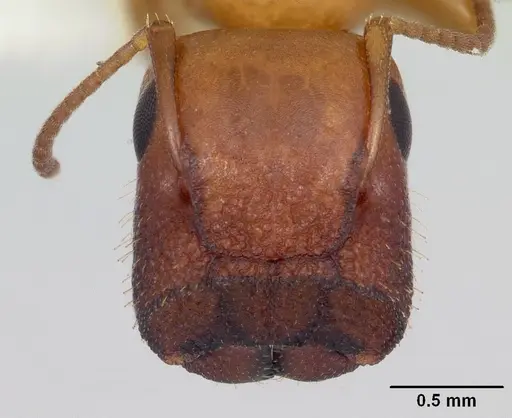
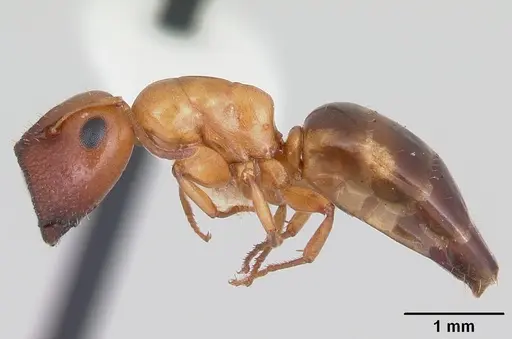
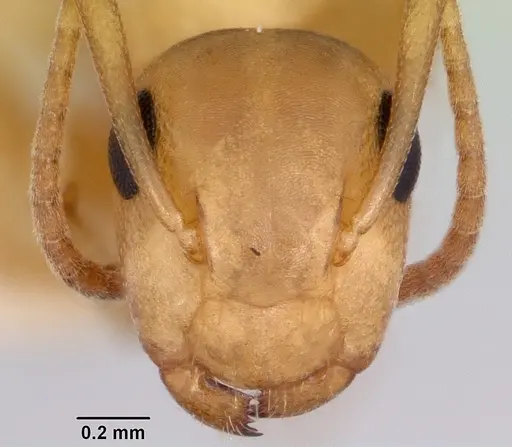
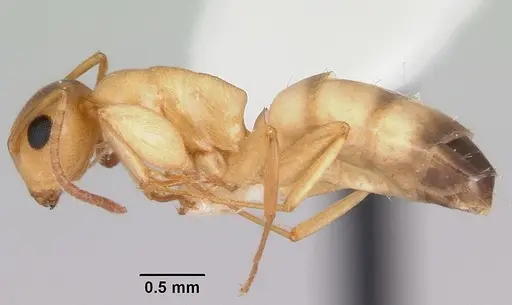
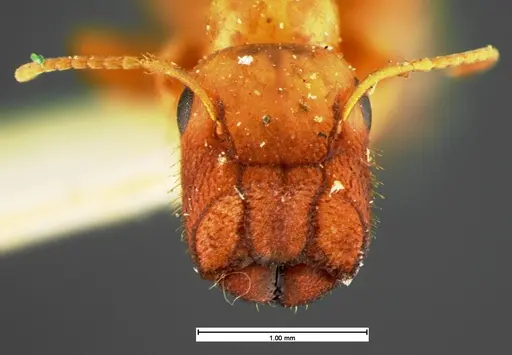
Colobopsis etiolata is a small to medium-sized ant native to the southern United States and northeastern Mexico. These ants are easily recognized by their pale yellowish-brown coloration and their most distinctive feature: the major workers (soldiers) have a uniquely shaped, subcylindrical head with a sharply truncated, concave front face that they use like a cork to block nest entrances [1]. Minor workers are much smaller at 3.5-4.5mm, while majors reach 5-6mm, and queens measure 5.5-6mm [1]. In the wild, they nest exclusively inside hollow plant structures, particularly the woody galls produced by cynipid wasps on live oak twigs, but also in hollow twigs of oaks, mesquite, and pecan trees [1][2]. This nesting habit inside plant cavities is what gives them the common name 'cork-headed ants.'
Quick Summary
- Difficulty: Easy
- Origin & Habitat: Southern United States (Texas) and northeastern Mexico (Nuevo León, Tamaulipas, Veracruz). Found in woody galls on live oaks (Quercus virginiana) and hollow twigs of various trees including oaks, mesquite, and pecan [1][2].
- Colony Type: Polydomous colonies, a single colony occupies multiple galls or twig chambers connected together on the same tree. Each gall houses roughly 24 workers on average, with about 5 soldiers and 20 workers per chamber [2]. Likely single-queen colonies (monogyne) based on typical Camponotini patterns.
- Colony: Monogyne
- Founding: Claustral
- Size & Growth:
- Queen: 5.5-6mm [1]
- Worker: Major workers: 5-6mm. Minor workers: 3.5-4.5mm [1]
- Colony: Colonies are polydomous with multiple nest sites, total colony size is distributed across many galls or twigs. Each gall averages about 24 workers [2].
- Growth: Moderate, typical for Camponotini genus
- Development: Estimated 6-8 weeks at optimal temperature based on related Camponotus species. (Development time is typical for carpenter ants, expect first workers (nanitics) around 6-8 weeks after founding at room temperature.)
- Antkeeping:
- Temperature: Keep at room temperature, around 20-24°C. They tolerate typical indoor temperatures well. A slight gradient is beneficial but not required.
- Humidity: Low to moderate, these ants naturally live in dry woody plant material, not damp soil. Keep nesting material moderately dry, providing a small water source in the outworld.
- Diapause: Yes, these ants are adapted to temperate climates and will benefit from a winter rest period. Reduce temperature to around 15°C for 2-3 months during winter.
- Nesting: These ants require dry, woody nesting material. In captivity, they do well in cork nests, Y-tong (AAC) nests, or acrylic nests with cork or wood inserts. They will not accept soil-based formicariums. The key requirement is narrow chambers that majors can effectively block with their heads.
- Behavior: Colobopsis etiolata is docile and not aggressive toward keepers. Their most fascinating behavior is the soldier's head-plugging defense, majors position themselves at nest entrances with their uniquely shaped heads blocking the opening, rotating to seal the chamber like a cork [2]. Queens also perform this behavior during founding [2]. They are nocturnal in the wild but foragers remain active day and night in captivity [1]. Workers are moderate climbers and may attempt escapes, though their size makes them relatively easy to contain. They do not sting and pose no danger to keepers.
- Common Issues: dry nesting material is critical, they will die in damp, soil-based nests, polydomous structure means they may spread across multiple connected chambers if given the opportunity, soldier head-plugging is normal behavior, don't assume a blocked entrance means a dead colony, slow founding means colonies take time to establish, don't overfeed or disturb founding queens, winter diapause is important for long-term colony health, skipping it may weaken colonies
Housing and Nest Setup
Colobopsis etiolata requires a unique approach to housing compared to most ant species. Because they naturally nest inside hollow plant stems and woody galls, they do best in nests that mimic this dry, woody environment. Cork nests (naturally occurring or artificial), Y-tong (AAC) nests with cork inserts, or acrylic nests with wooden chambers all work well. The critical requirement is that the nesting chambers must be narrow enough that the major workers can effectively block the entrance with their specialized heads. Avoid soil-based formicariums entirely, these ants will not thrive in damp substrate. Provide a small water tube in the outworld for hydration, but keep the nest itself dry. Because colonies are polydomous in nature, you can connect multiple nest modules to allow the colony to expand naturally across chambers. [1][2]
Feeding and Diet
Like other members of the ant tribe Camponotini (carpenter ants), Colobopsis etiolata is omnivorous with a preference for protein-rich foods. Offer protein sources such as small insects (fruit flies, small crickets, mealworms), and provide sugar water, honey, or diluted maple syrup as an energy source. They have the typical Camponotini symbiotic relationship with Blochmannia bacteria, which helps them extract nutrients from their food [3]. Feed protein 2-3 times per week and keep a constant sugar source available. Remove uneaten prey after 24 hours to prevent mold. These ants are modest eaters compared to larger carpenter ant species, adjust food amounts accordingly.
Temperature and Seasonal Care
Colobopsis etiolata adapts well to typical room temperatures between 20-24°C. They are native to Texas and northern Mexico, which experience both hot summers and cool winters, so they tolerate a reasonable temperature range. During the summer active season, room temperature is ideal. In winter, provide a diapause period by reducing temperatures to around 15°C for 2-3 months. This mimics their natural seasonal cycle and helps maintain colony health long-term. You can achieve this by moving the colony to a cooler location like an unheated garage or basement, or using a thermostat-controlled cooler. Do not feed during diapause, the colony will be largely dormant and food will simply mold. Resume normal feeding when temperatures rise in spring. [2]
Understanding Soldier Head-Plugging Behavior
One of the most fascinating aspects of keeping Colobopsis etiolata is observing their unique defense behavior. Major workers (soldiers) have a distinctly shaped head, almost perfectly cylindrical with a concave, circular truncated front face. When at rest or threatened, soldiers position themselves at nest entrances with their heads inserted into the opening, effectively sealing the colony like a cork in a bottle [2]. This behavior is not a sign of illness or death, it's completely normal. Even founding queens perform this behavior, using their heads to block the entrance until their first workers emerge [2]. When keeping this species, don't be alarmed if you see what appears to be a dead ant blocking the entrance, it's likely a healthy soldier doing its job. The soldiers also rotate to allow workers to enter and exit, demonstrating remarkable control over this behavior.
Colony Structure and Polydomous Housing
In the wild, Colobopsis etiolata colonies are polydomous, meaning a single colony occupies multiple separate nest sites that are connected together. Wheeler documented that colonies start in a single gall on a live oak tree, and as the population grows, some workers relocate with brood to other galls on the same tree [2]. Each gall has multiple entrance holes, and soldiers guard each one. In captivity, you can replicate this by connecting multiple nest modules. This allows the colony to naturally distribute itself across chambers, just as they would in multiple galls in nature. This also makes observation more interesting, you can watch workers moving brood between chambers and soldiers repositioning at different entrances. The polydomous structure also helps with humidity control since different chambers can have slightly different moisture levels.
Frequently Asked Questions
Can I keep Colobopsis etiolata in a test tube?
Test tubes are not ideal for this species. They naturally nest in dry, woody plant material (twigs and galls), not soil or damp chambers. A cork nest, Y-tong nest with cork inserts, or acrylic nest with wooden chambers is much more appropriate. Test tubes can work for temporary housing during founding, but transfer to a proper woody nest once the colony establishes.
How long does it take for Colobopsis etiolata to produce first workers?
Expect first workers (nanitics) around 6-8 weeks after the queen lays her first eggs, assuming temperatures around 22-24°C. This is typical for Camponotini species. Founding is claustral, the queen seals herself in and raises the first brood alone without foraging. Be patient and resist the urge to check on her too frequently, as disturbance can cause her to abandon the chamber.
Are Colobopsis etiolata good for beginners?
Yes, this is an excellent species for beginners. They are docile, don't sting, and have straightforward housing requirements (dry woody nests). The main challenges are providing the correct nest type and understanding their unique soldier head-plugging behavior, which can look alarming to new keepers but is completely normal. They are also forgiving of minor temperature variations.
Do Colobopsis etiolata need hibernation?
Yes, they benefit from a winter diapause period. As a species native to Texas and northern Mexico with a temperate climate, they are adapted to seasonal temperature changes. Provide 2-3 months of reduced temperatures (around 15°C) during winter. This helps maintain colony health and mimics their natural annual cycle. Skip the diapause and you may see reduced colony vigor over time.
Why is my soldier blocking the nest entrance?
This is completely normal behavior! Colobopsis soldiers use their uniquely shaped heads to block nest entrances, rotating to seal the chamber like a cork. This is their primary defense mechanism. Workers can still enter and exit, the soldier simply rotates to allow passage. Don't assume the soldier is dead or the colony is in trouble. This is actually a sign of a healthy, defensive colony.
What do Colobopsis etiolata eat?
They are omnivorous like other carpenter ants. Offer protein sources (small insects like fruit flies, pinhead crickets, or mealworms) 2-3 times per week, and provide a constant sugar source (sugar water, honey, or maple syrup). They are modest eaters compared to larger ant species. Remove uneaten prey after 24 hours to prevent mold.
Can I keep multiple queens together?
This species is not typically polygynous (multi-queen). In the wild, colonies appear to have a single founding queen that establishes in one gall, then the colony expands to other galls through worker dispersal. Combining unrelated foundress queens is not recommended and likely unnecessary, a single established queen will build a healthy colony on her own.
When should I move my colony to a formicarium?
You can transfer from a founding test tube setup to a proper nest once the colony has 15-20 workers and you see them becoming active in the outworld. However, because they prefer dry woody nesting material, consider using a cork nest or Y-tong from the start rather than a traditional soil formicarium. They do well in smaller nests initially, you can always add connected modules as the colony grows.
How big do Colobopsis etiolata colonies get?
Colonies are polydomous, meaning they spread across multiple nest sites. Each gall or twig chamber in the wild houses around 24 workers on average. A mature colony distributed across multiple connected chambers could reach several hundred workers. They are not among the largest ant species, but their unique housing requirements make them fascinating to observe.
References

This caresheet is licensed under CC BY-SA 4.0 .
CASENT0104766
View on AntWeb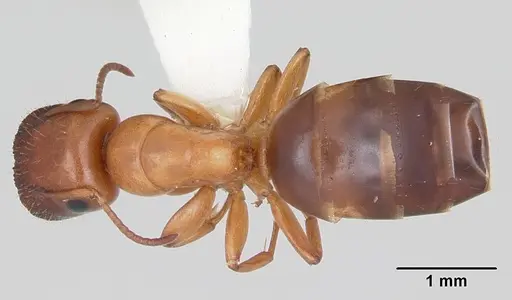
CASENT0104949
View on AntWeb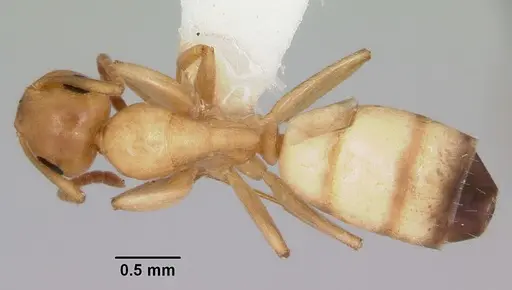
CASENT0105584
View on AntWeb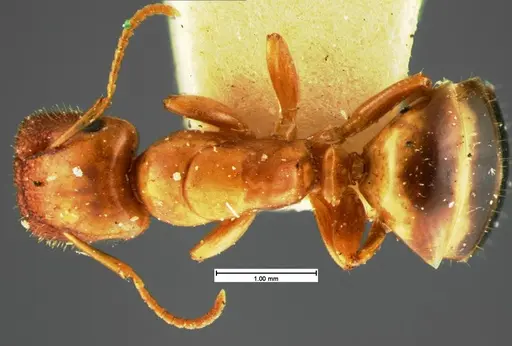
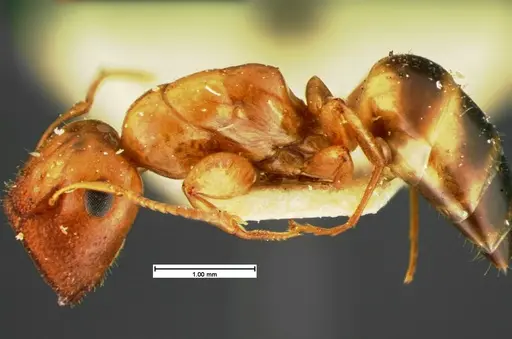
CASENT0923508
View on AntWeb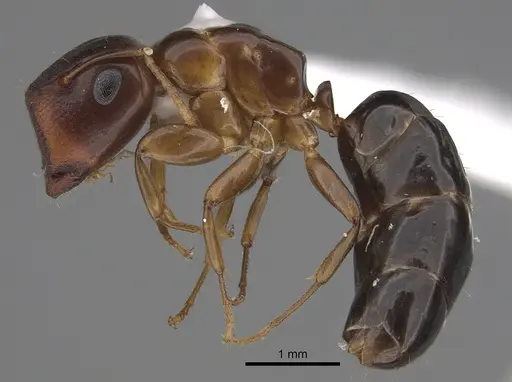
Literature
Loading...Loading products...