

Colobopsis cotesii
- Scientific Name
- Colobopsis cotesii
- Tribe
- Camponotini
- Subfamily
- Formicinae
- Author
- Forel, 1893
- Distribution
- Found in 1 countries
Colobopsis cotesii Overview
Colobopsis cotesii is an ant species of the genus Colobopsis. It is primarily documented in 1 countries , including United States of America. Detailed taxonomic data and occurrence records can be further explored via authoritative databases such as AntWeb or the Global Biodiversity Information Facility (GBIF).
Colobopsis cotesii
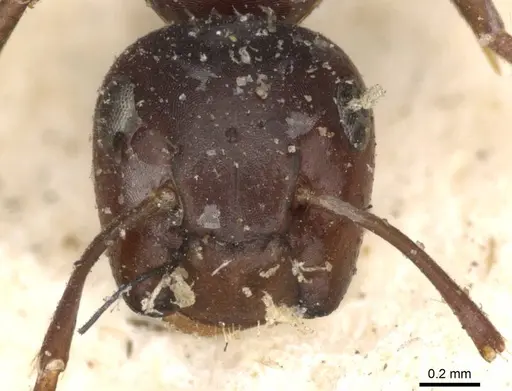
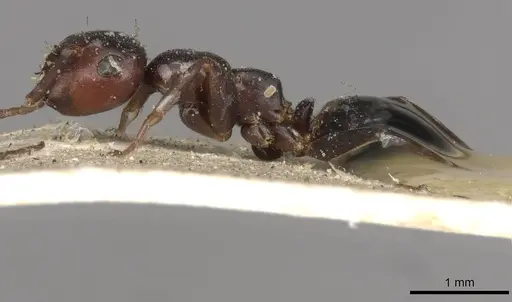
Colobopsis cotesii is a medium-sized ant species native to the Himalayan region and southern China. Workers come in two sizes: majors are chunky at 8mm with a distinctive black, shiny body and reddish-brown head, while minors are more slender at 4.5-6mm. The most striking feature is their truncated (flattened) head shape, especially in the major workers, this is the 'cork' ant group that uses their specially shaped heads to plug nest entrances like a bottle cork. They have two small yellowish spots at the base of abdomen and a somewhat conical metanotum. This species nests naturally in rotting wood and tree hollows across India (Uttarakhand, Meghalaya, Assam, Himachal Pradesh, Arunachal Pradesh) and China's Yunnan province [1][2].
What makes Colobopsis cotesii interesting is this cork-plugging behavior, major workers (sometimes called 'soldiers') can block nest entrances with their uniquely shaped heads, a defense mechanism unique to the genus. They are part of the Formicinae subfamily, which means they don't have a stinger but can spray formic acid as a defense. This is a less commonly kept species in captivity, making it an interesting choice for antkeepers looking to expand beyond common Camponotus species.
Quick Summary
- Difficulty: Medium
- Origin & Habitat: Himalayan region of India (Uttarakhand, Meghalaya, Assam, Himachal Pradesh, Arunachal Pradesh) and Yunnan province, China. They live in rotting wood and tree hollows in forested areas [1][2].
- Colony Type: Likely single-queen (monogyne) colonies based on typical Colobopsis patterns. Colony size appears moderate, likely reaching a few hundred workers at maximum based on related species.
- Colony: Monogyne
- Founding: Claustral
- Size & Growth:
- Queen: Unconfirmed, likely 10-12mm based on genus patterns for Colobopsis majors
- Worker: Majors: 8mm, Minors: 4.5-6mm [1]
- Colony: Estimated 200-500 workers based on typical Colobopsis colony sizes
- Growth: Moderate, typical for Formicinae which grow at moderate pace
- Development: Estimated 6-8 weeks at optimal temperature based on related Camponotus species (Development time is inferred from genus-level data since species-specific studies are lacking. Formicinae typically take 6-10 weeks from egg to first worker.)
- Antkeeping:
- Temperature: Keep around 22-26°C. They come from a temperate to subtropical climate so room temperature or slight heating works well. A gentle gradient allowing workers to self-regulate is ideal.
- Humidity: Moderate humidity around 50-70%. These wood-nesting ants prefer slightly drier conditions than soil-nesting species. Provide a water tube but avoid overly damp nests.
- Diapause: Yes, they likely require a winter rest period of 2-3 months at 10-15°C, consistent with their Himalayan origin. Reduce feeding and keep them in a cool location during winter.
- Nesting: Best kept in wood-based nests, Y-tong (AAC) nests work well, or a naturalistic setup with rotting wood cork nesting medium. They prefer tight, enclosed spaces typical of their natural tree-hollow nesting. Avoid test tubes for established colonies, provide proper formicarium with wood cavities.
- Behavior: Generally peaceful and non-aggressive. Like other Formicinae, they can spray formic acid when threatened but pose minimal danger to keepers. Workers are moderately active and foragers. Escape risk is moderate, they are not particularly small but can squeeze through small gaps. Major workers are larger and less likely to escape than minors. They are primarily nocturnal or crepuscular foragers. majors serve as 'cork' soldiers that can block nest entrances with their heads.
- Common Issues: wood-nesting requirements mean they need specific setup, test tubes alone are insufficient for established colonies, moderate growth rate can test beginner patience, don't expect rapid colony explosion, winter diapause is essential for long-term health, skipping hibernation may weaken colonies, escape prevention still matters, minors at 4.5mm can fit through standard gaps if not careful, limited captive breeding means wild-caught colonies may struggle with adaptation to captivity
Housing and Nest Setup
Colobopsis cotesii requires wood-based housing, this is non-negotiable for long-term success. In the wild, they nest in rotting tree trunks and branches, using their specially shaped heads as living corks to seal the nest entrance. For captivity, Y-tong (AAC) nests work excellently, or you can create a naturalistic setup with cork or rotting wood as the nesting medium. The chambers should be appropriately sized to the worker size, not too spacious, as these ants prefer tight, enclosed spaces. Test tubes are suitable for founding colonies but must be replaced with proper formicarium housing once the colony reaches 15-20 workers. Provide a water tube for humidity but ensure ventilation prevents mold. The outworld can be a standard foraging area where workers collect food.
Feeding and Diet
Like other Formicinae, Colobopsis cotesii is omnivorous with a preference for protein. Feed them protein sources like mealworms, small crickets, or other insects twice weekly. Sugar water, honey, or sucrose solutions should be available constantly, these ants will readily accept sweet liquids. In nature, they likely forage for honeydew from aphids and scavenge on small insects. Fresh fruit can occasionally be offered as well. Remove uneaten prey after 24-48 hours to prevent mold. A varied diet helps maintain colony health. Unlike some specialized predators, these ants are not difficult feeders and will accept most standard ant foods.
Temperature and Seasonal Care
Maintain temperatures between 22-26°C for optimal colony health and brood development. They can tolerate slightly cooler conditions (down to around 18°C) but growth will slow. A heating cable on one side of the nest creates a gentle gradient that workers will use to self-regulate. Place the heating on top of the nest, not underneath, to avoid excessive drying. Most importantly, these ants require an annual diapause (winter rest) of 2-3 months. During autumn, gradually reduce temperature to 10-15°C and reduce feeding. Keep them in a cool location like an unheated garage or basement. This hibernation period is essential for long-term colony health and mimics their natural seasonal cycle in the Himalayan region.
Behavior and Defense
Colobopsis cotesii is a peaceful species that poses minimal threat to keepers. As Formicinae, they lack a stinger but can spray formic acid as a defensive secretion, this is harmless to humans in normal circumstances but can be irritating if sprayed in eyes. The most fascinating behavior is the 'cork' soldier system: major workers have uniquely truncated heads that can plug nest entrances, protecting the colony from predators and intruders. This is a specialized defense unique to Colobopsis. Workers are moderately active, primarily foraging at night or during twilight hours. They are not aggressive toward keepers and can be handled gently if needed. Escape risk is moderate, while not tiny, minors at 4.5mm can slip through small gaps, so use standard escape prevention.
Colony Growth and Development
Colony growth follows typical Formicinae patterns: claustral queens seal themselves in a chamber and raise the first brood alone, living off stored fat reserves until nanitic (first) workers emerge. The first generation is typically small (nanitics) but subsequent generations are normal-sized. Growth rate is moderate, expect 6-8 weeks from egg to first worker at optimal temperature, then several months to reach 50 workers, and a year or more to reach 100+. Maximum colony size is estimated at 200-500 workers based on related species. Colonies are long-lived perennials that can persist for many years with proper care. The presence of major workers (soldiers) becomes more common as the colony grows, and these specialized workers take on defensive cork-plugging roles.
Frequently Asked Questions
How long does it take for Colobopsis cotesii to produce first workers?
Expect first workers (nanitics) to emerge in 6-8 weeks at optimal temperature (around 24°C). This is based on typical Formicinae development patterns since species-specific data is lacking. The queen will remain sealed in her founding chamber until the first workers emerge.
What do Colobopsis cotesii ants eat?
They are omnivorous. Offer protein (insects like mealworms, small crickets) twice weekly, and keep sugar water or honey available constantly. They will also accept fruit occasionally. Remove uneaten prey after a day or two to prevent mold.
Do Colobopsis cotesii need hibernation?
Yes, they require an annual winter rest period of 2-3 months at 10-15°C. This diapause is essential for long-term colony health and mimics their natural seasonal cycle in the Himalayan region. Reduce feeding during this period.
Are Colobopsis cotesii good for beginners?
They are rated as medium difficulty. While not the easiest species, they are manageable for keepers with some experience. The main challenges are providing proper wood-based housing and managing the annual hibernation cycle. They are less commonly kept than Camponotus but not difficult to maintain once established.
How big do Colobopsis cotesii colonies get?
Colony size is estimated at 200-500 workers based on related Colobopsis species. This is a moderate colony size, not among the largest ants but substantial enough to be impressive.
Can I keep multiple queens together?
This species is likely monogyne (single queen). Combining unrelated queens is not recommended as they would likely fight. In nature, only one queen establishes each colony.
Why are my Colobopsis cotesii dying?
Common causes include: improper nesting (they need wood cavities, not test tubes for established colonies), skipping hibernation, mold from overwatering, or stress from wild-caught adaptation. Ensure proper housing, correct temperature, and annual winter rest. Also check for escape prevention, minors can slip through small gaps.
When should I move from test tube to formicarium?
Move to a proper formicarium once the colony reaches 15-20 workers or when the test tube becomes cramped. Wood-based nests (Y-tong or naturalistic) are essential for this species, they will not thrive in test tubes long-term.
References

This caresheet is licensed under CC BY-SA 4.0 .
CASENT0910594
View on AntWeb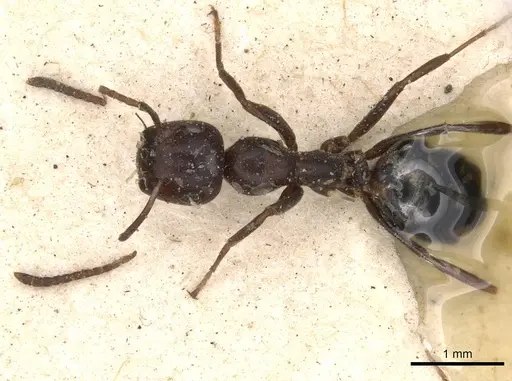
Literature
Loading...Loading products...