

Cladomyrma hewitti
- Scientific Name
- Cladomyrma hewitti
- Tribe
- Lasiini
- Subfamily
- Formicinae
- Author
- Wheeler, 1910
- Distribution
- Found in 2 countries
Cladomyrma hewitti Overview
Cladomyrma hewitti is an ant species of the genus Cladomyrma. It is primarily documented in 2 countries , including Indonesia, Malaysia. Detailed taxonomic data and occurrence records can be further explored via authoritative databases such as AntWeb or the Global Biodiversity Information Facility (GBIF).
Cladomyrma hewitti
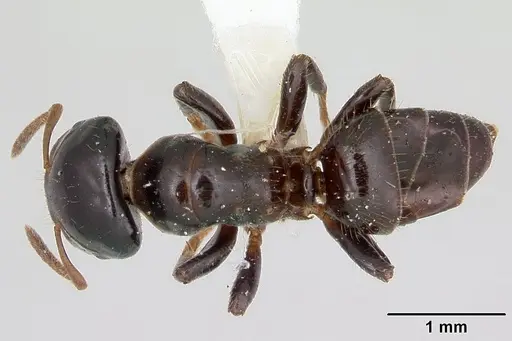
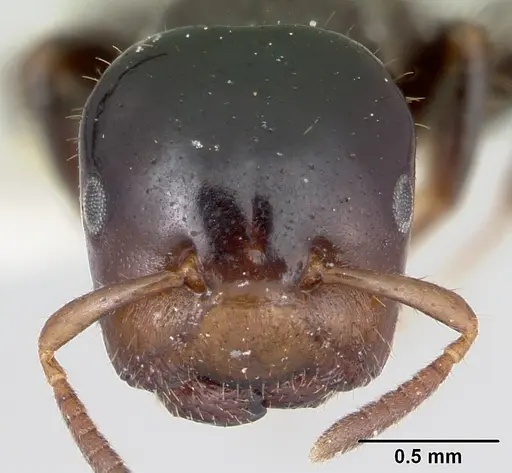
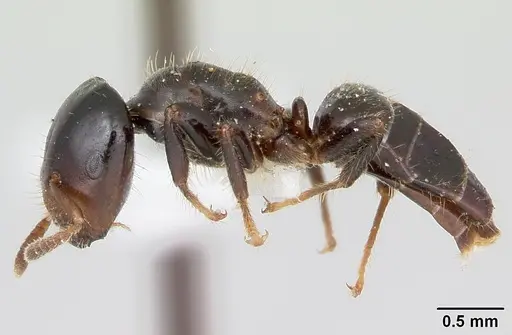
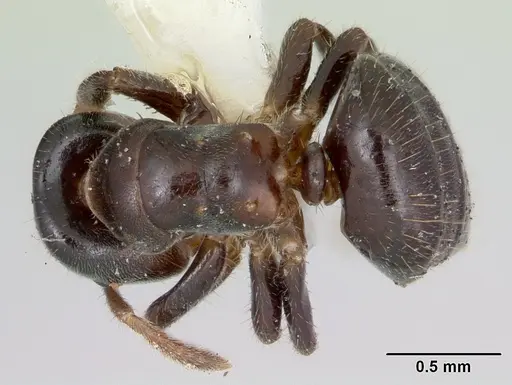
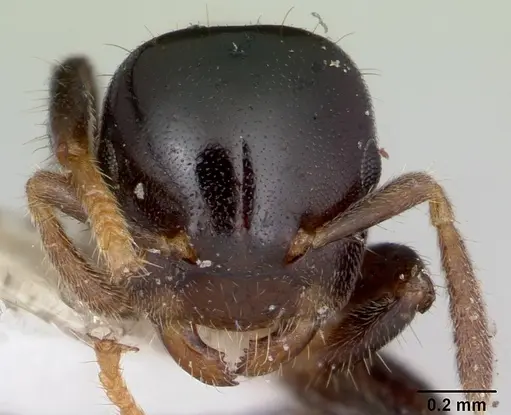
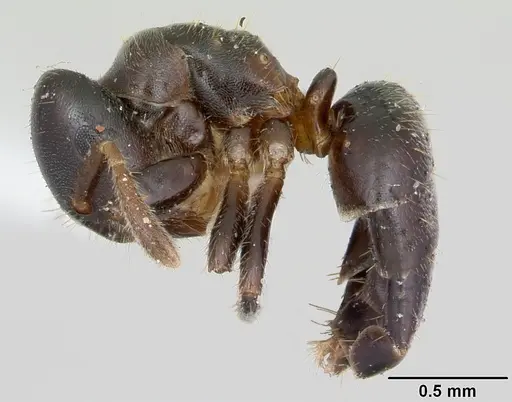
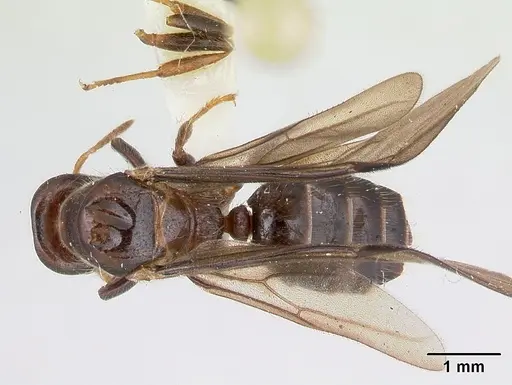
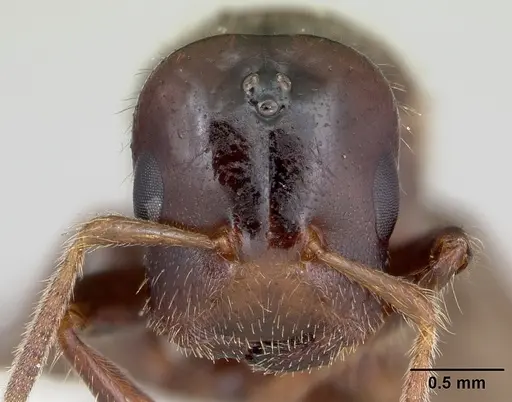
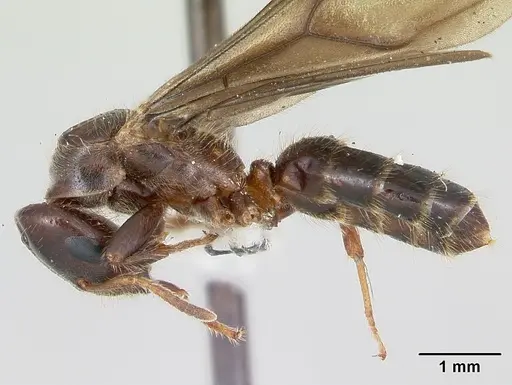
Cladomyrma hewitti is a medium-sized plant-ant native to Borneo, found only in Sarawak, Brunei, and Sabah. Workers measure 2-3.5mm with a distinctive elongated head and dark brown coloration, the head and gaster are notably darker than the rest of the body. The queen is larger at 6-7mm and has an unusually long, parallel-sided head. These ants are obligate symbionts with Neonauclea trees, nesting exclusively in the swollen internodes (domatia) of these plants. This makes them a true plant-ant, similar to the better-known Crematogaster or Azteca species that inhabit acacia trees. The species was first collected in 1907 from a 'swollen internode of a shrub' near Bidi in Sarawak, and has since been found only in lowland dipterocarp forests [1][2].
Quick Summary
- Difficulty: Expert
- Origin & Habitat: Borneo (Sarawak, Brunei, Sabah), lowland dipterocarp forests. This is a tropical rainforest species that lives exclusively inside the domatia (swollen stem cavities) of Neonauclea host plants [1][2].
- Colony Type: Colony structure is unconfirmed. As a plant-ant, colonies likely consist of a single queen housed within the domatia of their host plant. Multiple colonies would be distributed across different host trees.
- Size & Growth:
- Queen: 6-7mm [1]
- Worker: Major workers: 3-3.5mm, Minor workers: ~2mm [1]
- Colony: Unknown, likely moderate sized colonies based on typical plant-ant patterns
- Growth: Unknown, estimated moderate growth rate based on tropical ant patterns
- Development: Unknown, estimated 4-8 weeks at tropical temperatures based on related Formicinae species (No direct development data available for this species. Related Formicinae ants typically develop from egg to worker in 4-8 weeks under warm tropical conditions.)
- Antkeeping:
- Temperature: Keep at 24-28°C, these are tropical rainforest ants from Borneo that need warm, stable temperatures [1]. A heating cable on one side of the nest can help maintain warmth.
- Humidity: High humidity is essential, think tropical forest understory. Keep the nest substrate consistently moist but not waterlogged. The domatia they naturally inhabit are humid but not saturated environments.
- Diapause: No, this is a tropical species that does not experience cold winters. They remain active year-round.
- Nesting: This is the most challenging aspect. In the wild, they live inside the swollen internodes of Neonauclea plants. In captivity, you would need to provide a domatia-like structure, either a naturalistic setup with live or artificial Neonauclea stems, or a custom acrylic/plaster nest with narrow chambers that mimic their natural plant cavities. Standard test tubes are not suitable for this species.
- Behavior: These are gentle, non-aggressive ants that live a sheltered life inside plant stems. They are not aggressive and do not have a painful sting. Workers forage within the host plant and on surrounding vegetation, likely collecting honeydew and small insects. They are not escape artists in the traditional sense, they simply don't venture far from their domatia. However, their small size means they could escape through small gaps if disturbed. They are docile plant-symbionts rather than typical ground-nesting ants.
- Common Issues: This is an expert-level species due to its specialized domatia-nesting requirements, most antkeepers cannot provide suitable housing, Host plant availability is extremely limited, Neonauclea species are not common in cultivation, Colony size and founding behavior are poorly documented, making captive breeding challenging, As a tropical species, they require precise temperature and humidity control year-round, Wild-caught colonies may be stressed from removal from their host plant and difficult to establish in captivity
Natural History and Host Plant Relationship
Cladomyrma hewitti is an obligate plant-ant, meaning it cannot survive without its specific host plant. In the wild, these ants live exclusively inside the swollen internodes (domatia) of Neonauclea trees, particularly Neonauclea longipedunculata and Neonauclea pseudocalycina. The domatia are specialized hollow chambers that form naturally in these plants, the plant benefits from having ants living there (protection from herbivores), and the ants benefit from having a safe, humid home with a ready food source. Researchers have found that these ants very rarely colonize a different plant, Myrmeconauclea strigosa, and only when Neonauclea trees are scarce, this suggests they have a strong preference for their primary host [1]. The relationship between C. hewitti and Neonauclea is one of the more specialized ant-plant symbioses in Southeast Asia.
Housing and Nesting Challenges
Housing Cladomyrma hewitti is the single greatest challenge in keeping this species. Unlike most ants that will accept test tubes or acrylic nests, these ants require domatia-like structures that mimic their natural plant stem homes. In practice, this means you would need either a live Neonauclea plant with domatia (extremely difficult to obtain and maintain), or a custom-designed artificial nest that replicates the narrow, humid chambers of a plant stem. Standard formicariums with large chambers are not suitable, the ants need tight, enclosed spaces. This species is not recommended for anyone except the most experienced antkeepers with access to specialized equipment or botanical connections. If you are determined to keep this species, contact botanical gardens or research institutions in Borneo for guidance on domatia-mimicry setups. [1]
Feeding and Diet
In their natural habitat, C. hewitti likely feeds on honeydew produced by the host plant and small insects they catch while foraging on the plant surface. As a Formicinae ant, they probably have a typical omnivorous diet. In captivity, you should offer sugar water or honey as an energy source, along with small live prey like fruit flies, pinhead crickets, or other tiny insects. Given their small worker size (2-3.5mm), prey items should be appropriately sized. The exact acceptance of various foods is unconfirmed for this species, so you may need to experiment. Avoid large prey items that could overwhelm these tiny workers. [1]
Temperature and Environmental Needs
As a tropical species from Borneo's lowland rainforests, C. hewitti requires warm and humid conditions year-round. Maintain temperatures between 24-28°C, avoiding any drops below 20°C. Room temperature in most homes is too cold, you will likely need a heating cable or small heat mat to maintain appropriate temperatures. Humidity should be high (70-85%) to replicate the humid interior of plant domatia. Use a hygrometer to monitor conditions. Unlike temperate ants that can tolerate temperature fluctuations, this species expects consistent tropical conditions. There is no diapause or winter rest period, the colony remains active throughout the year. [1]
Colony Structure and Reproduction
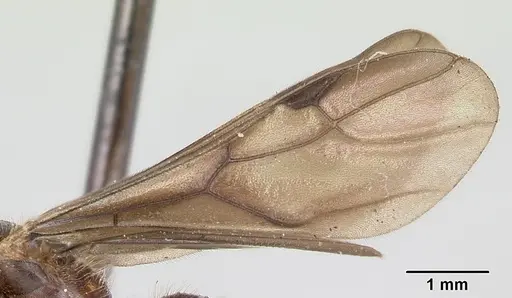
The exact colony structure of C. hewitti has not been documented in scientific literature. Based on related plant-ants, colonies likely contain a single queen (monogyne) living within the domatia, though this is unconfirmed. Queens are relatively large at 6-7mm and have the distinctive elongated head seen in workers but more pronounced. Alates (reproductives) have been captured in flight intercept traps, indicating nuptial flights occur. The timing of these flights is unknown. Workers come in three size castes: major (3-3.5mm), media (~2.8mm), and minor (~2mm), with the major workers having the characteristic extremely long head that gives this species its distinctive appearance [1].
Frequently Asked Questions
Can I keep Cladomyrma hewitti in a test tube?
No. Test tubes are completely unsuitable for this species. Cladomyrma hewitti is a plant-ant that lives exclusively inside the domatia (swollen stem cavities) of Neonauclea trees. They require domatia-like nesting structures with narrow, enclosed chambers that mimic their natural plant stem homes. Standard ant housing will not work.
What do Cladomyrma hewitti ants eat?
They likely eat honeydew from their host plant and small insects. In captivity, offer sugar water or honey as an energy source, plus small live prey like fruit flies or pinhead crickets. Prey should be appropriately sized for their tiny 2-3.5mm workers.
How long does it take for Cladomyrma hewitti to develop from egg to worker?
The exact development time is unknown. Based on related Formicinae species in tropical conditions, estimate 4-8 weeks from egg to first worker at optimal temperatures (24-28°C).
Are Cladomyrma hewitti good for beginners?
No. This is an expert-level species due to its specialized domatia-nesting requirements. Most antkeepers cannot provide suitable housing, they need plant-stem-like structures that are extremely difficult to replicate. This species is not recommended for beginners.
Where is Cladomyrma hewitti found?
This species is endemic to Borneo, found only in Sarawak, Brunei, and Sabah. They live in lowland dipterocarp forests and are obligate symbionts of Neonauclea host plants.
Do Cladomyrma hewitti need hibernation?
No. This is a tropical species from Borneo that does not experience cold winters. They remain active year-round and do not require a diapause period. Keep them warm continuously.
How big do Cladomyrma hewitti colonies get?
The maximum colony size is unknown. Based on typical plant-ant patterns, colonies likely reach a few hundred workers. They are distributed across host plants rather than forming massive supercolonies.
Can I keep multiple queens together?
This has not been documented. As a plant-ant with colonies housed in individual domatia, it is unlikely they form multi-queen colonies. Do not attempt to combine unrelated queens.
Why are Cladomyrma hewitti so hard to find in the antkeeping hobby?
This species has extremely specialized housing requirements (domatia of Neonauclea plants) that are nearly impossible to replicate in captivity. Additionally, they are only found in a limited region of Borneo and have rarely been collected for study.
References

This caresheet is licensed under CC BY-SA 4.0 .
Literature
Loading...Loading products...