

Cladomyrma dianeae
- Scientific Name
- Cladomyrma dianeae
- Tribe
- Lasiini
- Subfamily
- Formicinae
- Author
- Agosti <i>et al.</i>, 1999
- Distribution
- Found in 1 countries
Cladomyrma dianeae Overview
Cladomyrma dianeae is an ant species of the genus Cladomyrma. It is primarily documented in 1 countries , including Malaysia. Detailed taxonomic data and occurrence records can be further explored via authoritative databases such as AntWeb or the Global Biodiversity Information Facility (GBIF).
Cladomyrma dianeae
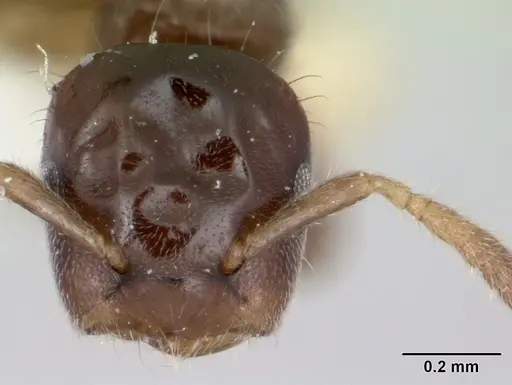
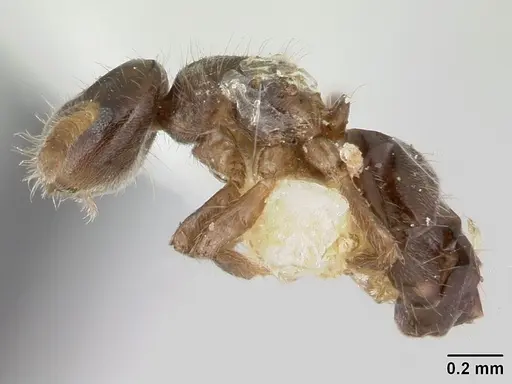
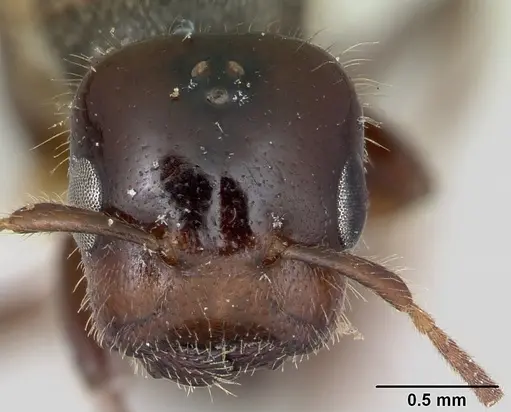
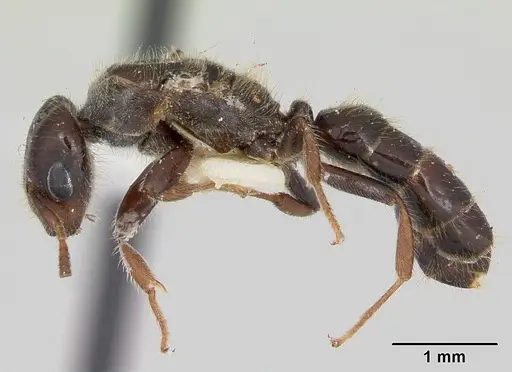
Cladomyrma dianeae is a medium to large sized ant belonging to the Formicinae subfamily. Workers measure 0.76-1.29mm in body length, with queens reaching 2.06-2.22mm. The species has a distinctive appearance with a yellowish-brown alitrunk contrasting against dark brown head, metapleuron, petiole, and gaster. The entire body is covered in long erect golden hairs, and the petiole is raised and nodiform to squamiform in shape [1].
This is a highly specialized plant-ant that lives exclusively in the domatia (hollow structures) of Neonauclea trees. All known collections come from various Neonauclea species in Borneo, making it one of the most host-specific ants in the region. The species was described in 1999 and is known from Sabah and Sarawak in Malaysian Borneo [1].
Quick Summary
- Difficulty: Expert
- Origin & Habitat: Borneo (Sabah, Sarawak) and Indonesia, tropical rainforest canopy. This species is a specialized ant associate of Neonauclea plants, living in the domatia (hollow structures) these plants form [1].
- Colony Type: Colony structure is unconfirmed, likely single queen colonies based on typical Formicinae patterns. Colonies range from 14-36 workers in young colonies to approximately 1500 workers in mature colonies [1].
- Size & Growth:
- Queen: 2.06-2.22 mm [1]
- Worker: 0.76-1.29 mm (minor: 0.76-0.84mm, major: 0.89-1.29mm) [1]
- Colony: Up to approximately 1500 workers in mature colonies [1]
- Growth: Unknown, likely moderate based on colony size data
- Development: Unconfirmed, no direct development data available for this species (Development timeline has not been studied. Related Formicinae species suggest 4-8 weeks at tropical temperatures, but this is an estimate.)
- Antkeeping:
- Temperature: Tropical species, keep warm around 24-28°C. This is inferred from their Borneo rainforest habitat [1].
- Humidity: High humidity required, they naturally live in plant domatia which maintain humid conditions. Aim for 70-85% humidity.
- Diapause: No, as a tropical species, they do not require hibernation. Keep them warm year-round.
- Nesting: This is the critical challenge, C. dianeae is a specialized plant-ant that lives in Neonauclea domatia. In captivity, they would need a naturalistic setup with access to live Neonauclea or similar domatia-bearing plants, or a carefully designed artificial nest that mimics plant cavity conditions. This is not a species for standard test tube or formicarium setups.
- Behavior: Behavior is poorly documented. As a plant-ant, they likely have a close mutualistic relationship with their host plants, potentially protecting the plant while living in its domatia. Workers are small to medium sized and likely forage on the plant surface and canopy. Escape risk is moderate, workers are not tiny but can climb well. Stinging ability is unknown but likely minimal given their small size.
- Common Issues: This is an extremely specialized species requiring live plant domatia, standard ant keeping methods will likely fail, No captive breeding data exists, wild colonies are the only source, Tropical humidity requirements are difficult to maintain consistently, Escape prevention is important but secondary to housing requirements, As a canopy-dwelling species, they may have different oxygen/ventilation needs than ground-nesting ants
Understanding Cladomyrma dianeae
Cladomyrma dianeae is one of the most ecologically specialized ants in the antkeeping hobby, it is an obligate plant-ant that lives exclusively in the domatia of Neonauclea trees. Domatia are specialized hollow structures that certain plants form, often at the base of leaves or along stems, specifically to house beneficial ants. This is a mutualistic relationship where the plant provides housing and the ants provide protection [1].
The species was described in 1999 and is known only from Borneo, where it has been found in association with multiple Neonauclea species including N. borneensis, N. gigantea, N. longipedunculata, and several unidentified species. The queen is relatively large at 2.06-2.22mm, while workers range from 0.76-1.29mm depending on whether they are minor or major workers [1].
Colony sizes range from very small (14-36 workers in what appear to be young colonies) to approximately 1500 workers in mature colonies. This suggests relatively slow colony growth compared to many common ant species [1].
Housing Challenge - The Plant-Ant Problem
This is the most critical and difficult aspect of keeping Cladomyrma dianeae. Unlike most ants that will accept artificial nests, this species is an obligate plant-ant that requires access to domatia, the specialized hollow structures found in Neonauclea plants. In the wild, colonies live entirely within these plant cavities, which provide humid, protected housing [1].
There are no documented cases of this species being kept in captivity. Standard ant keeping setups (test tubes, acrylic nests, Y-tong nests) are unlikely to work because they do not replicate the plant-based environment this species requires. A naturalistic vivarium setup with a living Neonauclea plant would be necessary, and even then, success would be uncertain.
The practical implication is that C. dianeae is essentially unkeepable in captivity with current knowledge. This is a species for researchers with access to field sites in Borneo, not for typical antkeepers. If you are interested in plant-ants, consider more commonly kept species like certain Camponotus or Pseudomyrmex that have been successfully maintained in captivity.
Temperature and Humidity Requirements
As a tropical species from Borneo's rainforest canopy, Cladomyrma dianeae requires warm and humid conditions. Based on the tropical climate of their range (Sabah, Sarawak), temperatures should be maintained in the 24-28°C range with high humidity of 70-85% [1].
These conditions are challenging to maintain consistently, especially the humidity requirements. Plant domatia naturally maintain high humidity through the plant's own moisture regulation. Replicating this in captivity would require a naturalistic setup with live plants.
Unlike temperate species, no winter dormancy or diapause is required. Year-round warm conditions are necessary to maintain colony health.
Feeding and Diet
The natural diet of Cladomyrma dianeae is not well documented. As a plant-ant, they likely have a mixed diet similar to other Cladomyrma species, they probably consume honeydew from sap-sucking insects on their host plant, extrafloral nectar from the plant itself, and small prey items they can capture on the plant surface [1].
In captivity, if a suitable setup were achieved, you would likely need to provide sugar sources (honey water or sugar water) and protein (small insects like fruit flies or pinhead crickets). However, getting them to accept artificial food in a non-plant environment is entirely speculative and unlikely to succeed.
The specialized nature of their ecological niche suggests they may have specific dietary requirements that cannot easily be met in captivity.
Frequently Asked Questions
Can I keep Cladomyrma dianeae in a test tube?
No. This is a specialized plant-ant that requires live plant domatia to survive. Standard test tube setups will not work. This species has never been documented in captivity and likely cannot be maintained without its host plant [1].
What do Cladomyrma dianeae eat?
Their natural diet is not well studied, but as a plant-ant they likely consume honeydew from sap-sucking insects on their Neonauclea host plants, plant nectar, and small prey. Captive feeding has not been documented [1].
How big do Cladomyrma dianeae colonies get?
Mature colonies reach approximately 1500 workers. Young colonies start with only 14-36 workers, suggesting relatively slow colony growth [1].
Where does Cladomyrma dianeae live in the wild?
They live exclusively in Borneo (Malaysia: Sabah, Sarawak and Indonesia) in the domatia of Neonauclea trees. They are among the most host-specific ants known [1].
Is Cladomyrma dianeae good for beginners?
No. This is an expert-level species that has never been successfully kept in captivity. It requires live plant domatia and specialized conditions that are essentially impossible to replicate. Consider more common ant species instead.
Do Cladomyrma dianeae need hibernation?
No. As a tropical species from Borneo, they do not require hibernation. Keep them warm year-round at 24-28°C.
How long does it take for Cladomyrma dianeae to develop from egg to worker?
This has not been studied. No development timeline data exists for this species. Related Formicinae suggest 4-8 weeks at tropical temperatures, but this is purely speculative.
Can I keep multiple Cladomyrma dianeae queens together?
This has not been studied. The colony structure is unconfirmed, and there are no captive breeding records for this species. Combining queens is not recommended given the lack of any captive data.
Why is Cladomyrma dianeae so hard to keep?
This is an obligate plant-ant that has evolved to live exclusively in the specialized hollow structures (domatia) of Neonauclea plants. They cannot survive without access to these plant structures, making captive maintenance essentially impossible with current knowledge [1].
References

This caresheet is licensed under CC BY-SA 4.0 .
CASENT0173914
View on AntWeb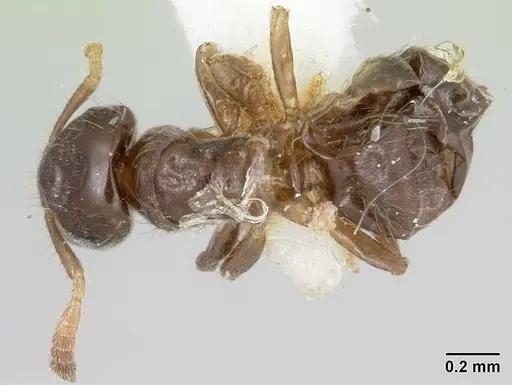
CASENT0173915
View on AntWeb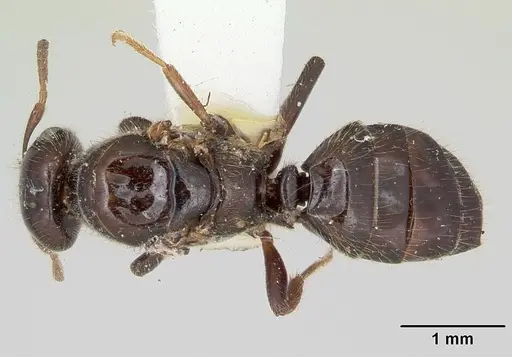
Literature
Loading...Loading products...