

Chrysapace sauteri
- Scientific Name
- Chrysapace sauteri
- Subfamily
- Dorylinae
- Author
- Forel, 1913
- Distribution
- Found in 1 countries
Chrysapace sauteri Overview
Chrysapace sauteri is an ant species of the genus Chrysapace. It is primarily documented in 1 countries , including Taiwan, Province of China. Detailed taxonomic data and occurrence records can be further explored via authoritative databases such as AntWeb or the Global Biodiversity Information Facility (GBIF).
Chrysapace sauteri
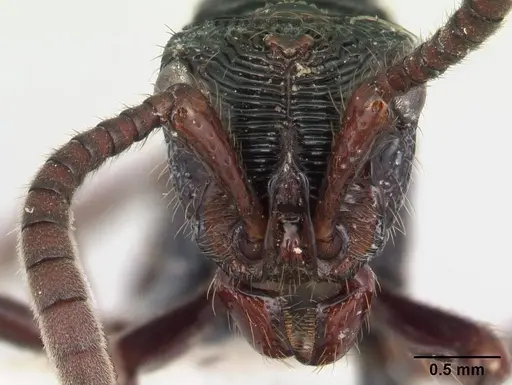
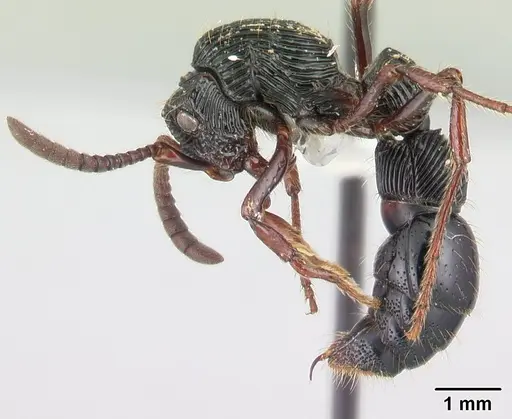
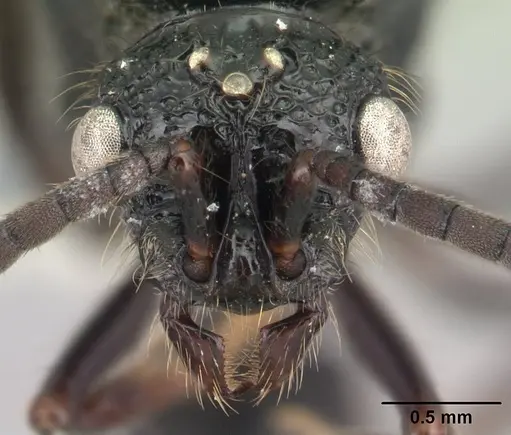
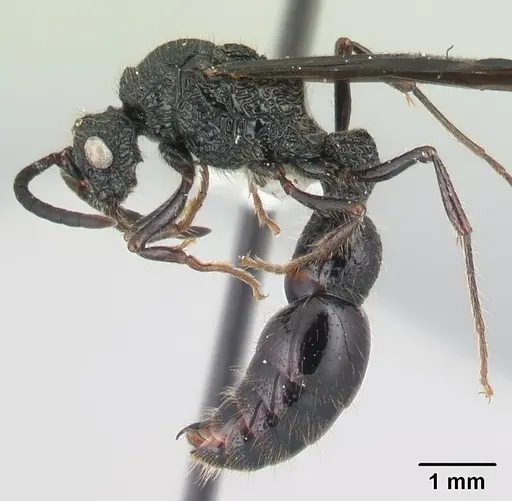
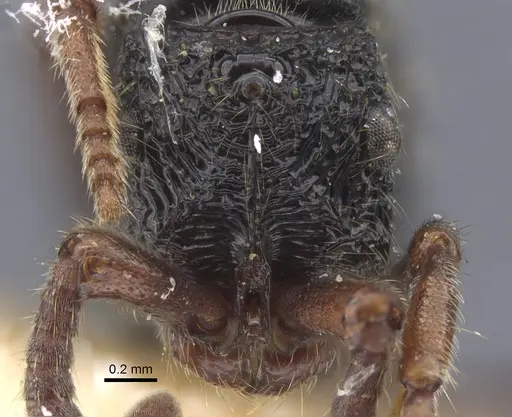
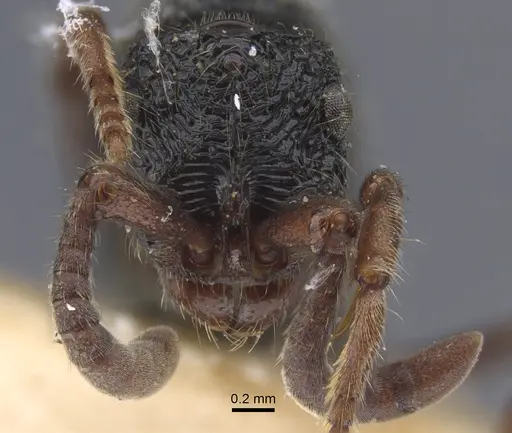
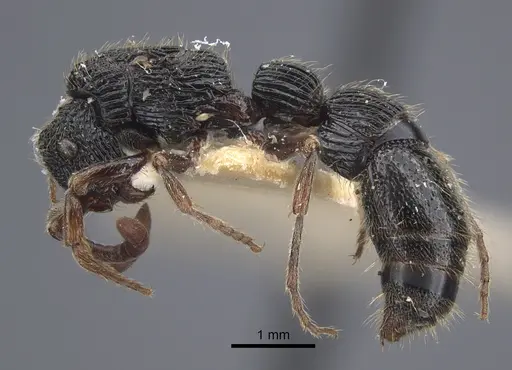
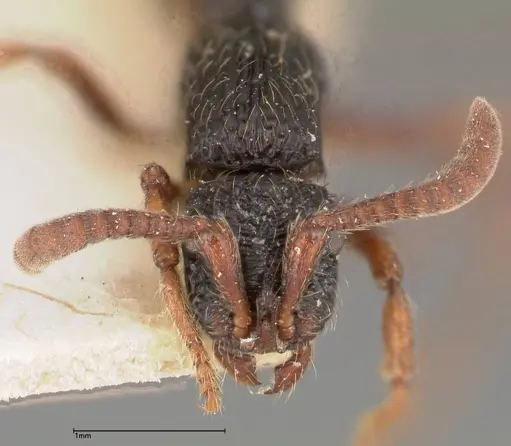
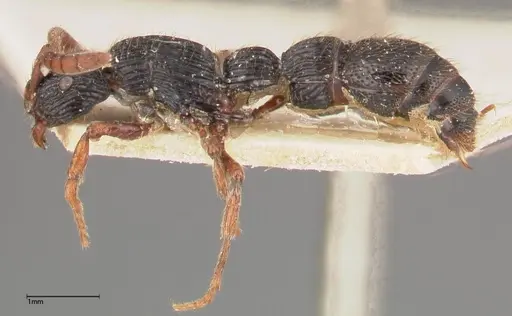
Chrysapace sauteri is a rare predatory ant belonging to the Dorylinae subfamily, the same group that includes army ants. Workers are small at around 1mm body length, with a distinctive appearance featuring coarse longitudinal ridges (costae) running along the head, mesosoma, petiole, and postpetiole. The body is black with dark reddish-brown antennae and legs. This species was originally described from Taiwan in 1913 and has since been recorded in Vietnam, making it one of the rarest ants in the Indomalaya region. The genus Chrysapace was once part of Cerapachys but was separated through taxonomic revision. These ants are predatory, like their army ant relatives, though their exact hunting behavior remains poorly documented due to the species' extreme rarity in collections.
Quick Summary
- Difficulty: Expert
- Origin & Habitat: Taiwan and Vietnam, found in primary tropical rainforests, specifically in rotting wood and decaying logs [1][2]
- Colony Type: Colony structure is unconfirmed. As a Dorylinae species, it likely forms colonies with a single queen, though this has not been directly documented.
- Size & Growth:
- Queen: 1.09-1.30mm [3]
- Worker: 1.01-1.23mm [3]
- Colony: Unknown, only a few specimens have ever been collected
- Growth: Unknown
- Development: Unknown, no development data exists for this species (Development timeline has not been studied. Related Dorylinae species typically develop from egg to worker in 4-8 weeks at tropical temperatures, but this is an estimate for similar species, not confirmed for C. sauteri.)
- Antkeeping:
- Temperature: Keep warm at 24-28°C based on their tropical rainforest habitat in Taiwan and Vietnam. A heating cable on one side of the nest creates a temperature gradient
- Humidity: High humidity required, these ants live in rotting wood in humid rainforests. Keep nest substrate consistently moist but not waterlogged. Mist occasionally and provide a water tube
- Diapause: Unknown, no data on overwintering requirements. Taiwan has mild winters, so they may not require true hibernation but may reduce activity in cooler months
- Nesting: Natural nesting occurs in rotting wood and decaying logs. In captivity, a naturalistic setup with damp wood or cork, or a Y-tong/plaster nest with high humidity works well. They need tight chambers scaled to their tiny size
- Behavior: Behavior is poorly documented due to the species' rarity. As Dorylinae, they are predatory and likely hunt small invertebrates. Workers are small (around 1mm) so escape prevention must be excellent, use fine mesh and tight-fitting barriers. Their defensive capabilities are unknown but likely minimal given their small size. They are not known to be aggressive toward humans.
- Common Issues: extreme rarity means wild-caught colonies are essentially impossible to obtain, no captive breeding data exists, establishing a breeding population would be pioneering work, their tiny size makes them difficult to house and feed properly, predatory diet requirements may be challenging to meet with appropriate live prey, virtually nothing is known about their founding behavior, queens may be semi-claustral
Taxonomy and Identification
Chrysapace sauteri was originally described as Chrysapace sauteri by Forel in 1913 from specimens collected in Taiwan. The species was transferred to the genus Chrysapace in 2016 following taxonomic revision of the former Cerapachys genus. Workers are easily recognized by their distinctive sculpture, coarse longitudinal ridges (costae) run along the head, mesosoma, petiole, and postpetiole. The body is black with dark reddish-brown antennae and legs. Workers measure approximately 1mm in head length, making them quite small. Queens are slightly larger at 1.09-1.30mm head length. This species can be distinguished from its closest relative Chrysapace costatus by having weaker ridge distortion on the head vertex and distinctly smaller eyes and ocelli. [1][3]
Distribution and Habitat
Chrysapace sauteri is known only from Taiwan and Vietnam, making it one of the rarest ant species in the Indomalaya region. The type locality is Taihorin in Taiwan, where specimens were collected from decaying wood. A female was later collected in Cúc-phu'óng, Vietnam in primary tropical forest. The few collections that exist have come from rotting logs in rainforest environments, suggesting this species prefers humid, shaded microhabitats within tropical forests. The genus Chrysapace as a whole is known only from a small number of collections, making biological information extremely limited. [1][2]
Predatory Lifestyle and Diet
As a member of the Dorylinae subfamily, Chrysapace sauteri is a predatory ant, related to army ants. The Dorylinae are specialized predators that hunt other invertebrates. However, the specific prey and hunting behavior of C. sauteri remains completely undocumented due to the species' extreme rarity. In captivity, you would likely need to provide small live prey such as springtails, micro-arthropods, or other tiny invertebrates. Sugar sources are not typically important for predatory Dorylinae, though occasional acceptance of sweet liquids may occur. The challenge of providing appropriate live prey makes this species difficult to keep.
Challenges of Keeping Rare Species
Chrysapace sauteri represents one of the most challenging ants to keep in captivity simply because so little is known about it. No captive colonies have ever been documented, meaning there is no established care protocol to follow. The species has never been found in large numbers, most collections consist of single workers or small series. This suggests colonies may be small or that the ants are difficult to locate even in their natural habitat. For these reasons, C. sauteri is truly an expert-level species suitable only for researchers or highly experienced antkeepers willing to work with unknown parameters. Attempting to establish this species in captivity would be pioneering work with uncertain outcomes. [1][2]
Frequently Asked Questions
Can I keep Chrysapace sauteri as a pet ant?
This species is not recommended for hobbyist antkeeping. It is extremely rare in the wild with virtually no specimens ever collected. No captive breeding colonies exist, and almost nothing is known about their care requirements. Unless you are a researcher with access to specimens, this species is not available to keep.
What do Chrysapace sauteri ants eat?
As a Dorylinae ant (army ant relative), they are predatory and likely hunt small invertebrates. In captivity, you would need to provide live prey such as springtails, micro-arthropods, or other tiny insects. Their exact prey preferences are unknown due to lack of observation.
How big do Chrysapace sauteri colonies get?
This is unknown. Only a handful of workers have ever been collected, and no large colonies have been documented. Related Dorylinae can form large colonies, but we have no data for this specific species.
What temperature do Chrysapace sauteri ants need?
Based on their tropical habitat in Taiwan and Vietnam, keep them warm at 24-28°C. This is an estimate based on their geographic range, not confirmed by behavioral studies.
Do Chrysapace sauteri ants need hibernation?
Unknown. Taiwan has mild winters, so they may not require true hibernation. However, no data exists on their seasonal behavior or temperature tolerance.
What is the best nest type for Chrysapace sauteri?
A naturalistic setup with damp rotting wood or cork would best replicate their natural habitat in decaying logs. A Y-tong or plaster nest with high humidity could also work. They need small chambers scaled to their tiny 1mm worker size.
Are Chrysapace sauteri ants aggressive?
Unknown. Their behavior has never been documented in captivity or in detail in the wild. As predatory Dorylinae, they may be aggressive toward prey but their temperament toward humans is unstudied.
References

This caresheet is licensed under CC BY-SA 4.0 .
CASENT0179562
View on AntWeb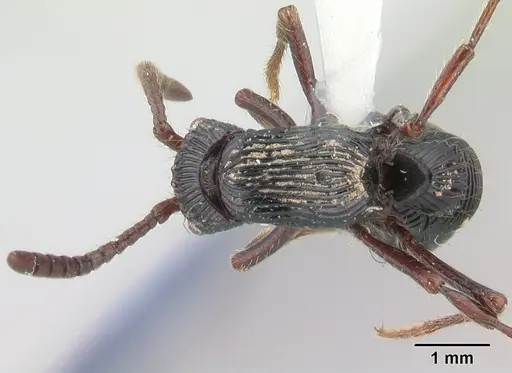
CASENT0179567
View on AntWeb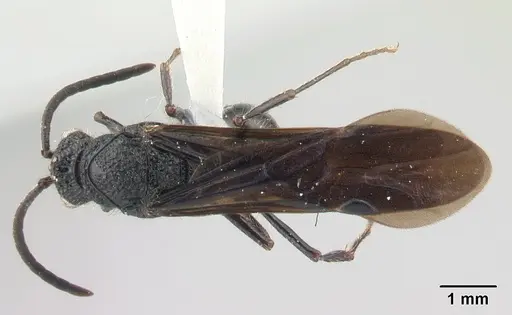
CASENT0917268
View on AntWeb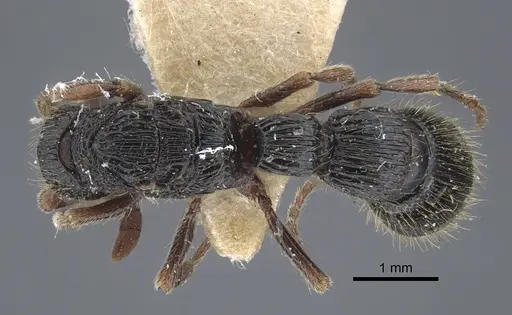
FOCOL0376
View on AntWeb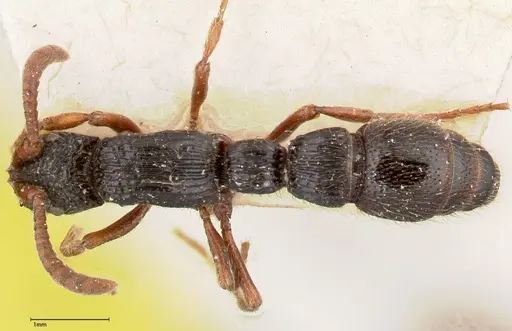
Literature
Loading...Loading products...