

Chronoxenus myops
- Scientific Name
- Chronoxenus myops
- Tribe
- Bothriomyrmecini
- Subfamily
- Dolichoderinae
- Author
- Forel, 1895
- Distribution
- Found in 2 countries
Chronoxenus myops Overview
Chronoxenus myops is an ant species of the genus Chronoxenus. It is primarily documented in 2 countries , including India, Malaysia. Detailed taxonomic data and occurrence records can be further explored via authoritative databases such as AntWeb or the Global Biodiversity Information Facility (GBIF).
Chronoxenus myops
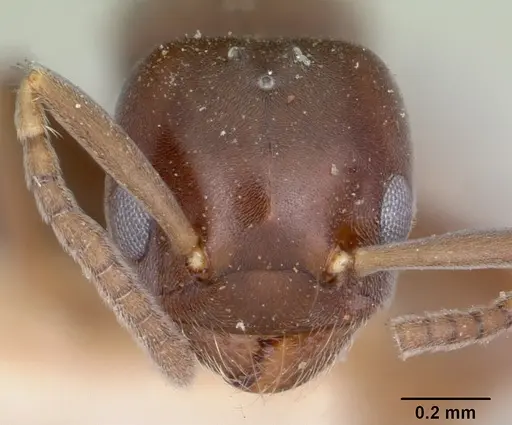
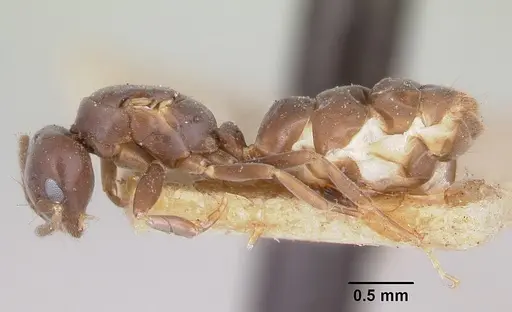
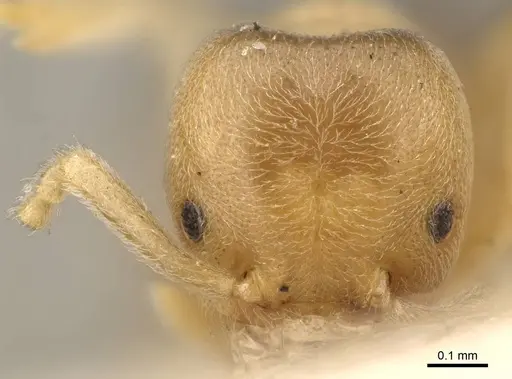
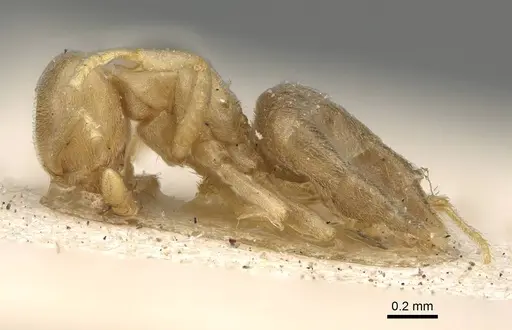
Chronoxenus myops is a small Dolichoderinae ant native to South Asia, found across India, Pakistan, China, and Myanmar. Workers measure just 1.5-2mm and are pale yellowish to brownish-yellow with a distinctly large head, very small eyes, and a dense covering of gray-white pubescence especially visible on the abdomen. Queens are larger at 3.5mm with a pale reddish-brown coloration. This species forages on the forest floor and has been recorded at elevations from 500m to 1775m in the Himalayan region. As a tropical-climate specialist, these ants are summer-active and have been specifically collected during warmer months [1][2][3].
Quick Summary
- Difficulty: Easy
- Origin & Habitat: Native to the Indomalaya region including India, Pakistan, Myanmar, and southern China. Found across multiple Indian states (Assam, Delhi, Himachal Pradesh, Jammu & Kashmir, Karnataka, Maharashtra, Meghalaya, Punjab, Sikkim, West Bengal) and Pakistan (Kashmir). Inhabits forest floors in tropical to subtropical Himalayan regions at elevations up to 1775m [1][4][5][3].
- Colony Type: Colony structure is unconfirmed. No published data on whether colonies are single-queen (monogyne) or multi-queen (polygyne).
- Size & Growth:
- Queen: 3.5mm [6]
- Worker: 1.5-2mm [1][7]
- Colony: Unknown, no published colony size data available
- Growth: Unknown, no development timing data published
- Development: Estimated 6-8 weeks based on typical Dolichoderinae development patterns at warm temperatures (No species-specific development data available. Related Dolichoderinae like Tapinoma and Linepithema typically develop in 6-8 weeks at 25-27°C.)
- Antkeeping:
- Temperature: Keep at 24-28°C. As a tropical-climate specialist from warm Himalayan foothills, they prefer warmer conditions. A gentle gradient allowing workers to self-regulate is ideal [3].
- Humidity: Moderate to high humidity (60-80%). Forest floor foragers, they likely prefer substrate that retains some moisture. Provide a moist but not waterlogged test tube setup.
- Diapause: Likely required. Collected only during summer months in the Punjab Shivalik region, suggesting they enter dormancy during cooler winter months [2][8]. Provide a cool period (15-18°C) for 2-3 months during winter.
- Nesting: Accepts standard test tube setups. Their tiny size (under 2mm) means narrow connections and excellent escape prevention are critical. Y-tong or acrylic nests with small chambers work well. Keep nest substrate lightly moist.
- Behavior: Generally docile and non-aggressive. As tiny forest floor foragers, they are not known to sting and pose no danger to keepers. Their very small size makes escape prevention essential, they can squeeze through standard mesh. Foraging occurs primarily in warmer months. Workers are pale yellow-brown and quite small, making them easy to overlook [1].
- Common Issues: escape prevention is critical due to their tiny 1.5-2mm size, use fine mesh and tight-fitting barriers, no published colony data makes it difficult to assess optimal colony structure, winter dormancy requirements are inferred but specific duration unclear, wild-caught colonies may have parasites given limited captive breeding history, slow to establish due to unknown founding behavior
Housing and Setup
Chronoxenus myops is a tiny ant at just 1.5-2mm workers, so housing must be scaled appropriately. A standard test tube setup works well, use a test tube with a small water reservoir sealed with cotton, providing a humid environment. Because of their minute size, escape prevention is critical. Even standard test tube setups can allow escapes if the cotton is not packed tightly enough. Foraging area should be simple, a small outworld with sugar water and tiny protein sources. Given their forest floor origins, they do best with a moist but not saturated nest chamber. A Y-tong (AAC) nest with narrow chambers or a small acrylic formicarium also works well. Avoid large, open spaces, these tiny ants feel more secure in tight, enclosed spaces. [1]
Feeding and Diet
In the wild, Chronoxenus myops forages on the forest floor, likely collecting honeydew from aphids and small insects. In captivity, offer sugar water or honey water as a constant energy source. For protein, provide tiny prey items appropriate to their size, fruit flies, pinhead crickets, or small mealworms cut into pieces. Given their minute size, standard cricket portions would be too large. Observe feeding behavior, if they ignore larger prey, switch to smaller options. Fresh water should always be available. Feed protein 2-3 times per week and keep sugar water constantly available. [1]
Temperature and Seasonal Care
As a tropical-climate specialist found in the Himalayan foothills, Chronoxenus myops prefers warm conditions around 24-28°C. This aligns with their summer-only activity pattern in the wild, they have been specifically collected during summer months in the Punjab Shivalik region, indicating reduced activity or dormancy during winter [2][8]. During active season (roughly March-October in the Northern Hemisphere), maintain warm temperatures. In winter (roughly November-February), provide a cool period at 15-18°C for 2-3 months to simulate natural dormancy. Do not keep them warm year-round, this can stress the colony and may prevent proper seasonal cycles. A small heating cable on one side of the nest creates a temperature gradient allowing self-regulation.
Behavior and Colony Dynamics
Chronoxenus myops is a docile, non-aggressive species that poses no stinging threat to keepers. Workers are pale yellowish-brown and remarkably small at under 2mm. They forage on the forest floor in their natural habitat, suggesting they prefer ground-level foraging rather than arboreal activity. The colony structure remains unconfirmed, we do not know whether wild colonies have single or multiple queens. Given their small size and docile nature, they are suitable for observation but may not display dramatic behaviors. The most notable aspect is their seasonal pattern: they are summer-active only in parts of their range, making them an interesting species for keepers who enjoy seasonal management. [1][2]
Frequently Asked Questions
How long does it take for Chronoxenus myops to produce first workers?
Exact development time is unknown, but based on typical Dolichoderinae patterns, expect 6-8 weeks from egg to worker at optimal warm temperatures (25-27°C). No species-specific development data has been published.
What do Chronoxenus myops eat?
They likely forage for honeydew and small insects in the wild. In captivity, offer sugar water or honey water constantly, plus tiny protein sources like fruit flies, small mealworm pieces, or pinhead crickets cut appropriately.
Are Chronoxenus myops good for beginners?
Yes, they are considered easy to keep due to their docile nature and straightforward care requirements. The main challenge is their tiny size requiring good escape prevention.
Do Chronoxenus myops need hibernation?
Likely yes. They have been collected only during summer months in the wild, suggesting they require a cool dormancy period. Provide 2-3 months at 15-18°C during winter.
What temperature is ideal for Chronoxenus myops?
Keep them at 24-28°C during the active season. As tropical-climate specialists from warm Himalayan foothills, they prefer warmer conditions with a gentle gradient for self-regulation.
How big do Chronoxenus myops colonies get?
Colony size data is not published. Based on their tiny worker size (1.5-2mm), expect moderate-sized colonies rather than massive supercolonies.
Can I keep multiple Chronoxenus myops queens together?
Unknown. No published data exists on whether this species is monogyne (single queen) or polygyne (multiple queens). Combining unrelated queens is not recommended without evidence they can coexist.
Why are my Chronoxenus myops escaping?
Their tiny 1.5-2mm size allows them to squeeze through standard barriers. Use fine mesh (at least 0.5mm or smaller), tightly packed cotton in test tubes, and ensure all connections are secure. Escape prevention is critical for this species.
When should I move Chronoxenus myops to a formicarium?
Wait until the colony reaches at least 20-30 workers. Their tiny size means they do well in test tube setups longer than larger species. A small acrylic nest or Y-tong works once they outgrow the test tube.
References

This caresheet is licensed under CC BY-SA 4.0 .
CASENT0103286
View on AntWeb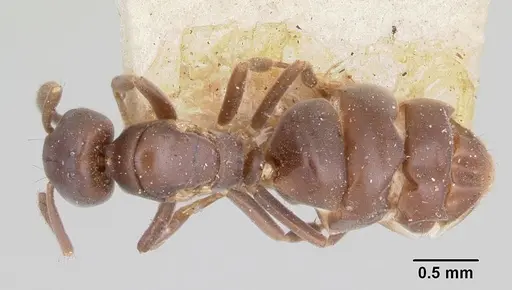
CASENT0903027
View on AntWeb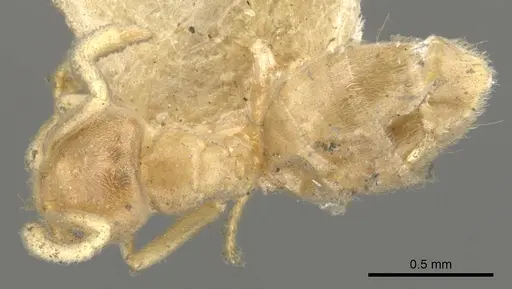
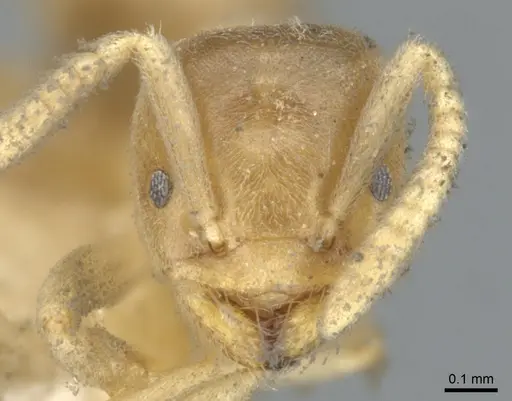
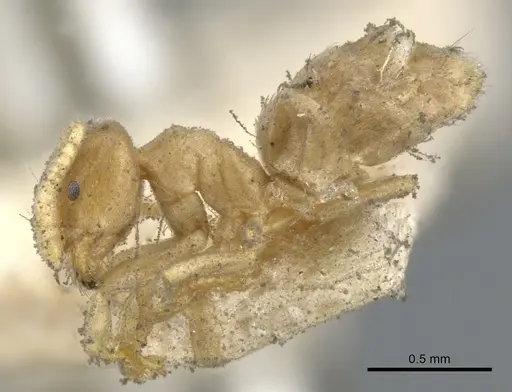
CASENT0907616
View on AntWeb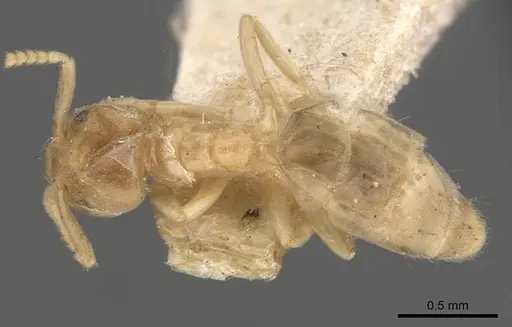
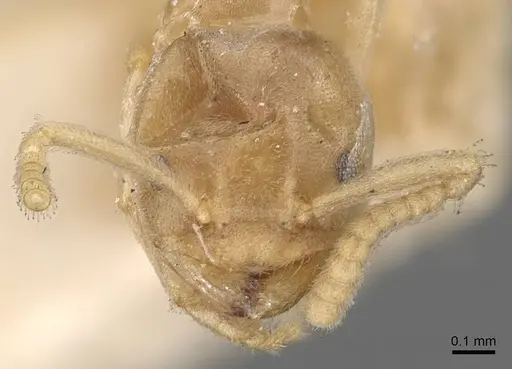
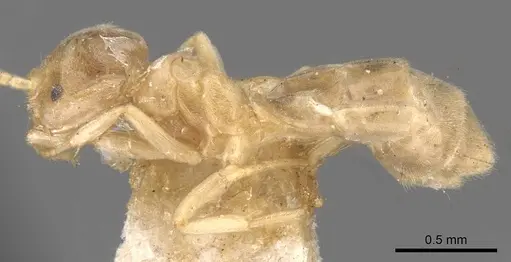
CASENT0909576
View on AntWeb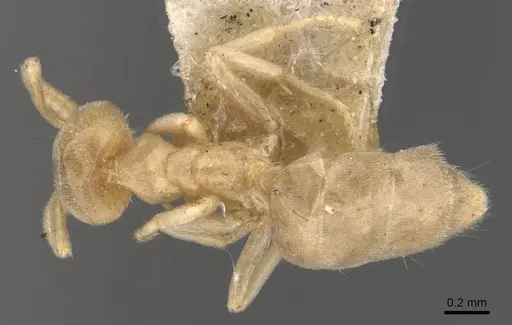
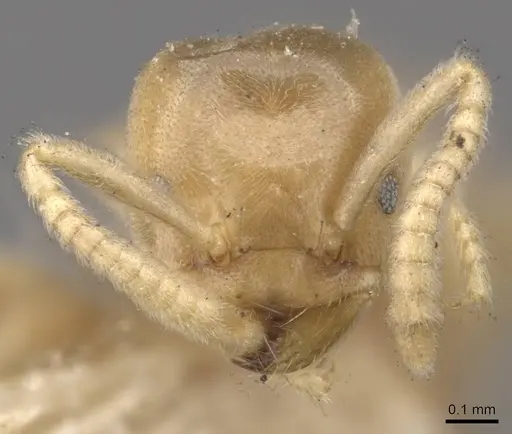
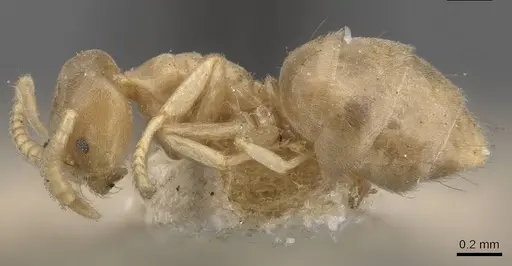
CASENT0922441
View on AntWeb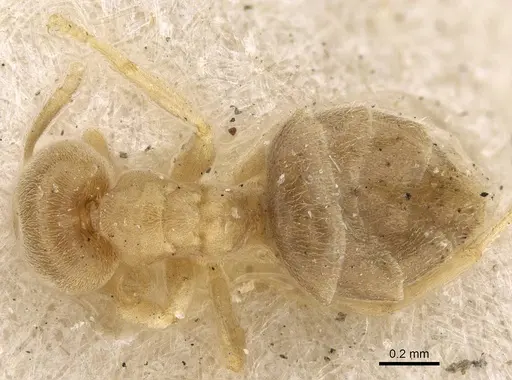
CASENT0923584
View on AntWeb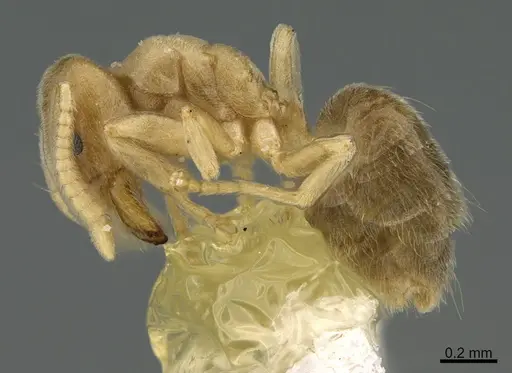
Literature
Loading...Loading products...