

Chelaner decuria
- Scientific Name
- Chelaner decuria
- Tribe
- Solenopsidini
- Subfamily
- Myrmicinae
- Author
- Heterick, 2001
- Distribution
- Found in 1 countries
Chelaner decuria Overview
Chelaner decuria is an ant species of the genus Chelaner. It is primarily documented in 1 countries , including Australia. Detailed taxonomic data and occurrence records can be further explored via authoritative databases such as AntWeb or the Global Biodiversity Information Facility (GBIF).
Chelaner decuria
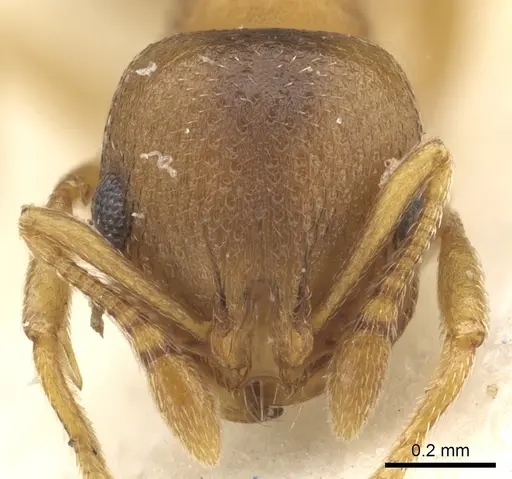
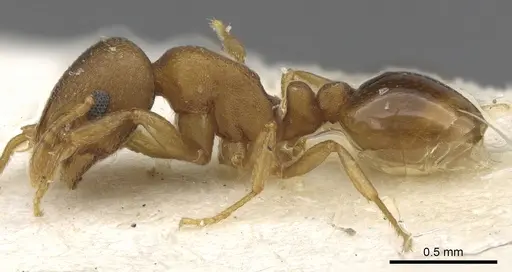
Chelaner decuria is a tiny Australian ant measuring just 1.4-1.8mm in total length, making it one of the smaller ant species you'll encounter. Workers are light brown with a darker head and gaster, while their legs are a tawny yellow. This species is remarkable because it is the only Australian Chelaner (and formerly Monomorium) with 10-segmented antennae, all its relatives have 12 segments [1][2]. The species was originally described as Chelaner decuria in 2001 by Heterick and later moved to the genus Chelaner in 2019 [1].
This ant is found only in the south-west corner of Western Australia, where it occupies habitats ranging from wet sclerophyll forest to coastal Banksia and Dryandra scrubland [3]. Despite its limited distribution, it is the most common member of its species group in that region. Workers forage nocturnally and move very slowly across the ground surface, making them easy to overlook. Their nest entrance is barely larger than a single worker, with no visible excavated soil around the opening [3].
Quick Summary
- Difficulty: Easy
- Origin & Habitat: South-west Western Australia, found in wet sclerophyll forest, coastal Banksia and Dryandra scrubland, woodlands, and urban parkland areas including Perth metropolitan region [3]
- Colony Type: Colony structure is unconfirmed, likely single-queen based on typical genus patterns
- Founding: Claustral
- Size & Growth:
- Queen: Undescribed, estimated 4-5mm based on related species in the falcatus group
- Worker: 1.41-1.83mm total length, head 0.56-0.74mm, head width 0.52-0.72mm [3]
- Colony: Unknown, likely under 500 workers based on similar small Myrmicinae
- Growth: Moderate, estimated based on small body size
- Development: Estimated 6-8 weeks at optimal temperature based on typical Monomorium development patterns (Development time is estimated, not directly studied for this species)
- Antkeeping:
- Temperature: Keep at room temperature around 20-24°C. Western Australia has a temperate to Mediterranean climate, so they tolerate moderate temperatures. A slight gradient is beneficial.
- Humidity: Moderate humidity around 50-60%. Their natural habitat includes wet sclerophyll forest, so they prefer some moisture but not saturated conditions. Allow the nest to dry slightly between waterings.
- Diapause: Unknown, Western Australia species may experience cooler winter periods. Consider a slight cool period (15-18°C) for 2-3 months during winter if colony shows reduced activity.
- Nesting: Use test tubes or small acrylic nests. In the wild they nest in soil with a tiny entrance hole. They prefer tight chambers scaled to their very small size. A small Y-tong or plaster nest works well.
- Behavior: Workers are nocturnal foragers that move very slowly across the ground surface [3]. They are not aggressive and likely have a mild sting, though their small size makes it barely noticeable. Escape prevention is critical, at only 1.4-1.8mm, they can squeeze through standard mesh barriers. Use fine mesh or fluon barriers. They are not known to be escape artists in terms of climbing, but their tiny size means they will find any gap.
- Common Issues: escape prevention is critical due to their very small size, use fine mesh barriers, slow growth may frustrate beginners, colonies develop gradually over months, nocturnal activity means you'll see most activity in evening and morning hours, wild-caught colonies may have parasites, quarantine and observe new colonies
Housing and Nest Setup
Chelaner decuria is a tiny ant that requires appropriately scaled housing. Test tubes work well for founding colonies, use a small water reservoir that won't flood the colony. The nest entrance in the wild is barely larger than a worker, so they do well in tight, small chambers. For established colonies, a small acrylic nest (Y-tong style) or plaster nest with narrow galleries works best. Avoid large, open spaces that would overwhelm such small ants. Because of their nocturnal foraging habit, you may not see much activity during daylight hours, this is normal. Place the nest in a quiet location with stable temperatures. [3]
Feeding and Diet
Like other Monomorium and Chelaner species, these ants are likely omnivorous with a preference for small insects and sugar sources. Offer small prey items like fruit flies, pinhead crickets, or small mealworms. They accept sugar water or honey as an energy source. Because workers are so small, prey items should be appropriately sized, avoid large insects that they cannot tackle. Feed protein 2-3 times per week and provide constant access to sugar water. Remove uneaten prey after 24 hours to prevent mold.
Temperature and Seasonal Care
Keep your colony at room temperature, ideally around 20-24°C. This species comes from the south-west of Western Australia, which has a temperate Mediterranean climate with mild winters. They can tolerate temperatures slightly outside this range but avoid extremes. During winter months (roughly June-August in the southern hemisphere), you may notice reduced activity, this is normal. If your colony slows down significantly, you can provide a cooler period around 15-18°C for 2-3 months, but this is not strictly required. Monitor your colony's behavior and adjust accordingly. [3]
Behavior and Observation
These ants are fascinating to watch because of their deliberate, slow movement. Workers forage primarily at night, so peak activity occurs in the evening and early morning hours. The nest entrance is remarkably small, just a tiny hole barely larger than a worker, with no visible mound or excavated soil around it. This makes finding their nests in the wild quite challenging. In captivity, they will maintain this quiet, methodical behavior. They are not aggressive and will likely retreat rather than engage. Their small size means you need to observe closely to appreciate their details, a magnifying glass or macro lens can help you see the distinctive 10-segmented antennae. [3]
Colony Development
Starting a colony of Chelaner decuria requires patience. The queen will seal herself in a chamber (claustral founding) and survive on stored fat reserves while raising the first brood. First workers, called nanitics, will be smaller than mature workers but should already show the species' characteristic slow movement. Growth is moderate, expect several months before you see significant colony growth. The colony will likely remain small, probably under a few hundred workers. Regular feeding and stable conditions will support healthy development. Avoid disturbing the queen during the founding stage.
Frequently Asked Questions
How long does it take for Chelaner decuria to produce first workers?
Expect first workers (nanitics) to emerge around 6-8 weeks after the queen lays eggs, assuming temperatures around 22-24°C. This is an estimate based on similar Monomorium species, as the exact development time has not been documented for this species.
What do Chelaner decuria ants eat?
They are omnivorous. Offer small insects like fruit flies, pinhead crickets, or small mealworms as protein. Provide sugar water or honey constantly for energy. Because workers are tiny, prey items should be small.
Can I keep Chelaner decuria in a test tube?
Yes, test tubes work well for founding colonies. Use a small water reservoir and ensure the chamber is appropriately sized for their tiny body size. Transfer to a small formicarium once the colony reaches 20-30 workers.
Are Chelaner decuria good for beginners?
Yes, they are considered easy to keep. They are forgiving of minor temperature fluctuations and don't require extreme humidity. Their main requirements are small-scale housing and escape prevention. Their slow movement and nocturnal habit may be less exciting than some species, but they are rewarding to observe.
How big do Chelaner decuria colonies get?
Colony size is not well documented, but based on similar small Myrmicinae, colonies likely reach several hundred workers at maximum. They remain a small, inconspicuous species even at maturity.
Do Chelaner decuria need hibernation?
Not strictly required, but they may benefit from a slight cool period during winter months. Reduce temperatures to around 15-18°C for 2-3 months if the colony shows reduced activity. This mimics their natural seasonal conditions in Western Australia.
Why are my Chelaner decuria not moving much?
This is normal behavior, they are naturally slow-moving ants that forage at night. You may simply be observing them during their inactive daytime period. Check in the evening or morning for peak activity. Also ensure temperatures are warm enough (above 18°C) to encourage activity.
How do I identify Chelaner decuria?
They are tiny (1.4-1.8mm) light brown ants with a darker head and gaster. The key identifying feature is their 10-segmented antennae, no other Australian Chelaner or Monomorium has this trait. Their slow, deliberate movement is also characteristic.
Where is Chelaner decuria found in the wild?
Only in the south-west corner of Western Australia, from the Perth metropolitan area north to Geraldton. They inhabit woodlands, wet sclerophyll forest, and coastal scrubland. They are the most common member of their species group in that region despite their limited range.
References

This caresheet is licensed under CC BY-SA 4.0 .
CASENT0902301
View on AntWeb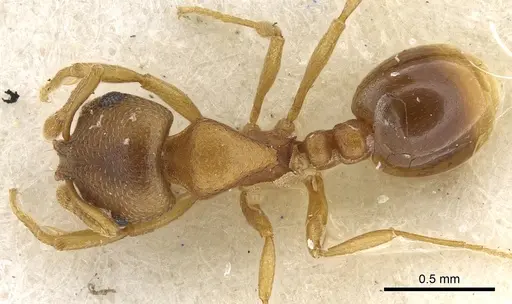
Literature
Loading...Loading products...