

Cephalotes simillimus
- Scientific Name
- Cephalotes simillimus
- Tribe
- Attini
- Subfamily
- Myrmicinae
- Author
- Kempf, 1951
- Distribution
- Found in 4 countries
Cephalotes simillimus Overview
Cephalotes simillimus is an ant species of the genus Cephalotes. It is primarily documented in 4 countries , including Brazil, Colombia, French Guiana. Detailed taxonomic data and occurrence records can be further explored via authoritative databases such as AntWeb or the Global Biodiversity Information Facility (GBIF).
Cephalotes simillimus
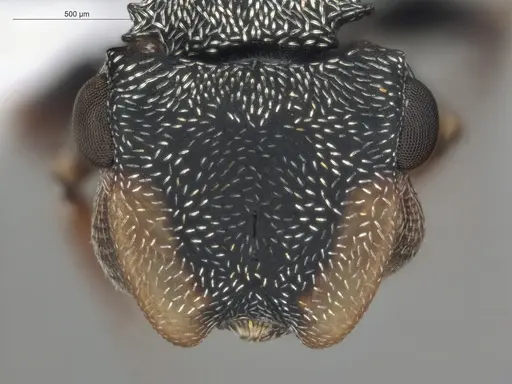
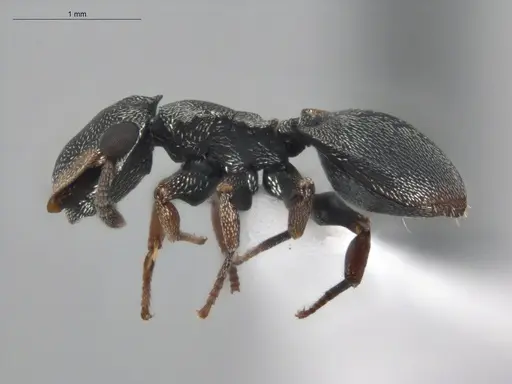
Cephalotes simillimus is a small to medium-sized ant belonging to the Myrmicinae subfamily and the Attini tribe. Workers measure 3.7-4.2mm while the larger soldiers reach 5.0-6.5mm. They are black ants with ferruginous (rusty brown) markings on their antennae, leg tips, and abdominal tip. Their most distinctive feature is the pair of propodeal spines on the rear of the thorax that expand downward into thin lamellae (flat plates), which helps distinguish them from similar species like C. minutus [1]. This species belongs to the pusillus species group and is found throughout the Amazon region of South America, from Bolivia and Brazil through Colombia and Peru to Guyana and French Guiana [2][1].
These ants are arboreal nesters, typically found in dead twigs and live branches in lowland rainforests [1]. They are part of the turtle ant genus Cephalotes, known for their flattened, shield-like soldiers and their ability to glide from trees using their specially adapted legs. Nothing is known about their specific colony structure, founding behavior, or reproduction in the wild, making them a species where captive observation could contribute valuable knowledge to science.
Quick Summary
- Difficulty: Unknown, no captive husbandry data exists
- Origin & Habitat: Amazon region of South America, found in lowland rainforests in Colombia, Peru, Bolivia, Brazil, Guyana, French Guiana, Ecuador, and Suriname at altitudes of 60-330m [2][1]. They nest in dead twigs and live branches in primary Amazonian forest [1].
- Colony Type: Unknown, colony structure has not been documented. Related Cephalotes species are typically monogyne (single queen) but this needs confirmation for C. simillimus.
- Size & Growth:
- Queen: Not described in original literature, estimated 5-6mm based on soldier size
- Worker: 3.7-4.2mm
- Colony: Unknown, likely under 500 workers based on related species
- Growth: Unknown
- Development: Unknown, estimated 6-10 weeks based on related Attini species (No direct development data exists for this species. Estimates based on typical Attini development patterns at tropical temperatures.)
- Antkeeping:
- Temperature: Keep at 24-28°C, these are lowland tropical ants from the Amazon [1]. A gentle gradient allowing warmer and cooler areas is recommended.
- Humidity: High humidity required, Amazon rainforest species. Keep nest substrate consistently moist but not waterlogged. Aim for 70-80% relative humidity with good ventilation to prevent mold.
- Diapause: No, these are tropical ants from the Amazon basin with no cold adaptation. They do not require hibernation.
- Nesting: Arboreal nester, in nature they nest in dead twigs and live branches [1]. In captivity, they do well in acrylic nests or Y-tong nests with narrow chambers scaled to their worker size. Provide twigs or small wooden structures as enrichment. Avoid test tube setups as they prefer above-ground nesting in wood-based media.
- Behavior: These ants are arboreal and relatively docile. They are not known to be aggressive and lack a functional stinger. Their primary defense is the soldier caste with its enlarged head. They are slow-moving and may rely on chemical defenses or retreat rather than attack. Escape risk is moderate, they are small but not particularly good climbers. Standard barrier methods should suffice. They are primarily herbivorous/nectarivorous based on gut microbiome studies showing they obtain nutrients from a nitrogen-recycling gut symbiosis [3].
- Common Issues: no captive husbandry data exists, this is an essentially unstudied species in captivity, arboreal nesting requirements may be difficult to replicate in standard formicaria, slow growth and small colony sizes may frustrate keepers expecting rapid development, high humidity requirements can lead to mold problems if ventilation is inadequate, wild-caught colonies may have parasites or fail to adapt to captive conditions
Natural History and Distribution
Cephalotes simillimus is found throughout the Amazon basin in South America, with confirmed records from Bolivia, Brazil, Colombia, Ecuador, French Guiana, Guyana, Peru, and Suriname [2][1]. They inhabit lowland rainforests at elevations between 60 and 330 meters above sea level [2]. Specimens have been collected primarily through canopy fogging in primary Amazonian rainforest, indicating they are arboreal species that nest high in the forest canopy [1]. They have also been found in forest remnants in the Brazilian Atlantic Forest and xeric shrublands of the Cerrado, showing some adaptability to different forest types [1]. In Colombia, they have been recorded in the departments of Amazonas, Caquetá, Putumayo, and Vaupés [4]. The species was originally described from Kartabo, Guyana in 1920 by W.M. Wheeler [5]. Their distribution spans less than 1000km geographically, making them a relatively localized species within the broader Amazon region [6].
Identification and Distinguishing Features
Cephalotes simillimus belongs to the pusillus species group within the genus Cephalotes [1]. Workers can be identified by their eyes being broader than one-third of the head length, and their propodeal spines (the spines on the rear of the thorax) that expand ventrally into lamellae, thin, flat plates that extend downward. This latter feature distinguishes them from the closely related species C. minutus, whose propodeal spines typically do not expand into lamellae [1]. Workers are black with ferruginous (rusty brown) markings on the apex of mandibles, antennae, tips of femora, tibiae, tarsi, apical gastral segments, and epinotal and petiolar spines. The frontal carinae are yellowish-brown. Their body is covered with silvery, appressed, scale-like hairs. Soldiers are larger (5.0-6.5mm) with an enlarged head and the same distinctive propodeal lamellae.
Nesting Behavior
Based on limited field observations, Cephalotes simillimus appears to be an arboreal nester, similar to other Cephalotes species. They may nest in dead twigs and live branches in the forest canopy [1]. This arboreal lifestyle means they are adapted to drier, more ventilated conditions than ground-nesting ants. In captivity, this suggests they would do well in nests that provide some air circulation rather than completely sealed test tube setups. Acrylic nests or Y-tong formicaria with wooden elements would be more appropriate. The presence of soldiers with their enlarged heads may help with colony defense in these narrow twig nests. Providing small twigs or wooden structures as enrichment would help replicate their natural nesting environment. The altitudinal range of 60-330m indicates they are a lowland species adapted to warm, humid tropical conditions [2].
Diet and Feeding
Research on Cephalotes gut microbiomes provides important clues about their diet. A 2018 study found that turtle ants like C. simillimus obtain essential nutrients from a conserved nitrogen-recycling gut microbiome [3]. This suggests they have a specialized herbivorous diet, likely feeding on plant-derived resources like nectar, honeydew, or fungal materials rather than hunting large prey. Another study found that their crop microbial communities are predominantly made up of Rhizobiales bacteria (74.05%), which is unusual and may be related to their nitrogen-recycling strategy [7]. This means in captivity, they should be offered sugar sources (honey water, sugar water) regularly, along with small protein sources like fruit flies or tiny insects. They are not likely to accept large prey items. The nitrogen-recycling gut symbiosis is a complex adaptation, so providing a varied diet with some protein is still important for colony health.
Keeping This Species in Captivity
Cephalotes simillimus is essentially an unstudied species in captivity, no established husbandry protocols exist. This makes them a species for experienced keepers who enjoy experimentation and observation. Start with a small colony or queen if available. Housing should be arboreal-focused: acrylic nests or Y-tong formicaria with narrow chambers work better than test tubes. Maintain temperatures of 24-28°C and humidity around 70-80%. Provide a sugar source constantly and offer small protein prey items occasionally. Because they are arboreal, ensure good ventilation to prevent mold while maintaining humidity. Watch for colony growth patterns and adjust conditions accordingly. This species represents an opportunity for antkeepers to contribute original observations to science, document your colony's behavior, development, and any unusual traits. If your colony thrives, you may be the first to document details of their biology that have never been observed.
Frequently Asked Questions
How long does it take for Cephalotes simillimus to develop from egg to worker?
This is unknown, no captive breeding data exists for this species. Based on related Attini ants in the genus Cephalotes, estimate 6-10 weeks at tropical temperatures (24-28°C). This is purely an educated guess based on genus patterns.
What do Cephalotes simillimus ants eat?
They appear to be herbivorous/nectarivorous with a specialized nitrogen-recycling gut microbiome. Offer sugar water or honey water as a constant food source. Small protein sources like fruit flies may be accepted occasionally. They are not active predators.
What temperature do Cephalotes simillimus need?
Keep them warm at 24-28°C. They are lowland Amazon rainforest ants adapted to tropical conditions year-round. A temperature gradient allowing them to choose their preferred warmth is ideal.
Are Cephalotes simillimus good for beginners?
No, this is not a recommended species for beginners. Essentially no captive husbandry information exists, and they have specific arboreal nesting requirements that differ from common ant species. They are best suited for experienced keepers interested in contributing to scientific knowledge.
How big do Cephalotes simillimus colonies get?
Colony size is unknown for this species. Based on similar Cephalotes species, they likely reach a few hundred workers at most. They are not known for producing massive colonies.
Do Cephalotes simillimus need hibernation?
No, they are tropical Amazon ants with no cold adaptation. They do not require hibernation or winter cooling. Keep them at warm temperatures year-round.
What type of nest is best for Cephalotes simillimus?
They are arboreal nesters that naturally live in dead twigs and branches. In captivity, use acrylic nests or Y-tong formicaria with wooden elements rather than test tubes. Provide good ventilation while maintaining humidity.
Where is Cephalotes simillimus found in the wild?
They are found throughout the Amazon region of South America: Bolivia, Brazil, Colombia, Ecuador, French Guiana, Guyana, Peru, and Suriname. They live in lowland rainforests at 60-330m elevation.
Can I keep multiple Cephalotes simillimus queens together?
Unknown, colony structure has not been documented for this species. Related Cephalotes are typically single-queen (monogyne) colonies, but this needs confirmation for C. simillimus. Do not attempt combining unrelated queens without evidence they can coexist.
References

This caresheet is licensed under CC BY-SA 4.0 .
ECOFOG-BUG-0494-03
View on AntWeb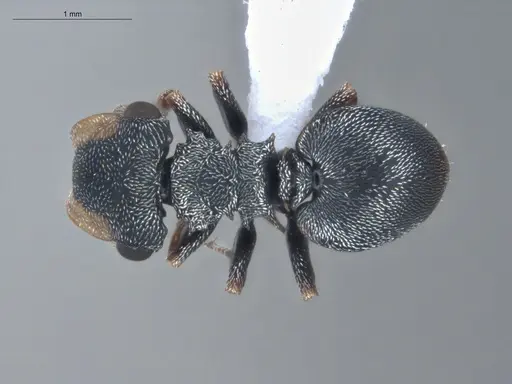
Literature
Loading...Loading products...