

Cephalotes peruviensis
- Scientific Name
- Cephalotes peruviensis
- Tribe
- Attini
- Subfamily
- Myrmicinae
- Author
- De Andrade, 1999
- Distribution
- Found in 1 countries
Cephalotes peruviensis Overview
Cephalotes peruviensis is an ant species of the genus Cephalotes. It is primarily documented in 1 countries , including Ecuador. Detailed taxonomic data and occurrence records can be further explored via authoritative databases such as AntWeb or the Global Biodiversity Information Facility (GBIF).
Cephalotes peruviensis
Cephalotes peruviensis is a tree-dwelling ant native to the Amazon basin and surrounding regions of Peru and Costa Rica. These ants belong to the Myrmicinae subfamily and are part of the crenaticeps species group within the coffeae clade. Workers are built with a distinctive flattened head that they can use to block nest entrances, giving them their common name of 'turtle ants' due to this head-shield adaptation. They are entirely arboreal, nesting in hollow twigs, branches, and tree cavities in the forest canopy.
Quick Summary
- Difficulty: Medium
- Origin & Habitat: Found in Peru (type locality) and Costa Rica, living in tropical forest canopies [1][2][3]. They are arboreal ants that nest in hollow wood high above the forest floor.
- Colony Type: Likely single-queen colonies based on typical Cephalotes behavior. The crenaticeps group shows typical colony structure for the genus.
- Colony: Monogyne
- Founding: Claustral
- Size & Growth:
- Queen: Estimated 8-10mm based on genus patterns for crenaticeps group members
- Worker: Estimated 5-7mm based on genus typical size range
- Colony: Estimated several hundred workers based on genus patterns, Cephalotes colonies rarely exceed a few thousand individuals
- Growth: Slow, Cephalotes are known for slow colony development compared to many Myrmicinae
- Development: Estimated 8-12 weeks based on typical Cephalotes development at tropical temperatures (around 24-28°C) (Development is slow, expect patience during the founding phase. First workers (nanitics) will be smaller than mature workers.)
- Antkeeping:
- Temperature: Keep at 24-28°C. As a tropical arboreal species, they need warm, stable conditions. A heating cable on one side of the nest creates a suitable gradient.
- Humidity: Moderate to high humidity (60-80%). Being arboreal, they prefer damp conditions but not waterlogged nests. Provide a water tube for drinking water.
- Diapause: No, as a tropical species from Peru and Costa Rica, they do not require hibernation. Keep temperatures consistent year-round.
- Nesting: Arboreal nesters need hollow twigs, branches, or similar structures. In captivity, they do well in Y-tong (AAC) nests, plaster nests with narrow chambers, or naturalistic setups with wood pieces. They prefer tight-fitting chambers scaled to their size.
- Behavior: Generally peaceful and non-aggressive. They rely on their morphological defenses (flattened head that blocks nest entrances) rather than stinging. Workers are slow-moving and foragers are deliberate. They are skilled climbers and may attempt escape, though not as prolific as some smaller species. They are primarily nectivorous, feeding on honeydew and nectar in the canopy.
- Common Issues: slow colony growth can frustrate beginners who expect rapid development, arboreal nesting means they need vertical space and appropriate nest structures, horizontal test tubes work poorly, they are sensitive to temperature drops, sudden cooling can stress or kill colonies, wild-caught colonies may have parasites or be already stressed from collection, they need a constant water source, dehydration kills them quickly
Housing and Nest Setup
Cephalotes peruviensis requires arboreal-style housing. These ants naturally nest in hollow twigs and branches in tree canopies, so your setup should mimic this. Y-tong (acrylic) nests work well, or you can create a naturalistic setup with hollow wood pieces or bamboo sections. The chambers should be appropriately sized, tight enough that the ants feel secure but with enough space for the colony to move brood around. Because they are arboreal, they do better in nests that allow climbing rather than horizontal-only setups. A test tube setup can work for founding colonies, but plan to move them to a more appropriate arboreal-style nest once they have 20-30 workers. The outworld should include vertical elements like twigs or cork bark to allow natural climbing behavior.
Feeding and Diet
In the wild, Cephalotes primarily feed on honeydew from aphids and scale insects, plus nectar from extrafloral nectaries. They are not aggressive predators. In captivity, offer sugar water or honey water (changed every 2-3 days), and supplement with small protein sources like fruit flies, small crickets, or mealworm pieces. Feed protein once or twice weekly. They typically ignore larger prey items. Fresh fruit (especially citrus or melon) is often accepted. Always provide a clean water source, a small test tube with a cotton plug works well.
Temperature and Humidity
As a tropical species from Peru and Costa Rica, Cephalotes peruviensis needs warm, humid conditions. Keep the nest area at 24-28°C. A heating cable on one side of the nest creates a gentle gradient that allows the ants to choose their preferred temperature. Avoid temperatures below 22°C or above 30°C. Humidity should be moderate to high (60-80%). Mist the nest occasionally, but allow it to dry partially between mistings, they need damp conditions, not standing water. A water tube provides drinking water and helps maintain humidity. Keep them away from air conditioning vents or drafty windows.
Colony Development and Growth
Cephalotes colonies grow slowly, this is normal for the genus. A newly mated queen may take 2-3 months to produce her first workers (nanitics), and these first workers will be smaller than workers produced later. Do not disturb the queen during founding, she is sealed in her chamber and will not forage. Once workers emerge, they will take over foraging and brood care. Colony growth from there is gradual: expect 6-12 months to reach 50 workers, and several years to reach several hundred. The slow growth is a feature of the genus, not a sign of problems. Resist the urge to overfeed or disturb the colony, this causes more harm than good.
Behavior and Defense
Cephalotes are not aggressive ants. Their primary defense is their unusual morphology: workers can block nest entrances with their flattened heads, creating a living shield against predators. They move slowly and deliberately, and will retreat rather than engage threats. They do not have a functional stinger and pose no danger to keepers. In captivity, they are fascinating to watch as they methodically explore their environment and tend to their brood. They are good climbers and may explore beyond the nest area, so use Fluon or other barriers on the rim of the outworld to prevent escapes.
Frequently Asked Questions
How long does it take for Cephalotes peruviensis to produce first workers?
Expect 8-12 weeks from founding to first workers emerging. This is typical for Cephalotes, they are slow developers compared to many ant species. The queen will seal herself in and not emerge until her first nanitics (small first workers) are ready.
What do Cephalotes peruviensis eat?
They are primarily nectivorous, feeding on sugar sources. Offer honey water or sugar water, and supplement with small protein like fruit flies or cricket pieces. They typically ignore large prey. Change sugar water every 2-3 days to prevent mold.
Can I keep Cephalotes peruviensis in a test tube?
Test tubes work for founding colonies, but these arboreal ants do better in Y-tong nests, plaster nests, or naturalistic setups with vertical elements. Move them to a proper arboreal-style nest once the colony reaches 20-30 workers.
What temperature do Cephalotes peruviensis need?
Keep them at 24-28°C. As a tropical species, they need warmth year-round. A heating cable on one side of the nest creates a suitable gradient. Avoid temperatures below 22°C.
How big do Cephalotes peruviensis colonies get?
Based on genus patterns, colonies likely reach several hundred workers over several years. They are slow-growing and never reach the massive colony sizes of some Myrmicinae.
Do they need hibernation?
No. As a tropical species from Peru and Costa Rica, they do not require hibernation. Keep temperatures consistent year-round at 24-28°C.
Why is my Cephalotes colony growing so slowly?
This is normal, Cephalotes are inherently slow-growing. A newly founded colony may take 2-3 months just to produce first workers, and years to reach full size. Patience is key with this genus.
Are Cephalotes peruviensis good for beginners?
They are intermediate difficulty. The slow growth and specific arboreal nesting requirements make them more challenging than common species like Lasius or Tetramorium, but they are rewarding for keepers willing to meet their needs.
How often should I feed Cephalotes peruviensis?
Provide sugar water constantly, check every 2-3 days and replace before it spoils. Offer protein (fruit flies, cricket pieces) once or twice weekly. Remove uneaten prey after 24 hours.
Can I keep multiple Cephalotes peruviensis queens together?
Not recommended. Based on typical Cephalotes behavior, they are likely monogyne (single-queen) species. Combining unrelated queens has not been studied for this species and risks fatal aggression.
What humidity level do they need?
Aim for 60-80% humidity. Mist occasionally and provide a water tube. They need damp conditions but not waterlogging. The substrate or nest material should feel moist but not soggy.
References

This caresheet is licensed under CC BY-SA 4.0 .
INBIOCRI002281725
View on AntWeb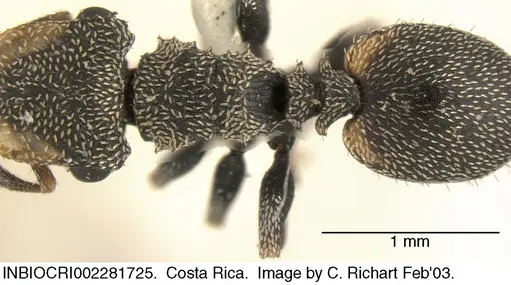
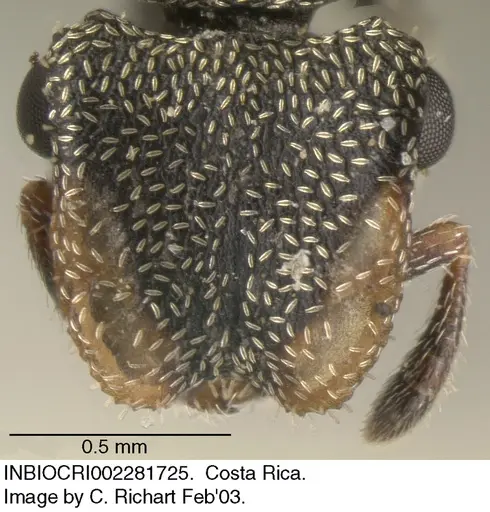
Literature
Loading...Loading products...