

Cephalotes inaequalis
- Scientific Name
- Cephalotes inaequalis
- Tribe
- Attini
- Subfamily
- Myrmicinae
- Author
- Mann, 1916
- Distribution
- Found in 2 countries
Cephalotes inaequalis Overview
Cephalotes inaequalis is an ant species of the genus Cephalotes. It is primarily documented in 2 countries , including Brazil, Guyana. Detailed taxonomic data and occurrence records can be further explored via authoritative databases such as AntWeb or the Global Biodiversity Information Facility (GBIF).
Cephalotes inaequalis
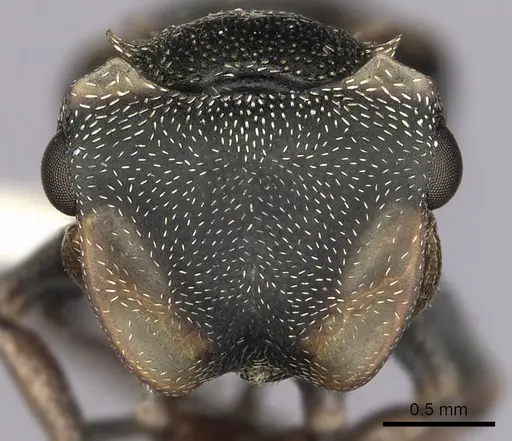
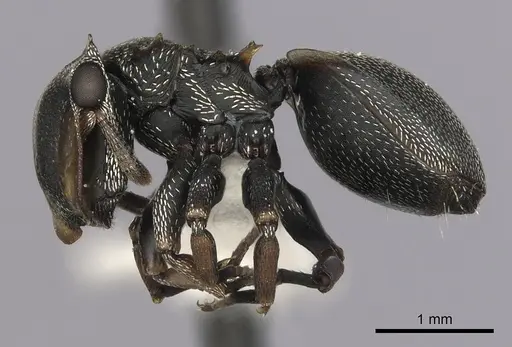
Cephalotes inaequalis is a striking turtle ant species native to the Amazon region of South America, found in Brazil, Colombia, and Guyana. Workers measure 4.9-5.7mm and are predominantly black with distinctive yellowish-brown to orange translucent markings on their frontal carinae, occipital lamellae, thoracic spines, and the lamellate border of the gaster. The soldier caste is notably larger at 7.1-8.0mm with a broader head and more pronounced spines, while the queen reaches an impressive 12.2mm. This species belongs to the laminatus clade and is characterized by dense pilosity and short, triangular, flattened spines on the pronotum and propodeum [1].
This species is one of the lesser-known Cephalotes, with biological details scarce in scientific literature. They inhabit lowland Amazon forest areas at elevations between 60-150m [1]. Like other turtle ants, they likely nest in hollow twigs, branches, or decaying wood in the forest canopy or understory, though specific nesting habits for this species remain unconfirmed.
Quick Summary
- Difficulty: Unknown, likely Expert
- Origin & Habitat: Amazon region of Brazil, Colombia, and Guyana, found in scrub forest and lowland tropical rainforest at 60-150m elevation [2][1][3]
- Colony Type: Colony structure unconfirmed, likely monogyne (single queen) based on typical Cephalotes patterns
- Colony: Monogyne
- Founding: Claustral
- Size & Growth:
- Queen: 12.18mm
- Worker: 4.9-5.7mm
- Colony: Unknown, likely small to moderate based on genus patterns
- Growth: Unknown
- Development: Unknown, estimated 6-10 weeks based on related Cephalotes species (No specific development data available for this species)
- Antkeeping:
- Temperature: Keep warm at 24-28°C based on their lowland tropical Amazon origin, monitor colony activity and adjust accordingly
- Humidity: Maintain high humidity (70-85%) similar to their rainforest habitat, keep nest substrate consistently moist but not waterlogged
- Diapause: Unlikely, as a tropical species, they probably do not require a diapause period
- Nesting: Likely prefers nesting in wood or hollow twigs, a naturalistic setup with rotting wood pieces or a Y-tong/plaster nest with high humidity works well. They may also accept test tube setups if provided with a dark retreat area.
- Behavior: Temperament and detailed behavior are unstudied for this species. Like other Cephalotes, they are likely relatively docile with well-developed defensive soldier castes. They probably forage in the canopy and understory, collecting nectar, honeydew, and small arthropods. Escape prevention should be moderate, they are not extremely small but use fine mesh as a precaution. Their flattened body shape allows them to retreat into tight spaces.
- Common Issues: very limited biological data makes captive care uncertain, much is inferred from genus patterns, high humidity requirements can lead to mold issues if ventilation is inadequate, tropical species may be sensitive to temperature drops below 22°C, wild-caught colonies may have parasites or diseases that are difficult to treat, slow colony growth may lead to keeper impatience and overfeeding
Nest Preferences
The natural nesting habits of Cephalotes inaequalis remain undocumented, but the genus typically nests in pre-existing cavities in decaying wood, hollow twigs, and branches in the forest environment. In captivity, they likely prefer naturalistic setups with access to rotting wood or cork bark, which maintains high humidity while providing appropriate cavity sizes. A Y-tong (acrylic) nest or plaster nest with chambers scaled to their size can work well. Given their Amazon origin, they require consistently high humidity, consider a water reservoir or moisture gradient in the nest. Provide a dark retreat area as they tend to avoid bright light. Test tube setups may be accepted if the colony feels secure, but monitor for drying. [3]
Feeding and Diet
Cephalotes ants are omnivorous, typically feeding on nectar, honeydew, and small arthropods. In captivity, offer sugar water or honey as a constant energy source, along with small protein sources like fruit flies, small crickets, or other tiny insects. They are not leaf-cutter ants (they belong to the tribe Attini but are not aggressive defoliators like Atta). Based on related species, they likely have a sweet tooth and will readily accept honey water or sugar solutions. Protein should be offered 2-3 times per week, with portions sized appropriately to their worker size. Remove uneaten prey after 24-48 hours to prevent mold.
Temperature and Care
As a lowland Amazon species from tropical South America, Cephalotes inaequalis requires warm temperatures in the range of 24-28°C. They are unlikely to tolerate temperatures below 22°C for extended periods. Use a heating cable or mat on one side of the nest to create a gentle temperature gradient, allowing the colony to self-regulate. Place the heating element on top of the nest to avoid drying out the substrate while providing warmth. Room temperature within this range is acceptable, if your space is cooler, targeted heating is essential. Unlike temperate species, they do not require a winter diapause period. Maintain consistent temperatures without fluctuations. [1]
Behavior and Temperament
Detailed behavioral observations for this specific species are lacking in scientific literature. However, Cephalotes ants in general are known for their distinctive flattened, shield-like body shape that allows soldiers to serve as living doorways, blocking nest entrances with their heads. The soldier caste of C. inaequalis (7.1-8.0mm) is significantly larger than workers and likely serves defensive functions. They are probably less aggressive than some ant genera and may rely more on their physical defenses. Foraging activity likely occurs in the canopy and understory layers in the wild. In captivity, provide an outworld space for foraging and ensure escape prevention is adequate, though they are not extreme escape artists like some tiny species.
Colony Founding
The founding behavior of Cephalotes inaequalis has not been directly documented. Based on typical Cephalotes patterns, the queen likely establishes her colony through claustral founding, she seals herself in a small chamber, uses stored fat reserves to survive, and raises the first brood alone without foraging. The queen is well-provisioned with stored energy (note her substantial 12.2mm size) to sustain her through the founding period. Expect a waiting period of 6-10 weeks before the first workers (nanitics) emerge, though this is estimated based on related species rather than documented for this specific ant.
Frequently Asked Questions
How long does it take for Cephalotes inaequalis to produce first workers?
The exact development timeline is unknown for this species. Based on related Cephalotes species, expect approximately 6-10 weeks from egg to first worker at optimal warm temperatures (24-28°C). This is an estimate as no specific development data exists for C. inaequalis.
What do Cephalotes inaequalis ants eat?
They are omnivorous like other Cephalotes species. Offer sugar water or honey as a constant energy source, and supplement with small protein sources such as fruit flies, small crickets, or other tiny insects 2-3 times per week.
Can I keep multiple Cephalotes inaequalis queens together?
The colony structure of this species is unconfirmed. Based on typical Cephalotes patterns, they are likely monogyne (single queen). Combining unrelated queens is not recommended without evidence that they can found colonies pleometrotically (multiple queens starting together).
What temperature do Cephalotes inaequalis need?
Keep them warm at 24-28°C. As a lowland Amazon species, they require tropical temperatures and are unlikely to tolerate cool conditions below 22°C. Use targeted heating if room temperature is below this range.
Are Cephalotes inaequalis good for beginners?
This species is not recommended for beginners. Very little is known about their specific care requirements in captivity, and they have specialized humidity and temperature needs as an Amazon species. They are best suited for experienced antkeepers who can provide stable tropical conditions.
Do Cephalotes inaequalis need hibernation?
No, they do not require hibernation. As a tropical Amazon species from Brazil, Colombia, and Guyana, they are adapted to year-round warm conditions and do not experience cold-induced dormancy.
How big do Cephalotes inaequalis colonies get?
The maximum colony size is unknown for this species. Based on related Cephalotes species, colonies likely reach several hundred workers at maximum. They are not known for forming supercolonies.
What humidity do Cephalotes inaequalis require?
Maintain high humidity at 70-85% to simulate their rainforest habitat. Keep the nest substrate consistently moist but not waterlogged. A humidity gradient allows the colony to self-regulate.
When should I move Cephalotes inaequalis to a formicarium?
Wait until the colony has established with at least 20-30 workers and is actively foraging in the outworld. For this species, a naturalistic setup with rotting wood or cork bark may be more appropriate than a standard formicarium, as it better simulates their natural nesting preferences.
References

This caresheet is licensed under CC BY-SA 4.0 .
CASENT0627946
View on AntWeb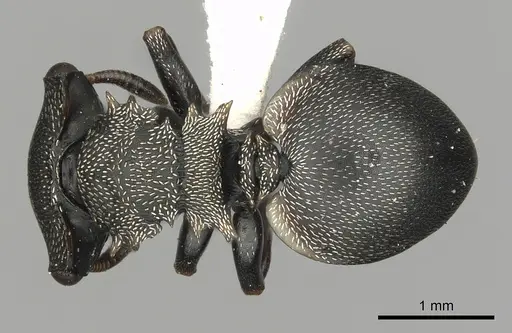
Literature
Loading...Loading products...