

Cephalotes hirsutus
- Scientific Name
- Cephalotes hirsutus
- Tribe
- Attini
- Subfamily
- Myrmicinae
- Author
- De Andrade, 1999
- Distribution
- Found in 1 countries
Cephalotes hirsutus Overview
Cephalotes hirsutus is an ant species of the genus Cephalotes. It is primarily documented in 1 countries , including Mexico. Detailed taxonomic data and occurrence records can be further explored via authoritative databases such as AntWeb or the Global Biodiversity Information Facility (GBIF).
Cephalotes hirsutus
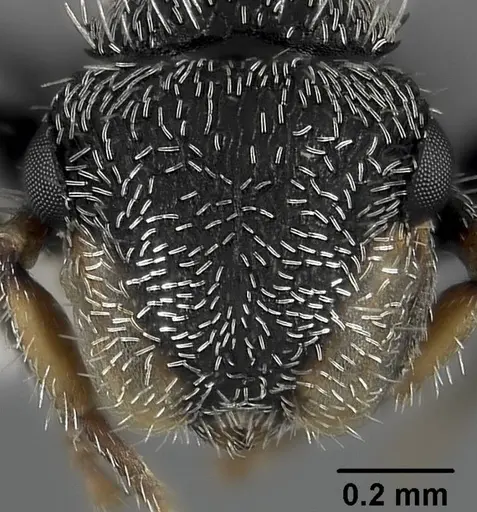
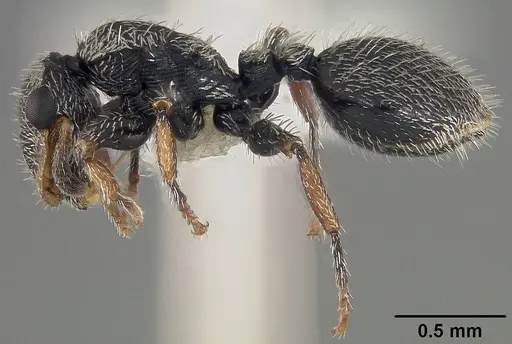
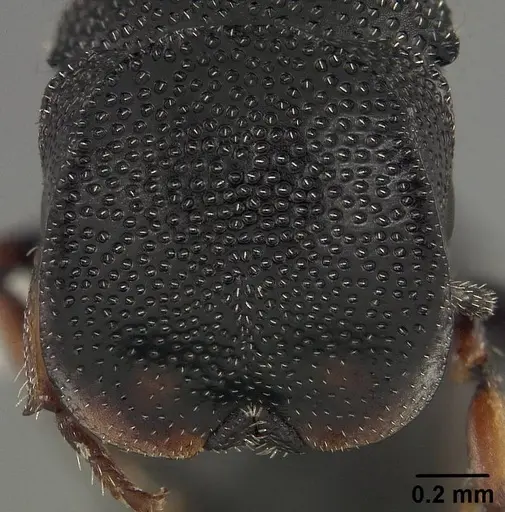
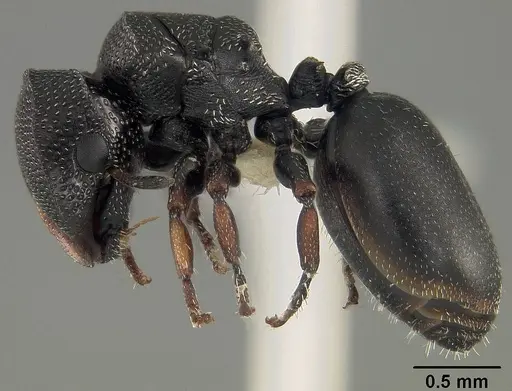
Cephalotes hirsutus is a small, distinctive turtle ant species native to western Mexico, specifically found in Sinaloa state. Workers measure 4.58-4.92mm and are immediately recognizable by their dense covering of long, golden-haired bristles that give the species its name (hirsutus means 'hairy' in Latin). The body is black with yellowish-orange frontal carinae and a distinctive transparent yellowish border on the gaster. This species belongs to the wheeleri clade and is closely related to C. insularis, sharing similar postpetiolar spines and gastral coloration. The species was described in 1999 from specimens collected near Chupaderos, Sinaloa. [1][2][3]
Quick Summary
- Difficulty: Medium
- Origin & Habitat: Native to the Neotropical region of western Mexico, specifically Sinaloa state. The type locality is near Chupaderos, with records from Concordia municipality. As a turtle ant, they likely inhabit tropical and subtropical forest environments, though their exact natural nesting habitat is unconfirmed. [3][1]
- Colony Type: Unconfirmed colony structure. Like other Cephalotes species, they likely form single-queen colonies (monogyne), but this has not been documented for this specific species. Turtle ants typically have moderate colony sizes. [1]
- Size & Growth:
- Queen: Undescribed, queen measurements not available. Based on related Cephalotes species, queens are likely 6-8mm. [1]
- Worker: 4.58-4.92mm [1]
- Colony: Unknown, no colony size data exists for this species. Related Cephalotes species typically reach several hundred workers. [1]
- Growth: Unknown, likely slow to moderate based on genus patterns. Turtle ant colonies typically grow more slowly than many common ant species. [1]
- Development: Unconfirmed, estimated 8-12 weeks based on typical Cephalotes development patterns at optimal temperature. (Development timeline has not been directly studied for this species. Estimates based on related turtle ant species.)
- Antkeeping:
- Temperature: Keep at 24-28°C. Turtle ants are tropical and need warm, stable conditions. A gentle gradient allowing warmer and cooler areas is recommended.
- Humidity: Maintain moderate to high humidity (60-80%). Provide a moist nest substrate while allowing some drier areas for the ants to self-regulate. Turtle ants often nest in humid microhabitats.
- Diapause: Unlikely, being a tropical species from Mexico, they probably do not require a true hibernation period. However, a slight reduction in temperature during winter months may be appropriate.
- Nesting: Preferred nest types include Y-tong (AAC) nests, plaster nests, or naturalistic setups with hollow twigs/branches. Turtle ants naturally nest in pre-existing cavities in wood and twigs. Provide narrow chambers scaled to their worker size. Test tubes can work for founding colonies but may need upgrading as the colony grows.
- Behavior: Cephalotes hirsutus is a turtle ant with typical genus behaviors. They are generally calm and not overly aggressive, but can defend their nest if threatened. Workers move at a moderate pace and are skilled at navigating vertical surfaces. Their small size (under 5mm) means escape prevention is important, they can squeeze through small gaps. Turtle ants are known for their distinctive disk-shaped heads and ability to block nest entrances with their armored heads. They are primarily arboreal foragers but will forage on the ground as well. [1]
- Common Issues: biology is completely unconfirmed, this is one of the least studied Cephalotes species, so care recommendations are largely inferred from genus patterns, escape prevention is critical due to their small size, use fine mesh and tight-fitting barriers, slow growth may frustrate beginners expecting rapid colony development, no established captive breeding lines exist, wild-caught colonies may have high mortality rates, humidity control is important, too dry causes desiccation, too wet promotes mold
Species Identification and History
Cephalotes hirsutus was described by M.L. de Andrade in 1999 based on worker specimens collected from Sinaloa, Mexico. The species name 'hirsutus' literally means 'hairy' in Latin, referring to the most distinctive feature of this ant, its dense covering of long, thick, golden-haired bristles covering most of the body. This pilosity gives the ant a noticeably fuzzy appearance compared to other turtle ants. The species belongs to the wheeleri clade and shares several features with C. insularis, including similarly sized postpetiolar spines and a yellowish-transparent border on the first gastral tergite. Only four type specimens (one holotype and three paratypes) have ever been documented, making this one of the rarest and least-studied Cephalotes species. [1][2]
Nest Preferences and Housing
In captivity, Cephalotes hirsutus should be provided with nest options that mimic their natural arboreal habitat. Y-tong (AAC) nests work well, as do plaster nests or naturalistic setups featuring hollow twigs and branches. The chambers should be appropriately scaled to their worker size of approximately 4.5-5mm. Turtle ants prefer pre-existing cavities and cannot excavate their own nests in hard materials. Provide a water tube or moisture source to maintain humidity within the nest. Since this species is poorly known, err on the side of slightly higher humidity (around 70%) and monitor colony behavior. A foraging area with vertical surfaces is appreciated, as turtle ants often forage upwards.
Feeding and Diet
Like other Cephalotes species, C. hirsutus likely has an omnivorous diet centered on honeydew and nectar in the wild, supplemented with small insects and other protein sources. In captivity, offer a constant source of sugar water or honey, and provide protein in the form of small insects like fruit flies, pinhead crickets, or mealworm pieces. Turtle ants are not aggressive predators but will readily accept small prey items. Feed protein roughly twice weekly, and keep sugar sources available at all times. Remove uneaten prey after 24-48 hours to prevent mold. Since the biology of this species is completely unconfirmed, observe your colony's preferences and adjust accordingly.
Temperature and Seasonal Care
As a tropical species from western Mexico, Cephalotes hirsutus requires warm conditions. Maintain temperatures between 24-28°C, with a slight gradient allowing the ants to self-regulate. Avoid temperatures below 20°C or above 32°C. A heating cable or mat on one side of the nest can help maintain warmth, but always provide unheated areas as well. Unlike temperate species, this ant likely does not require a true hibernation period. However, a slight seasonal reduction in temperature during winter months (dropping to around 20-22°C) may be appropriate and could stimulate natural activity cycles. Keep humidity stable and avoid drafts.
Behavior and Colony Dynamics
Cephalotes ants are known for their distinctive defensive behaviors. Their most notable trait is the ability to block nest entrances using their uniquely shaped, disk-like heads, this is where the common name 'turtle ant' comes from. Workers are relatively calm and not prone to biting, but will defend aggressively if their nest is threatened. The colony will likely grow slowly, with the queen producing eggs intermittently rather than in continuous broods. First workers (nanitics) will be smaller than mature workers. Turtle ants are excellent climbers and navigate complex three-dimensional spaces easily. Watch for workers patrolling the foraging area and tending any honeydew-producing insects present.
Frequently Asked Questions
How long does it take for Cephalotes hirsutus to produce first workers?
The exact timeline is unconfirmed, but based on typical Cephalotes development, expect 8-12 weeks from egg to first worker at optimal temperature (24-28°C). Turtle ants generally develop more slowly than common ant species.
Can I keep Cephalotes hirsutus in a test tube?
Yes, test tubes work well for founding colonies. Use a standard test tube setup with a water reservoir sealed with cotton. Once the colony reaches 15-20 workers, consider upgrading to a more spacious nest like a Y-tong or plaster formicarium.
Are Cephalotes hirsutus good for beginners?
This species is not ideal for complete beginners due to the complete lack of documented biology, all care recommendations are inferred from genus patterns. However, antkeepers with some experience keeping tropical species should find this species manageable. The main challenges are slow growth and the need for careful humidity and temperature control.
What do Cephalotes hirsutus eat?
Like other turtle ants, they likely accept sugar water or honey continuously, plus small protein sources like fruit flies, small crickets, or mealworm pieces. Feed protein roughly twice weekly and keep sugar available at all times.
How big do Cephalotes hirsutus colonies get?
Colony size is unconfirmed for this species, but related Cephalotes species typically reach several hundred workers. Growth is generally slow, so large colonies take years to develop.
Do Cephalotes hirsutus need hibernation?
No, being a tropical species from Mexico, they do not require true hibernation. A slight temperature reduction during winter (to around 20-22°C) may be appropriate but is not mandatory.
Why are my Cephalotes hirsutus dying?
The most likely causes are: incorrect humidity (too dry or too wet), temperature stress (too cold below 20°C or too hot above 32°C), or escape/collection stress if wild-caught. This species has no documented captive breeding, so wild-caught colonies may have high initial mortality. Ensure proper humidity, warm temperatures, and minimal disturbance.
Can I keep multiple queens together?
This has not been documented for this species. Based on typical Cephalotes patterns, single-queen colonies are most likely. Combining unrelated queens is not recommended without evidence they will tolerate each other.
When should I move Cephalotes hirsutus to a formicarium?
Move from test tube to a proper nest once the colony reaches 15-30 workers and the test tube shows signs of crowding or mold. Y-tong or plaster nests work well for turtle ants.
References

This caresheet is licensed under CC BY-SA 4.0 .
CASENT0718039
View on AntWeb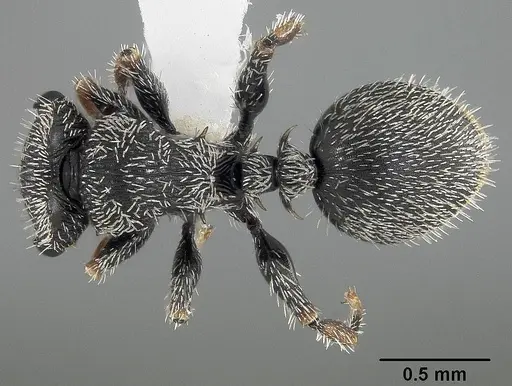
CASENT0718042
View on AntWeb
Literature
Loading...Loading products...