

Cephalotes hamulus
- Scientific Name
- Cephalotes hamulus
- Tribe
- Attini
- Subfamily
- Myrmicinae
- Author
- Roger, 1863
- Distribution
- Found in 2 countries
Cephalotes hamulus Overview
Cephalotes hamulus is an ant species of the genus Cephalotes. It is primarily documented in 2 countries , including Dominican Republic, Haiti. Detailed taxonomic data and occurrence records can be further explored via authoritative databases such as AntWeb or the Global Biodiversity Information Facility (GBIF).
Cephalotes hamulus
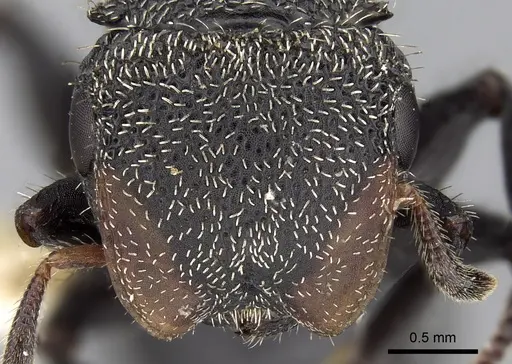
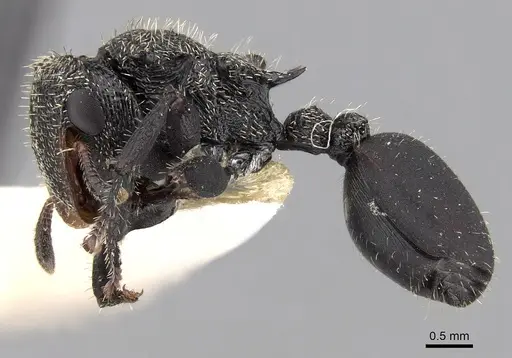
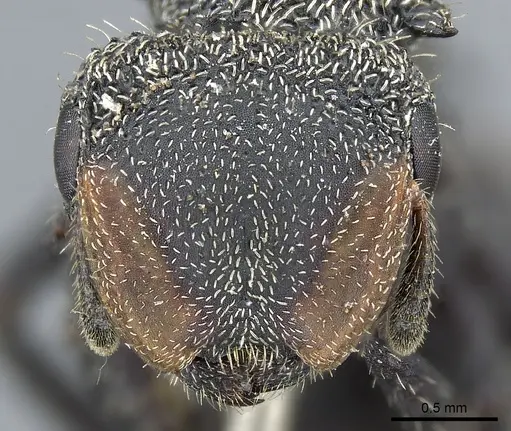
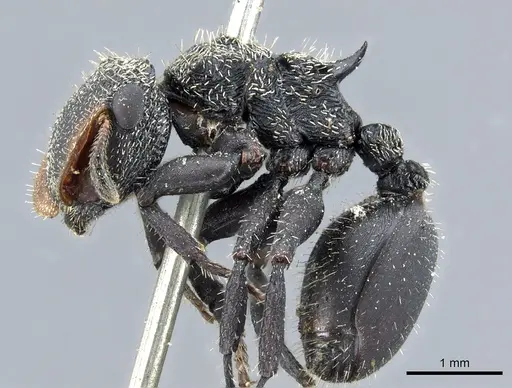
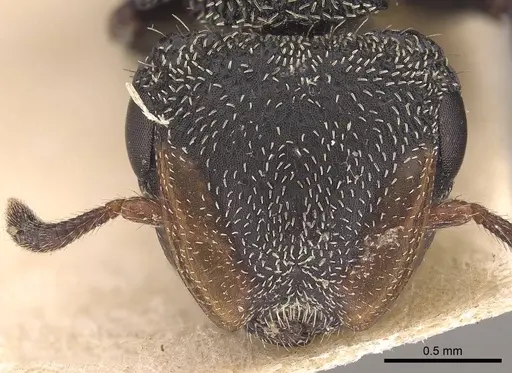
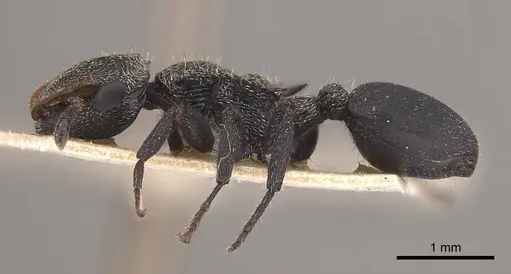
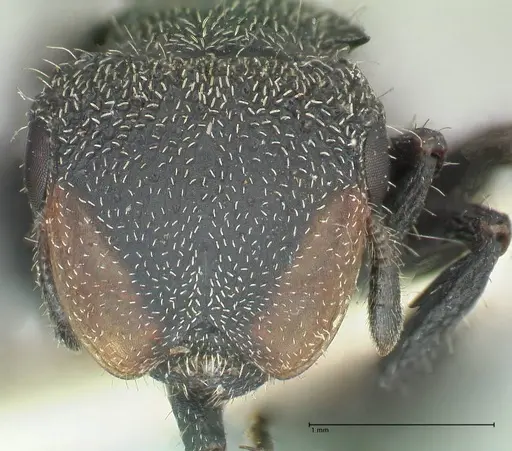
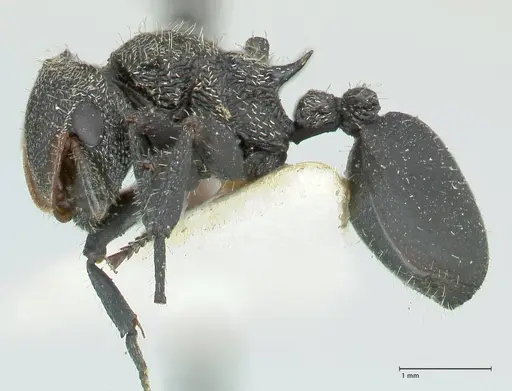
Cephalotes hamulus is a distinctive turtle ant species endemic to Hispaniola (Haiti and the Dominican Republic). Workers are large at 6.16-7.16mm with a completely black body marked by longitudinal rugosities on the front portion of the gaster and distinctive flattened spines on the propodeum and postpetiole [1]. Unlike many Cephalotes species, this one lacks soldiers, colonies consist of a single worker type [2][3]. Queens are substantially larger at around 9mm, while males are smaller at 5.6mm [4]. This species belongs to the hamulus clade, characterized by their completely black coloration and unique body sculpturing [4].
What makes C. hamulus particularly interesting is their nesting flexibility, while most colonies nest in hollow twigs as is typical for turtle ants, Wheeler and Mann (1914) observed colonies nesting in fence-posts in Port-au-Prince, showing they can adapt to larger human-made cavities [2][3]. This is a rare species known from only a few records, making captive colonies particularly special for antkeepers.
Quick Summary
- Difficulty: Medium
- Origin & Habitat: Hispaniola (Haiti and Dominican Republic). Found at elevations of 183-610m in dry forest and scrub forest habitats. Nests in hollow twigs and fence-posts [2][3].
- Colony Type: Monogyne (single queen), colonies have one queen with no soldier caste. Workers are monomorphic (all the same size) [2][3].
- Colony: Monogyne
- Size & Growth:
- Queen: ~9.18 mm [4]
- Worker: 6.16-7.16 mm [1]
- Colony: Unknown, likely moderate based on typical Cephalotes patterns
- Growth: Moderate, estimated based on genus patterns
- Development: 6-10 weeks (estimated based on related Cephalotes species) (Direct development data unavailable for this species, estimates based on typical genus development at tropical temperatures)
- Antkeeping:
- Temperature: Keep at 24-28°C, they are a tropical Caribbean species adapted to warm conditions. A gentle gradient allows workers to regulate their temperature [2].
- Humidity: Moderate humidity around 60-70%. These are not moisture-dependent like some tropical ants, they come from relatively dry forest habitats at moderate elevations [2][3].
- Diapause: No, as a tropical Caribbean species, they do not require hibernation. Keep them at stable warm temperatures year-round.
- Nesting: Cavity nesters, they naturally nest in hollow twigs and similar narrow cavities. In captivity, they do well in Y-tong (acrylic) nests with narrow chambers scaled to their size, or in naturalistic setups with twigs/branches. Avoid overly large, open spaces, they prefer tight-fitting chambers.
- Behavior: Generally calm and non-aggressive. Workers are slow-moving and deliberate. They are not known for stinging, their main defense is their armored appearance and ability to block nest entrances with their heads. Escape risk is moderate due to their size, standard barriers work well but ensure lids fit tightly. They are cavity nesters and will readily occupy provided spaces.
- Common Issues: Very rare in the hobby, finding a colony may be difficult as this species is rarely collected, Cavity nesting requirements mean they need appropriately sized chambers, too large spaces stress them, As a tropical species, cold temperatures can be fatal, keep warm year-round, Limited available care information due to few records in the scientific literature, Wild-caught colonies may have parasites or stress from collection, quarantine and monitor closely
Housing and Nest Preferences
Cephalotes hamulus is a cavity nester by nature. In the wild, they nest in hollow twigs and have been documented nesting in fence-posts, showing they can adapt to various cavity sizes [2][3]. For captive care, Y-tong (acrylic) nests work well, choose chambers that are appropriately sized to their worker length (6-7mm). The chambers should be snug but not cramped. Naturalistic setups with actual twigs or branches are also excellent if you can provide them securely.
These ants do not excavate their own nests, they occupy pre-existing cavities. This means you should not provide them with soil or diggable substrates. Instead, provide ready-made chambers and tunnels. A formicarium with narrow, tight-fitting chambers mimics their natural hollow twig environment. Avoid large, open spaces that would make them feel exposed, they prefer to feel enclosed and secure.
Temperature and Heating
As a tropical Caribbean species from Hispaniola, Cephalotes hamulus requires warm temperatures. Keep the nest area at 24-28°C. This is warmer than what most temperate species need, but aligns with their natural habitat on a Caribbean island. Room temperature may be sufficient if your home stays in this range, otherwise a small heating cable or mat on one side of the nest can provide the needed warmth.
Temperature affects their activity level and development. At warmer temperatures within their range, they are more active and brood develops faster. A gentle thermal gradient (warmer on one side, cooler on the other) allows workers to self-regulate by moving to their preferred temperature. Monitor their behavior, if they cluster near the heat source, increase warmth slightly, if they avoid it, reduce heating. Avoid temperatures below 20°C as this species is not adapted to cool conditions. [2]
Feeding and Diet
Like other Cephalotes species, C. hamulus likely has an omnivorous diet. In the wild, turtle ants typically feed on nectar, honeydew from aphids and scale insects, and small insects. For captive care, offer a varied diet. Sugar water or honey should be available continuously, they will drink nectar substitutes readily. Protein should come from small insects like fruit flies, small crickets, or mealworms. Offer protein prey 1-2 times per week.
Feed them in the outworld (foraging area), not inside the nest. Remove any uneaten prey after 24-48 hours to prevent mold. Fresh water should always be available. Turtle ants are not aggressive foragers and may take time to discover new food sources, place food near the colony entrance and be patient. Their large, distinct heads make them memorable feeders to watch.
Colony Structure and Development
This species is monomorphic, all workers are the same size, with no soldier caste [2][3]. This is notable because some Cephalotes species have specialized soldiers with enlarged heads for defense. C. hamulus makes do with regular workers only. Colonies are monogyne, meaning one queen per colony.
Queens are substantially larger than workers at ~9mm compared to worker 6-7mm [4]. The queen described by de Andrade and Baroni Urbani (1999) was previously undescribed, showing how rare this species is in scientific collections. Development from egg to worker likely takes 6-10 weeks based on related Cephalotes species, though this specific timeline is unconfirmed. The colony will grow gradually, turtle ants are not fast growers compared to some Myrmicinae, but they are long-lived.
Behavior and Temperament
Cephalotes hamulus has a calm temperament. They are not aggressive and do not have a painful sting. Their main defense is their armored appearance, they may block nest entrances with their large heads, a common behavior in turtle ants. Workers move deliberately and slowly, not darting around like some smaller species.
Escape risk is moderate. While they are larger ants, they can still climb smooth surfaces. Use standard barrier methods like fluon on test tube rims or formicarium edges. They are not known for being particularly escape-prone. The outworld should be simple and easy to clean, these ants do well with minimal decoration. Provide a water source and feeding area, but avoid complex setups that make observation difficult.
Seasonal Care
As a tropical species from the Caribbean, Cephalotes hamulus does not require hibernation or diapause. Keep temperatures stable and warm year-round. There is no seasonal slowdown in their requirements, they remain active throughout the year if kept warm.
The elevation range of 183-610m on Hispaniola suggests they are adapted to somewhat warm but not extreme conditions [2][3]. They likely experience little temperature variation in their natural habitat. In captivity, avoid placing their setup near windows or areas with drafts. Consistent room temperature in the 24-28°C range is ideal. If your room temperature drops at night or seasonally, consider supplemental heating to maintain stability.
Frequently Asked Questions
How long does it take for Cephalotes hamulus to produce first workers?
The exact timeline is unconfirmed for this species, but based on related Cephalotes species, expect 6-10 weeks from egg to first worker at warm tropical temperatures (around 26°C). Be patient, turtle ants develop more slowly than many common ant species.
What do Cephalotes hamulus ants eat?
They are omnivorous. Offer sugar water or honey continuously for energy, and small insects like fruit flies or small crickets 1-2 times per week for protein. They likely also collect honeydew in the wild, but sugar sources suffice in captivity.
Can I keep multiple Cephalotes hamulus queens together?
No. This species is monogyne, colonies have a single queen. Unlike some Cephalotes that can be polygyne, C. hamulus forms single-queen colonies. Introducing multiple unrelated queens will likely result in fighting.
What size nest do Cephalotes hamulus need?
They are cavity nesters that occupy pre-existing holes, not excavate. Y-tong nests with narrow chambers scaled to their 6-7mm worker size work well. Avoid overly large chambers, they prefer snug, enclosed spaces that mimic hollow twigs.
Are Cephalotes hamulus good for beginners?
They are rated Medium difficulty. They require warm tropical temperatures and specific cavity-nesting setups, which is more specialized than beginner species like Lasius. However, they are calm and not aggressive. The main challenge is finding a colony, as this species is rarely available in the antkeeping hobby.
Do Cephalotes hamulus need hibernation?
No. As a tropical Caribbean species, they do not require hibernation or winter cooling. Keep them warm year-round at 24-28°C. Cold temperatures can be harmful or fatal to this species.
How big do Cephalotes hamulus colonies get?
The maximum colony size is unknown for this rarely-studied species. Based on typical Cephalotes patterns, colonies likely reach dozens to a few hundred workers. They are not among the largest turtle ants.
Why are my Cephalotes hamulus not eating?
They may need time to discover new food sources. Place food near the nest entrance and be patient. Also ensure temperatures are warm enough (24-28°C), cool temperatures reduce their activity and appetite. Fresh sugar water should always be available.
Where is Cephalotes hamulus native to?
They are endemic to Hispaniola, found only in Haiti and the Dominican Republic. This makes them one of the most restricted Cephalotes species geographically. They are found at elevations of 183-610m in dry and scrub forest habitats.
When will Cephalotes hamulus alates (reproductives) appear?
The timing of nuptial flights is unconfirmed for this species. As a tropical species, reproduction likely occurs year-round with appropriate conditions rather than seasonal flights. Be patient with established colonies, it may take a year or more for the colony to produce reproductives.
References

This caresheet is licensed under CC BY-SA 4.0 .
CASENT0280796
View on AntWeb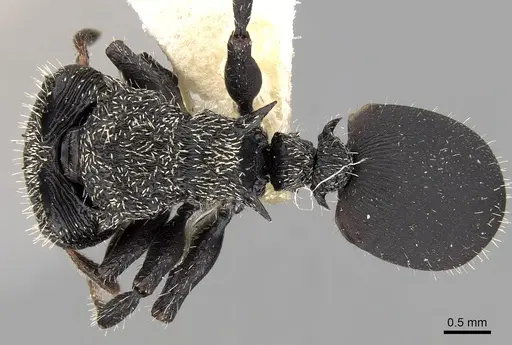
CASENT0904900
View on AntWeb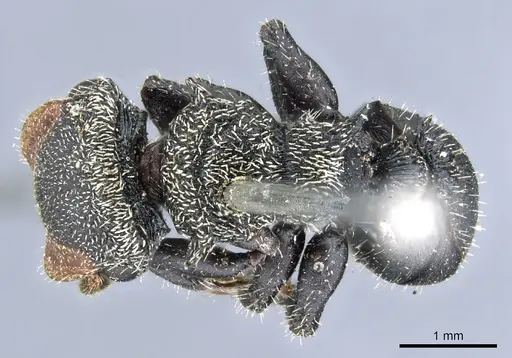
CASENT0919599
View on AntWeb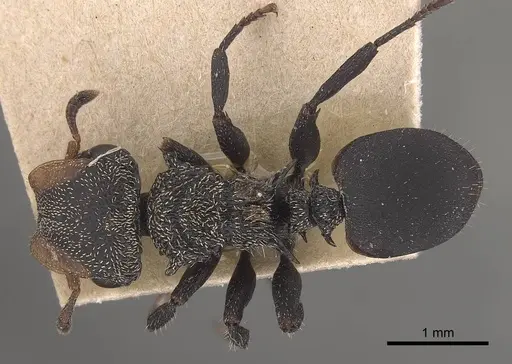
FOCOL2146
View on AntWeb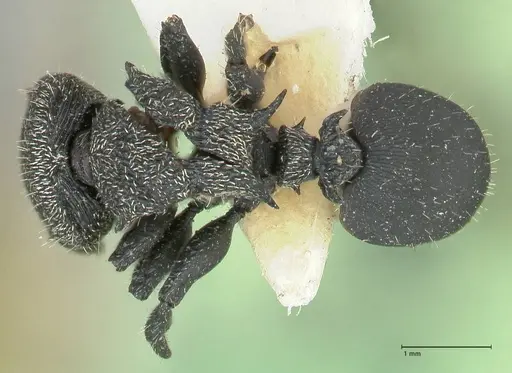
Literature
Loading...Loading products...