

Cephalotes curvistriatus
- Scientific Name
- Cephalotes curvistriatus
- Tribe
- Attini
- Subfamily
- Myrmicinae
- Author
- Forel, 1899
- Distribution
- Found in 3 countries
Cephalotes curvistriatus Overview
Cephalotes curvistriatus is an ant species of the genus Cephalotes. It is primarily documented in 3 countries , including Costa Rica, Mexico, Nicaragua. Detailed taxonomic data and occurrence records can be further explored via authoritative databases such as AntWeb or the Global Biodiversity Information Facility (GBIF).
Cephalotes curvistriatus
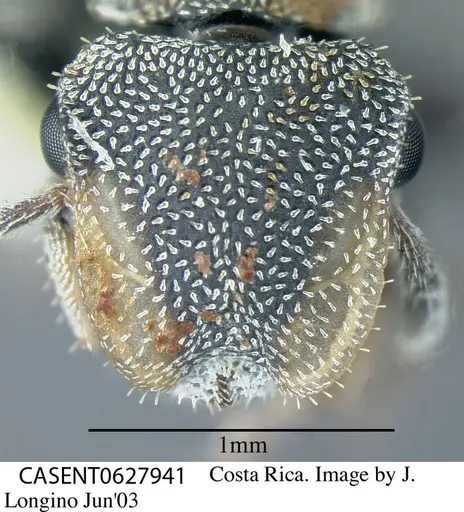
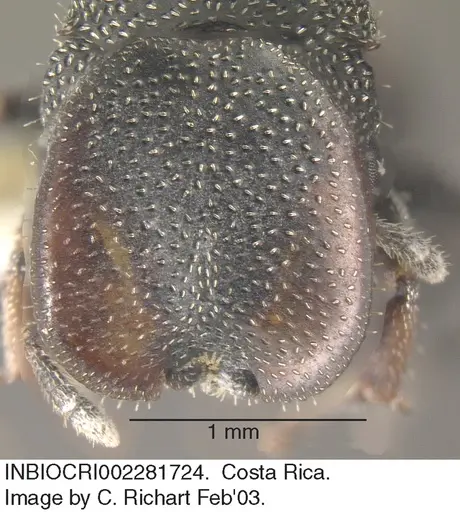
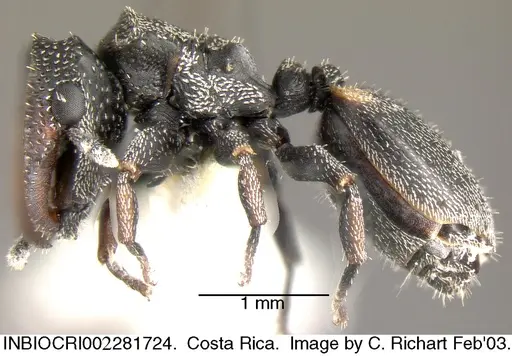
Cephalotes curvistriatus is a small, distinctive turtle ant native to the Neotropical region of Central America, found in Costa Rica and southern Mexico. Workers measure 4.2-4.8mm with a flattened, broad body characteristic of the genus, they look like tiny, armored turtles. The body is predominantly black with rusty ferruginous markings on the tips of mandibles, antennae, legs, and distinctive white maculae (spots) on the gaster that give them a silvery-grey appearance when light catches their scale-like hairs [1]. This species belongs to the texanus clade, distinguished by thick regular striations on the underside of the head [2]. As arboreal ants, they nest in hollow twigs and branches in wet forest canopies [3].
Quick Summary
- Difficulty: Medium
- Origin & Habitat: Neotropical region, Costa Rica and southern Mexico, in wet/moist lowland tropical forests [2][4]. Collected in multiple locations in Tabasco, Mexico including Cunduacán, Emiliano Zapata, Huimanguillo, Macuspana, Teapa and Tenosique municipalities [4].
- Colony Type: Colony structure is not well documented. Based on genus patterns, likely single-queen (monogyne) colonies with typical Cephalotes social structure.
- Colony: Monogyne
- Founding: Claustral
- Size & Growth:
- Queen: 7.2-7.5mm [2]
- Worker: 4.2-4.8mm [2]
- Colony: Unknown, Cephalotes colonies typically reach several hundred workers
- Growth: Moderate, typical for tropical Myrmicinae
- Development: Unknown for this species. Based on related Cephalotes species and tropical ant development patterns, likely 6-10 weeks at warm temperatures (Development time estimated from genus patterns, direct data not available for this species)
- Antkeeping:
- Temperature: Keep at 24-28°C, these are tropical ants requiring warm, stable conditions. A gentle gradient allowing workers to self-regulate is beneficial
- Humidity: High humidity is essential, think damp tropical forest. Keep nest substrate consistently moist but not waterlogged. Provide a water source and mist occasionally if using an open setup
- Diapause: No, as tropical ants from Costa Rica and Mexico, they do not require hibernation. Maintain warm conditions year-round
- Nesting: Arboreal nesting species, in captivity they do well in Y-tong (acrylic) nests or plaster nests with narrow chambers scaled to their size. Provide small connecting tubes and avoid large open spaces. Natural setups with hollow twigs or branches also work well
- Behavior: Generally peaceful and non-aggressive. Workers are slow-moving and spend most of their time foraging on vegetation and tree surfaces. They are not known to sting and pose no danger to keepers. Their flattened body allows them to retreat into narrow crevices and hollow twigs. Escape prevention should be good, while small at 4-5mm, they are not particularly agile climbers compared to some Myrmicinae. Standard barrier methods should suffice
- Common Issues: high humidity requirements can lead to mold problems if ventilation is poor, limited available information means care is largely based on genus patterns rather than species-specific research, tropical warmth requirements may need heating in cooler climates, arboreal nesting means they may not readily accept ground-level test tube setups, wild-caught colonies may carry parasites that can cause problems in captivity
Housing and Nest Setup
Cephalotes curvistriatus is an arboreal species, meaning they naturally nest in hollow twigs, branches, and tree cavities in the forest canopy. In captivity, they adapt well to Y-tong (acrylic) nests or plaster nests with small, tight chambers scaled to their tiny 4-5mm worker size. The chambers should be narrow, these ants feel secure in snug spaces. Avoid large, open formicarium areas as they may feel exposed and stressed. Connect the nest to a foraging area with small-diameter tubing. Some keepers have success with naturalistic setups using small hollow twigs or bamboo sections, which more closely mimics their natural arboreal habitat. Ensure escape prevention is adequate, while not excellent climbers, their small size means they can slip through tiny gaps. A smooth barrier like fluon on the rim of the foraging area helps prevent escapes.
Feeding and Diet
In the wild, Cephalotes ants are omnivorous foragers that collect honeydew from aphids and scale insects, and hunt small invertebrates. They also feed on nectar and may scavenge on dead insects. In captivity, offer a varied diet: sugar water or honey as a constant energy source, and protein sources like small live or frozen insects (fruit flies, small mealworms, pinhead crickets). Feed protein 2-3 times per week, and keep sugar water available at all times. These ants are not large predators, offer appropriately sized prey. Some Cephalotes species will accept fruit, but this varies. Observe your colony's preferences and adjust accordingly. Remove uneaten prey after 24-48 hours to prevent mold.
Temperature and Humidity
As tropical ants from Costa Rica and Mexico, Cephalotes curvistriatus requires warm, humid conditions. Maintain temperatures between 24-28°C, this is ideal for tropical ant development and activity. A slight temperature gradient allows workers to regulate their own conditions. Use a heating cable or mat on one side of the nest if room temperature falls below this range. Humidity should be high, these ants come from wet/moist forest habitats. Keep the nest substrate consistently damp but not waterlogged. In dry environments, occasional misting helps, but ensure good ventilation to prevent mold buildup. A water tube should always be available.
Behavior and Colony Life
Cephalotes curvistriatus workers are slow-moving and deliberate in their movements. They are not aggressive and do not pose a sting risk to keepers. The genus name 'Cephalotes' means 'head-bearing' in reference to their distinctive head shape, and these ants are easily recognized by their flattened, broad body that resembles a tiny turtle shell. Workers forage along vegetation and tree surfaces in search of honeydew and small prey. Colonies are relatively peaceful and do not exhibit raiding or aggressive behaviors toward other ant species. The soldiers (larger workers) in this species have distinctive head discs that can be raised to block nest entrances, a defensive adaptation. Overall, they are calm, fascinating ants to observe.
Frequently Asked Questions
How long does it take for Cephalotes curvistriatus to develop from egg to worker?
The exact development time is not documented for this specific species. Based on related Cephalotes species and typical tropical ant development, expect approximately 6-10 weeks from egg to first worker at optimal warm temperatures (24-28°C).
What do Cephalotes curvistriatus ants eat?
They are omnivorous. Offer sugar water or honey constantly as an energy source, and protein (small insects like fruit flies, pinhead crickets, or small mealworms) 2-3 times per week. Remove uneaten prey after a day or two.
What temperature do they need?
Keep them warm at 24-28°C. These tropical ants require consistent warmth year-round with no hibernation period.
Are they good for beginners?
They are considered medium difficulty. While not aggressive, they have specific humidity and temperature requirements typical of tropical arboreal ants. Their care is relatively straightforward once warm, humid conditions are established.
How big do colonies get?
Colony size is not specifically documented for this species, but Cephalotes colonies typically reach several hundred workers. Growth is moderate.
Do they need hibernation?
No, they do not hibernate. As tropical ants from Costa Rica and Mexico, they require warm conditions year-round. Do not expose them to cool temperatures.
Why are my ants dying?
Common causes include: temperatures too low (below 24°C), humidity too low or too high (causing mold), improper feeding, or stress from too-large foraging areas. Check that your setup matches their arboreal, humid, warm habitat requirements.
Can I keep multiple queens together?
This is not recommended. While colony structure is not well documented for this species, Cephalotes are typically single-queen colonies. Combining unrelated queens has not been studied and risks aggression.
References

This caresheet is licensed under CC BY-SA 4.0 .
CASENT0627941
View on AntWeb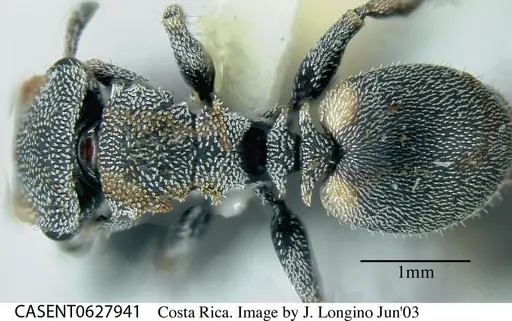
INBIOCRI002281724
View on AntWeb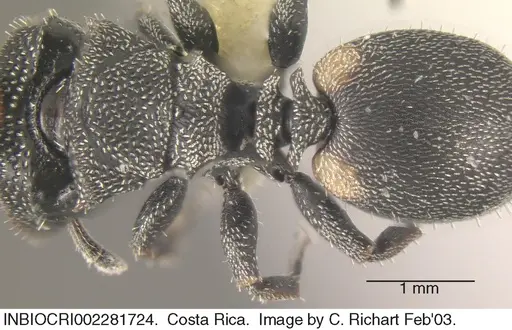
Literature
Loading...Loading products...