

Cephalotes conspersus
- Scientific Name
- Cephalotes conspersus
- Tribe
- Attini
- Subfamily
- Myrmicinae
- Author
- Smith, 1867
- Distribution
- Found in 3 countries
Cephalotes conspersus Overview
Cephalotes conspersus is an ant species of the genus Cephalotes. It is primarily documented in 3 countries , including Brazil, Colombia, Mexico. Detailed taxonomic data and occurrence records can be further explored via authoritative databases such as AntWeb or the Global Biodiversity Information Facility (GBIF).
Cephalotes conspersus
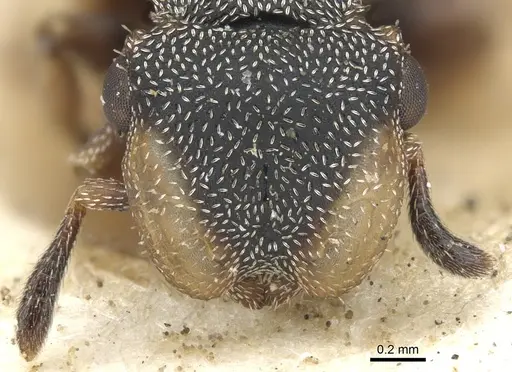
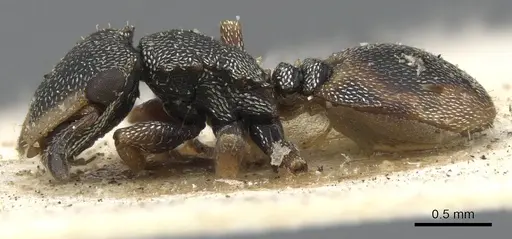
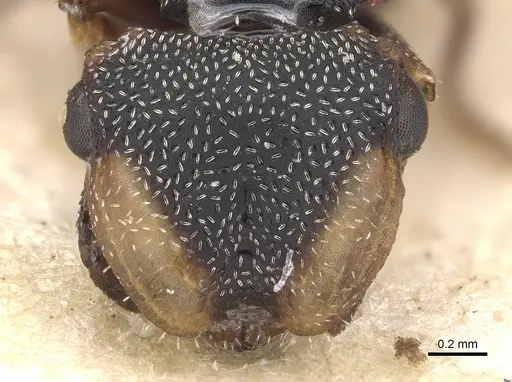
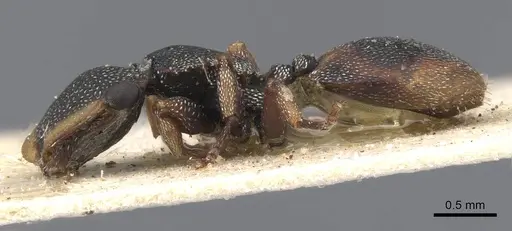
Cephalotes conspersus is a small, distinctive turtle ant found throughout the Amazon basin in South America. Workers measure 3.46-3.92mm and feature a striking bicolored pattern, their first gastral tergite has a black rhombus-shaped spot in the center with the remaining surface ferruginous to orange-brown. The head, mesosoma, and legs are predominantly black with yellowish to ferruginous accents on the frontal carinae, antennae, and leg joints. Soldiers are larger at 4.92mm with a more armored appearance typical of the genus. This species belongs to the angustus species group and is distinguished from related species by its bicolored gaster pattern [1][2].
The biology of this species remains completely unstudied in the scientific literature, making it one of the more challenging Cephalotes to keep. Like all turtle ants, they likely nest in hollow twigs and dead wood in the forest canopy or edge. Their distribution spans the Amazon region of Brazil, Colombia, Ecuador, Venezuela, Bolivia, and Trinidad, typically at low to mid elevations (60-330m) in humid tropical forests [1][2][3].
Quick Summary
- Difficulty: Expert
- Origin & Habitat: Amazon basin, found in Brazil, Colombia, Ecuador, Venezuela, Bolivia, and Trinidad at elevations 60-330m. Inhabits humid tropical rainforests, cloud forests, and tropical dry forests. Typically collected from forest litter [1][2][3].
- Colony Type: Colony structure is unconfirmed. Most Cephalotes species are monogyne (single queen colonies), but this has not been documented for C. conspersus specifically.
- Colony: Monogyne
- Founding: Claustral
- Size & Growth:
- Queen: Estimated 5-6mm based on soldier size (4.92mm) and typical Cephalotes proportions
- Worker: 3.46-3.92mm
- Colony: Estimated 200-500 workers based on typical Cephalotes colony sizes
- Growth: Unknown, likely slow to moderate like other Cephalotes species
- Development: Estimated 8-12 weeks based on typical Cephalotes development at warm tropical temperatures (Not directly studied, estimates based on genus-level patterns for tropical Myrmicinae)
- Antkeeping:
- Temperature: Keep warm at 24-28°C. This species comes from lowland Amazon tropical forests where temperatures are consistently warm year-round. A gentle gradient allowing workers to self-regulate is ideal [2][3].
- Humidity: High humidity (70-85%) is essential. Amazon rainforest species require consistently moist conditions. Keep nest substrate damp but not waterlogged, with some drier areas available.
- Diapause: No diapause required. As a tropical species from the Amazon basin, they do not experience cold winters and should be kept at stable warm temperatures year-round.
- Nesting: In captivity, they do well in Y-tong (AAC) nests, plaster nests, or naturalistic setups with hollow twigs/branches. They prefer tight, enclosed spaces that mimic their natural nesting in dead twigs and small cavities. Avoid dry, airy setups.
- Behavior: Turtle ants are generally calm and non-aggressive. Workers are slow-moving and spend much of their time foraging in the canopy layer. They are not known to be escape artists but their small size (under 4mm) means they can slip through small gaps. They likely feed on honeydew from aphids and scale insects, plus small insects. No sting is reported for this species, and they are not considered dangerous to humans.
- Common Issues: complete lack of biological data means all care is based on genus-level inference, expect experimentation, tropical humidity requirements make them prone to mold in poorly ventilated setups, small size requires fine mesh barriers to prevent escapes, slow growth may lead to keeper impatience and overfeeding, wild-caught colonies may carry parasites or diseases not yet documented
Housing and Nest Setup
Cephalotes conspersus requires a humid, enclosed nest environment. Y-tong (acrylic) nests work well because they hold humidity while allowing you to monitor the colony. Plaster nests are another excellent option, they naturally hold moisture and create the damp conditions these Amazon ants need. If using a naturalistic setup, provide hollow twigs, cork bark, or small bamboo sections as nest sites. The chambers should be relatively tight-fitting, these ants prefer snug, enclosed spaces that mimic their natural hollow twig nests. Outworld space can be simple since they are not particularly active or adventurous. Ensure all connections between nest and outworld have tight-fitting barriers, workers at 3.5mm can squeeze through surprisingly small gaps.
Feeding and Diet
Like other Cephalotes species, these ants are likely omnivorous with a preference for honeydew and small prey. Offer sugar water or honey regularly, turtle ants readily accept sweet liquids. For protein, provide small live insects like fruit flies, pinhead crickets, or mealworm pieces. Since they are small, prey items should be appropriately sized. Some Cephalotes also accept seeds and plant matter, but protein should form the majority of their diet. Feed every 2-3 days, removing uneaten prey to prevent mold. Fresh water should always be available.
Temperature and Humidity Management
This is the most critical aspect of keeping C. conspersus successfully. As an Amazon species, they require warm, humid conditions year-round. Maintain temperatures between 24-28°C, use a gentle heat source like a heating cable on one side of the nest if your room temperature is below this range. Place the heat source on top of the nest, not underneath, to avoid drying out the substrate. Humidity should stay at 70-85%. Monitor condensation levels in the nest, some condensation is good but excessive moisture leads to mold. Use a hygrometer to track conditions. Poor humidity is the most common cause of colony failure with this species. [2][3]
Colony Establishment and Growth
Since nothing is known about the founding behavior of this species, all advice is based on typical Cephalotes patterns. Queens likely seal themselves in (claustral founding) and raise the first workers alone on stored body fat. Expect 6-12 months before you see significant colony growth. Turtle ant colonies grow slowly compared to common pest ants. Be patient, overfeeding can lead to mold problems that kill small colonies. Once established, colonies may reach 200-500 workers over several years. The soldier caste, when present, serves as a door guard, blocking the nest entrance with their armored heads.
Observations and Behavior
Cephalotes conspersus workers are relatively slow-moving compared to many Myrmicinae. They are not aggressive and do not possess a painful sting. The most notable feature is their distinctive appearance, the bicolored gaster with the black rhombus spot makes them visually striking under magnification. Workers likely forage along branches and leaves in the wild, collecting honeydew from sap-sucking insects. In captivity, they will emerge to collect sugar water and prey. The soldier caste (larger, more armored workers) may develop in larger colonies and serve as nest guards. [1][2]
Frequently Asked Questions
How long does it take for Cephalotes conspersus to produce first workers?
Estimated 8-12 weeks from egg to first worker at optimal warm temperatures (24-28°C). This is based on typical Cephalotes development patterns since no specific data exists for this species.
What do Cephalotes conspersus ants eat?
They likely accept sugar water or honey for carbohydrates, plus small live insects like fruit flies or pinhead crickets for protein. This is based on typical Cephalotes diet preferences.
What temperature do Cephalotes conspersus need?
Keep them warm at 24-28°C. As an Amazon species, they require year-round warmth without any diapause or cooling period.
Are Cephalotes conspersus good for beginners?
No. This species is recommended only for expert antkeepers. The biology is completely unstudied, requiring keepers to experiment with care based on genus-level inference. Their high humidity and warmth requirements are demanding.
How big do Cephalotes conspersus colonies get?
Estimated 200-500 workers based on typical Cephalotes colony sizes. Growth is slow, taking several years to reach maximum size.
Can I keep multiple Cephalotes conspersus queens together?
Not recommended and likely unnecessary. Most Cephalotes are monogyne (single queen colonies). Combining unrelated queens has not been documented for this species.
Do Cephalotes conspersus need hibernation?
No. As a tropical Amazon species, they do not require diapause or hibernation. Keep them warm and active year-round.
Why are my Cephalotes conspersus dying?
The most likely causes are low humidity (below 70%), temperatures below 24°C, or mold from overfeeding. Ensure proper humidity, warm temperatures, and clean feeding practices. This species has no documented biology, so some experimentation may be needed.
What type of nest is best for Cephalotes conspersus?
Y-tong (AAC) nests or plaster nests work best because they hold humidity well. Provide tight, enclosed chambers that mimic their natural hollow twig nesting sites.
References

This caresheet is licensed under CC BY-SA 4.0 .
CASENT0901462
View on AntWeb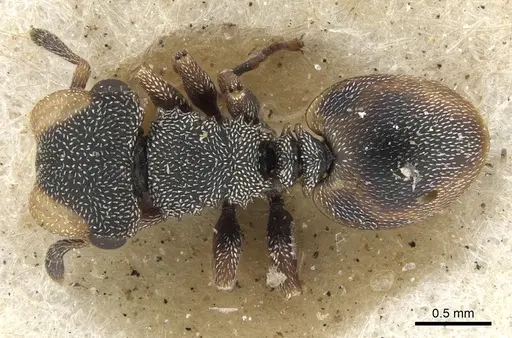
CASENT0909283
View on AntWeb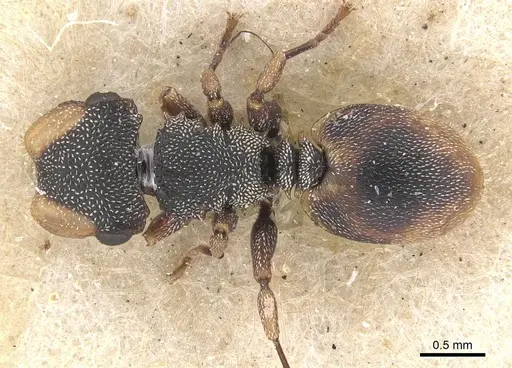
Literature
Loading...Loading products...