

Cephalotes columbicus
- Scientific Name
- Cephalotes columbicus
- Tribe
- Attini
- Subfamily
- Myrmicinae
- Author
- Forel, 1912
- Distribution
- Found in 2 countries
Cephalotes columbicus Overview
Cephalotes columbicus is an ant species of the genus Cephalotes. It is primarily documented in 2 countries , including Colombia, Panama. Detailed taxonomic data and occurrence records can be further explored via authoritative databases such as AntWeb or the Global Biodiversity Information Facility (GBIF).
Cephalotes columbicus
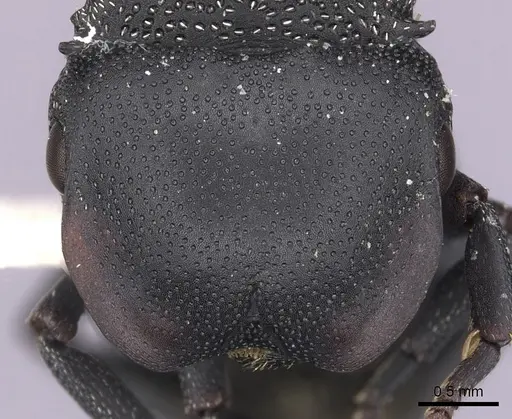
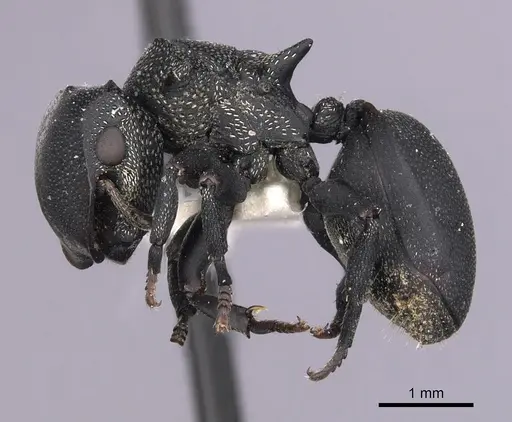
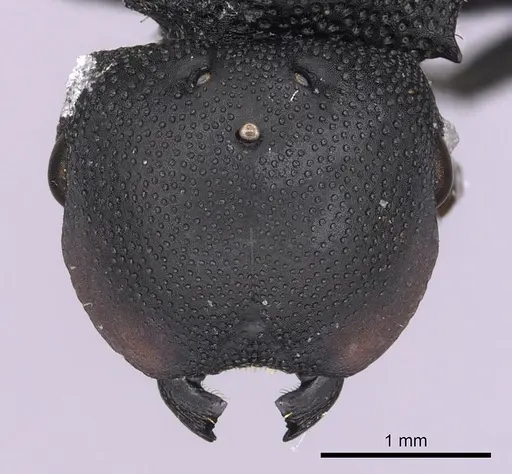
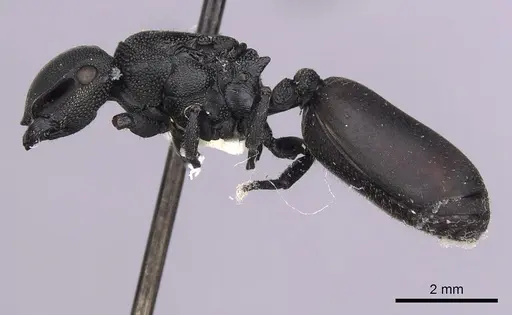
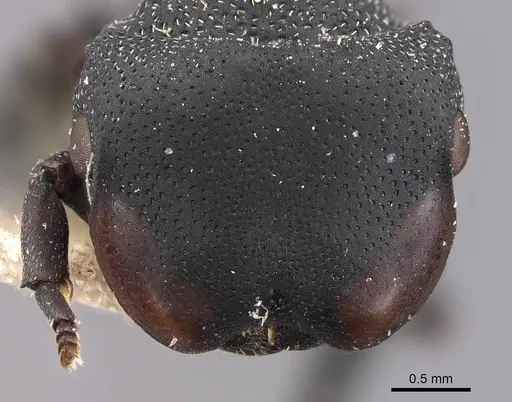
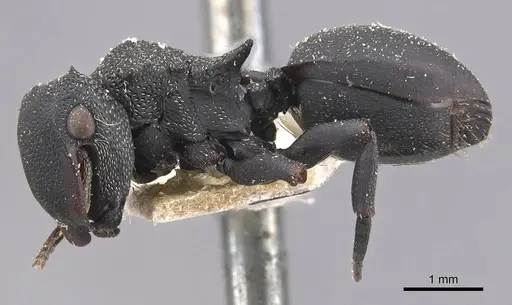
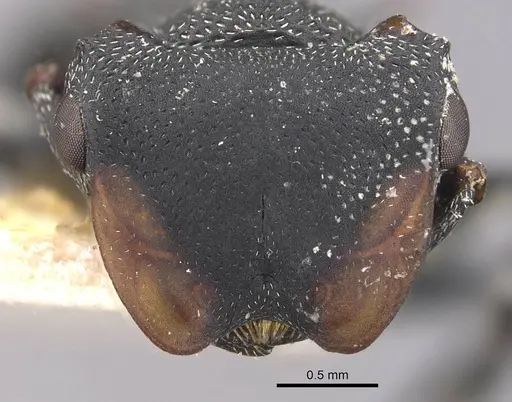
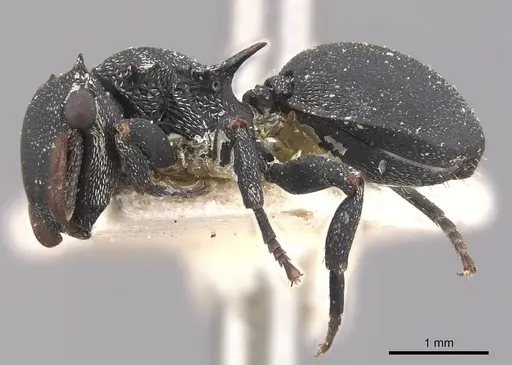
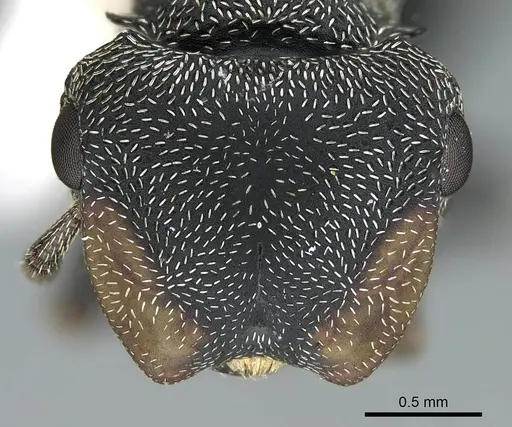
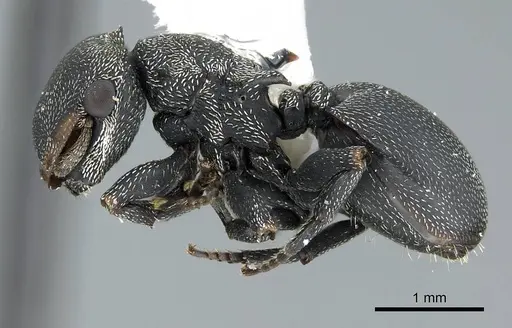
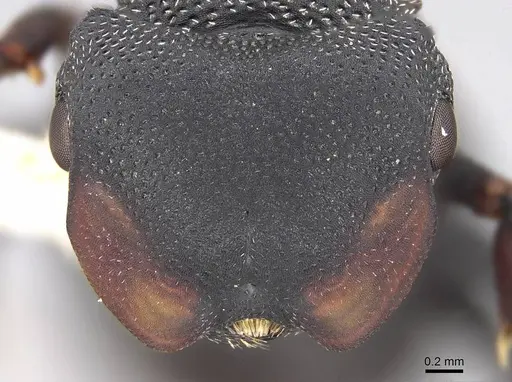
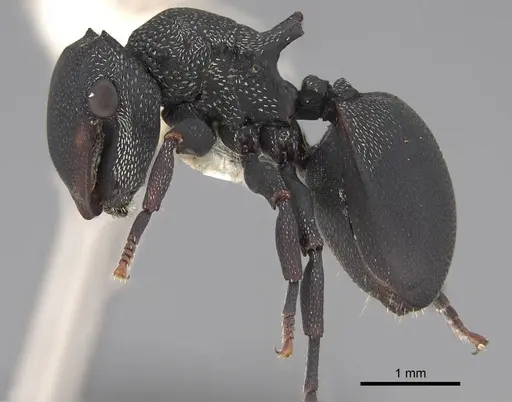
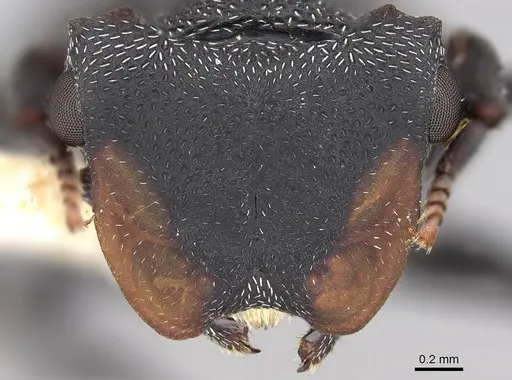
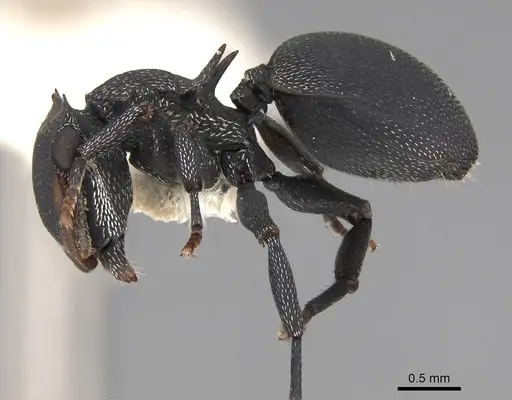
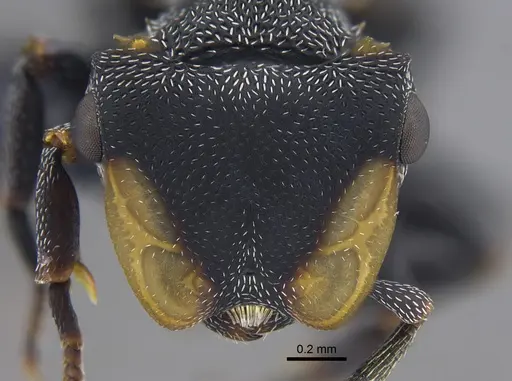
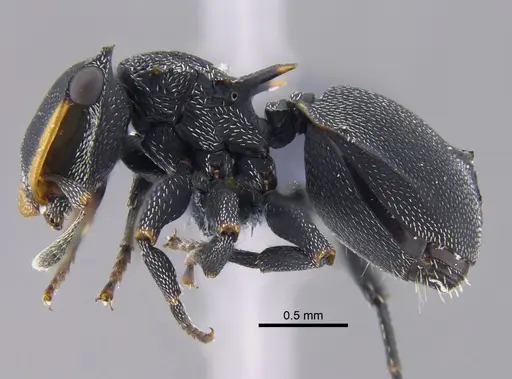
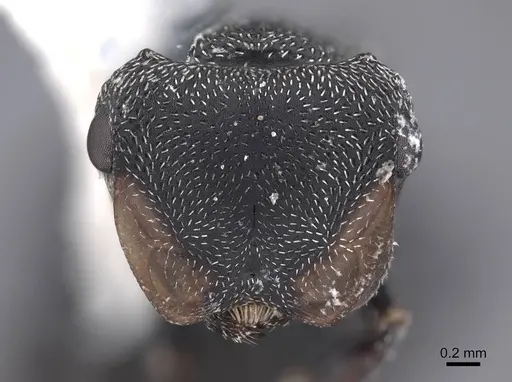
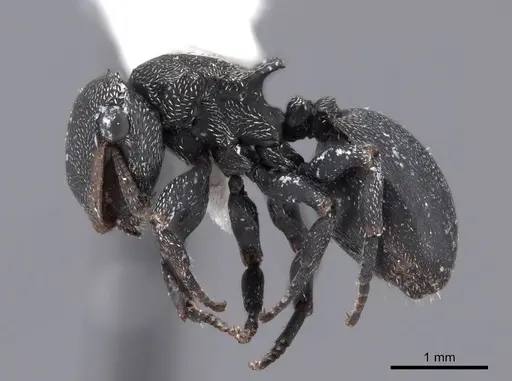
Cephalotes columbicus is a small to medium-sized turtle ant native to Colombia and Venezuela. Workers measure 5.2-5.8mm, soldiers are larger at 6.9-7.3mm, and queens are the largest caste at 11-12mm. These ants are easily recognized by their dark black coloration with distinctive broad, transparent gastral lamellae (the transparent edges of their abdomen). The head is notably flattened, a characteristic feature of turtle ants that helps them block nest entrances. This species belongs to the pusillus clade and is distinguished from related species by its shallower, more rounded foveae (small depressions in the exoskeleton) and broader lamellae on the head and gaster [1].
Unlike the leaf-cutter ants that appear in much of the older research literature under the name 'Cephalotes columbicus', true Cephalotes columbicus are arboreal ants that nest in hollow twigs, branches, and pre-existing cavities in dead wood. They are peaceful ants that rely on their armored appearance and defensive posture rather than aggressive behavior.
Quick Summary
- Difficulty: Medium
- Origin & Habitat: Native to Colombia and Venezuela, found in the Caribbean region of Colombia at elevations from 2-550m. They inhabit tropical dry forest and disturbed habitats [1][2].
- Colony Type: Single-queen (monogyne) colonies. Turtle ants typically have smaller colony sizes than many Myrmicinae, usually reaching a few thousand workers at most.
- Colony: Monogyne
- Founding: Claustral
- Size & Growth:
- Queen: 11.04-11.93mm
- Worker: 5.18-5.76mm
- Colony: Estimated 1,000-3,000 workers based on typical Cephalotes colony sizes [2]
- Growth: Moderate
- Development: 6-8 weeks (estimated based on typical Myrmicinae development at 24-26°C) (Development time is estimated as direct measurements for this species are not available. Turtle ant colonies grow more slowly than many common pet ants.)
- Antkeeping:
- Temperature: Keep at 24-28°C. These are tropical ants that prefer warm, stable conditions. A gentle gradient allowing them to self-regulate is ideal.
- Humidity: Moderate humidity (60-75%). Turtle ants prefer slightly drier conditions than many tropical ants. Provide a moist cotton ball in the outworld but allow the nest area to dry somewhat between rehydrations.
- Diapause: No, being from tropical Colombia and Venezuela, they do not require hibernation. Keep temperatures consistent year-round.
- Nesting: Y-tong (acrylic) nests work well, or a naturalistic setup with hollow twigs/branches. They prefer tight-fitting chambers scaled to their size. Avoid overly humid conditions that can cause mold in the nest.
- Behavior: Turtle ants are generally peaceful and not aggressive. Workers are slow-moving compared to many ants. They are not known for stinging, their primary defense is the soldier's armored head which blocks nest entrances. They are escape artists due to their small size, use fine mesh and tight-fitting barriers. Foraging occurs primarily in the outworld where they search for honeydew, small insects, and sugar sources.
- Common Issues: escape prevention is critical, turtle ants are small and will find the tiniest gaps in setup, colonies grow slowly and beginners may lose patience, overfeeding can cause mold problems in the nest, too much humidity leads to mold which can kill colonies, wild-caught colonies may have parasites that are difficult to treat in captivity
Housing and Nest Setup
Cephalotes columbicus does well in a Y-tong (acrylic) nest with chambers scaled to their small size. The tight-fitting chambers help them feel secure. A small outworld connected to the nest allows for foraging. Because they are arboreal ants that naturally nest in hollow twigs and branches, you can also create a naturalistic setup with appropriately sized hollow stems or bamboo sections. Keep the nest relatively dry, turtle ants are prone to mold problems in overly humid conditions. Ensure excellent escape prevention: these are small ants that can squeeze through surprisingly tiny gaps. Use fine mesh on any ventilation holes and check all connections regularly. [1][2]
Feeding and Diet
Turtle ants are omnivorous. They readily accept sugar water, honey, or diluted maple syrup as an energy source. For protein, offer small insects like fruit flies, small mealworms, or cricket pieces. Some colonies will also accept small amounts of seeds or plant matter. Feed protein 2-3 times per week, and keep a sugar source available at all times. Remove uneaten food promptly to prevent mold. Unlike their distant relatives the leaf-cutter ants (Atta), Cephalotes species do not cultivate fungus and do not require leaf material. [2]
Temperature and Humidity
Maintain temperatures between 24-28°C. These tropical ants do not tolerate cool conditions well. A small heating cable on one side of the nest can create a gentle gradient, but ensure the ants can move away from heat if needed. For humidity, aim for 60-75% in the outworld with the nest area being somewhat drier. Unlike many tropical ants, Cephalotes columbicus prefers conditions that are moderately dry rather than constantly damp. Provide water in the outworld via a test tube water reservoir with a cotton plug, and mist occasionally, but allow the nest to dry between waterings. [2]
Colony Development
Colony growth is slower than many common ant species. A newly mated queen will seal herself in a small chamber and lay eggs after a few days. The first workers (nanitics) will emerge after 6-8 weeks under optimal conditions. These initial workers are smaller than normal workers. Growth continues moderately, expect several months before you have more than a dozen workers. A mature colony may reach 1,000-3,000 workers over several years. Be patient with these ants, they are long-lived but slow-growing. Queens can live for many years, and colonies can persist for decades in ideal conditions. [2]
Behavior and Defense
Cephalotes columbicus is a peaceful species. Their primary defense mechanism is the soldier caste, which has an enlarged, flattened head used to block nest entrances. When threatened, soldiers position themselves at the nest entrance, making entry physically impossible for intruders. Workers are slow-moving and not aggressive. They do not possess a painful sting. These ants are best described as docile and somewhat shy. They spend most of their time foraging in the outworld and tending to the queen and brood within the nest chambers. [2]
Frequently Asked Questions
Can I keep Cephalotes columbicus in a test tube setup?
Test tubes can work for founding colonies, but you'll need to move them to a proper nest (Y-tong or naturalistic) once the colony reaches 15-20 workers. Turtle ants need tight-fitting chambers scaled to their small size.
How long does it take for the first workers to emerge?
Expect 6-8 weeks from egg to first worker at optimal temperature (24-28°C). This is slower than many common ant species, so patience is required.
What do Cephalotes columbicus eat?
They are omnivorous. Offer sugar water, honey, or maple syrup continuously. For protein, provide small insects like fruit flies or small mealworms 2-3 times per week.
Are Cephalotes columbicus good for beginners?
They are rated as medium difficulty. The main challenges are their slow growth (requiring patience), escape prevention due to their small size, and sensitivity to over-humidity. They are not the easiest species but are manageable for committed beginners.
Do they need hibernation or diapause?
No. Being from tropical Colombia and Venezuela, they do not require any winter cooling period. Keep temperatures consistent year-round.
How big do colonies get?
Mature colonies typically reach 1,000-3,000 workers over several years. This is smaller than many Myrmicinae species and far smaller than leaf-cutter ant colonies.
Why are my ants dying?
Common causes include: mold from over-humidity, escapes due to inadequate barriers, temperatures too low, or stress from too frequent disturbances. Check that your setup is not too humid and that escape prevention is thorough.
Can I keep multiple queens together?
No. This is a monogyne (single-queen) species. Multiple unrelated queens will fight. Only keep one queen per colony.
When should I move them to a formicarium?
Move the colony when the test tube becomes crowded or the population exceeds 20-30 workers. A Y-tong nest with appropriately sized chambers works well for turtle ants.
References

This caresheet is licensed under CC BY-SA 4.0 .
CASENT0627935
View on AntWeb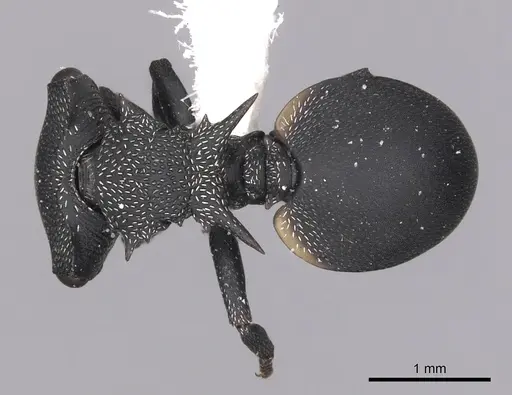
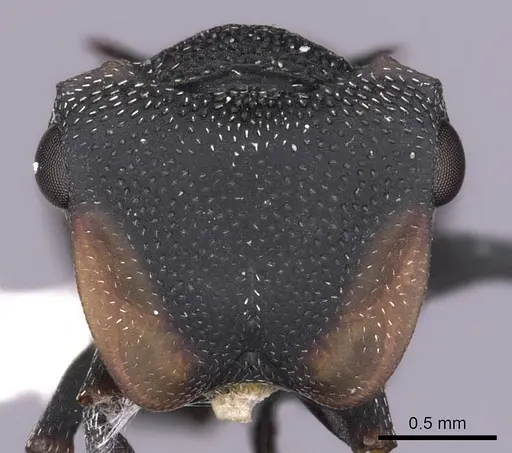
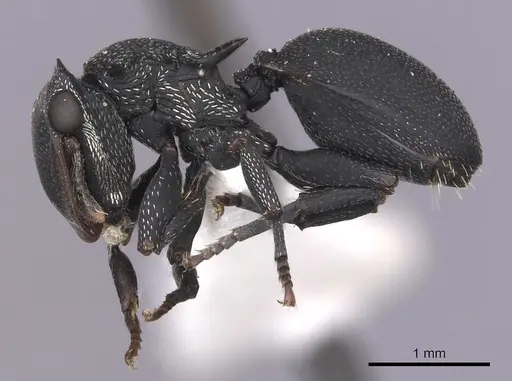
CASENT0627936
View on AntWeb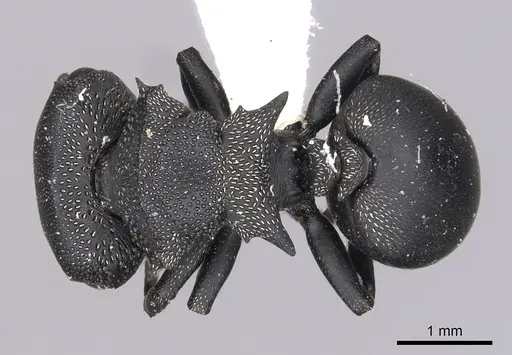
CASENT0627937
View on AntWeb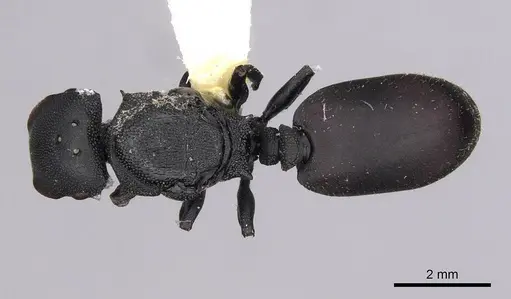
CASENT0909268
View on AntWeb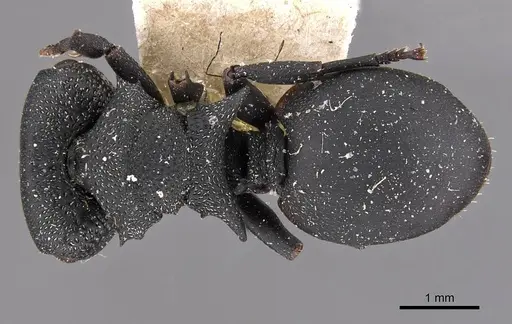
CASENT0909269
View on AntWeb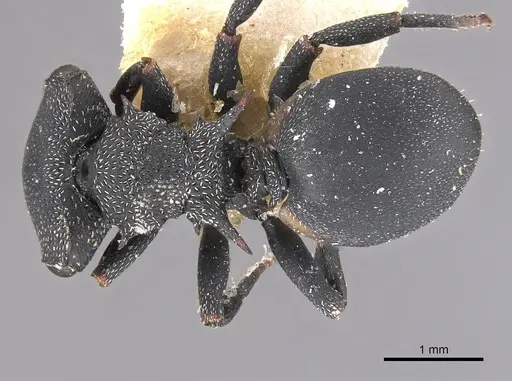
CASENT0914469
View on AntWeb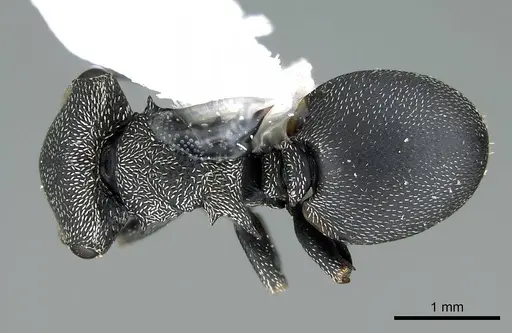
CASENT0922593
View on AntWeb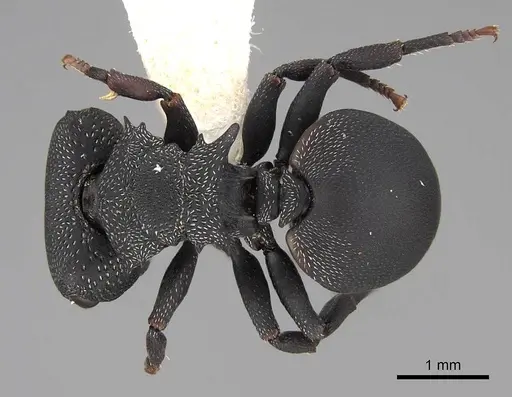
CASENT0922594
View on AntWeb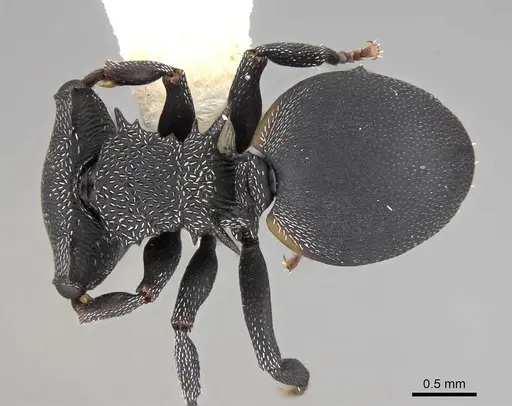
CBUMAGENT41885
View on AntWeb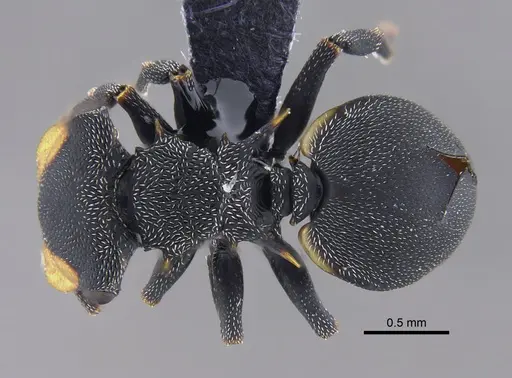
FMNHINS0000047232
View on AntWeb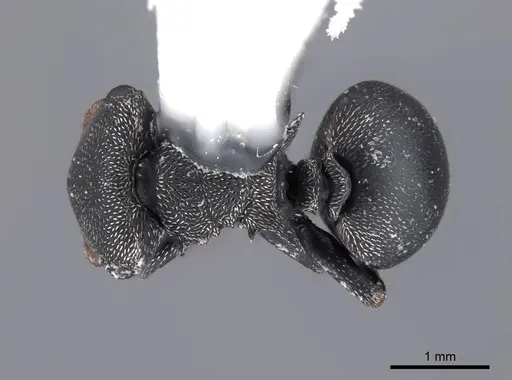
Literature
Loading...Loading products...