

Cephalotes adolphi
- Scientific Name
- Cephalotes adolphi
- Tribe
- Attini
- Subfamily
- Myrmicinae
- Author
- Emery, 1906
- Distribution
- Found in 1 countries
Cephalotes adolphi Overview
Cephalotes adolphi is an ant species of the genus Cephalotes. It is primarily documented in 1 countries , including Brazil. Detailed taxonomic data and occurrence records can be further explored via authoritative databases such as AntWeb or the Global Biodiversity Information Facility (GBIF).
Cephalotes adolphi
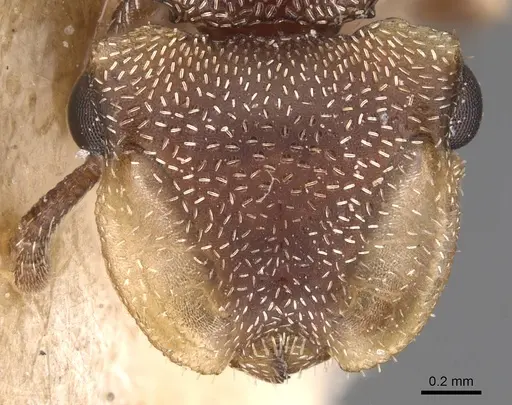
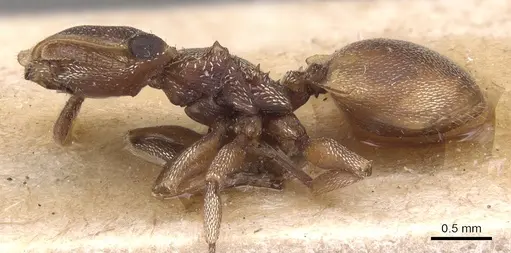
Cephalotes adolphi is an extremely rare turtle ant species known from only a handful of specimens collected in South America. Workers measure approximately 4mm in length and feature the distinctive flattened head and shield-like plates characteristic of turtle ants. Their body is light brown with lighter coloration on the frontal carinae, anterior gaster, and legs. This species belongs to the angustus group and was known only from workers until recently, when soldiers and a queen were finally described. The species was originally described from Coxipó in Mato Grosso, Brazil, and has since been recorded in Pará, Brazil and Peru. This ant represents one of the rarest and least-studied Cephalotes species, with virtually no published information on its biology or colony structure.
Quick Summary
- Difficulty: Expert
- Origin & Habitat: Known from tropical forest regions in Brazil (Mato Grosso, Pará) and Peru. Specific habitat requirements are unconfirmed, but related turtle ants are arboreal, typically nesting in hollow twigs and branches in forest canopies [1][2].
- Colony Type: Colony structure is unconfirmed. Based on genus patterns, likely single-queen colonies with soldier caste present [2].
- Size & Growth:
- Queen: 7.71mm (gyne description from 2021) [2]
- Worker: 4.00mm
- Colony: Unknown, no colony data exists for this species
- Growth: Unknown, no development data exists
- Development: Unconfirmed, no direct observations. Based on typical Cephalotes patterns, likely 6-10 weeks at tropical temperatures. (This is a pure estimate based on genus-level data since no species-specific development information exists.)
- Antkeeping:
- Temperature: Unconfirmed. Related Cephalotes species are tropical and likely prefer warm conditions (24-28°C). Start around 24-26°C and observe colony activity.
- Humidity: Unconfirmed. Turtle ants are arboreal and prefer moderate to high humidity. Aim for 60-80% relative humidity with good ventilation.
- Diapause: Unconfirmed. Tropical species typically do not require hibernation, but this species' specific seasonal requirements are unknown.
- Nesting: Based on genus patterns, this species likely nests in hollow twigs and small branches in trees. In captivity, a naturalistic setup with twigs or a Y-tong/plaster nest with narrow chambers works well. Avoid wet substrates, arboreal ants prefer drier conditions than ground-nesting species.
- Behavior: Behavior is unconfirmed for this species. Based on genus patterns, turtle ants are generally docile, slow-moving, and rely on their shield-like plates for defense rather than aggression. They are arboreal foragers, likely feeding on honeydew and small prey. Escape prevention should be moderate, workers are medium-sized at 4mm but can be quick. Monitor your specific colony's behavior and adjust handling accordingly.
- Common Issues: extreme rarity in the wild means virtually no captive colonies exist, this species is almost never available in the antkeeping hobby, no established care protocols exist, keepers would be pioneering husbandry methods, specific dietary requirements are unknown, must be determined through trial and error, colony structure and founding behavior are unconfirmed, basic biology remains a mystery, wild-caught colonies may have parasites or diseases with no documented treatment protocols
Species Overview and Rarity
Cephalotes adolphi is one of the rarest turtle ant species in existence. Originally described from just two worker specimens collected in Coxipó, Brazil in 1900,it remained virtually unknown for nearly a century. The species was only recently documented more broadly, with records from Pará, Brazil and Peru. What makes this species particularly significant is that until 2021,only workers were known, the soldier and queen castes were undescribed. The 2021 taxonomic revision by Oliveira, Powell, and colleagues provided the first descriptions of these castes, revealing that soldiers can reach 6.85-7.16mm and queens reach 7.71mm. This species belongs to the angustus group, which represents an early branching lineage within the genus. For antkeepers, this species represents an extreme challenge, it is virtually unavailable in the hobby and no captive husbandry protocols exist. [2]
Identification and Morphology
Workers of C. adolphi measure approximately 4mm in total length with a distinctive turtle ant morphology. The head is broader than long with characteristic flattened frontal carinae. The pronotum bears pointed triangular teeth followed by broad lobes. The propodeum has four pairs of pointed denticles of varying sizes. The petiole features lateral spines, and the postpetiole has long thin spines directed forward. The body is light brown with lighter coloration on the frontal carinae, anterior third of the first gastral tergite, femora, and tibiae. The sculpture is distinctive, the head and mesosoma are covered with minute punctures and oval foveae (small pits), while the gaster has deep reticulation with dense superficial foveae. This species can be distinguished from its closest relative C. dentidorsum by its less shining, more opaque body with more impressed sculpture, particularly on the gaster.
Distribution and Biogeography
Cephalotes adolphi is known from a scattered distribution across northern South America. The type locality is Coxipó in Mato Grosso, Brazil, collected in September 1900. More recent records include specimens from Almeirim in Pará state, Brazil, representing the first record for that region. The species has also been recorded in Peru, based on historical records from Kempf (1972) and Escalante Gutiérrez (1993). This distribution pattern across Brazil and Peru suggests the species may be associated with Amazonian or transitional forest habitats, though specific microhabitat preferences remain unstudied. The species appears to be naturally rare or difficult to collect, as despite extensive ant surveys in the region, very few specimens have been documented. [2]
Keeping an Extremely Rare Species
We must be direct: Cephalotes adolphi is not a species you can realistically keep. It is one of the rarest ants in the world with essentially no presence in the antkeeping hobby. No colonies have ever been documented in captivity, and no husbandry information exists. If you somehow obtained specimens, you would be pioneering all aspects of care. For turtle ants in general (related species), the approach would be: use a naturalistic or Y-tong/plaster nest with narrow chambers, maintain tropical temperatures (24-28°C), provide moderate humidity (60-80%), and offer typical turtle ant foods like sugar water/honey and small protein sources. However, this species' specific requirements remain entirely unknown. We include this caresheet for completeness, but prospective keepers should seek more common Cephalotes species like C. varians or C. texanus where established care protocols exist.
Frequently Asked Questions
Can I keep Cephalotes adolphi as a pet?
No. This is one of the rarest ant species in the world, known from only a handful of specimens in museums. It is essentially unavailable in the antkeeping hobby and no captive colonies exist. Even if you obtained specimens, no husbandry protocols exist, you would be pioneering all aspects of care with no guidance.
How big do Cephalotes adolphi colonies get?
Unknown. No colony data exists for this species. Based on related turtle ants, colonies may reach several hundred workers, but this is purely speculative.
What do Cephalotes adolphi ants eat?
Unconfirmed. Based on genus patterns, turtle ants typically feed on honeydew, nectar, and small arthropods. Specific dietary preferences for C. adolphi are completely unknown.
What temperature do Cephalotes adolphi ants need?
Unconfirmed. As a tropical species from Brazil and Peru, they likely prefer warm conditions around 24-28°C. This is an estimate based on related species, not documented requirements.
How long does it take for Cephalotes adolphi to develop from egg to worker?
Unknown. No development data exists for this species. Based on typical Cephalotes patterns, development likely takes 6-10 weeks at tropical temperatures, but this is a rough estimate.
Are Cephalotes adolphi good for beginners?
No. This species is not available in the antkeeping hobby and would be considered expert-level even if obtainable due to completely unknown husbandry requirements. Beginners should start with more common species with established care protocols.
Do Cephalotes adolphi need hibernation?
Unlikely. As a tropical species from Brazil and Peru, they probably do not require hibernation. However, this has not been specifically studied for this species.
Can I keep multiple Cephalotes adolphi queens together?
Unknown. Colony structure is unconfirmed for this species. No data exists on whether they are single-queen or multi-queen colonies.
What is the best nest type for Cephalotes adolphi?
Unconfirmed. Based on genus patterns, turtle ants are arboreal and likely nest in hollow twigs in nature. In captivity, a Y-tong or plaster nest with narrow chambers, or a naturalistic setup with twigs, would be appropriate guesses. No species-specific data exists.
References

This caresheet is licensed under CC BY-SA 4.0 .
CASENT0904906
View on AntWeb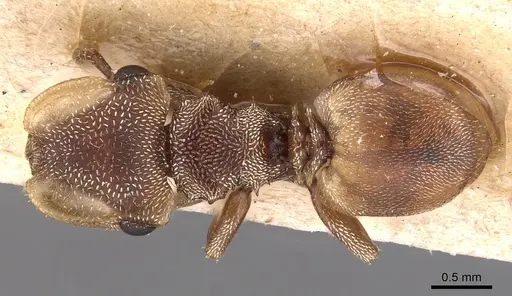
Literature
Loading...Loading products...