

Cataulacus tenuis
- Scientific Name
- Cataulacus tenuis
- Tribe
- Crematogastrini
- Subfamily
- Myrmicinae
- Author
- Emery, 1899
- Distribution
- Found in 1 countries
Cataulacus tenuis Overview
Cataulacus tenuis is an ant species of the genus Cataulacus. It is primarily documented in 1 countries , including Madagascar. Detailed taxonomic data and occurrence records can be further explored via authoritative databases such as AntWeb or the Global Biodiversity Information Facility (GBIF).
Cataulacus tenuis
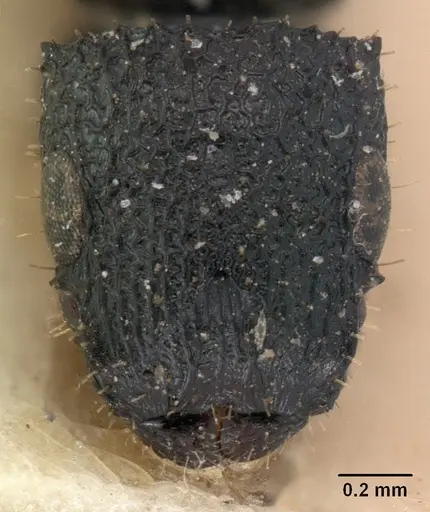
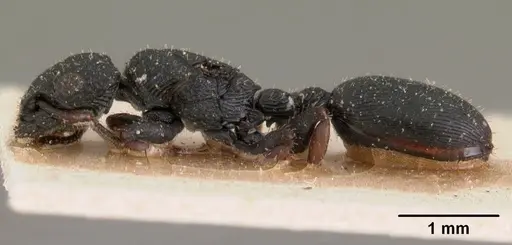
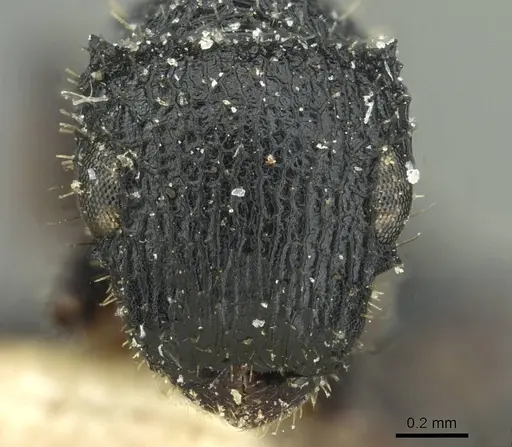
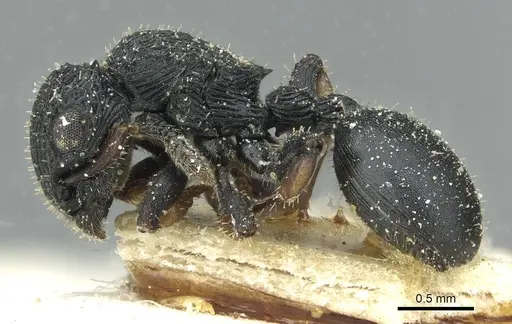
Cataulacus tenuis is a tiny arboreal ant endemic to Madagascar. Workers measure just 3.5mm while queens reach 5.0mm [1]. This species is easily recognized by its unusually long and narrow head, about one quarter longer than wide, giving it a distinctively elongated appearance compared to other Cataulacus species [1]. The head has projecting occipital corners (tooth-like projections), and the body surface is longitudinally rugose with a reticulate pattern on certain areas [1]. As a member of the tenuis group, this ant is part of a genus known for their arboreal lifestyle, typically nesting in rotting wood, hollow twigs, and tree cavities in their tropical forest habitats [1].
Quick Summary
- Difficulty: Unknown, biology unstudied
- Origin & Habitat: Madagascar, specifically Antongil Bay region. As a tropical arboreal ant from Madagascar, they likely inhabit rainforest environments in hollow wood or twigs in the forest canopy [2][1].
- Colony Type: Colony structure is unconfirmed, no biological studies exist for this species. Based on genus patterns, Cataulacus species typically have single-queen colonies, but this is not verified for C. tenuis.
- Size & Growth:
- Queen: 5.0mm [1]
- Worker: 3.5mm [1]
- Colony: Unknown, no colony data exists
- Growth: Unknown
- Development: Unknown, no development studies exist. Based on similar small tropical Myrmicinae, estimate 4-8 weeks at optimal temperature, but this is a rough guess. (Development timeline is completely unstudied. Any estimate would be speculative.)
- Antkeeping:
- Temperature: Unconfirmed, likely need warm conditions typical of tropical ants. Based on Madagascar's climate, aim for roughly 24-28°C with a gentle gradient. Observe colony activity to adjust.
- Humidity: Unconfirmed, likely need moderate to high humidity typical of arboreal ants in tropical forests. Keep nest substrate moist but not waterlogged, with some drier areas available.
- Diapause: Unknown, no seasonal studies exist. As a tropical species from Madagascar, they likely do not require hibernation, but a slight cool period during the dry season may be beneficial if natural conditions are replicated.
- Nesting: Based on genus patterns, they are arboreal, in captivity they likely do well in Y-tong nests, acrylic nests with tight chambers, or naturalistic setups with rotting wood/twigs. Avoid test tubes as their natural nesting sites are in wood, not soil. Keep chambers scaled to their tiny 3.5mm size.
- Behavior: Behavior is unstudied. Based on genus patterns, Cataulacus ants are generally less aggressive and more docile than many Myrmicinae. They are arboreal and likely forage in trees and vegetation. Their small size (3.5mm workers) means escape prevention must be excellent, use fine mesh and tight-fitting barriers. They likely have moderate escape risk due to their tiny size.
- Common Issues: no biological data means all care is speculative, start with conservative conditions and adjust based on colony response, tiny worker size (3.5mm) requires excellent escape prevention with fine mesh barriers, completely unstudied species, expect to experiment with temperature and humidity to find what works, no data on founding behavior or colony development timeline makes success uncertain, arboreal nature means they likely need wood-based nesting rather than soil, test tubes may not be suitable
Appearance and Identification
Cataulacus tenuis is a distinctive little ant with workers measuring just 3.5mm and queens reaching 5.0mm [1]. The most striking feature is their unusually long and narrow head, about one quarter longer than wide, which is extremely unusual in the genus and makes this species relatively easy to identify [1]. Workers have projecting occipital corners (tooth-like projections at the back of the head), and the sides of the middle body section (alitrunk) are margined with small teeth [1]. The body surface is covered with longitudinal ridges (rugose) with an irregular net-like pattern (reticulation) on the pronotum, and the gaster has a reticulate-punctate texture with longitudinal lines on the basal third [1]. This species is endemic to Madagascar, specifically known from the Antongil Bay region [2][1].
Natural History and Habitat
Nothing is known about the biology of Cataulacus tenuis, this is explicitly stated in the scientific literature [1]. However, we can make some educated guesses based on what we know about the genus. Cataulacus is an arboreal ant genus, meaning they naturally live in trees and vegetation rather than in soil nests. In the wild, they typically nest in rotting wood, hollow twigs, and tree cavities, particularly in tropical forest environments [1]. Madagascar's climate is tropical, with warm temperatures year-round and distinct wet and dry seasons. This suggests C. tenuis is adapted to warm, humid conditions. The Antongil Bay region where they are found receives significant rainfall and maintains relatively stable temperatures throughout the year. For captive care, this means replicating a warm, humid environment similar to a tropical forest canopy.
Housing and Nesting
Since Cataulacus tenuis is an arboreal species, they likely do best in nests that mimic their natural wood-dwelling habitat. Y-tong (acrylic) nests with appropriately sized chambers work well, as do naturalistic setups with pieces of rotting wood or cork. The chambers should be scaled to their tiny 3.5mm worker size, tight passages and small chambers are better than large open spaces. Test tubes are likely not ideal since this species doesn't naturally nest in soil or underground. Ensure the nest material retains some moisture to maintain humidity, but avoid waterlogging. Provide a water tube or cotton ball with fresh water as a hydration source. Because of their very small size, escape prevention must be excellent, use tight-fitting lids and fine mesh on any ventilation holes.
Feeding and Diet
The diet of Cataulacus tenuis is completely unstudied, but based on genus patterns, they likely have a varied diet typical of arboreal Myrmicinae. They probably collect honeydew from aphids and scale insects on vegetation, and may hunt small insects and arthropods. In captivity, offer sugar water or honey water as a constant energy source. For protein, small live prey like fruit flies, pinhead crickets, or other tiny insects would be appropriate. Given their tiny 3.5mm worker size, prey items should be very small. Observe whether they accept different foods and adjust accordingly. As with any ant species, remove uneaten prey after 24-48 hours to prevent mold issues.
Temperature and Humidity
No specific temperature or humidity data exists for this species. Based on their origin in tropical Madagascar, they likely prefer warm conditions, aim for roughly 24-28°C as a starting point. A gentle temperature gradient allows the colony to self-regulate. For humidity, arboreal tropical ants typically prefer moderate to high humidity. Keep the nest substrate moist but not waterlogged, with some slightly drier areas available for the ants to move to if needed. Monitor condensation levels, some moisture is good but excessive condensation can indicate too much humidity. Observe colony behavior: if workers seem sluggish, try warming slightly, if they avoid the heated area, reduce temperature.
Colony Development and Growth
The entire colony development timeline is completely unknown for this species, no scientific studies have documented their founding behavior, development times, or colony growth rates [1]. This is one of the least studied ant species in the hobby. Based on typical patterns for small tropical Myrmicinae, you might expect 4-8 weeks from egg to first worker at optimal temperature, but this is purely speculative. Queens are claustral (seal themselves in to raise first workers) based on genus patterns, but this is not confirmed for C. tenuis specifically. Be prepared for a potentially slow process with no reference points, patience and careful observation will be key. Document your results to help build knowledge for this understudied species.
Frequently Asked Questions
How long does it take for Cataulacus tenuis to produce first workers?
The development timeline is completely unknown, no scientific studies exist for this species. Based on similar small tropical Myrmicinae, estimate 4-8 weeks at optimal temperature, but this is a rough guess. Be patient and document your results.
What nest type is best for Cataulacus tenuis?
Based on their arboreal nature, Y-tong nests or naturalistic setups with rotting wood work best. Avoid test tubes since they naturally nest in wood, not soil. Use chambers scaled to their tiny 3.5mm size.
Do Cataulacus tenuis ants sting?
Stinging behavior is not documented for this species. However, as Myrmicinae, they likely have a stinger but it may be too small to penetrate human skin effectively. Based on genus patterns, they are generally docile.
What do Cataulacus tenuis eat?
Diet is unstudied. Based on genus patterns, they likely eat honeydew and small insects. In captivity, offer sugar water/honey water and small live prey like fruit flies.
Are Cataulacus tenuis good for beginners?
No, this species has no documented biology and all care is speculative. The complete lack of information on founding, development, temperature preferences, and colony structure makes it extremely challenging even for experienced antkeepers. Consider starting with better-studied species.
What temperature should I keep Cataulacus tenuis at?
Temperature requirements are unconfirmed. Based on Madagascar's tropical climate, start around 24-28°C with a gentle gradient. Observe colony activity and adjust based on their behavior.
Do Cataulacus tenuis need hibernation?
Unknown, no seasonal studies exist. As a tropical species from Madagascar, they likely do not require hibernation. A slight cool period during a simulated dry season may be beneficial but is not necessary.
How big do Cataulacus tenuis colonies get?
Colony size is completely unknown, no colony data exists for this species. Based on their small worker size (3.5mm), colonies are likely moderate at most.
Where is Cataulacus tenuis found?
This species is endemic to Madagascar, specifically known from the Antongil Bay region [2][1]. It is not found anywhere else in the world.
Can I keep multiple Cataulacus tenuis queens together?
Not recommended, colony structure is unconfirmed for this species, and combining unrelated queens has not been documented. Based on genus patterns, they likely have single-queen colonies.
Why are my Cataulacus tenuis dying?
Without any documented care information, diagnosing problems is extremely difficult. Common issues likely include: incorrect humidity (too dry or too wet), inappropriate temperature, poor escape prevention, or stress from unknown requirements. Start with conservative conditions and adjust gradually based on colony response.
Is Cataulacus tenuis invasive?
No, this species is endemic to Madagascar and has never been documented as invasive anywhere. It is not established in any other region.
References

This caresheet is licensed under CC BY-SA 4.0 .
CASENT0102070
View on AntWeb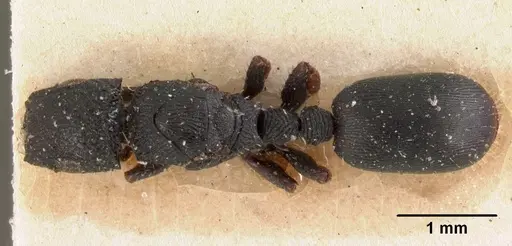
CASENT0912570
View on AntWeb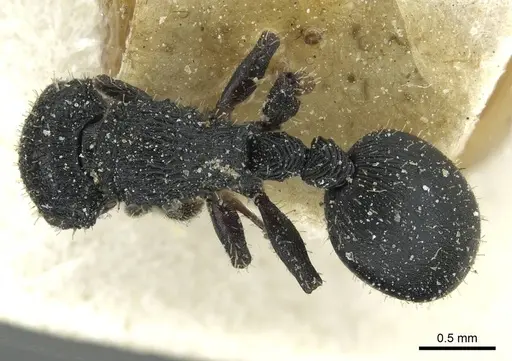
Literature
Loading...Loading products...