

Cataulacus simoni
- Scientific Name
- Cataulacus simoni
- Tribe
- Crematogastrini
- Subfamily
- Myrmicinae
- Author
- Emery, 1893
- Distribution
- Found in 1 countries
Cataulacus simoni Overview
Cataulacus simoni is an ant species of the genus Cataulacus. It is primarily documented in 1 countries , including India. Detailed taxonomic data and occurrence records can be further explored via authoritative databases such as AntWeb or the Global Biodiversity Information Facility (GBIF).
Cataulacus simoni
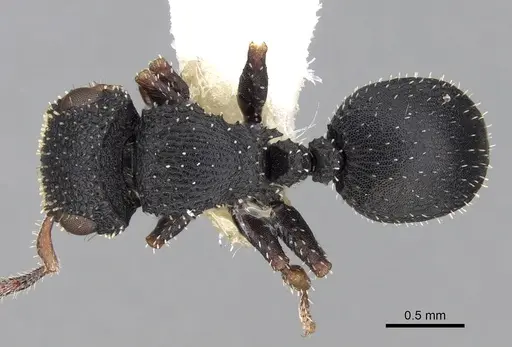
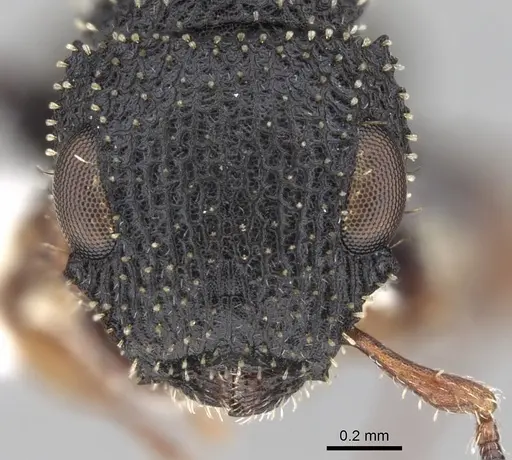
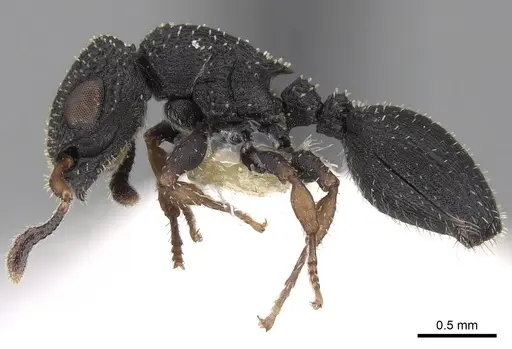
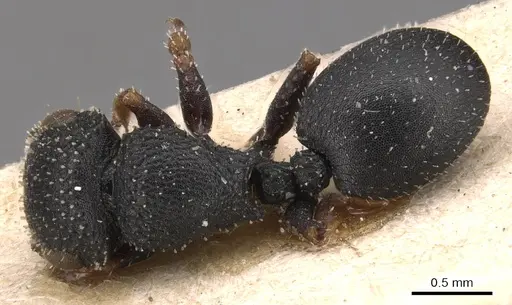
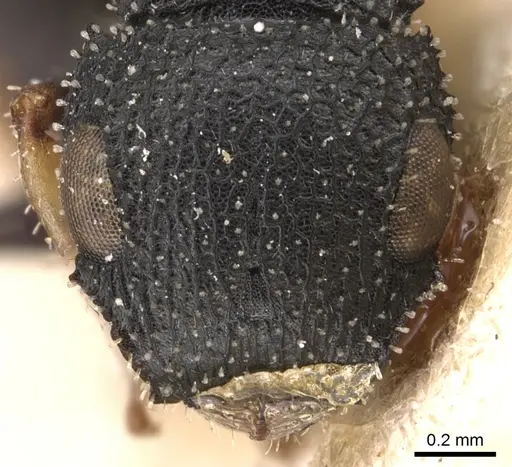
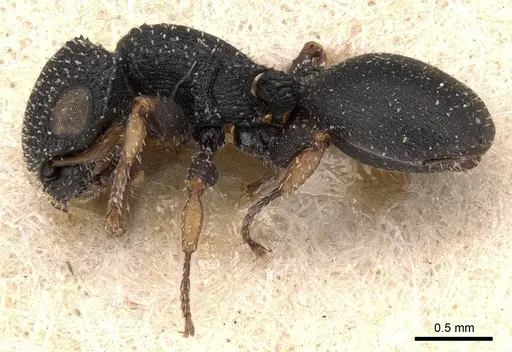
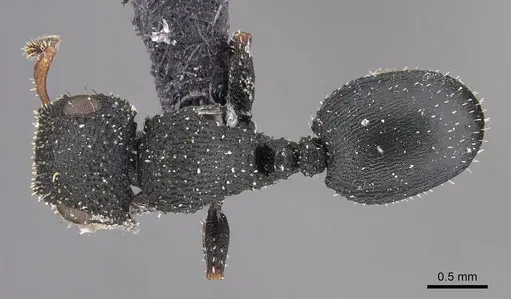
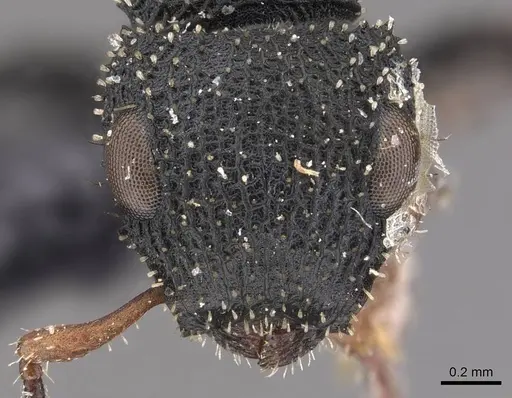
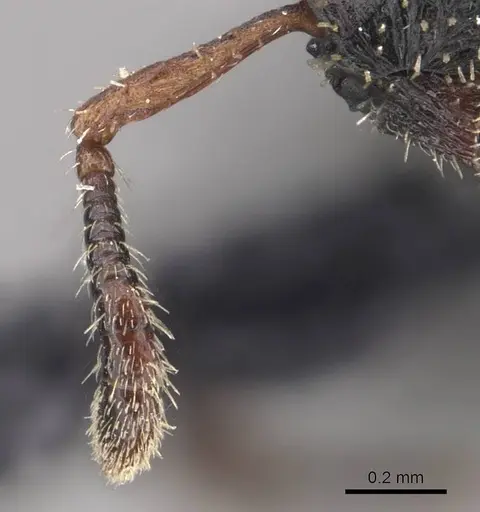
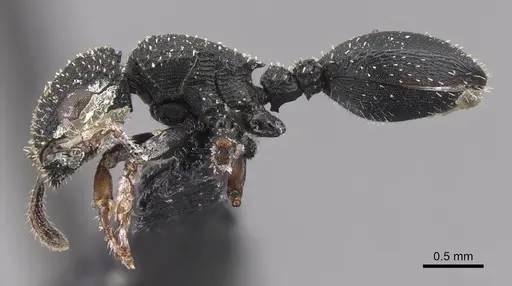
Cataulacus simoni is a small arboreal ant measuring 3.8-4.1mm for workers and around 5mm for queens. They belong to the granulatus species group and are distinguished by their relatively narrow head, large eyes, and the presence of short clavate (club-shaped) hairs on their body. The workers have a black body with reddish appendages and a densely punctured, opaque appearance [1]. This species is restricted to Sri Lanka and the Andaman Islands in the Indian Ocean[2].
Nothing is known about the specific biology of Cataulacus simoni, including their founding behavior, colony structure, or exact nesting preferences [2]. However, as a member of the genus Cataulacus, they are likely arboreal nesters, similar to other species in this genus which typically nest in rotting wood, hollow twigs, and tree cavities in tropical forests.
Quick Summary
- Difficulty: Unknown
- Origin & Habitat: Sri Lanka and Andaman Islands, found in lowland wet forest reserves [3][4]. They appear to be restricted to these tropical regions in South Asia.
- Colony Type: Unconfirmed, colony structure has not been documented for this species [2].
- Size & Growth:
- Queen: 5.0mm
- Worker: 3.8-4.1mm
- Colony: Unknown, no colony size data available
- Growth: Unknown
- Development: Unknown, no development data exists for this species (Based on typical Myrmicinae patterns, expect 6-10 weeks at warm tropical temperatures, but this is a rough estimate only)
- Antkeeping:
- Temperature: Likely 24-28°C based on their tropical Sri Lanka/Andaman distribution, provide a warm, stable temperature gradient and adjust based on colony activity
- Humidity: Likely requires moderate to high humidity (60-80%) given their wet forest habitat in Sri Lanka, keep nest substrate moist but not waterlogged
- Diapause: Unknown, tropical species may not require formal hibernation but may show reduced activity during cooler periods
- Nesting: Likely arboreal, provide rotting wood setups, cork bark, or Y-tong nests with wood-based substrate. They probably prefer nesting in wood cavities like other Cataulacus species [2].
- Behavior: Behavior is undocumented for this species [2]. Based on genus-level knowledge, Cataulacus ants are typically arboreal, somewhat slow-moving, and not particularly aggressive. Their small size (under 4mm) means escape prevention is important, use fine mesh barriers and tight-fitting lids. They likely forage in trees and surrounding vegetation rather than on the ground.
- Common Issues: no biological data exists, keepers must extrapolate from genus patterns, tropical humidity needs may be difficult to maintain consistently, small size makes escape prevention critical, completely unconfirmed diet preferences, must experiment with common ant foods, no documented founding behavior, unknown if claustral or semi-claustral
Species Overview and Identification
Cataulacus simoni is a small arboreal ant species described by Emery in 1893,originally collected from Sri Lanka (Kandy and Colombo). Workers measure 3.8-4.1mm in total length, making them one of the smaller Cataulacus species. They can be identified by their relatively narrow head with large eyes, the presence of distinctly clavate (club-shaped) hairs on the head and alitrunk, and fine sculpturing on the body surface. The head and thorax have a reticulate-rugose pattern with finely punctured interspaces, giving a dull shine. Propodeal spines are variable, ranging from distinct short structures to small teeth. The species was previously known as Cataulacus simoni before being synonymized with C. simoni. [1][2]
Distribution and Habitat
Cataulacus simoni appears to be restricted to Sri Lanka and the Andaman Islands in the Indian Ocean[2]. In Sri Lanka, they have been recorded in lowland wet forest reserves [3][4]. The species has also been reported from mainland India including Meghalaya in the northeast and Kerala in the south, as well as from the Andaman and Nicobar Islands [5]. There are also old records from China, though these may require verification. Their presence in wet forest habitats suggests they prefer humid, shaded tropical environments with access to trees and decaying wood for nesting.
Nesting and Housing
Nesting behavior has not been documented for Cataulacus simoni specifically [2]. However, the genus Cataulacus is known to be arboreal, with species typically nesting in rotting wood, hollow twigs, tree cavities, and similar elevated microhabitats. For captive care, provide a naturalistic setup with rotting wood, cork bark, or a Y-tong/plaster nest with wood-based substrate. The nest should maintain moderate to high humidity (60-80%) to simulate their wet forest habitat. Ensure adequate ventilation to prevent mold while maintaining humidity. Because they are small (under 4mm), use appropriately scaled chambers and fine mesh barriers for escape prevention.
Feeding and Diet
The specific diet of Cataulacus simoni is completely undocumented [2]. Based on typical Cataulacus behavior and related Myrmicinae ants, they likely forage for honeydew, small insects, and may accept sugar sources. Start with standard ant foods: sugar water or honey as an energy source, and protein sources like small mealworms, fruit flies, or other tiny insects. Monitor for acceptance and adjust feeding based on colony preferences. Because nothing is known about their specific dietary needs, be prepared to experiment with various food types. Avoid overfeeding as uneaten food can mold in the humid setup they require.
Temperature and Environmental Needs
As a tropical species from Sri Lanka and the Andaman Islands, Cataulacus simoni likely requires warm temperatures in the range of 24-28°C. Their presence in lowland wet forests suggests they prefer stable, warm, and humid conditions. Provide a temperature gradient so the ants can self-regulate, a heating cable on one side of the nest can create this gradient. Monitor colony activity to determine if temperature adjustments are needed. If workers cluster near the heat source, increase temperature slightly, if they avoid heated areas, reduce heat. Since nothing is known about their diapause requirements, assume they do not require formal hibernation, but may show reduced activity during cooler periods. [2]
Known Information Gaps
It cannot be overstated that virtually nothing is known about the biology of Cataulacus simoni [2]. No research exists on their colony founding behavior, queen number (monogyne vs polygyne), development timeline, specific habitat preferences, or behavior in captivity. This makes them a challenging species to keep for beginners, as there are no established care protocols to follow. Keepers must be prepared to experiment and document their observations carefully. The genus-level information provided here (arboreal nesting, likely tropical temperature needs) represents the best available guidance, but species-specific requirements may differ significantly. Consider starting with more commonly kept species if you are new to antkeeping.
Frequently Asked Questions
How long does it take for Cataulacus simoni to develop from egg to worker?
The egg-to-worker development timeline is completely unknown for this species, no research has been documented. Based on typical Myrmicinae patterns, expect roughly 6-10 weeks at warm tropical temperatures (around 26°C), but this is only a rough estimate.
What do Cataulacus simoni ants eat?
Their specific diet is undocumented. Based on genus-level knowledge, they likely accept sugar sources (honey, sugar water) and small protein sources (tiny insects like fruit flies, springtails). Start with standard ant foods and observe what the colony accepts.
Can I keep Cataulacus simoni in a test tube?
A test tube setup can work for founding queens and small colonies, but given their likely arboreal nature, they may do better in a naturalistic setup with rotting wood or cork bark. The small size (under 4mm) means escape prevention must be excellent regardless of setup.
Are Cataulacus simoni good for beginners?
This species is NOT recommended for beginners. Nothing is known about their biology, care requirements, or behavior in captivity. There are no established protocols to follow. Beginners should start with species that have well-documented care requirements.
Do Cataulacus simoni ants sting?
Stinging ability is not documented for this specific species. Most Myrmicinae ants have stingers, but they are often too small to penetrate human skin effectively. Based on their small size (under 4mm), any sting would likely be minimal if present.
What temperature should I keep Cataulacus simoni at?
Based on their tropical Sri Lanka/Andaman distribution, aim for 24-28°C. Provide a temperature gradient so the ants can choose their preferred zone. Adjust based on observed colony activity.
Do Cataulacus simoni need hibernation or diapause?
This is unknown. As a tropical species from Sri Lanka, they likely do not require formal hibernation. They may show reduced activity during cooler periods, but no documented diapause behavior exists.
How big do Cataulacus simoni colonies get?
Colony size is completely undocumented for this species. No research has documented maximum colony sizes or growth rates.
Is Cataulacus simoni monogyne or polygyne?
Colony structure is unconfirmed, no research has documented whether they have single queens or multiple queens. The genus Cataulacus shows variation in colony structure across species.
When do Cataulacus simoni have nuptial flights?
Nuptial flight timing is completely undocumented for this species. As a tropical species, flights likely occur during warm, humid periods but specific timing is unknown.
References

This caresheet is licensed under CC BY-SA 4.0 .
Literature
Loading...Loading products...