

Cataulacus flagitiosus
- Scientific Name
- Cataulacus flagitiosus
- Tribe
- Crematogastrini
- Subfamily
- Myrmicinae
- Author
- Smith, 1862
- Distribution
- Found in 1 countries
Cataulacus flagitiosus Overview
Cataulacus flagitiosus is an ant species of the genus Cataulacus. It is primarily documented in 1 countries , including Indonesia. Detailed taxonomic data and occurrence records can be further explored via authoritative databases such as AntWeb or the Global Biodiversity Information Facility (GBIF).
Cataulacus flagitiosus
Cataulacus flagitiosus is a small arboreal ant species native to Sulawesi, Indonesia. Workers measure approximately 4.6-4.8mm in total length, making them a moderately small species [1]. They belong to the taprobane species group and are characterized by distinctive pronotal lobes or flanges along the sides of the thorax, which give them a unique appearance among Myrmicinae ants [1]. The head and body feature coarse rugoreticulate sculpture with fine reticulate-puncturation, and they possess long, strong propodeal spines that are divergent [1]. This species has only been collected from Sulawesi (formerly Celebes), making it an endemic species to this Indonesian island [1].
Very little is known about the biology of Cataulacus flagitiosus, in fact, AntWiki explicitly states that nothing is known about the biology of this species [2]. As with other Cataulacus species, they are arboreal ants that likely nest in hollow twigs, branches, or tree cavities rather than in ground nests [2]. The genus Cataulacus is known for its arboreal lifestyle and unusual morphology compared to other Myrmicinae ants.
Quick Summary
- Difficulty: Unknown
- Origin & Habitat: Sulawesi, Indonesia, tropical island environment with humid forest habitats [1]. As an arboreal species, they likely inhabit forest canopies and woody vegetation.
- Colony Type: Colony structure is unconfirmed, no data exists on queen number or colony organization for this species.
- Size & Growth:
- Queen: Unknown, no queen specimens have been described in scientific literature
- Worker: 4.6-4.8mm total length [1]
- Colony: Unknown, no colony size data exists
- Growth: Unknown
- Development: Unknown, no development data exists for this species (Development timeline has not been studied. Based on typical Cataulacus patterns and tropical Myrmicinae, expect development in the range of 4-8 weeks at warm temperatures, but this is entirely estimated.)
- Antkeeping:
- Temperature: Unknown for this specific species. As a tropical Sulawesi ant, they likely prefer warm conditions in the range of 24-28°C. Start in the mid-20s Celsius and observe colony activity, if workers are active and foraging, the temperature is likely suitable. Provide a gentle temperature gradient if possible.
- Humidity: Unknown for this species. As an arboreal ant from Sulawesi's humid tropical environment, they likely require moderate to high humidity. Keep the nest substrate consistently moist but not waterlogged. Monitor for condensation and mold as indicators of humidity balance.
- Diapause: Unknown, no research exists on seasonal behavior. As a tropical species from Sulawesi, they may not require a true diapause, but may show reduced activity during cooler or drier periods.
- Nesting: Cataulacus are arboreal ants that naturally nest in hollow twigs, branches, and tree cavities. In captivity, they do well in Y-tong (AAC) nests, plaster nests, or naturalistic setups with ample woody material. They prefer tight, enclosed chambers scaled to their size. Avoid dry, desert-style setups, they need access to moisture.
- Behavior: Behavior is unstudied for this species. The genus Cataulacus is known for being relatively docile compared to many Myrmicinae, with workers that are not particularly aggressive. They are arboreal foragers, likely foraging on vegetation and tree bark rather than ground foraging. Escape risk is moderate, at 4.6-4.8mm, they are not tiny but can still squeeze through small gaps. Use standard mesh barriers and secure enclosures. They likely have a stinger but its potency against human skin is unknown.
- Common Issues: No biological data exists, everything about keeping this species is speculative and based on genus-level knowledge, Lack of development data makes it impossible to predict growth timelines or identify problems, Unknown humidity requirements risk killing colonies through improper moisture levels, Unknown diapause requirements may lead to seasonal management mistakes, Very limited availability, this species is rarely collected or available in the antkeeping hobby
Species Identification and Morphology
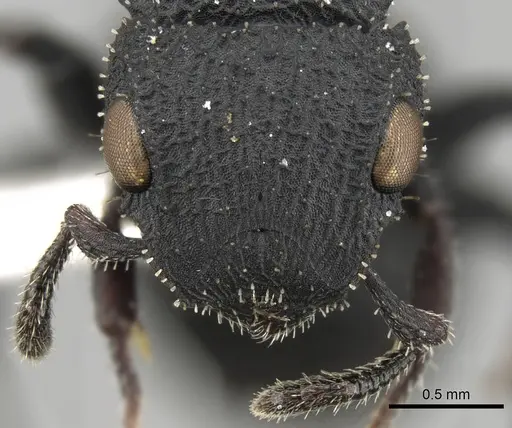
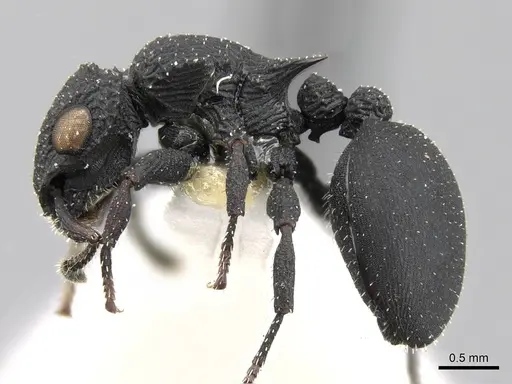
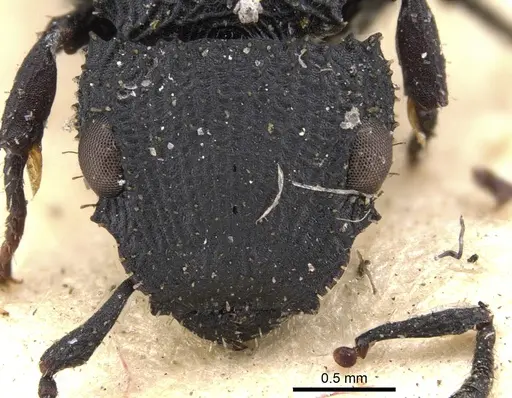
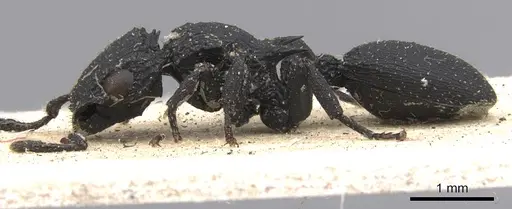
Cataulacus flagitiosus workers are distinctive among Cataulacus species due to their pronotal flanges, broad, lobe-like extensions on the sides of the pronotum that are denticulate along their outer edges [1]. The workers measure 4.6-4.8mm in total length, with a head width of 1.30-1.34mm [1]. The head has a complete occipital crest with denticles, and the sides behind the eyes are denticulate [1]. The propodeal spines are notably long, strong, and divergent, with each spine being approximately as long as the distance between the two spines [1]. The base of the gaster (abdomen) is marginated, and the entire body is covered with coarse rugoreticulum overlaid by fine reticulate-puncturation [1]. The species was originally described by Frederick Smith in 1862 from specimens collected in Tondano, Sulawesi [1].
Distribution and Collection
Cataulacus flagitiosus is known only from Sulawesi, Indonesia, an island in the Indonesian archipelago formerly known as Celebes [1]. The type locality is Tondano, collected by the famous naturalist A.R. Wallace during his 19th-century explorations [1]. There has been some historical confusion about the collection data, the holotype is labeled 'SAR 5' where SAR typically refers to Sarawak (Borneo), but Bolton confirmed the specimen was actually collected from Sulawesi [1]. The species has also been reported from the Bachian islands, though this may refer to a different specimen or species [3]. This limited distribution makes C. flagitiosus an endemic species to Sulawesi.
Nest Preferences and Housing
As a Cataulacus species, this ant is arboreal, meaning it naturally lives in trees and woody vegetation rather than in ground nests. In their natural habitat, they likely nest in hollow twigs, under bark, or in decaying wood cavities in forest trees. For captive care, provide nest setups that mimic these conditions: Y-tong (AAC) nests work well, as do plaster nests or naturalistic setups with ample rotting wood or cork bark. The chambers should be appropriately sized for their 4.6-4.8mm workers, not too large or open. Ensure the nest material can hold moisture since arboreal ants often have different humidity needs than ground-nesting species. Provide an outworld area where workers can forage. [2]
Feeding and Diet
The specific diet of Cataulacus flagitiosus is unknown, no feeding observations or studies exist for this species. However, Cataulacus genus members are typically omnivorous, feeding on honeydew from aphids and scale insects, small insects, and occasionally nectar. For captive colonies, offer a varied diet including sugar water or honey as an energy source, and protein sources such as small insects (fruit flies, small crickets, mealworms). Start with modest offerings and observe what the colony accepts. As an arboreal species, they may prefer foraging on elevated surfaces rather than on the ground. Do not overfeed, remove uneaten prey after 24-48 hours to prevent mold.
Temperature and Seasonal Care
No specific temperature data exists for Cataulacus flagitiosus. As a tropical species from Sulawesi, they likely prefer warm, stable temperatures in the range of 24-28°C. Sulawesi has a warm tropical climate year-round, so avoid cold temperatures. If keeping this species, maintain room temperature in the mid-20s Celsius. A heating cable on one side of the nest can create a gentle gradient if your room temperature runs cooler. Observe colony behavior, active foraging and brood development indicate suitable temperatures. Regarding diapause or winter rest: as a tropical species, they likely do not require a true hibernation period, but may show reduced activity during naturally cooler or drier seasons. err on the side of maintaining consistent warm conditions.
Challenges and Limitations
Cataulacus flagitiosus presents significant challenges for antkeepers due to the complete lack of biological data. AntWiki explicitly states that nothing is known about the biology of this species, this means no information exists about colony founding, development times, queen behavior, dietary preferences, humidity needs, or any other aspect of captive care. Everything recommended for keeping this species must be inferred from general Cataulacus genus knowledge, which may or may not apply to this specific species. This makes C. flagitiosus unsuitable for beginners or anyone who needs reliable, species-specific guidance. Additionally, this species appears to be rarely collected and may not be available in the antkeeping hobby. Prospective keepers should consider more well-documented species unless they have a specific research interest in this poorly studied ant. [2]
Frequently Asked Questions
How do I care for Cataulacus flagitiosus ants?
Unfortunately, specific care requirements are unknown because nothing has been documented about this species' biology. Based on genus knowledge, provide a warm (24-28°C), humid environment with an arboreal-style nest (Y-tong or plaster with woody material). Feed sugar water and small insects. This species is not recommended for beginners due to the complete lack of biological data.
What do Cataulacus flagitiosus eat?
The specific diet of this species is unstudied. Based on typical Cataulacus behavior, they likely accept honeydew, sugar sources, and small insects. Offer sugar water or honey and small protein sources like fruit flies or tiny crickets. Start with small amounts and observe acceptance.
What temperature do Cataulacus flagitiosus need?
Temperature requirements are not documented for this species. As a tropical ant from Sulawesi, they likely need warm conditions around 24-28°C. Maintain stable temperatures in this range and provide a gentle gradient if possible.
Do Cataulacus flagitiosus need hibernation?
Unknown, no research exists on seasonal behavior. As a tropical species from Sulawesi, they likely do not require a true diapause. Maintain consistent warm conditions year-round.
How big do Cataulacus flagitiosus colonies get?
Colony size is unknown, no colony size data exists for this species. No one has documented how large colonies grow in the wild or in captivity.
How long does it take for Cataulacus flagitiosus to develop from egg to worker?
Unknown, no development data exists for this species. Based on typical tropical Myrmicinae and genus patterns, development may take 4-8 weeks at warm temperatures, but this is entirely estimated.
Are Cataulacus flagitiosus good for beginners?
No, this species is not recommended for beginners. The complete lack of biological data means no reliable care guidelines exist. Beginners should choose species with well-documented care requirements.
Can I keep multiple Cataulacus flagitiosus queens together?
Unknown, colony structure has not been documented for this species. No information exists about whether they are single-queen or multi-queen colonies.
What size nest do Cataulacus flagitiosus need?
As an arboreal species, they prefer nests with woody material, hollow twigs, or tight chambers. Y-tong (AAC) nests or plaster nests with cork bark work well. Use chambers appropriately sized for their 4.6-4.8mm workers.
Do Cataulacus flagitiosus ants sting?
Unknown, stinging behavior has not been documented for this species. Most Myrmicinae have stingers, but whether they can penetrate human skin and cause pain is unknown.
Where is Cataulacus flagitiosus found?
This species is known only from Sulawesi, Indonesia. The type locality is Tondano on Sulawesi. It is considered endemic to this island.
Is Cataulacus flagitiosus available in the antkeeping hobby?
Likely not, this species is rarely collected and appears to have no established presence in the antkeeping hobby. The lack of any biological data also means no one has attempted to keep this species in captivity. It remains a poorly studied species known only from historical museum specimens.
References

This caresheet is licensed under CC BY-SA 4.0 .
CASENT0280801
View on AntWeb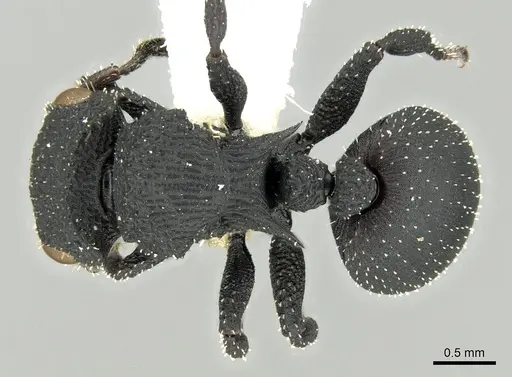
CASENT0901454
View on AntWeb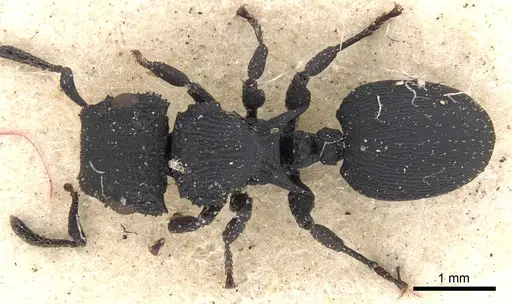
Literature
Loading...Loading products...