

Cataglyphis setipes
- Scientific Name
- Cataglyphis setipes
- Tribe
- Formicini
- Subfamily
- Formicinae
- Author
- Forel, 1894
- Distribution
- Found in 6 countries
Cataglyphis setipes Overview
Cataglyphis setipes is an ant species of the genus Cataglyphis. It is primarily documented in 6 countries , including Afghanistan, India, Iran. Detailed taxonomic data and occurrence records can be further explored via authoritative databases such as AntWeb or the Global Biodiversity Information Facility (GBIF).
Cataglyphis setipes
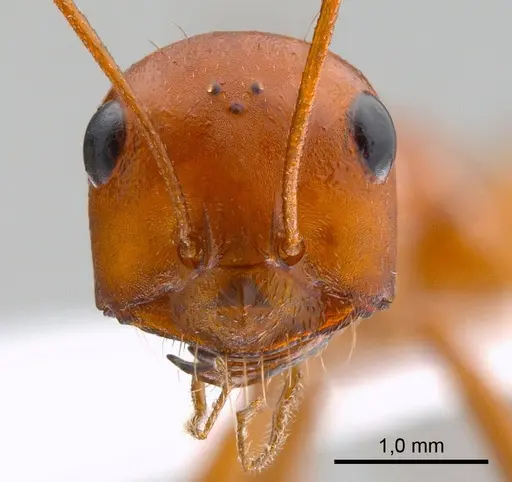
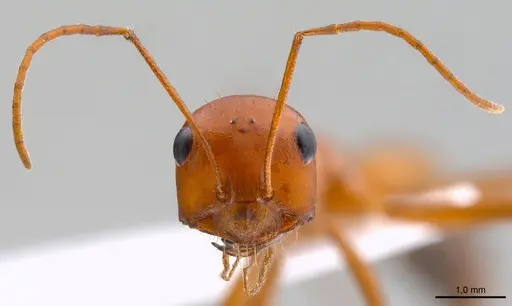
Cataglyphis setipes is a medium-to-large desert ant belonging to the bicolor species group, native to arid and semi-arid regions of Central and South Asia. Workers measure 4-5mm in total body length with a distinctive color pattern: the head, mesosoma, and petiole are dark reddish-brown while the gaster (abdomen) is black [1]. They have long legs and 12-segmented antennae with scapes that extend well past the back of the head [1]. This species is one of the most conspicuous ants in its range, commonly found in open habitats like bare ground, roadsides, and graveyards where they build permanent nests in dry soil [1][2]. Workers forage individually and carry their gaster raised while walking, a characteristic behavior of the genus that helps them avoid overheating on hot desert surfaces [1].
Quick Summary
- Difficulty: Medium
- Origin & Habitat: Native to arid and semi-arid zones of Central and South Asia, including India, Pakistan, Iran, Turkey, Turkmenistan, Afghanistan, Kyrgyzstan, and Uzbekistan. Found at elevations from 250 to 2400 meters above sea level [3][1]. Inhabits subtropical areas with open, dry habitats, typically bare ground, roadsides, and agricultural areas [1]. Nests are constructed in dry soil with a developed system of surface galleries and chambers located 20-40cm deep, with one or more vertical shafts reaching the surface [4].
- Colony Type: Monogyne, single queen colonies. This species is known to host the social parasite Cataglyphis zakharovi, an inquiline that lives in the nest without killing the host queen [5].
- Colony: Monogyne
- Founding: Claustral
- Size & Growth:
- Queen: Queen measures approximately 5.27mm in total length (GL 5.27mm, WL 4.56mm) [1]
- Worker: Workers range from 1.54-2.97mm head length (HL), with major workers reaching up to 3.08mm head width (HW) and 4.90mm mesosoma length (WL) [1]
- Colony: Colonies can reach several thousand workers. In Turkmenistan, colonies build additional vertical shafts once the colony reaches around 2,500 individuals, with up to 3 shafts per mature nest [4]
- Growth: Moderate, development timeline is estimated based on related Cataglyphis species
- Development: Estimated 6-10 weeks at optimal temperature based on genus patterns for bicolor-group species (Development is temperature-dependent, warmer conditions within species tolerance accelerate growth. Nanitic (first) workers are typically smaller than normal workers.)
- Antkeeping:
- Temperature: Keep at 25-32°C with a thermal gradient. This species is adapted to hot desert conditions and thrives in warm temperatures. Provide a heating cable on one side of the nest to create a gradient, allowing workers to regulate their temperature [4].
- Humidity: Low to moderate. These are desert ants adapted to dry conditions. Keep nest substrate moderately dry, damp but not wet. Provide a water tube for drinking but avoid excessive moisture that causes mold. The natural habitat is dry soil in arid regions [1].
- Diapause: Yes, this species is active only during warm months and enters dormancy during winter. In their native range, they are not found during the winter season [6]. Provide a cool period around 10-15°C for 2-3 months during winter months.
- Nesting: Y-tong (acrylic) nests or plaster nests work well. These ants prefer dry, compact nesting material. Provide chambers scaled to colony size, start with test tube setups for founding colonies, then transition to formicarium as the colony grows. Nest depth of 20-40cm in the wild suggests they benefit from deeper nesting areas in captivity [4].
- Behavior: Workers are active foragers that search for food individually, characteristic of the genus. They are fast-moving and alert, with good vision. When disturbed, they may raise their gaster as a defensive display. They are not particularly aggressive toward humans but will defend their nest. Escape risk is moderate, use standard barrier methods like fluon on test tube rims. Workers have long legs and are capable climbers, so ensure enclosures are secure. They are diurnal (daytime) foragers, matching their desert lifestyle [1][4].
- Common Issues: colonies often fail during winter if not given proper cool period, they need a diapause to reset their seasonal cycle, dry conditions can be tricky to balance, too wet causes mold, too dry may stress the colony, slow initial growth during founding phase can lead to beginner impatience and overfeeding, wild-caught colonies may carry parasites that can devastate captive colonies, queens are claustral but may abandon nests if disturbed too frequently during founding
Housing and Nest Setup
Cataglyphis setipes adapts well to captivity in standard ant setups. For founding colonies, use a test tube setup with a water reservoir at one end, plugged with cotton, this provides humidity without excess moisture. Once the colony reaches 15-20 workers, transition to a Y-tong (acrylic) nest or plaster formicarium. These ants prefer dry conditions, so choose a nest type that doesn't retain excessive moisture. A thermal gradient is essential, place a heating cable under or beside one end of the nest to create a warm zone (around 30-32°C) and a cooler zone (around 22-25°C). This allows workers to regulate their body temperature by moving between zones. The nest should have chambers scaled to the colony size, avoid overly large, empty spaces that can stress small colonies. For the outworld (foraging area), a simple plastic container works fine with standard escape prevention like fluon on the rim. [4][1]
Feeding and Diet
Like other Cataglyphis species, C. setipes is an omnivorous forager that accepts both sugar sources and protein. In the wild, they are daytime hunters and scavengers in desert environments. Offer sugar water (1:3 ratio or honey diluted with water) as a constant energy source, they will readily drink it. For protein, offer small insects like fruit flies, small crickets, or mealworms. Since they are relatively large ants, they can handle prey items bigger than what tiny ants require. Feed protein every 2-3 days, removing any uneaten prey after 24 hours to prevent mold. Sugar water should always be available. Fresh water should be provided in a shallow dish or through the test tube water reservoir. These ants are active foragers, so they will readily search out and consume food in the outworld. [1]
Temperature and Seasonal Care
This species requires warm conditions to thrive. Maintain nest temperatures between 25-32°C, with the warmer end around 30-32°C for optimal brood development. During the active summer season (roughly April through October in the Northern Hemisphere), keep them warm and well-fed. Come winter, they need a diapause period, reduce temperatures to around 10-15°C for 2-3 months. This mimics their natural seasonal cycle where they are inactive during the cold months [6]. During diapause, reduce feeding significantly and do not disturb the colony unnecessarily. After the cold period, gradually warm them back up to trigger spring activity. Temperature affects development speed, warmer within the safe range means faster brood development, but avoid overheating above 35°C. A heating cable placed on one side of the nest creates the necessary gradient for thermoregulation.
Colony Founding
Newly mated queens will found colonies claustrally, they seal themselves into a small chamber and remain inside while using stored fat reserves to produce eggs and raise the first brood. This process takes several months. During this time, the queen needs complete darkness and minimal disturbance. Do not open or check the founding chamber for at least 4-6 weeks, and even then only if absolutely necessary. The first workers (nanitics) will be smaller than mature workers but will immediately begin caring for subsequent brood and foraging for food. Once the first nanitics emerge, you can begin offering tiny amounts of sugar water and small protein items. The colony will grow slowly at first, then accelerate once the worker force reaches around 10-15 individuals. Be patient, claustral founding can take 2-4 months from egg to first worker, depending on temperature. [1]
Behavior and Defense
Cataglyphis setipes workers are characteristic desert ants, fast, alert, and always on the move. They forage individually rather than in trails, scanning the environment for food items [1]. When walking, they carry their gaster (abdomen) raised upward, this is a genus-typical behavior that may help them avoid overheating by lifting the body away from hot ground surfaces. They are not particularly aggressive but will bite if their nest is threatened. They possess formic acid as a defensive secretion, common to the Formicinae subfamily. Workers have good vision and will respond to vibrations and shadows. In the outworld, they are active and will explore extensively. They are moderate escape artists, while not tiny, they are agile and can climb smooth surfaces. Always use fluon or similar barriers on enclosure rims.
Frequently Asked Questions
How long does it take for Cataglyphis setipes to produce first workers?
Expect 6-10 weeks from egg to first worker at optimal temperature (around 28-30°C). This is typical for Cataglyphis species in the bicolor group. The exact timing depends on temperature, warmer conditions speed development, while cooler temperatures slow it down.
What temperature range is best for Cataglyphis setipes?
Keep them between 25-32°C with a thermal gradient. The warm end (30-32°C) supports optimal brood development, while the cooler end (22-25°C) allows workers to regulate their temperature. A heating cable under one side of the nest creates this gradient effectively.
Can I keep multiple Cataglyphis setipes queens together?
No, this is a monogyne (single-queen) species. Multiple unrelated queens will fight. Only keep one queen per colony. If you find a queen during nuptial flight season, set up an individual test tube for each to found a separate colony.
Do Cataglyphis setipes need hibernation?
Yes, they require a winter diapause. In their native range, they are not active during winter [6]. Provide 2-3 months at cool temperatures (10-15°C) during winter. This is essential for long-term colony health and mimics their natural seasonal cycle.
What do Cataglyphis setipes eat?
They accept both sugar and protein. Offer sugar water or diluted honey as a constant energy source. For protein, feed small insects like fruit flies, small crickets, or mealworms. Feed protein every 2-3 days and remove uneaten prey after 24 hours.
Are Cataglyphis setipes good for beginners?
They are rated as medium difficulty. They require warm temperatures and proper seasonal care with a winter diapause. They are not as forgiving as some common species like Lasius, but with attention to temperature and seasonal cycles, they are manageable for intermediate antkeepers.
When should I move my colony to a formicarium?
Move from test tube to Y-tong or plaster nest once the colony reaches 15-20 workers. Make sure the new nest has appropriate humidity levels, these desert ants prefer drier conditions than many species. The transition is easiest when the colony is actively growing.
Why is my Cataglyphis setipes colony not growing?
Check three things: temperature (needs 25-32°C), food (are they getting enough protein and sugar?), and diapause (did they have a proper winter rest?). Also ensure humidity is not too high, these are desert ants that prefer drier conditions. Slow growth can also simply be normal for the founding phase.
How big do Cataglyphis setipes colonies get?
Mature colonies can reach several thousand workers. In the wild, colonies build additional vertical nest shafts once they reach around 2,500 workers [4]. With proper care, your colony can grow to this size over several years.
References

This caresheet is licensed under CC BY-SA 4.0 .
ANTWEB1008064
View on AntWeb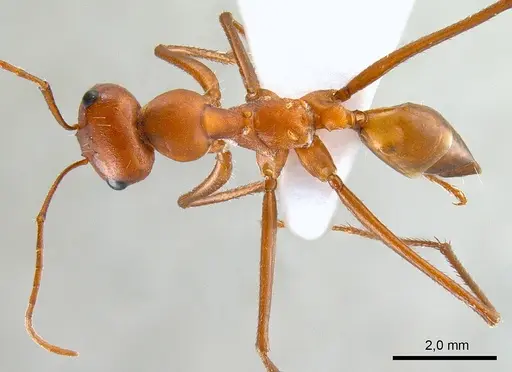


Literature
Loading...Loading products...