

Cataglyphis emmae
- Scientific Name
- Cataglyphis emmae
- Tribe
- Formicini
- Subfamily
- Formicinae
- Author
- Forel, 1909
- Distribution
- Found in 2 countries
Cataglyphis emmae Overview
Cataglyphis emmae is an ant species of the genus Cataglyphis. It is primarily documented in 2 countries , including Algeria, Morocco. Detailed taxonomic data and occurrence records can be further explored via authoritative databases such as AntWeb or the Global Biodiversity Information Facility (GBIF).
Cataglyphis emmae
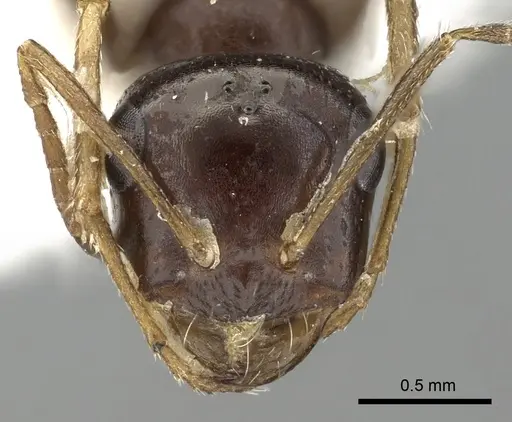
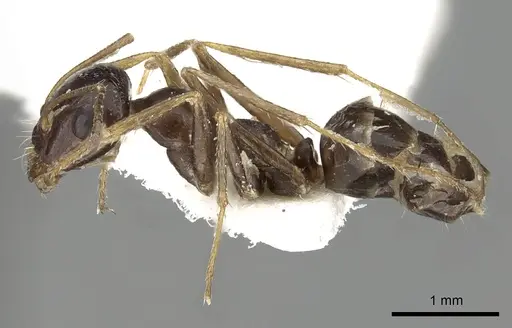
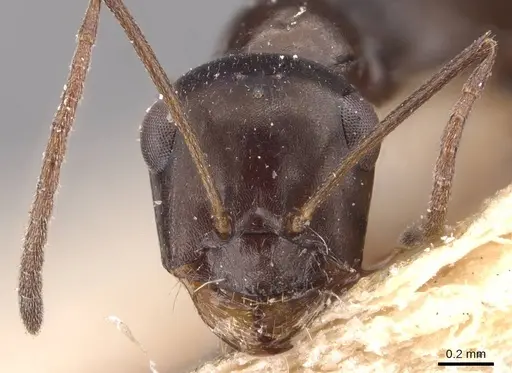
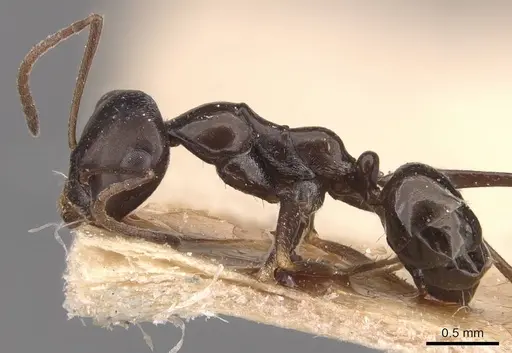
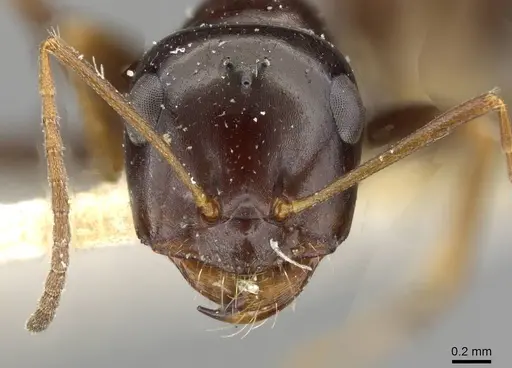
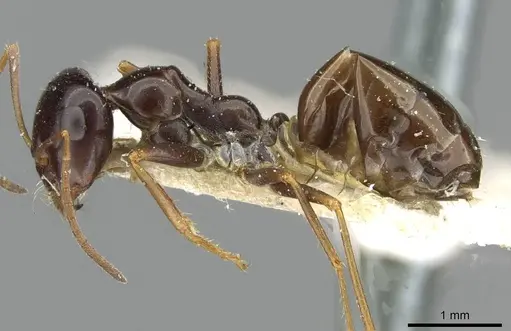
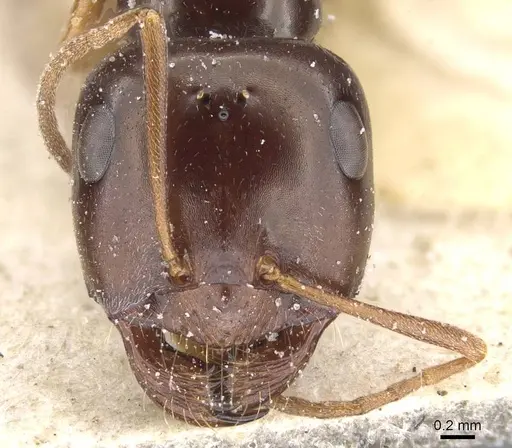
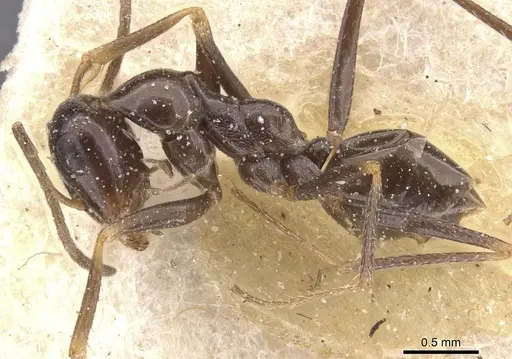
Cataglyphis emmae is a medium-sized desert ant found across North Africa and the Middle East, from Algeria and Morocco through Saudi Arabia to the UAE and Israel. Workers measure 3.2-5.5mm with a dark blackish body, while queens are significantly larger at 22mg with large wings suited for flight. This species inhabits pre-Saharan steppes and wadis (seasonally dry riverbeds), nesting in sandy or clay substrates where they build multi-chambered nests [1][2]. The species is notable for its pronounced worker-queen polymorphism, queens are roughly 3.5 times heavier than workers with a much larger mesonotum (the middle body section), reflecting their independent colony founding strategy where new queens fly away to establish nests alone [3][4].
Quick Summary
- Difficulty: Medium
- Origin & Habitat: Pre-Saharan steppes and wadis of Morocco, Algeria, Saudi Arabia, UAE, and Israel. Nests in sandy desert and clay substrates at altitudes of 1080-1450m [3][1][2].
- Colony Type: Monogyne (single-queen colonies). Queens are macropterous (large-winged) and practice independent colony founding, they fly away after mating to establish new colonies alone. Polyandrous, queens mate with multiple males (average 3.05 paternity frequency) [5][1].
- Colony: Monogyne
- Founding: Claustral, Semi-claustral
- Size & Growth:
- Queen: 22.4±0.6 mg weight, macropterous (large-winged) [3][4]. Size in mm not directly measured but significantly larger than workers.
- Worker: 3.2-5.5mm [2]. Worker weight 4.2±1.1 mg, head width 1.02±0.23mm [3][6].
- Colony: Up to ~700 workers in established colonies (702.5±78.5 workers observed) [1]. Earlier observations suggest smaller colonies of up to 50 workers in some areas [2].
- Growth: Moderate, colonies reach several hundred workers over multiple years
- Development: Unknown, not directly studied. Based on related Cataglyphis species and desert ant development patterns, estimate 6-10 weeks at optimal warm temperatures. (Development time not documented in scientific literature. Related Cataglyphis species typically develop in 6-10 weeks at warm temperatures.)
- Antkeeping:
- Temperature: Keep warm, around 24-28°C. This species is adapted to hot desert and pre-Saharan conditions. Provide a temperature gradient so ants can choose their preferred warmth.
- Humidity: Low to moderate. Desert-adapted species, keep nest substrate dry to slightly moist, not wet. Provide a water tube but avoid excessive moisture.
- Diapause: Likely, Based on temperate/desert origin, a cool period (15-18°C) during winter months is recommended. Exact duration unconfirmed.
- Nesting: Test tube setup works well for founding colonies. For established colonies, a Y-tong or plaster nest with sand or clay areas mimics their natural wadi habitat. They prefer multi-chambered nests.
- Behavior: Active foragers that hunt for insects and collect honeydew. Queens practice independent colony founding, after mating, they land and dig a nest chamber to raise their first workers alone. Workers are moderately aggressive when defending the nest. They have a stinger but it's small. Escape risk is moderate due to worker size, standard barriers are sufficient.
- Common Issues: colonies may fail if kept too cold, they need warm temperatures, overwatering can kill colonies, desert species prefer dry conditions, queenless colonies may produce worker males through arrhenotokous parthenogenesis, this is normal but indicates no queen, slow growth compared to tropical species may frustrate beginners, wild-caught colonies may have parasites that kill them in captivity
Housing and Nest Setup
For founding colonies, a simple test tube setup works well. Fill the tube with water and plug the end with cotton, providing a humidity chamber. Place the tube in a dark area and leave the queen alone, she will seal herself in and lay eggs. For established colonies (50+ workers), upgrade to a Y-tong (acrylic) nest or plaster formicarium. Add a section of sand or sandy soil to allow natural digging behavior if desired. These ants naturally nest in wadis with sandy-clay substrates, so a mixed substrate works well. Always provide an outworld for foraging with a water tube. [1][2]
Feeding and Diet
Cataglyphis emmae is a generalist predator and scavenger. Feed protein sources like small crickets, mealworms, fruit flies, and other small insects. Offer sugar water, honey, or diluted jam as a carbohydrate source. In the wild, they forage for insects and likely collect honeydew from aphids. Feed every 2-3 days, removing uneaten prey after 24 hours. A constant sugar source is recommended for established colonies.
Temperature and Heating
This is a desert-adapted species that thrives in warmth. Keep the nest area at 24-28°C. A heating cable or mat on one side of the nest creates a temperature gradient, allowing ants to regulate their body temperature by moving between warmer and cooler areas. Avoid temperatures below 20°C for extended periods. Place heating on top of the nest, not underneath, to prevent excessive drying. [3]
Colony Structure and Development
Colonies are strictly monogynous, only one queen per colony. Queens are macropterous (large-winged) and practice independent colony founding. After mating in swarms, queens fly away, land, shed their wings, and dig a chamber to raise their first workers alone. This is different from dependent colony founding where queens return to the natal nest. The colony grows through the queen's continuous egg-laying. Workers have moderate polymorphism, some are larger than others. Maximum colony size reaches around 700 workers [1].
Behavior and Foraging
Workers are active foragers that hunt individually for prey and collect sugar sources. They are moderately aggressive when defending the nest but not particularly territorial. Queens disperse by flight after mating, genetic studies show no isolation by distance at local scales, indicating long-range dispersal. Males gather in swarms near nest entrances to mate with emerging queens. This is typical independent colony founding behavior seen in many Cataglyphis species. [1]
Seasonal Care and Overwintering
As a species from North Africa and the Middle East, C. emmae likely experiences cooler winters in its range but not harsh cold. Provide a cool period (15-18°C) for 2-3 months during winter, reducing feeding frequency. This mimics natural seasonal cycles. Do not feed during deep hibernation. Return to warm conditions gradually in spring. The exact diapause requirements are not well-documented, so observe your colony's activity levels.
Queen Replacement and Colony Continuity
Research shows that during mating season, some colonies become queenless (8 out of 33 nests in one study had no queen). In these queenless colonies, workers may produce males through arrhenotokous parthenogenesis (unfertilized eggs). However, these colonies will not survive long-term without a queen. If your colony loses its queen, the colony will eventually die out. This is normal and expected, plan to obtain a new founding queen if you wish to continue keeping this species. [1][5]
Frequently Asked Questions
How long does it take for Cataglyphis emmae to produce first workers?
The exact timeline is not documented, but based on related Cataglyphis species, expect 6-10 weeks from egg to first worker at warm temperatures (24-28°C). Be patient, founding colonies grow slowly as the queen raises her first brood alone.
Can I keep multiple Cataglyphis emmae queens together?
No. This species is strictly monogynous, colonies have only one queen. Multiple queens will fight. If you want to start multiple colonies, each needs a separate queen.
What temperature do Cataglyphis emmae need?
Keep them warm at 24-28°C. They are desert-adapted and need consistent warmth for brood development. A heating cable on one side of the nest creates a gradient.
Are Cataglyphis emmae good for beginners?
Medium difficulty. They are not as challenging as some specialized species, but they require warm, dry conditions and patience during the slow founding phase. They are more moderate than easy beginner species like Lasius.
How big do Cataglyphis emmae colonies get?
Colonies reach around 700 workers at maturity. This is moderate size, not huge like some Formica species, but substantial. Growth is gradual over several years.
Do Cataglyphis emmae need hibernation?
Likely yes. As a species from North Africa and the Middle East, they probably benefit from a cool period (15-18°C) for 2-3 months in winter. Reduce feeding during this time.
Why did my queen die during founding?
Founding queens often die if conditions are wrong. Common causes: too cold, too wet (they drown in test tubes), disturbed during founding, or simply failure to thrive. Ensure the test tube has proper humidity (damp cotton, not flooded) and place the tube in a dark, quiet location without vibration.
What do Cataglyphis emmae eat?
They eat small insects (protein) and sugar sources. Offer small crickets, mealworms, fruit flies, and other insects. Provide sugar water, honey, or diluted jam constantly for carbohydrates.
When should I move my colony to a formicarium?
Wait until you have at least 30-50 workers. Before that, a test tube setup is safer and less stressful. When moving, connect the formicarium to the outworld and let the ants explore and move on their own.
My colony has no queen - what happened?
During mating season, some wild colonies become queenless. This is normal, the original queen may have died or been replaced. In your colony, if the queen dies, the colony will eventually die out as no new workers are born. Worker males may appear but cannot found new colonies.
Is Cataglyphis emmae invasive anywhere?
No. This species is native to North Africa and the Middle East. It has not been documented as invasive in any region.
References

This caresheet is licensed under CC BY-SA 4.0 .
CASENT0249840
View on AntWeb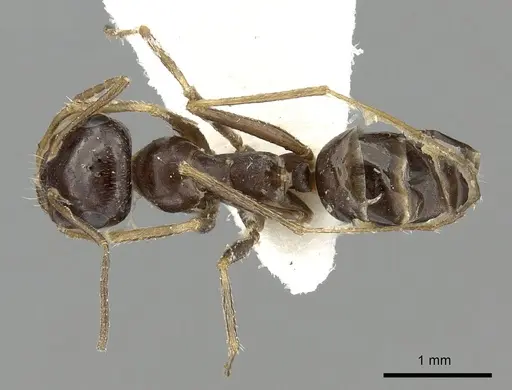
CASENT0249886
View on AntWeb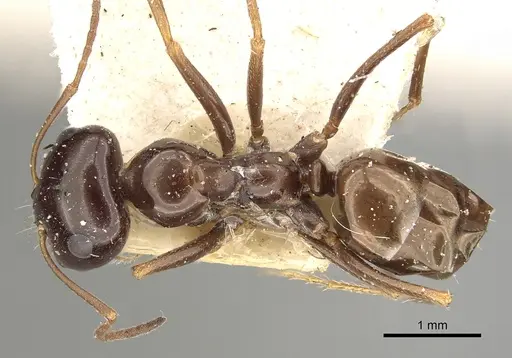

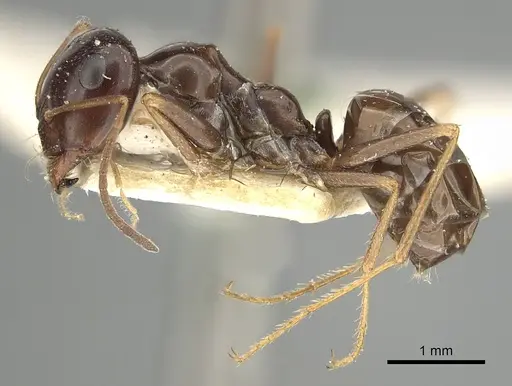
CASENT0823290
View on AntWeb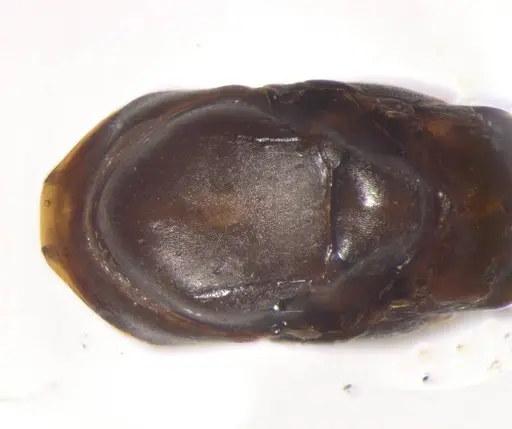

CASENT0903290
View on AntWeb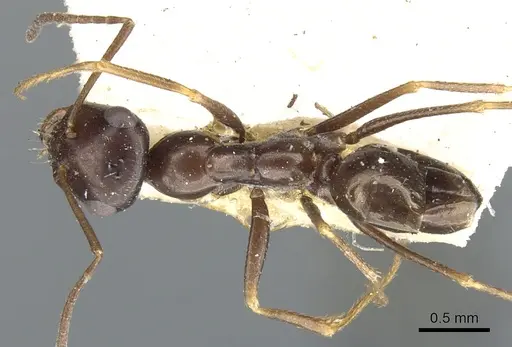


CASENT0905715
View on AntWeb
CASENT0911097
View on AntWeb
CASENT0912194
View on AntWeb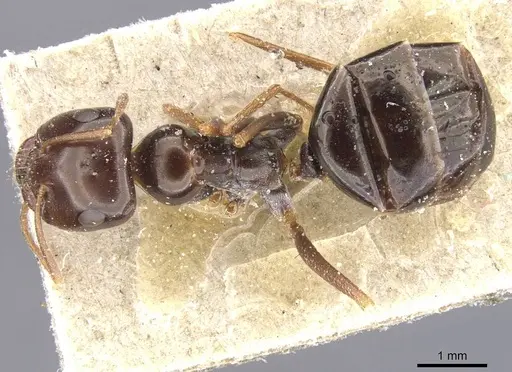

CASENT0912195
View on AntWeb

Literature
Loading...Loading products...