

Carebara silvestrii
- Scientific Name
- Carebara silvestrii
- Tribe
- Crematogastrini
- Subfamily
- Myrmicinae
- Author
- Santschi, 1914
- Distribution
- Found in 10 countries
Carebara silvestrii Overview
Carebara silvestrii is an ant species of the genus Carebara. It is primarily documented in 10 countries , including Congo, Democratic Republic of the, Central African Republic. Detailed taxonomic data and occurrence records can be further explored via authoritative databases such as AntWeb or the Global Biodiversity Information Facility (GBIF).
Carebara silvestrii
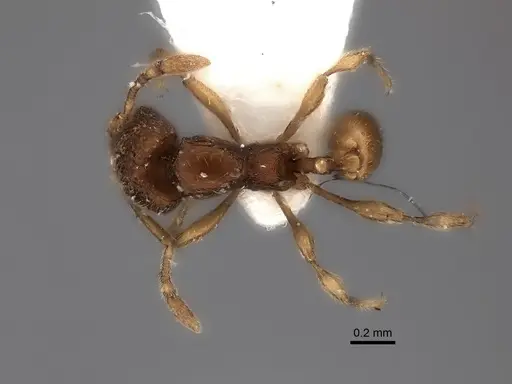
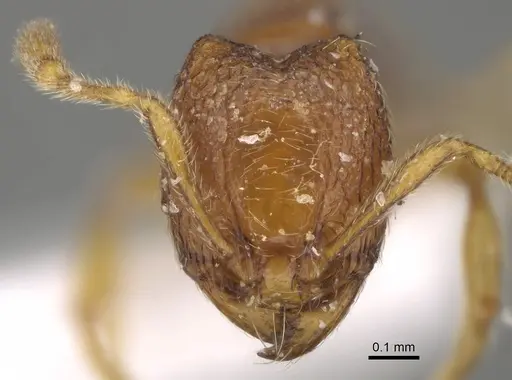
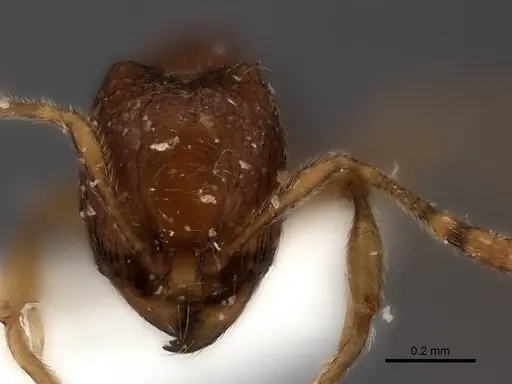
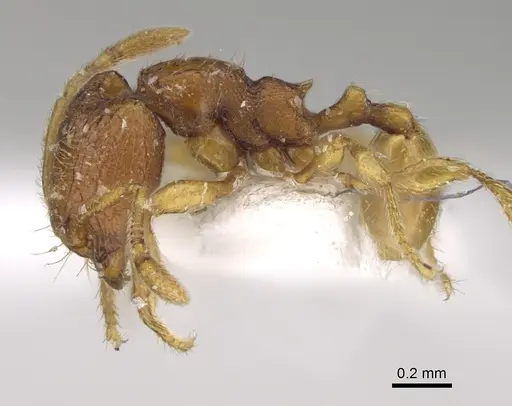
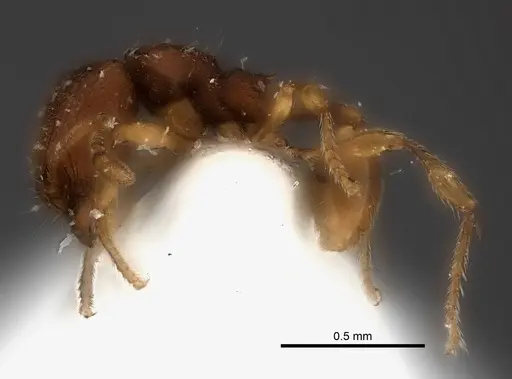
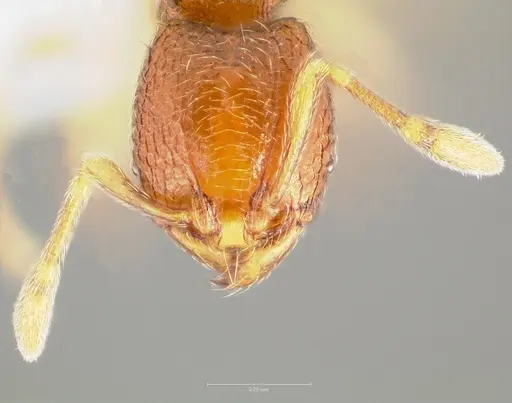
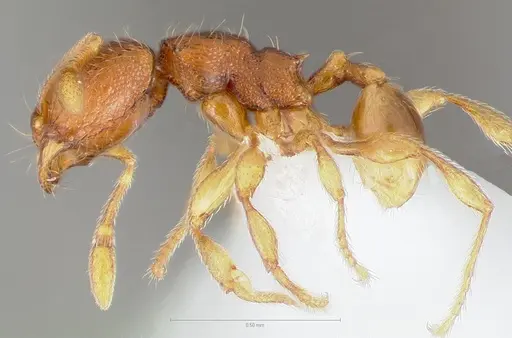
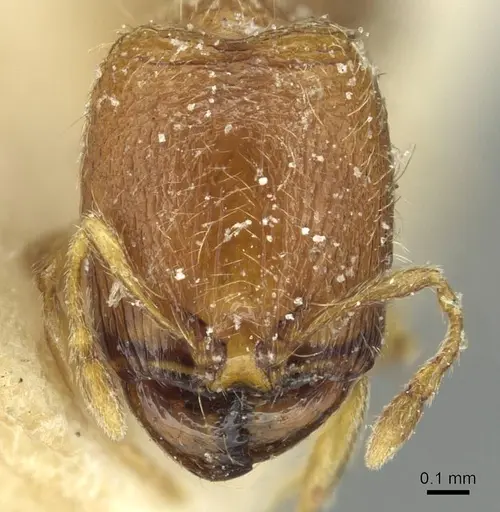
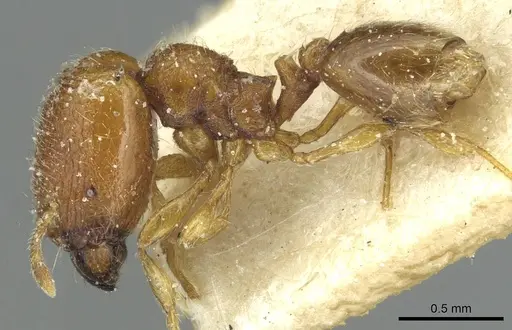
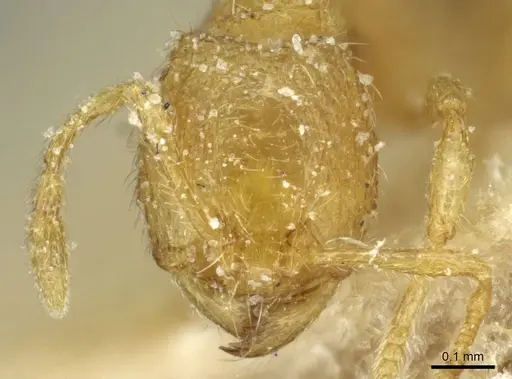
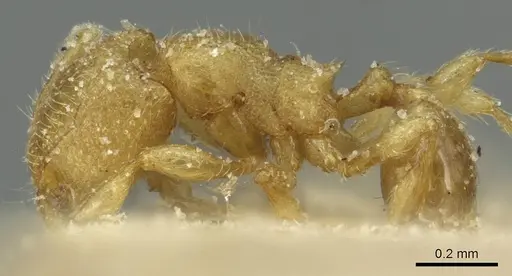
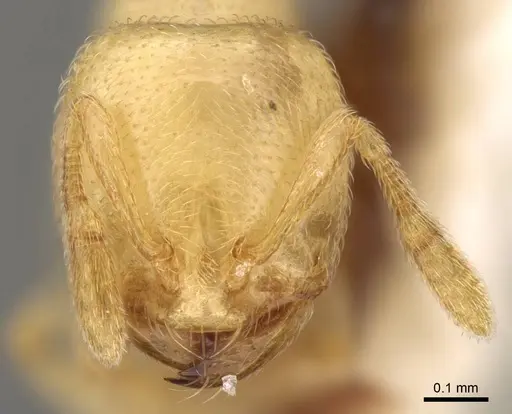
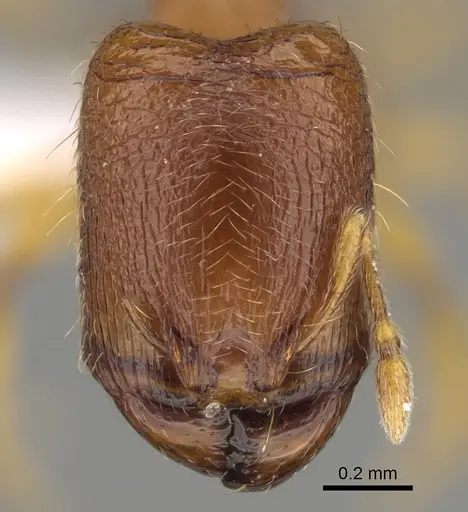
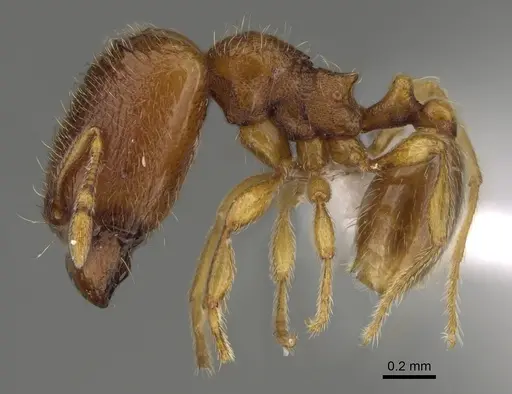
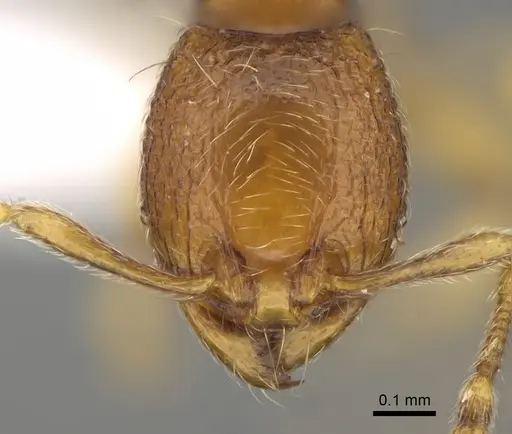
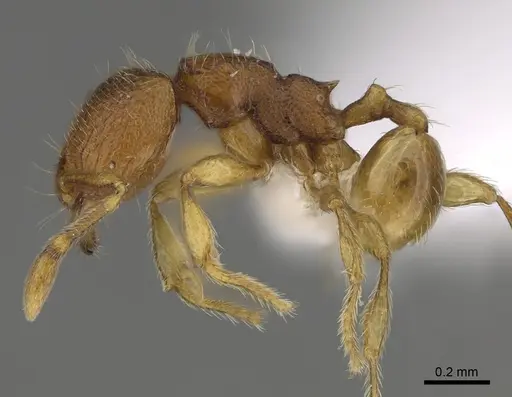
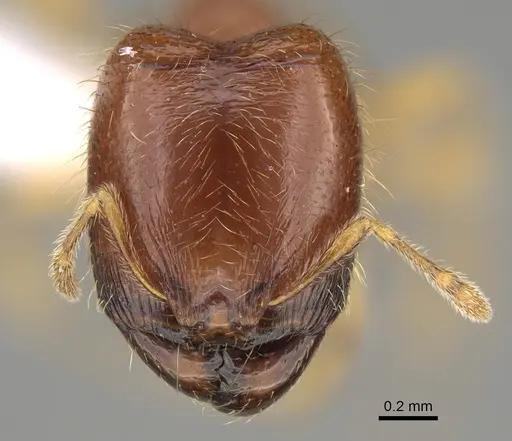
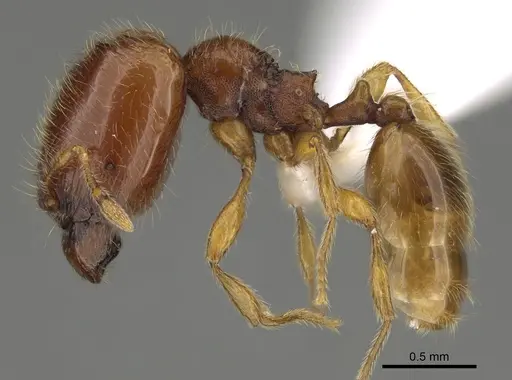
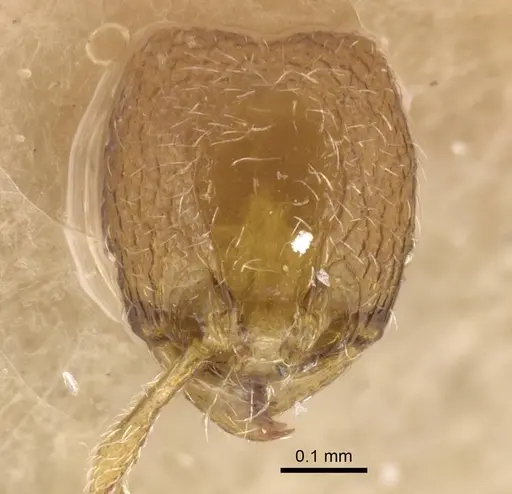
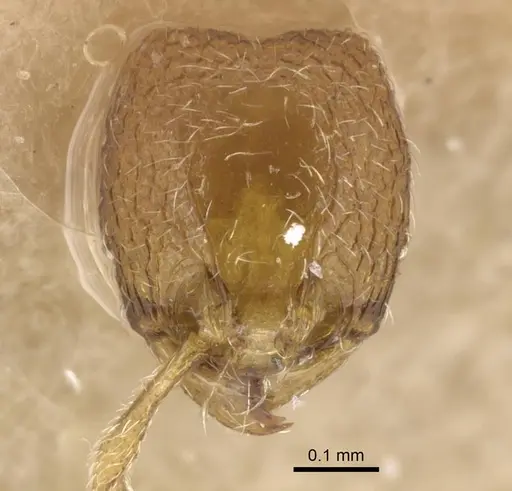
Carebara silvestrii are tiny reddish-brown ants native to African rainforests. Workers come in two distinct sizes: majors with large rectangular heads measuring 0.79-1.15 mm long and 0.64-0.99 mm wide, and smaller minors with oval heads around 0.41-0.51 mm long [1]. Both castes have 11-segmented antennae and yellowish legs, living in soil and leaf litter from Ghana to Zimbabwe at elevations between 10-2250 meters [1][2]. Unlike many ants, Carebara silvestrii shows dramatic worker dimorphism, the major workers have distinctly rectangular heads with a transverse ridge near the back and rough textured sides, while minors have smooth shiny foreheads and strongly convex head sides [1]. This size difference likely helps them process different food items in their rainforest home. They have even been found in urban parks in Ivory Coast, showing they can adapt to disturbed habitats [3].
Quick Summary
- Difficulty: Medium to Hard
- Origin & Habitat: Afrotropical rainforest, found in Cameroon, Central African Republic, DR Congo, Equatorial Guinea, Gabon, Ghana, Guinea, Ivory Coast, Kenya, Nigeria, Senegal, Uganda, and Zimbabwe at elevations from 10-2250 m [1][2].
- Colony Type: Unconfirmed, colony structure has not been directly studied [2].
- Size & Growth:
- Queen: Unknown, not documented in available research [2].
- Worker: Major workers: head length 0.79-1.15 mm, width 0.64-0.99 mm, body length (Weber's length) 0.58-0.87 mm, Minor workers: head length 0.41-0.51 mm, width 0.36-0.44 mm, body length 0.45-0.59 mm [1]. Total body length estimated 2-3 mm for majors,1.5-2 mm for minors.
- Colony: Unknown [2].
- Growth: Unknown [2].
- Development: Unknown, likely 6-10 weeks based on tropical small ant patterns, but unconfirmed [2]. (Development time depends on temperature, tropical species typically develop faster at warmer temperatures.)
- Antkeeping:
- Temperature: Keep warm and stable, roughly 24-28°C (75-82°F). This is estimated from their tropical rainforest habitat [1][2].
- Humidity: High humidity required, keep nest material damp but not waterlogged, similar to rainforest leaf litter conditions [1][2].
- Diapause: No, tropical species that remains active year-round [2].
- Nesting: Soil and leaf litter nests in nature [1]. In captivity, use small chambers with tight spaces, Y-tong nests or naturalistic setups with soil and leaf litter work well [2].
- Behavior: Cryptic and soil-dwelling. Workers are dimorphic with distinct major and minor castes, majors have rectangular heads longer than wide, minors have oval heads almost as wide as long [1]. They are likely non-aggressive but escape artists due to tiny size, majors are still only around 2-3 mm long [1].
- Common Issues: tiny workers can squeeze through the smallest gaps, use fine mesh (less than 0.5 mm) and Fluon barriers., tropical species require consistent heating, temperatures below 20°C (68°F) may stress or kill the colony., cryptic behavior means they spend much time hidden in soil, making observation difficult., humidity must remain high, dry conditions kill tropical leaf-litter species quickly.
Nest Preferences
In nature, Carebara silvestrii lives in soil and leaf litter in rainforests, collected via Winkler sifting and pitfall traps [1]. This means they need small, enclosed spaces in captivity. Use Y-tong (AAC) nests with narrow chambers, or naturalistic setups with a mix of soil and leaf litter. The nest should feel damp to the touch, mimicking the moist microhabitats of African forest floors. Avoid tall, open spaces, these ants prefer tight, cryptic quarters close to their food and moisture sources. Because they are so small, ensure any mesh or ventilation holes are smaller than 0.5 mm to prevent escapes.
Temperature and Humidity
As a tropical rainforest species found from 10-2250 m elevation, Carebara silvestrii needs warm, humid conditions [1]. Keep the nest area between 24-28°C (75-82°F) with a gentle heat gradient if possible. A heating cable on one side of the nest works well, but place it on top rather than underneath to avoid drying out the substrate. Humidity should be high, the substrate should stay consistently moist but not waterlogged. You can achieve this by using a water tower in Y-tong nests or by regularly misting naturalistic setups. Watch for condensation on the glass, too much means over-watering, while dry substrate means you need to add moisture immediately.
Worker Dimorphism
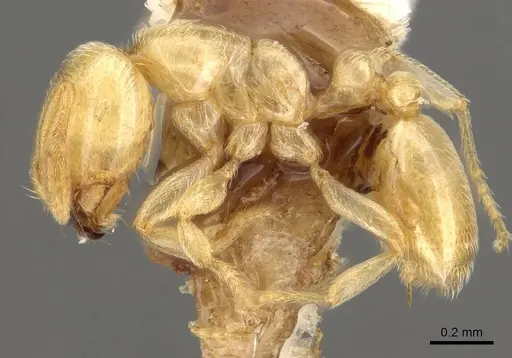
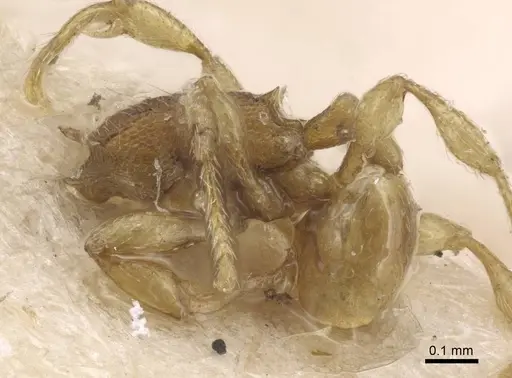
Carebara silvestrii has two distinct worker types that look quite different. Major workers have large, nearly rectangular heads that are longer than wide (cephalic index 76-87), with a distinct transverse ridge near the back of the head and rough, textured sides [1]. They have short, stout spines on their propodeum and their gaster is covered with abundant decumbent hairs [1]. Minor workers are smaller with oval heads that are almost as wide as long (cephalic index 86-88), smooth shiny foreheads, and shorter, more triangular spines [1]. This division of labor likely helps with food processing and defense. In captivity, you will see majors doing most of the heavy lifting and defense, while minors handle general foraging and brood care.
Feeding and Diet
While specific diet studies are lacking, Carebara silvestrii likely feeds on small insects, seeds, and honeydew sources in their leaf-litter habitat [2]. Offer small live prey like springtails, fruit flies, or tiny pieces of mealworm. They may also accept sugar water or honey drops. Because they are small ants, provide appropriately sized food, majors can handle slightly larger items, but minors need tiny prey. Remove uneaten food quickly to prevent mold in their humid nest environment. Watch to see what they actually accept, as individual colonies may vary in preferences.
Frequently Asked Questions
Can I keep Carebara silvestrii in a test tube?
Yes, but only for founding colonies or very small colonies. Use small test tubes (10-12 mm diameter) with tiny water reservoirs. However, they do best in soil-based nests that mimic their natural leaf-litter habitat [1][2].
How long until Carebara silvestrii gets its first workers?
The exact timeline is unknown and unconfirmed. Based on similar small tropical ants, expect roughly 6-10 weeks at 25-28°C, but this is an estimate [2].
Do Carebara silvestrii need hibernation?
No. They are a tropical species from African rainforests and remain active year-round. Keep them warm consistently, do not cool them for winter [2].
Can I keep multiple Carebara silvestrii queens together?
This is unconfirmed and not recommended. Their colony structure (single queen vs multiple queens) has not been studied. Combining unrelated queens risks fighting and death [2].
Are Carebara silvestrii good for beginners?
Probably not ideal for beginners. Their very small size makes escape prevention difficult, and their tropical requirements demand consistent heating and humidity control. They are better suited to keepers with some experience [2].
What do Carebara silvestrii eat?
They likely eat small insects, seeds, and sugary liquids based on their leaf-litter habitat. Offer springtails, fruit flies, small cricket pieces, and sugar water. Adjust based on what your colony accepts [2].
How big do Carebara silvestrii colonies get?
Colony size is unknown for this species. Many leaf-litter dwelling ants have small to moderate colonies, possibly a few hundred workers, but this is speculation [2].
Do Carebara silvestrii ants sting?
Stinging behavior is unconfirmed for this species. Most small Myrmicinae have stingers but cannot penetrate human skin. Handle with care regardless [2].
References

This caresheet is licensed under CC BY-SA 4.0 .
CASENT0217198
View on AntWeb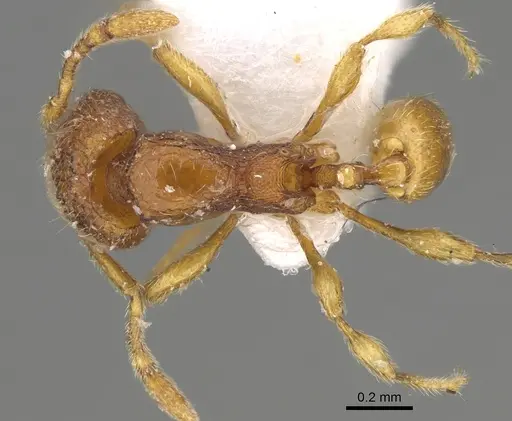
CASENT0409327
View on AntWeb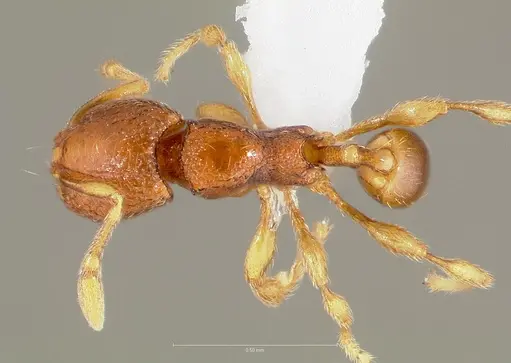
CASENT0913522
View on AntWeb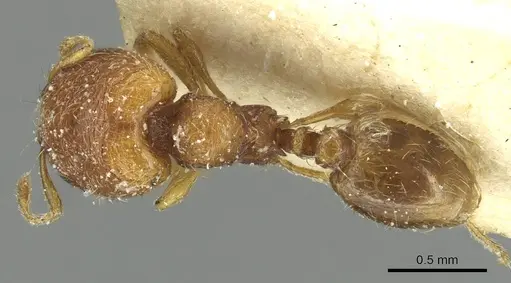
CASENT0913523
View on AntWeb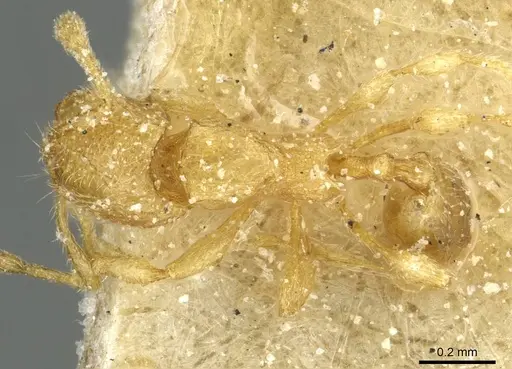
CASENT0914067
View on AntWeb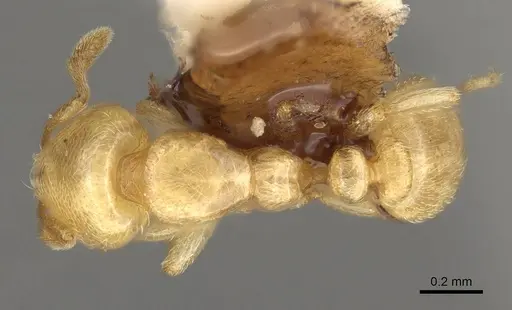
CASENT0914214
View on AntWeb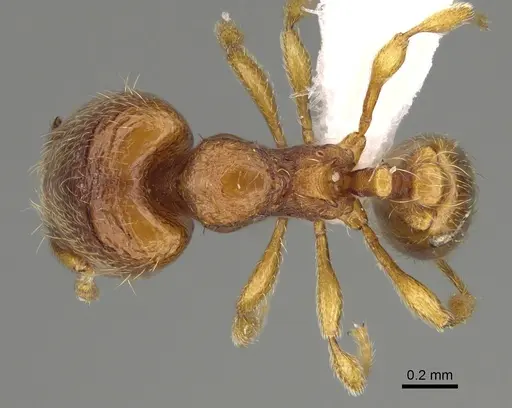
CASENT0914215
View on AntWeb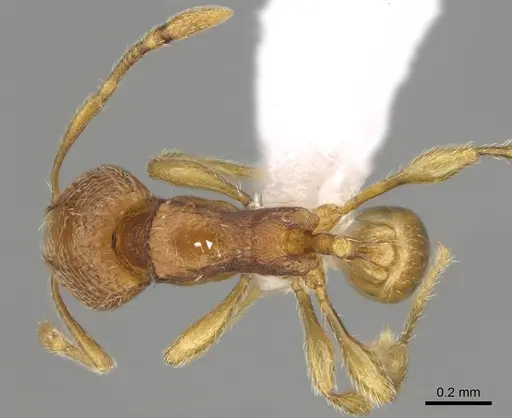
CASENT0914216
View on AntWeb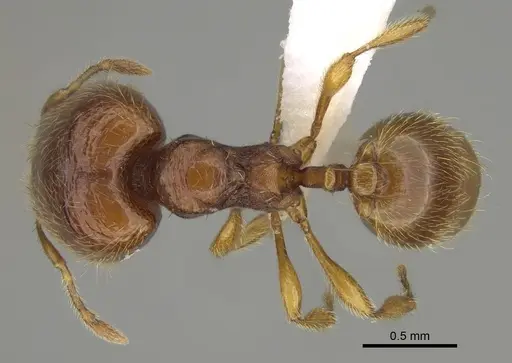
CASENT0917023
View on AntWeb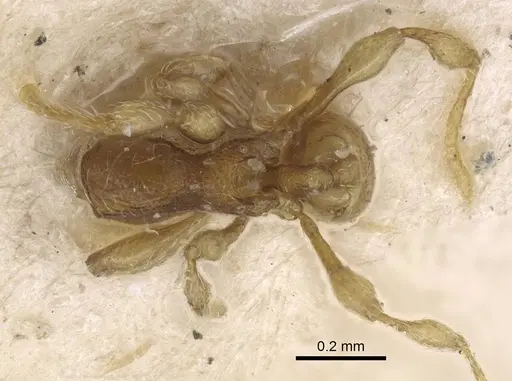
Literature
Loading...Loading products...