

Carebara rectidorsa
- Scientific Name
- Carebara rectidorsa
- Tribe
- Crematogastrini
- Subfamily
- Myrmicinae
- Author
- Xu, 2003
- Distribution
- Found in 1 countries
Carebara rectidorsa Overview
Carebara rectidorsa is an ant species of the genus Carebara. It is primarily documented in 1 countries , including Lao People's Democratic Republic. Detailed taxonomic data and occurrence records can be further explored via authoritative databases such as AntWeb or the Global Biodiversity Information Facility (GBIF).
Carebara rectidorsa
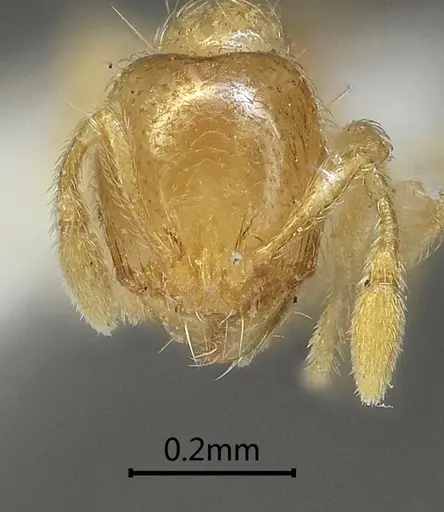
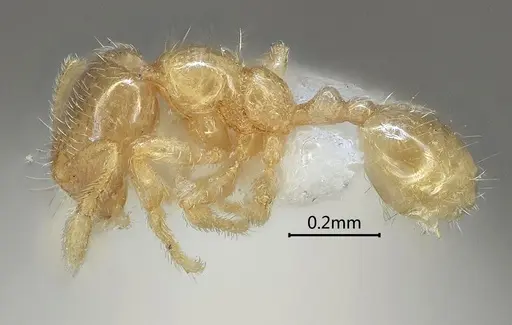
Carebara rectidorsa is a tiny yellow ant species native to southern China and northeastern India. Workers measure just 1.1-1.2mm, while the larger major workers (soldiers) reach 1.4-1.7mm [1]. This species has 9-segmented antennae with a 2-segmented club, and major workers have a pair of small horns on the back of their head [2]. They inhabit semi-evergreen broadleaf forests at elevations between 820-1484 meters [3][4]. These ants are ground-dwelling foragers that search for food both on the soil surface and within the soil itself [3]. They are active year-round in their native range and show particularly high activity levels during warmer seasons [4].
Quick Summary
- Difficulty: Medium
- Origin & Habitat: Southern China (Yunnan, Hainan, Sichuan, Hunan, Hubei, Henan, Chongqing, Xizang) and northeastern India (Meghalaya). Found in secondary shrub vegetation and semi-evergreen broadleaf forests at elevations of 820-1484 meters [3][4][5].
- Colony Type: Colony structure is not well documented in scientific literature. Like other Carebara species, they likely have colonies with one queen (monogyne) and major/minor worker castes. Further research needed on exact colony structure.
- Size & Growth:
- Queen: Not directly measured in available literature. Based on genus patterns, likely 3-5mm. Signal if estimated.
- Worker: Minor workers: 1.1-1.2mm. Major workers (soldiers): 1.4-1.7mm [1].
- Colony: Unknown. Related Carebara species typically form colonies of several hundred to a few thousand workers.
- Growth: Unknown. Based on their small size and tropical/subtropical distribution, growth rate is likely moderate to fast.
- Development: Unconfirmed. Based on typical Myrmicinae patterns at warm temperatures (24-28°C), estimate 4-8 weeks from egg to first worker. (Direct development data not available for this species. Estimates based on genus patterns.)
- Antkeeping:
- Temperature: Keep at 24-28°C. This species comes from warm temperate to subtropical regions in southern China and India, so they prefer stable warmth [3][4]. A heating cable on one side of the nest creates a suitable gradient.
- Humidity: Keep the nest substrate moderately moist. They inhabit forest floor environments, so aim for substrate that feels damp but not waterlogged. Provide some drier areas for workers to regulate their own humidity preferences.
- Diapause: Likely not required. This species is found in warm temperate to subtropical climates and shows activity year-round in its native range [4]. However, a slight winter cooldown (reducing to 18-20°C for 2-3 months) may be beneficial if your colony shows reduced activity.
- Nesting: Use small, tight-fitting chambers scaled to their tiny size. Test tubes with cotton barriers work well, or small acrylic nests with narrow passages. They naturally nest in soil and decaying wood in forest habitats [3]. A naturalistic setup with moist soil and hiding spots mimics their natural environment.
- Behavior: These ants are shy and not aggressive. They are ground-dwelling foragers that search for food on the soil surface and within the soil layer [3]. Major workers (soldiers) are present in the colony for defense and seed processing. Because of their extremely small size, escape prevention is critical, they can squeeze through the tiniest gaps. Use fine mesh barriers and ensure all openings are sealed tightly. Workers are slow-moving compared to larger ant species.
- Common Issues: escape prevention is critical due to their tiny 1-2mm size, they can slip through standard barrier setups, colonies may be slow to establish due to small colony size and limited initial brood, wild-caught colonies may carry parasites that can devastate captive colonies, overfeeding can lead to mold issues in small nest setups, temperature fluctuations can stress these small ants more than larger species
Housing and Nest Setup
Because Carebara rectidorsa workers are only 1.1-2mm in size, standard ant keeping setups require modification for escape prevention. Use test tubes with cotton barriers, or small acrylic nests (like Tarheel or similar mini-nest designs) with very tight-fitting connections. Fine mesh (at least 0.5mm or smaller) must cover all ventilation holes. These ants naturally nest in soil and decaying wood in forest habitats, so a naturalistic setup with moist soil, small stones, and decaying leaves works well [3]. The nest chambers should be small and scaled to their tiny size, avoid tall, open spaces that can make them feel exposed. A shallow foraging area with a small water tube and feeding dish completes the setup.
Feeding and Diet
Carebara rectidorsa likely has a typical Myrmicinae diet based on genus patterns. They probably feed on small insects, honeydew from aphids, and seeds. In captivity, offer small protein sources like fruit flies, pinhead crickets, small mealworms, and other tiny arthropods. Sugar water or honey water can be offered occasionally, though their small size may limit how much they can consume. Given their ground-foraging nature, they likely scavenge for small food items rather than hunting large prey [3]. Feed small amounts every 2-3 days and remove uneaten food promptly to prevent mold.
Temperature and Seasonal Care
This species comes from warm temperate to subtropical regions in southern China and India, so they prefer stable temperatures around 24-28°C [3][4]. They are found at elevations between 820-1484 meters, suggesting they can tolerate some temperature variation but prefer warmth. In their native range, they show high activity in all seasons with peak abundance in warmer months [4]. A slight winter reduction to 18-20°C may be beneficial if your colony naturally slows down, but full hibernation is likely not required. Use a heating cable on one side of the nest to create a gentle temperature gradient, placing it on top of the nest to avoid evaporating moisture.
Handling and Colony Dynamics
Carebara rectidorsa colonies likely have distinct major and minor worker castes, similar to other Carebara species. Major workers (soldiers) with their characteristic head horns are larger (1.4-1.7mm) and serve for defense and seed processing, while minor workers (1.1-1.2mm) handle most foraging and brood care [1]. These ants are not aggressive and will flee rather than attack when threatened. However, their tiny size makes them vulnerable to stress from handling and disturbance. Minimize nest inspections and avoid shaking or moving the nest setup unnecessarily. Colonies start small and grow gradually, patience is key during the founding stage.
Frequently Asked Questions
How long does it take for Carebara rectidorsa to have first workers?
The exact development timeline is unconfirmed for this species. Based on typical Myrmicinae patterns at warm temperatures (24-28°C), expect 4-8 weeks from egg to first worker. Smaller ant species often develop faster than larger ones, so the lower end of this range is more likely.
Can I keep Carebara rectidorsa in a test tube?
Yes, test tubes work well for founding colonies. Use a small test tube (around 10-15cm long) with a water reservoir section separated by cotton. Because of their tiny 1-2mm size, ensure the cotton barrier is packed tightly and consider adding a fine mesh barrier at the tube opening.
Do Carebara rectidorsa ants sting?
As Myrmicinae ants, they have stingers, but due to their extremely small size (1-2mm), they are unlikely to penetrate human skin. They are not aggressive and pose no danger to keepers.
What do Carebara rectidorsa eat?
Based on genus patterns, they likely accept small insects (fruit flies, pinhead crickets, small mealworms), honeydew, and sugar water. Offer small protein items 2-3 times per week and keep sugar water available. Remove uneaten food promptly.
Are Carebara rectidorsa good for beginners?
This species is rated as medium difficulty. Their tiny size requires careful attention to escape prevention, which can be challenging for new antkeepers. They are not aggressive and are interesting to observe due to their distinct worker castes. However, limited availability and lack of captive breeding information may make them more suitable for intermediate keepers.
How big do Carebara rectidorsa colonies get?
The maximum colony size is not documented for this species. Based on related Carebara species, colonies likely reach several hundred to a few thousand workers over time. Growth is gradual from a small founding colony.
Do Carebara rectidorsa need hibernation?
Full hibernation is likely not required. This species is active year-round in its native range in southern China and India [4]. A slight temperature reduction during winter months (reducing to 18-20°C for 2-3 months) may be beneficial if your colony shows reduced activity, but is not strictly necessary.
Why are my Carebara rectidorsa escaping?
Their tiny 1-2mm size means they can squeeze through gaps that seem insignificant. Use fine mesh (0.5mm or smaller) on all openings, ensure lid seals are tight, and consider applying fluon or another barrier gel to the edges of your setup. Check all connections between nest and outworld.
When should I move Carebara rectidorsa to a formicarium?
Wait until the colony has at least 20-30 workers and the founding test tube shows signs of condensation drying out frequently. For these small ants, a small acrylic nest or naturalistic setup works well. Move them only when the colony is actively foraging and outgrowing the test tube.
Can I keep multiple queens together?
The colony structure of Carebara rectidorsa is not well documented. Based on genus patterns, they likely have single-queen colonies. Combining unrelated queens has not been studied for this species and is not recommended.
References

This caresheet is licensed under CC BY-SA 4.0 .
ANTWEB1060560
View on AntWeb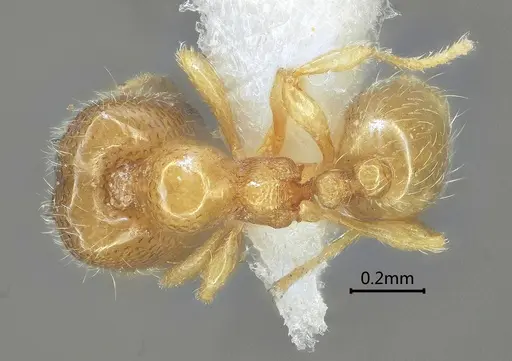
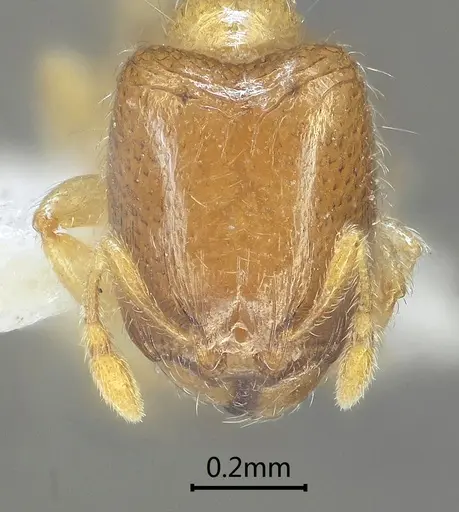
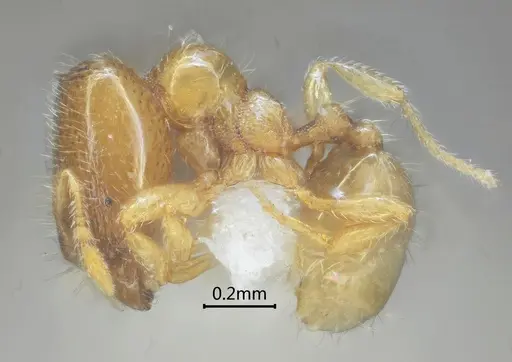
ANTWEB1060561
View on AntWeb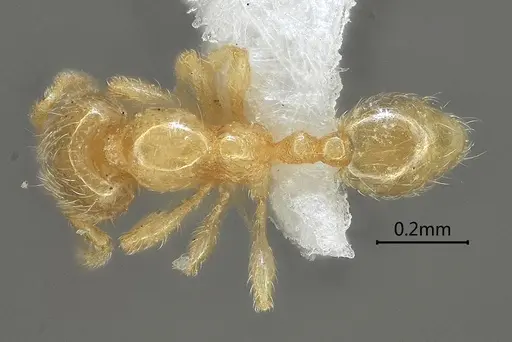
Literature
Loading...Loading products...