

Carebara rectangulata
- Scientific Name
- Carebara rectangulata
- Tribe
- Crematogastrini
- Subfamily
- Myrmicinae
- Author
- Bharti & Kumar, 2013
- Distribution
- Found in 1 countries
Carebara rectangulata Overview
Carebara rectangulata is an ant species of the genus Carebara. It is primarily documented in 1 countries , including India. Detailed taxonomic data and occurrence records can be further explored via authoritative databases such as AntWeb or the Global Biodiversity Information Facility (GBIF).
Carebara rectangulata
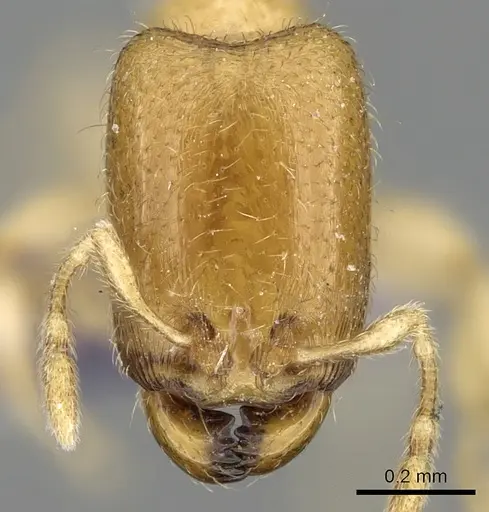
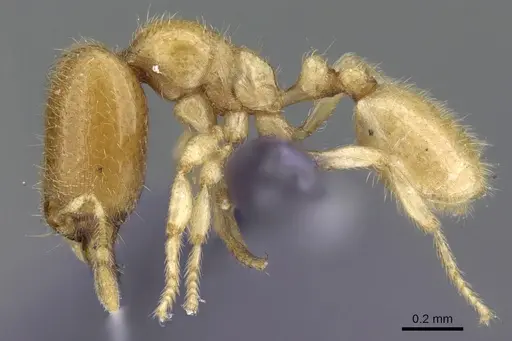
Carebara rectangulata is a tiny dimorphic ant species endemic to India, specifically found in Jammu and Kashmir at elevations of 650-700 meters. The species was described in 2013 and is named for its distinctive nearly rectangular head shape in major workers. Major workers measure around 2.4mm in total length, while minor workers are even smaller at 1.4mm. They have a yellowish-brown coloration and nine-segmented antennae. This is a recently described species with only the worker caste known, no queens or males have been documented yet. The genus Carebara contains many tiny 'pygmy' ants that typically nest in soil or rotting wood.
Quick Summary
- Difficulty: Unknown, biology unconfirmed
- Origin & Habitat: India (Jammu & Kashmir), endemic to this region. Found in soil cores at 650-700m elevation [1][2].
- Colony Type: Unconfirmed, only workers have been collected, no queens documented. Based on genus patterns, likely single-queen colonies.
- Size & Growth:
- Queen: Unknown, queen caste not yet described
- Worker: Major workers: 2.41mm, Minor workers: 1.38-1.43mm [1]
- Colony: Unknown, no colony data available
- Growth: Unknown
- Development: Unknown, no development data exists for this species (Based on related Carebara species, development likely takes 4-8 weeks at warm temperatures. No direct observations available.)
- Antkeeping:
- Temperature: Start around 22-26°C and observe colony activity. No specific data exists for this species, use conditions that work for other Indian Carebara species as a starting point.
- Humidity: Keep nest substrate moderately moist. In nature they were found in soil cores, suggesting they prefer damp but not waterlogged conditions.
- Diapause: Unknown, no seasonal data available. Jammu & Kashmir has cold winters, so a winter rest period may be beneficial if the colony shows reduced activity.
- Nesting: Use a test tube setup or Y-tong nest with small chambers scaled to their tiny size. They were found in soil, so a substrate-filled setup works well.
- Behavior: Behavior is unstudied. Based on genus patterns, they are likely shy and not aggressive. Their tiny size (under 3mm) means escape prevention is critical, they can squeeze through standard test tube barriers. Handle with care as they are very small.
- Common Issues: no documented biology means all care is speculative, monitor colony closely and adjust conditions, tiny size makes escape likely without fine mesh barriers, no queen data means founding behavior is unknown, wild-caught workers cannot establish colonies, slow growth potential due to small colony size, don't overfeed, no confirmed diet data, start with small live prey and sugar water
Species Discovery and Status
Carebara rectangulata is a recently described species, first documented in 2013 by Himender Bharti and Rakesh Kumar from specimens collected in Jammu and Kashmir, India. The species name 'rectangulata' refers to the distinctive nearly rectangular shape of the major worker's head. What makes this species particularly interesting for antkeepers is how little we know about it, only worker castes have been collected, and no queens, males, or colony observations exist in scientific literature. This means you're essentially working with a blank slate when it comes to captive care. The species is endemic to a relatively small geographic area in northern India, which may influence its temperature and humidity preferences. [1][2]
Identification and Morphology
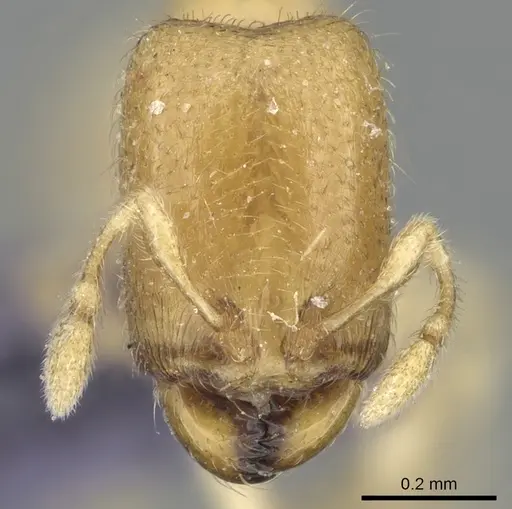
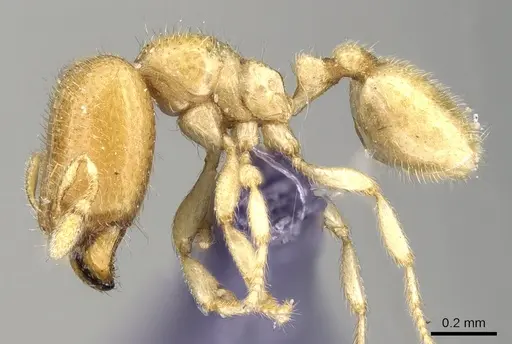
This is a dimorphic species, meaning it has two distinct worker sizes, major workers and minor workers. Major workers reach about 2.4mm in total length and have a distinctive nearly rectangular head with straight, parallel sides. The posterior margin of the head has a transverse carina (a ridge-like feature). Their eyes are extremely small, consisting of just a single ommatidium. Minor workers are much smaller at 1.4mm, with a slightly longer-than-broad head that has convex sides. Both castes have nine-segmented antennae, which is a key identification feature for the genus. The body is yellowish-brown in color, with the mandibles having a blackish tint. These tiny ants can be identified under magnification by their rectangular head shape (in majors) and the nine-segmented antennae. [1]
Natural Habitat and Distribution
Carebara rectangulata is endemic to India, specifically found in Jammu and Kashmir state. The type specimens were collected from two locations: Bilawar at 650m elevation and Suriensar at 700m elevation. Both collection sites were in soil cores, indicating this species nests in the ground. The elevation range of 650-700m suggests they inhabit a subtropical to temperate zone in the Himalayan foothills. Jammu and Kashmir experiences distinct seasons with cold winters and warm summers, which may influence their seasonal activity patterns. This restricted distribution makes them particularly interesting for antkeepers who want to keep species with limited availability. [1][2]
Housing and Nest Setup
Given their tiny size (under 3mm), you'll need to use appropriately scaled housing. A test tube setup works well for founding colonies, but ensure the cotton barrier is packed tightly, these small ants can squeeze through gaps that larger species cannot. A Y-tong (acrylic) nest with small chambers is also suitable. Since they were found in soil cores in the wild, a naturalistic setup with a thin layer of moist substrate (like a mix of soil and sand) can mimic their natural environment. The key is providing chambers small enough for their tiny bodies, avoid tall, open spaces. Because of their minute size, escape prevention must be excellent. Use fine mesh on any ventilation holes and check all seams regularly. [1]
Feeding and Diet
The diet for Carebara rectangulata is completely unstudied, no observations of their feeding behavior exist in scientific literature. Based on typical Carebara genus patterns, they likely feed on small insects, aphids, and other tiny arthropods, plus honeydew from aphids. For captive care, start with small live prey like fruit flies, pinhead crickets, or small mealworms. They may also accept sugar water or honey, though this is unconfirmed for this species. Given their tiny size, any prey items should be appropriately scaled, springtails or fruit flies are good starting points. Feed small amounts and remove any uneaten prey within 24 hours to prevent mold issues.
Temperature and Seasonal Care
No specific temperature data exists for this species. Based on their collection location in Jammu and Kashmir (650-700m elevation in the Himalayan foothills), they likely experience temperate conditions with distinct seasons. As a starting point, aim for room temperature in the low-to-mid 20s Celsius (around 22-26°C). You can create a slight temperature gradient in the nest area so the ants can choose their preferred zone. During winter, if your colony shows reduced activity, consider providing a cool period around 10-15°C for several months, this mimics the cold winters in their native range. However, since no biological data exists, observe your colony's behavior and adjust accordingly.
Challenges and Considerations
The biggest challenge with Carebara rectangulata is the complete lack of biological data. Everything about their colony structure, founding behavior, development timeline, and exact care requirements is unknown. This makes them a species for experienced antkeepers who can interpret colony behavior and adjust conditions accordingly. Additionally, their tiny size creates practical challenges: escape prevention is critical, feeding appropriate-sized prey is necessary, and observing the colony requires good lighting and magnification. You should not expect to find queens for sale since this species has rarely been collected, most availability would likely be from occasional wild catches of workers, which cannot establish new colonies without a queen.
Frequently Asked Questions
How long does it take for Carebara rectangulata to develop from egg to worker?
This is completely unknown, no development data exists for this species. Based on related Carebara species, it may take 4-8 weeks at warm temperatures, but this is only an estimate.
What do Carebara rectangulata ants eat?
Their diet has not been documented. Based on genus patterns, they likely eat small insects and honeydew. In captivity, try small live prey like fruit flies or tiny mealworms, and offer sugar water to test acceptance.
Do Carebara rectangulata queens exist?
The queen caste has not been described in scientific literature. Only worker castes (major and minor) have been collected and documented.
How big do Carebara rectangulata colonies get?
Colony size is unknown, no colony observations exist for this species. Related Carebara species typically have colonies ranging from dozens to a few hundred workers.
What temperature should I keep Carebara rectangulata at?
No specific data exists. Start around 22-26°C and observe your colony. Adjust based on activity levels, if they cluster in warmer areas, increase temperature slightly.
Does Carebara rectangulata need hibernation?
This is unknown, but their native range in Jammu & Kashmir has cold winters. If your colony shows reduced activity in winter, a cool period around 10-15°C for 2-3 months may be beneficial.
Are Carebara rectangulata good for beginners?
No, this is not a beginner species. Their biology is completely unstudied, meaning all care is speculative. Additionally, their tiny size creates practical challenges. This species is for experienced keepers who can adapt care based on observation.
How do I identify Carebara rectangulata?
Major workers have a distinctive nearly rectangular head with straight, parallel sides. Both castes have nine-segmented antennae. They are tiny (1.4-2.4mm) with yellowish-brown coloration. Under magnification, look for the transverse carina on the posterior margin of the major worker's head.
Where is Carebara rectangulata found?
This species is endemic to Jammu and Kashmir, India. It has only been collected from two locations at 650-700m elevation in soil cores.
Can I keep multiple queens together?
This is unknown, the colony structure has not been documented. No queens have ever been collected for this species, so colony founding behavior is completely unconfirmed.
Do Carebara rectangulata ants sting?
This has not been documented, but given their tiny size (under 3mm), any sting would likely be imperceptible to humans. Most Myrmicinae ants have stingers but are too small to penetrate human skin effectively.
Why are there no Carebara rectangulata colonies for sale?
This is a recently described, rarely collected species endemic to a small region in India. Queens have never been documented, so established colonies are essentially unavailable. Any availability would be from occasional wildcaught workers, which cannot start new colonies.
References

This caresheet is licensed under CC BY-SA 4.0 .
CASENT0906097
View on AntWeb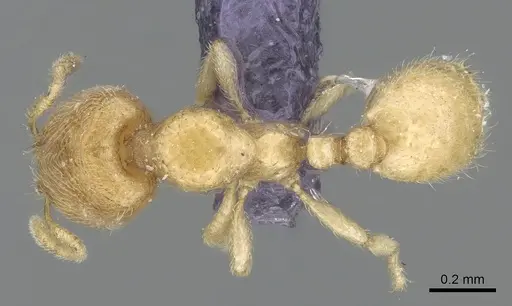
CASENT0906098
View on AntWeb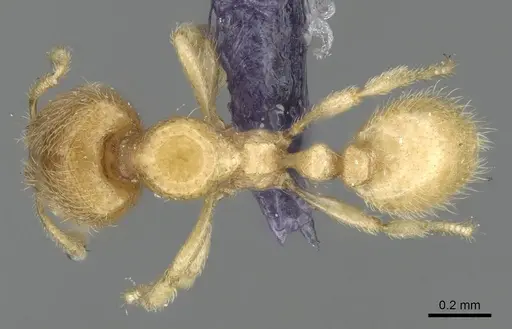
Literature
Loading...Loading products...