

Carebara placida
- Scientific Name
- Carebara placida
- Tribe
- Crematogastrini
- Subfamily
- Myrmicinae
- Author
- Azorsa & Fisher, 2018
- Distribution
- Found in 1 countries
Carebara placida Overview
Carebara placida is an ant species of the genus Carebara. It is primarily documented in 1 countries , including Madagascar. Detailed taxonomic data and occurrence records can be further explored via authoritative databases such as AntWeb or the Global Biodiversity Information Facility (GBIF).
Carebara placida
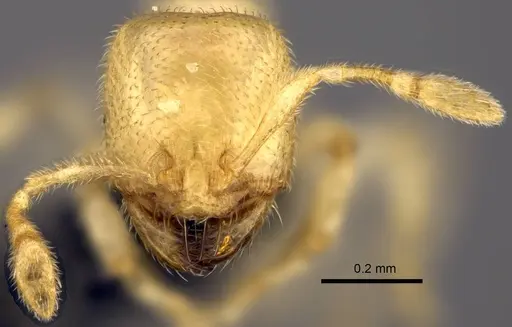
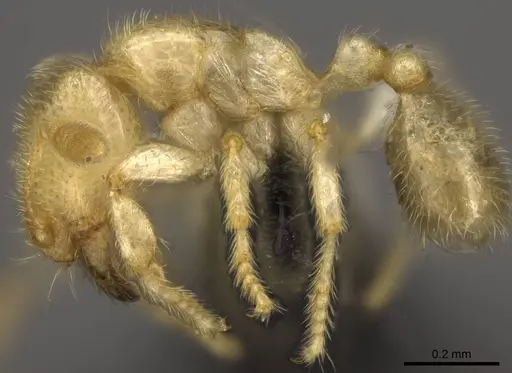
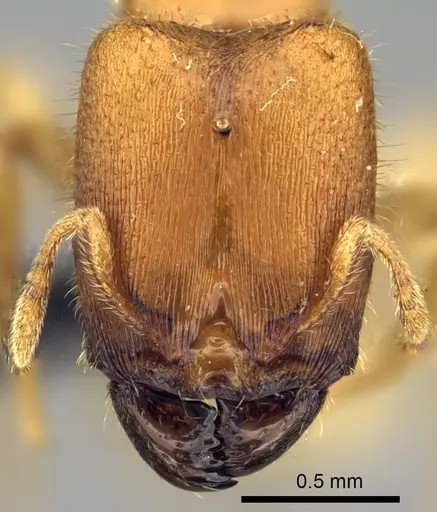
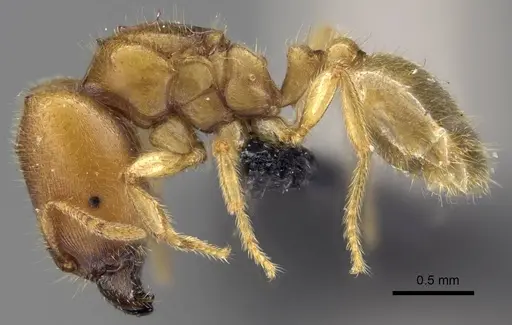
Carebara placida is a tiny rainforest ant from southeastern Madagascar, recently described in 2018. Workers come in two distinct sizes: majors measure 0.73-1.20mm with a distinctive subrectangular head featuring longitudinal rugae and a deeply concave posterior margin, while minors are even smaller at just 0.40-0.41mm. The species has 10-segmented antennae and a yellowish coloration. This is an extremely new species to science with limited documented biology, it's known only from a single locality in the Forêt de Vevembe at 600m elevation where it was collected under stones in transitional rainforest-montane forest habitat [1].
Quick Summary
- Difficulty: Expert
- Origin & Habitat: Southeastern Madagascar, Forêt de Vevembe,600m elevation in rainforest transitioning to montane forest. Collected under stones [1][2].
- Colony Type: Colony structure is unconfirmed. No research documents whether this species is single-queen (monogyne) or multi-queen (polygyne).
- Size & Growth:
- Queen: Not yet documented in scientific literature, no queens have been described [1]. Signal: estimated based on genus patterns.
- Worker: Major workers: 0.73-1.20mm, minor workers: 0.40-0.41mm [1].
- Colony: Likely small, estimated under 500 workers based on typical Carebara colony sizes and the limited known range. Signal: estimated.
- Growth: Unknown, no documented development timeline. Signal: estimated based on genus patterns as moderate.
- Development: 6-10 weeks estimated based on related Carebara species. Signal: inferred from genus patterns. (No direct development data exists for this species. Estimates based on typical Myrmicinae development at warm temperatures.)
- Antkeeping:
- Temperature: Keep around 22-26°C. This species comes from a warm Madagascar location at 600m elevation, aim for low-to-mid 20s with a gentle gradient. Signal: inferred from habitat.
- Humidity: Keep moderately humid, rainforest transition to montane forest suggests 60-80% humidity. Provide a moist nest substrate that doesn't dry out completely. Signal: inferred from habitat.
- Diapause: Unknown, no research on seasonal behavior. Madagascar has mild seasons, but this species may have a reduced activity period. Signal: unknown.
- Nesting: In captivity, use small test tubes or a Y-tong/plaster nest with tight chambers scaled to their tiny size. They were found under stones in the wild, suggesting they prefer enclosed spaces with some soil contact. Signal: inferred from collection data.
- Behavior: This is a tiny, cryptic ant species. No documented aggression or stinging behavior exists in research, but Carebara species are generally non-aggressive and avoid confrontation. Their extremely small size (under 1.2mm for majors) makes escape prevention critical, they can squeeze through the tiniest gaps. Foraging style is likely opportunistic scavenging and predation on micro-arthropods. Signal: inferred from genus patterns and morphology.
- Common Issues: escape prevention is critical due to their extremely small size, use fine mesh barriers and tight-fitting lids, no documented colony founding information makes initial establishment risky for keepers, limited natural history data means care requirements are largely inferred, not confirmed, wild-caught colonies may have parasites or diseases with no documented treatment, slow growth and tiny size make them vulnerable to stress and poor conditions
Nest Preferences and Housing
Carebara placida is an extremely tiny ant that requires carefully scaled housing. In the wild, they were collected under stones in rainforest-transition habitat, suggesting they prefer enclosed nest sites with some soil moisture. For captivity, small test tubes work well for founding colonies, use a water reservoir that won't flood the small chamber. As the colony grows, a Y-tong (acrylic) nest or plaster nest with tight chambers scaled to their minute size is ideal. The major workers max out at just 1.2mm, so even standard formicarium passages would feel cavernous to them. Provide a small outworld for foraging and ensure all connections are sealed, these ants will find and exploit any gap. Signal: inferred from collection data and morphology. [1][2]
Feeding and Diet
Based on typical Carebara feeding patterns, this species likely accepts small protein sources like micro-arthropods (springtails, booklice, fruit flies) and may also consume sugar water or honey. Their tiny size means prey items must be appropriately scaled, even small fruit fly pieces work better than whole insects. Feed small amounts of protein 2-3 times per week and keep a constant sugar water source. Remove uneaten food promptly to prevent mold in the small enclosures these ants require. The minor workers at just 0.40mm are among the smallest ant workers you'll encounter, so food particle size matters significantly. Signal: inferred from genus patterns.
Temperature and Seasonal Care
This species comes from southeastern Madagascar at 600m elevation in rainforest-transition-to-montane forest habitat. The region has a warm, humid tropical climate with seasonal variation. Keep nest temperatures in the 22-26°C range, a gentle gradient allows the ants to self-regulate. A small heating cable on one side of the nest can create this gradient, but ensure it doesn't dry out the substrate. No research documents diapause requirements, so maintain consistent conditions year-round. If your colony shows reduced activity in winter, a brief cool period (2-3 months at 18-20°C) may be appropriate, but this is speculative. Signal: inferred from habitat data. [1]
Behavior and Colony Dynamics
Carebara placida exhibits polymorphism with major and minor worker castes, plus intermediate forms. The majors have distinctive features including a deeply concave head posterior margin, longitudinal rugae on the head, and an angulate propodeum. The minors are simpler in structure with an unarmed propodeum. Research notes that intermediate forms exist, intermediate 2 has reduced eyes (14 ommatidia), one ocellus, and reduced flight sclerites, suggesting these may be ergatoid or pre-ergatoid individuals. No documented aggression or colony defense behaviors exist in the literature, and these tiny ants likely avoid conflict rather than engage. Their cryptic lifestyle under stones in nature suggests they prefer dark, enclosed spaces and may be shy foragers. Signal: inferred from morphology and collection data. [1]
Frequently Asked Questions
How long does it take for Carebara placida to produce first workers?
No documented development timeline exists for this species. Based on typical Carebara and Myrmicinae development, expect 6-10 weeks from egg to first worker at warm temperatures (24-26°C). This is an estimate, actual timing may vary.
Can I keep Carebara placida in a test tube?
Yes, test tubes work well for founding colonies. Use a small test tube with a water reservoir, the tiny workers (under 1.2mm) need appropriately scaled housing. Ensure the cotton is packed tightly to prevent escapes.
What do Carebara placida ants eat?
Based on typical Carebara feeding, offer small live prey like springtails, fruit flies, or micro-arthropods. They likely accept sugar water or honey as well. Scale food to their tiny size, even a fruit fly is large prey for a 0.4mm minor worker.
Are Carebara placida ants aggressive?
No aggression has been documented. Based on genus patterns, they are likely peaceful and avoid confrontation. Their tiny size makes them vulnerable rather than threatening.
Do Carebara placida ants sting?
No documented stinging behavior exists. Given their minute size (max 1.2mm), any sting would be negligible to humans. They would likely flee rather than defend.
How big do Carebara placida colonies get?
Colony size is unconfirmed but likely small, estimated under 500 workers based on limited range and typical Carebara colony sizes. This is an estimate since no colony size data exists in scientific literature.
What temperature do Carebara placida ants need?
Keep nest temperatures around 22-26°C based on their Madagascar rainforest habitat. A gentle gradient allows self-regulation. This is inferred from habitat data since no thermal tolerance studies exist.
Is Carebara placida good for beginners?
No, this is an expert-level species. It's a newly described species (2018) with almost no documented care information. Their extremely small size creates significant housing and escape prevention challenges. Only experienced antkeepers should attempt this species.
Can I keep multiple queens together?
Unknown, colony structure (monogyne vs polygyne) has not been documented. Do not attempt combining unrelated queens until more is known about this species' natural colony structure.
Why are my Carebara placida dying?
Common causes include: escape through tiny gaps (use fine mesh), drying out (keep substrate moist), stress from disturbance (minimize handling), and poor food scaling. Their tiny size makes them vulnerable to conditions that larger ants tolerate.
References

This caresheet is licensed under CC BY-SA 4.0 .
CASENT0070817
View on AntWeb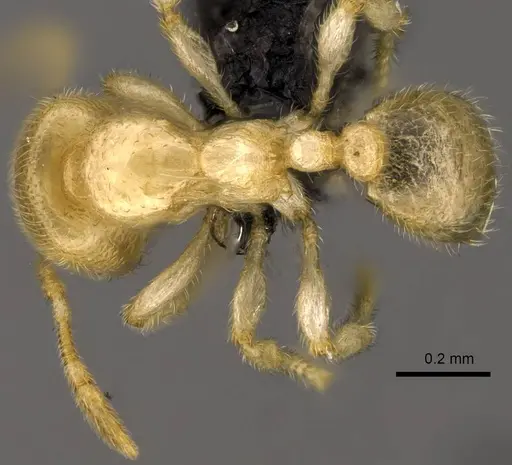
CASENT0070818
View on AntWeb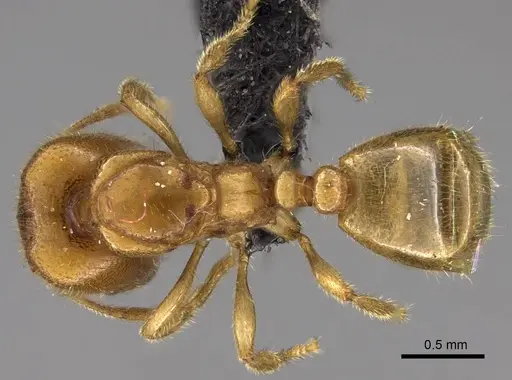
Literature
Loading...Loading products...