

Carebara phragmotica
- Scientific Name
- Carebara phragmotica
- Tribe
- Crematogastrini
- Subfamily
- Myrmicinae
- Author
- Fischer <i>et al.</i>, 2015
- Distribution
- Found in 1 countries
Carebara phragmotica Overview
Carebara phragmotica is an ant species of the genus Carebara. It is primarily documented in 1 countries , including Kenya. Detailed taxonomic data and occurrence records can be further explored via authoritative databases such as AntWeb or the Global Biodiversity Information Facility (GBIF).
Carebara phragmotica
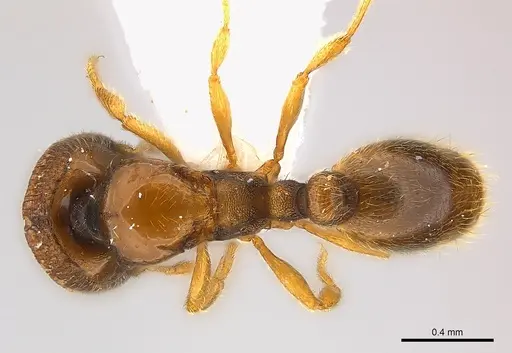
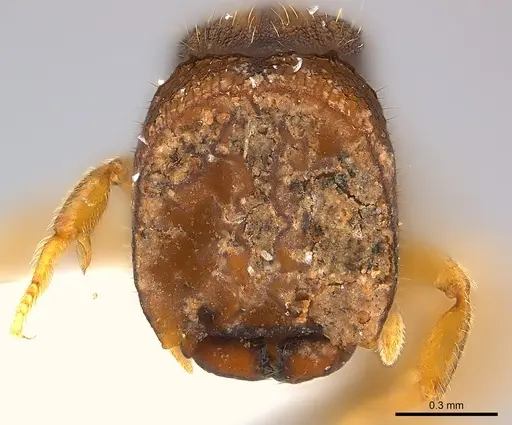
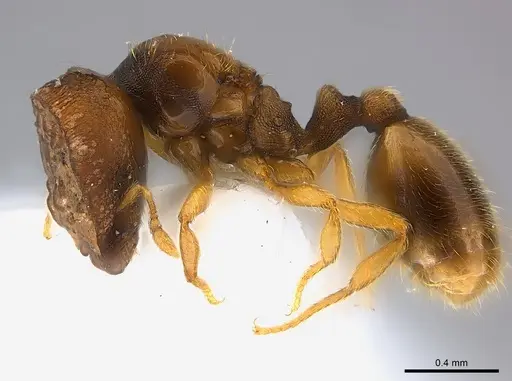
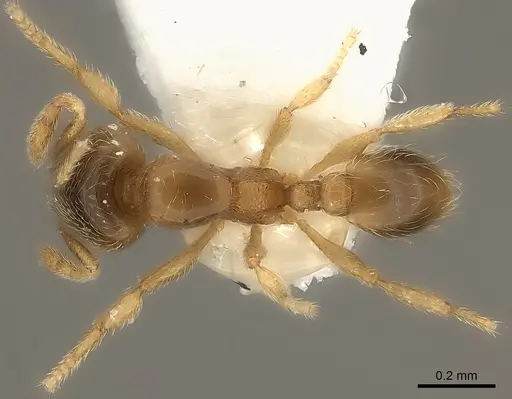
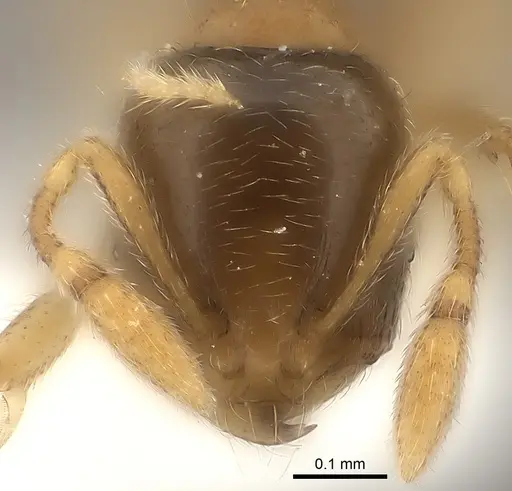
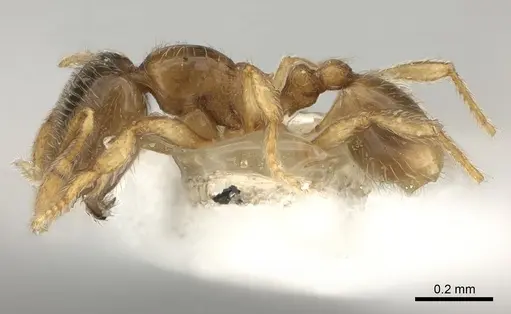
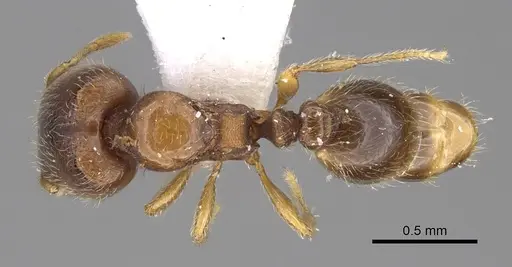
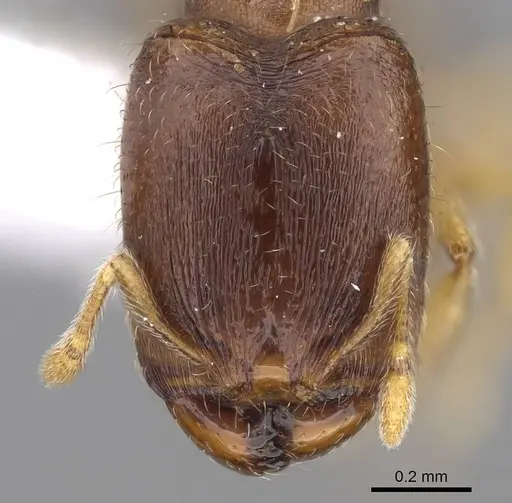
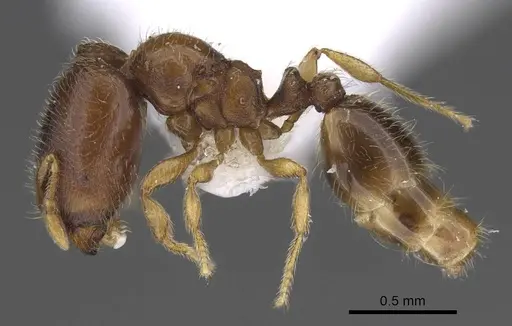
Carebara phragmotica is an exceptionally rare African leaf litter ant discovered in 2015 from the Kakamega Forest in western Kenya. This tiny species is famous for its extraordinary phragmosis adaptation, the major workers have evolved a plug-shaped head that acts like a living door to seal the nest entrance [1]. The phragmotic majors have a distinctive cephalic shield with two raised ridges in the center, creating a unique appearance among ants. Workers come in three castes: tiny minor workers at 0.32-0.34mm, larger major workers at 0.59-0.63mm, and the rare phragmotic majors at 0.68-0.71mm [1]. All castes have 10 antennal segments, which is unusual in the genus. The species is known only from rainforest leaf litter at elevations around 1600-1650m in Kenya's Kakamega Forest region [1].
Quick Summary
- Difficulty: Expert
- Origin & Habitat: Kakamega Forest, Western Province of Kenya, rainforest leaf litter at 1600-1650m elevation [1]
- Colony Type: Unknown colony structure. This is a newly described species with no published colony data. Likely single-queen based on genus patterns, but unconfirmed.
- Size & Growth:
- Queen: Undescribed, no queen measurements available [1]
- Worker: Minor: 0.32-0.34mm, Major: 0.59-0.63mm, Phragmotic major: 0.68-0.71mm [1]
- Colony: Unknown, no colony size data published [1]
- Growth: Unknown, no development data available
- Development: Unconfirmed, no development studies exist for this species. Based on typical Carebara patterns, expect 4-8 weeks at warm temperatures, but this is an estimate. (No direct development data exists. Related Carebara species typically develop in 4-8 weeks at tropical temperatures.)
- Antkeeping:
- Temperature: Keep warm at 24-28°C. This species comes from a tropical rainforest at 1650m elevation, suggesting they prefer warm but not extreme conditions. Use a heating cable on one side of the nest to create a gradient
- Humidity: High humidity required, rainforest leaf litter species. Keep nest substrate consistently moist but not waterlogged. Mist occasionally and provide a water tube. The substrate should feel damp to the touch
- Diapause: Unknown, no seasonal data available. Kakamega Forest is near the equator with minimal temperature variation, so diapause may not be required. Monitor colony activity patterns [1]
- Nesting: This is a leaf litter species that likely nests in small cavities within rotting wood, under bark, or in compacted leaf litter. In captivity, a naturalistic setup with moist substrate (coco fiber, soil mix) works well, or a Y-tong/plaster nest with small chambers scaled to their tiny size. The phragmotic majors may attempt to block passages with their heads [1]
- Behavior: This is a cryptic leaf litter species that forages in the dark, humid microhabitats of the forest floor. Workers are likely slow-moving and secretive. The phragmotic majors serve as living doors, when threatened, they plug nest entrances with their specialized heads. Minor workers are extremely small and can likely escape through standard mesh barriers. Escape prevention must be excellent. Aggression levels are unknown but likely low, they are a cryptic species, not an aggressive one. Workers have reduced eyes, indicating they navigate primarily by chemical cues rather than vision [1].
- Common Issues: no published care information exists, this is one of the least-studied ant species in the hobby, colony size is unknown, expect very small colonies based on their tiny worker size, escape prevention is critical, minor workers at 0.32mm can squeeze through standard mesh, no confirmed diet information, must be determined through experimentation, founding queens have never been documented, colony acquisition will likely rely on wild-caught colonies
The Phragmosis Adaptation
Carebara phragmotica is one of only a handful of Carebara species worldwide that exhibits phragmosis, a remarkable defensive adaptation where major workers have evolved plug-shaped heads [1]. The phragmotic majors have a highly modified cephalic shield that forms a door-like structure. In profile, their head appears as a thick, anteriorly flattened plug that can seal nest entrances [1]. This adaptation likely evolved to protect the colony from predators in the humid leaf litter environment where they live. The cephalic shield features two raised, wavy ridges in the center, surrounded by radiating canyons and ridges. The inside of the shield is normally covered with a layer of dirt, which may help it blend with the nest substrate when in use [1]. This is an extremely rare trait in ants, most species rely on mandibles or stings for defense, not modified head morphology.
Natural History and Distribution
This species is known only from the Kakamega Forest in Kenya's Western Province, along with smaller forest fragments in the area (Malawa, Kisere, Kaimosi, and Yala forests) [1]. All specimens have been collected from leaf litter sampling in rainforest habitats at elevations of 1600-1650m [1]. Kakamega Forest is a remnant of the ancient Guineo-Congolian rainforest that once covered much of central Africa. The forest sits at a high elevation near the equator, creating a unique microclimate with relatively cool temperatures for a tropical rainforest. This species has never been found outside these specific forest fragments, making it potentially endangered by habitat loss [1]. The type series was collected through careful leaf litter extraction, indicating these ants live deep within the forest floor litter layer where they are difficult to find [1].
Housing and Nest Setup
Given their natural habitat in rainforest leaf litter, these ants require high humidity and small-scale nesting structures. A naturalistic setup with a moist substrate mixture (coco fiber, peat moss, or potting soil) works best to replicate their natural environment. The substrate should be kept consistently moist but never waterlogged. Because minor workers are extremely tiny (0.32mm), escape prevention must be excellent, use tight-fitting lids and fine mesh barriers [1]. A Y-tong (acrylic) nest or plaster nest with small chambers can also work, but ensure humidity is maintained. The phragmotic majors may attempt to block passages with their heads, so avoid nest designs where this could cause problems. Provide a water tube for humidity and mist the outworld occasionally. Keep the nest in a dark location as these are cryptic, light-avoiding ants.
Feeding and Diet
The diet of Carebara phragmotica has not been documented in scientific literature. As a leaf litter ant in the genus Carebara (which belongs to the subfamily Myrmicinae), they likely feed on small arthropods, honeydew, and other organic matter found in the forest floor [1]. In captivity, you should offer a varied diet including: small live prey like fruit flies, pinhead crickets, or springtails, sugar sources like honey water or sugar water, and possibly small seeds. Start with small live prey items and observe acceptance. Given their tiny size, all food items must be very small. Remove any uneaten prey after 24-48 hours to prevent mold. The reduced eyes of this species suggest they are not visual hunters, they likely rely on chemical trails to locate food [1].
Temperature and Seasonal Care
Based on their collection location in a Kenyan rainforest at 1650m elevation, these ants likely prefer warm, stable temperatures in the range of 24-28°C. The Kakamega Forest region has relatively mild temperatures year-round due to its elevation, so significant temperature fluctuations would be unnatural for them. Use a heating cable on one side of the nest to create a gentle temperature gradient, allowing the colony to self-regulate. Place the heating on top of the nest, not underneath, to avoid drying out the substrate. Diapause requirements are unknown, Kakamega Forest is near the equator with minimal seasonal temperature variation, so a true winter dormancy may not be necessary. Monitor your colony's activity levels and adjust temperatures accordingly. If workers become sluggish, slightly increase temperature, if they avoid the heated area, reduce it.
Frequently Asked Questions
How long does it take for Carebara phragmotica to develop from egg to worker?
The development timeline has not been scientifically documented for this species. Based on typical Carebara patterns, expect approximately 4-8 weeks from egg to first worker at warm temperatures (around 26°C). However, this is an estimate, actual development time is unknown and may vary significantly.
What do Carebara phragmotica ants eat?
Their exact diet is unconfirmed, but as leaf litter ants they likely accept small live prey (fruit flies, springtails), sugar sources (honey water, sugar water), and possibly tiny seeds. Start with small live prey and observe acceptance. Remove uneaten food after 24-48 hours.
Are Carebara phragmotica good for beginners?
No. This is an expert-level species due to several factors: they are newly described with no published care information, colony size and structure are unknown, founding behavior is unconfirmed, and their tiny size (0.32mm minors) requires excellent escape prevention. There are many better species for beginners.
Do Carebara phragmotica ants sting?
Stinging ability is unknown. As a Myrmicinae ant, they likely have a stinger, but it would be too small to penetrate human skin effectively. Their primary defense is the phragmotic major workers with plug-shaped heads that block nest entrances.
How big do Carebara phragmotica colonies get?
Colony size is unknown, no published colony data exists. Based on related leaf litter Carebara species, expect small colonies likely under 500 workers. This is a rare species that has never been found in large numbers.
What is phragmosis in ants?
Phragmosis is a rare defensive adaptation where major workers have evolved plug-shaped heads that act as living doors to seal nest entrances. Carebara phragmotica is one of only a handful of Carebara species exhibiting this remarkable trait [1].
Can I keep multiple queens together?
This has not been documented. Colony structure (monogyne vs polygyne) is unconfirmed for this species. Do not attempt combining unrelated queens without evidence they will accept each other.
What temperature should I keep Carebara phragmotica at?
Keep them warm at 24-28°C. Use a heating cable on one side of the nest to create a gradient. This species comes from a Kenyan rainforest at 1650m elevation, suggesting they prefer warm but not extreme conditions.
Why are my Carebara phragmotica dying?
Without published care information, troubleshooting is difficult. Common issues likely include: escape (they are extremely small), improper humidity (too dry), temperature stress (too hot or too cold), or inadequate food. Ensure excellent escape prevention, maintain high humidity, and offer small live prey.
Where is Carebara phragmotica found in the wild?
Only in the Kakamega Forest and surrounding fragments (Malawa, Kisere, Kaimosi, Yala) in Kenya's Western Province. All specimens have been collected from rainforest leaf litter at 1600-1650m elevation [1].
References

This caresheet is licensed under CC BY-SA 4.0 .
Literature
Loading...Loading products...