

Carebara osborni
- Scientific Name
- Carebara osborni
- Tribe
- Crematogastrini
- Subfamily
- Myrmicinae
- Author
- Wheeler, 1922
- Distribution
- Found in 1 countries
Carebara osborni Overview
Carebara osborni is an ant species of the genus Carebara. It is primarily documented in 1 countries , including Congo, Democratic Republic of the. Detailed taxonomic data and occurrence records can be further explored via authoritative databases such as AntWeb or the Global Biodiversity Information Facility (GBIF).
Carebara osborni
Carebara osborni is a tiny myrmicine ant species native to the Democratic Republic of Congo, specifically recorded from the Niangara region in Haut-Uelé [1][2]. Workers are among the smallest in the genus, measuring just 1.5-2mm, with queens significantly larger at around 5-6mm. The species was described by W.M. Wheeler in 1922 from specimens collected during the American Museum Congo Expedition [1]. As a poorly documented endemic species, biological details remain largely unknown, but Carebara ants are generally known for their tiny size, colony flexibility, and generalist foraging habits.
Quick Summary
- Difficulty: Unknown, insufficient data for reliable difficulty assessment
- Origin & Habitat: Endemic to the Democratic Republic of Congo, specifically the Niangara region in Haut-Uelé province. The natural habitat consists of tropical forest environments in central Africa [1][2].
- Colony Type: Colony structure is unconfirmed. Based on typical Carebara patterns, colonies likely have a single founding queen (monogyne) but may show flexibility. No data on whether multiple queens can establish together or if ergatoid replacement reproductives exist.
- Size & Growth:
- Queen: Approximately 5-6mm, estimated from original description [1]
- Worker: 1.5-2mm, very small ants typical of the genus [1]
- Colony: Unknown, no colony size data available
- Growth: Unknown, no development data available
- Development: Unknown, no direct measurements exist. Based on typical Carebara and small Myrmicinae patterns, estimate 4-8 weeks at tropical temperatures, but this is a rough guess. (No specific development data exists for this species. Temperature-dependent estimates suggest faster development in warm conditions typical of their tropical range.)
- Antkeeping:
- Temperature: Keep at tropical room temperatures, roughly 24-28°C. This range reflects their natural habitat in central Africa. A slight gradient allowing cooler areas (22°C) is beneficial.
- Humidity: Moderate to high humidity,60-80%. Their native forest habitat suggests they prefer damp conditions. Keep nest substrate consistently moist but not waterlogged.
- Diapause: Unknown, no data on overwintering requirements. As a tropical species from central Africa, they likely do not require hibernation, but may benefit from slight seasonal temperature fluctuations.
- Nesting: Natural nesting is unconfirmed. Most Carebara species nest in soil or under stones in forest floor microhabitats. For captivity, a small test tube setup or mini Y-tong nest works well given their tiny size. Provide moist substrate and avoid large chambers.
- Behavior: Behavior is poorly documented. Carebara species are generally non-aggressive, foragers that scavenge and tend aphids for honeydew. Their tiny size makes them docile and unlikely to sting. Escape prevention is critical, their small size means they can squeeze through standard gaps easily. They are likely nocturnal or crepuscular foragers.
- Common Issues: very small size makes escape likely without fine mesh barriers, no species-specific care data exists, keepers must rely on genus-level estimates, tropical humidity requirements mean dry conditions can quickly stress colonies, slow growth potential means colonies may take months to establish, wild-caught colonies may carry parasites or diseases not well-documented
Species Overview and Distribution
Carebara osborni is one of the more poorly documented Carebara species, known only from its original description by W.M. Wheeler in 1922. The type locality is Niangara in what was then the Belgian Congo, now the Democratic Republic of Congo [1]. More recent surveys confirm its presence in Haut-Uelé province, making it an endemic species to this region of central Africa [2]. The original collection included workers, a queen, and males, providing the morphological basis for the species description [1]. Despite being described nearly a century ago, no ecological or behavioral studies have been published on this species, leaving significant gaps in our understanding of its biology.
Size and Morphology
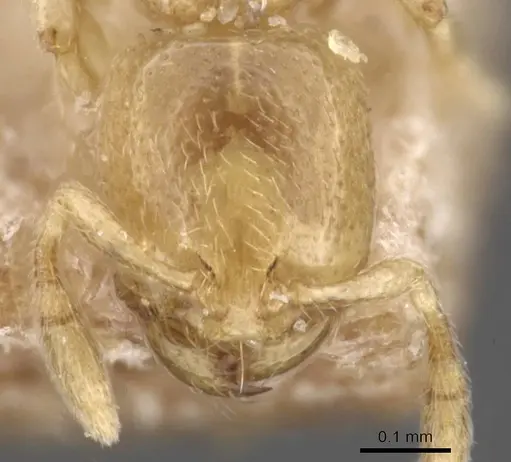
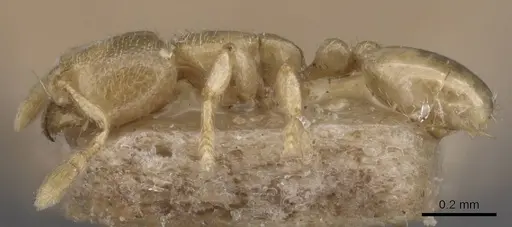
This is a tiny ant species, with workers measuring approximately 1.5-2mm in length. Queens are significantly larger at roughly 5-6mm, showing the pronounced size dimorphism typical of the genus. The original description by Wheeler included figures of the worker, queen, and male castes [1]. Carebara workers are often characterized by their small size, relatively large heads, and typical myrmicine body proportions. The species name 'osborni' honors someone from the original expedition, following the naming conventions of early 20th-century African ant surveys.
Housing and Nesting
Given their tiny size, Carebara osborni requires carefully scaled housing. A small test tube setup works well for founding colonies, use a narrow diameter tube with a water reservoir that maintains humidity without flooding. For established colonies, a mini Y-tong (acrylic) nest with small chambers or a small naturalistic setup with fine substrate works best. The nest material should remain consistently moist but never waterlogged. Because of their very small size, escape prevention is critical, use fine mesh barriers and ensure all connections are tight. Avoid large, open spaces in the nest as these ants prefer tight, enclosed chambers scaled to their tiny bodies.
Feeding and Diet
Diet is unconfirmed for this specific species, but Carebara ants are generally omnivorous scavengers. They likely forage for small insects, honeydew from aphids, and nectar. In captivity, offer small protein sources like fruit flies, pinhead crickets, or other tiny arthropods. Sugar water or honey can be offered occasionally, though many tiny myrmicines prefer protein. Feed small amounts every 2-3 days and remove uneaten food promptly to prevent mold. Given their tiny size, prey items should be appropriately scaled, springtails or fruit fly pupae work well for starters.
Temperature and Humidity Requirements
As a tropical species from central Africa, Carebara osborni requires warm, humid conditions. Maintain temperatures between 24-28°C, with a slight gradient allowing workers to self-regulate. A heating cable on one side of the nest can create this gradient. Humidity should be kept at 60-80%, mimicking the damp forest floor conditions of their native habitat. Monitor substrate moisture regularly, it should feel damp to the touch but not have standing water. Adequate ventilation helps prevent mold while maintaining humidity.
Colony Development and Growth
No specific development data exists for this species. Based on typical Carebara patterns and other small Myrmicinae, founding queens likely seal themselves in a small chamber and raise the first brood alone (claustral founding). The first workers (nanitics) will be smaller than normal workers. Colony growth is expected to be slow initially, as the queen can only lay a few eggs at a time while tending the first brood. Once established, growth may accelerate but overall colony size likely remains moderate, probably under a few hundred workers given the small worker size. Patience is essential, as small tropical species can take many months to establish.
Frequently Asked Questions
How long does it take for Carebara osborni to produce first workers?
The egg-to-worker timeline is unknown for this species. Based on typical Carebara and small Myrmicinae patterns, expect 4-8 weeks at tropical temperatures (26-28°C), but this is a rough estimate. Small colonies may take longer as the queen can only tend a limited number of larvae at once.
What do Carebara osborni ants eat?
Diet is unconfirmed but likely follows typical Carebara patterns. They probably accept small live prey (fruit flies, springtails), small insects, and may scavenge. Offer protein sources 2-3 times weekly and sugar water occasionally. Remove uneaten food promptly.
Do Carebara osborni ants sting?
Given their very small size (1.5-2mm workers), any sting would be negligible even if present. Most Carebara species are docile and non-aggressive. The sting apparatus exists in Myrmicinae but is often too small to penetrate human skin effectively.
Can I keep multiple Carebara osborni queens together?
Colony structure is unconfirmed. Based on typical Carebara patterns, single-queen colonies are most likely. Combining unrelated foundress queens is not recommended without evidence they can coexist peacefully. Wait until you have a established colony before attempting any multi-queen arrangements.
What size colony does Carebara osborni reach?
Maximum colony size is unknown. Based on small worker size and typical Carebara patterns, colonies likely reach a few hundred workers at most. They are not among the large colony-forming Myrmicinae.
Do Carebara osborni need hibernation or diapause?
As a tropical species from central Africa, they likely do not require hibernation. No data exists on diapause requirements. Slight seasonal temperature fluctuations may be beneficial but are not necessary. Keep them warm year-round.
How do I prevent Carebara osborni from escaping?
Escape prevention is critical due to their tiny size. Use fine mesh (at least 0.5mm or finer), tight-fitting lids, and barrier tape (Fluon) on all edges. Check connections regularly as they can squeeze through the smallest gaps. A test tube setup with cotton plug works well for founding colonies.
Is Carebara osborni suitable for beginners?
Difficulty level cannot be reliably assessed due to limited species-specific data. Their tiny size and specific humidity requirements may make them challenging. Beginners may want to start with better-documented species. If you proceed, expect a learning curve and be prepared to adjust care based on colony response.
What nest type is best for Carebara osborni?
A small test tube setup works well for founding colonies. For established colonies, a mini Y-tong nest with small chambers or a small acrylic formicarium with appropriately scaled tunnels works well. The key is providing tight, small chambers scaled to their tiny 1.5-2mm workers.
References

This caresheet is licensed under CC BY-SA 4.0 .
CASENT0913484
View on AntWeb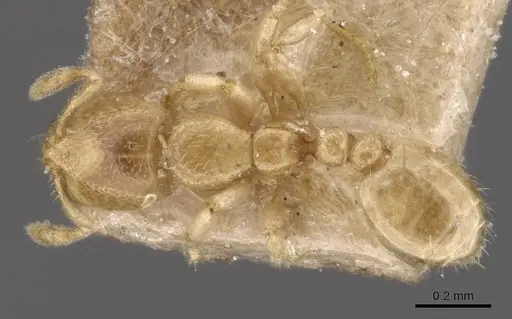
Literature
Loading...Loading products...