

Carebara nicotianae
- Scientific Name
- Carebara nicotianae
- Tribe
- Crematogastrini
- Subfamily
- Myrmicinae
- Author
- Arnold, 1948
- Distribution
- Found in 2 countries
Carebara nicotianae Overview
Carebara nicotianae is an ant species of the genus Carebara. It is primarily documented in 2 countries , including Mozambique, Zambia. Detailed taxonomic data and occurrence records can be further explored via authoritative databases such as AntWeb or the Global Biodiversity Information Facility (GBIF).
Carebara nicotianae
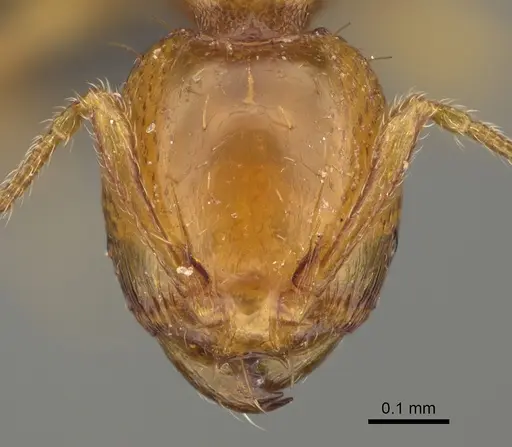
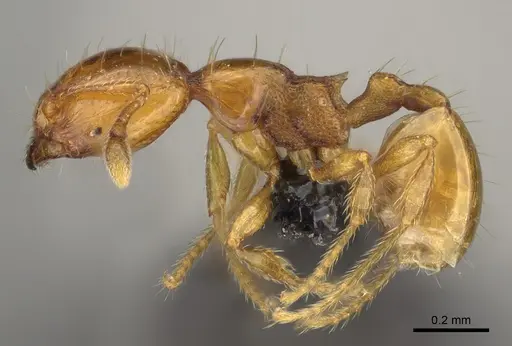
Carebara nicotianae is a small African ant species native to the miombo woodlands of Zambia and Zimbabwe, found at elevations between 1300 and 1650 meters [1]. This species shows pronounced worker polymorphism, major workers have a massive head measuring 2.09mm in width, while minor workers are tiny at just 0.46-0.47mm [1]. Major workers are reddish brown with coarse rugose-reticulate sculpture on the face, while minor workers are dark orange with smoother, shinier surfaces [1]. Both castes have 11-segmented antennae and well-developed propodeal spines [1]. The species can be distinguished from related Carebara species by the absence of horns on the posterolateral lobes of major workers and the areolate sculpture on minor worker mesonotum and propodeum [1].
Quick Summary
- Difficulty: Medium
- Origin & Habitat: Zambia and Zimbabwe in miombo woodland at 1300-1650m elevation [1]
- Colony Type: Likely monogyne (single queen colonies) based on typical Carebara genus patterns, colony structure is unconfirmed for this species
- Size & Growth:
- Queen: Unconfirmed, no queen measurements available in primary literature
- Worker: Major workers: 2.09mm head width, Minor workers: 0.46-0.47mm head width [1]
- Colony: Unknown, no colony size data available
- Growth: Unknown, development has not been studied in this species
- Development: Estimated 6-8 weeks based on typical Carebara genus development patterns (This is an estimate based on related species, no direct measurements exist for C. nicotianae)
- Antkeeping:
- Temperature: Keep at room temperature around 22-26°C, adjust based on colony activity. No specific thermal data exists for this species, but miombo woodland experiences moderate temperatures
- Humidity: Maintain moderate to high humidity, their natural habitat is woodland with seasonal moisture. Keep nest substrate consistently moist but not waterlogged
- Diapause: Unknown, no studies on overwintering requirements. Given their elevation range (1300-1650m), they likely experience cooler periods and may benefit from a mild winter rest around 15-18°C for 2-3 months
- Nesting: In captivity, use test tubes for founding colonies. Established colonies do well in Y-tong nests or plaster nests with small chambers scaled to their tiny size. Provide damp substrate, they likely nest in soil or rotting wood in nature
- Behavior: This is a poorly studied species with limited behavioral observations. Based on typical Carebara behavior, they are likely predatory on micro-arthropods like springtails and mites. Workers are polymorphic with distinct major and minor castes, majors likely specialize in seed processing or defense. They are small ants and may have good escape abilities, use fine mesh barriers. Aggression levels are unknown but likely moderate like most Carebara species.
- Common Issues: limited data makes care recommendations uncertain, be prepared to experiment, escape prevention is important given their tiny worker size, slow colony growth may frustrate beginners, patience is key, no documented diet acceptance, start with live micro-prey and observe, founding colonies may be difficult to establish, queens are likely claustral but this is unconfirmed
Housing and Nest Setup
Carebara nicotianae is a tiny ant species that requires appropriately scaled housing. For founding colonies, use standard test tubes filled with water and backed with cotton, the water chamber should be modest to prevent flooding. Once the colony reaches 20-30 workers, you can move them to a small formicarium. Y-tong (AAC) nests work well because they provide tight chambers that prevent escapes. Plaster nests are also suitable, just ensure the chambers are small enough for these tiny ants. The outworld should be simple since these ants are not large foragers. Escape prevention is critical, use fluon on test tube rims and fine mesh on any ventilation. These ants are much smaller than many common hobby species, so standard barriers may not work.
Feeding and Diet
The diet of Carebara nicotianae has not been documented in scientific literature, but based on typical Carebara genus behavior, they are likely predatory on micro-arthropods. In captivity, offer small live prey such as springtails, fruit flies, and tiny crickets. They may also accept protein powders or crushed insects. Sugar sources like honey water or sugar water may be accepted, but this is uncertain, offer occasionally and observe. Feed protein 2-3 times per week for established colonies. Remove uneaten prey after 24-48 hours to prevent mold. Since minor workers are extremely tiny (under 0.5mm), prey items must be appropriately sized, springtails are ideal.
Temperature and Seasonal Care
No specific temperature requirements exist in the scientific literature for this species. Based on their natural habitat in miombo woodland at 1300-1650m elevation in Zambia and Zimbabwe, they likely experience moderate temperatures with seasonal variation. Start with room temperature around 22-26°C and observe colony behavior. If workers cluster together and show reduced activity, they may want it slightly warmer. If they avoid heated areas, reduce temperature. A gentle temperature gradient allows ants to self-regulate. For winter rest, given their elevation range, consider a mild diapause period of 2-3 months at 15-18°C. This is speculative but aligns with their likely seasonal biology. [1]
Colony Development and Growth
Colony development for Carebara nicotianae has not been studied, so exact timelines are unknown. Based on typical Carebara patterns and related small Myrmicinae, expect 6-8 weeks from egg to first worker at optimal temperature. The first workers (nanitics) will be small minor workers. Growth is likely slow initially, small colonies may take months to reach 30-50 workers. Major workers develop later in the colony cycle and require more resources. Be patient with founding colonies, these ants are not fast growers. Monitor for queen laying eggs, then track development through larval and pupal stages. If the colony stalls, check temperature, humidity, and food availability.
Handling and Observation
Carebara nicotianae workers are tiny, making detailed observation challenging without magnification. Major workers with their massive heads are more visible than the minute minor workers. When observing, use good lighting and consider a magnifying glass for the smallest workers. These ants are not aggressive and unlikely to sting, their stingers are too small to penetrate human skin. However, they may bite if threatened. For photography, use a macro lens or attachment. Their small size means you may need to photograph through the nest material for best results. Handle colonies gently during moves, sudden vibrations can stress queens and young colonies.
Frequently Asked Questions
How long does it take for Carebara nicotianae to produce first workers?
The exact timeline is unknown, but based on typical Carebara development, expect 6-8 weeks from egg to first worker at warm room temperature (around 24-26°C). This is an estimate since no specific development data exists for this species.
What do Carebara nicotianae ants eat?
Their diet is unconfirmed, but based on typical Carebara behavior, they likely eat small live prey like springtails, fruit flies, and micro-arthropods. Offer protein 2-3 times per week. Sugar sources may be accepted, offer honey water occasionally and observe.
Are Carebara nicotianae good for beginners?
This species is not ideal for beginners due to limited care data and their tiny size requiring careful escape prevention. The slow growth and uncertain requirements can be frustrating. If you're experienced with small Myrmicinae and comfortable experimenting, this can be an interesting species to keep.
Do Carebara nicotianae ants sting?
They likely have stingers but are too small to penetrate human skin effectively. They are not considered dangerous to humans. If threatened, they may bite rather than sting.
What temperature should I keep Carebara nicotianae at?
Start with room temperature around 22-26°C. No specific requirements exist in the literature, so observe your colony and adjust. A slight temperature gradient allows ants to choose their preferred zone.
How big do Carebara nicotianae colonies get?
Colony size is unknown, no data exists on maximum colony size for this species. Based on related Carebara species, they likely reach several hundred workers at most.
Can I keep multiple Carebara nicotianae queens together?
This is unconfirmed. The colony structure (monogyne vs polygyne) has not been documented. Based on typical Carebara patterns, single-queen colonies are likely. Do not combine unrelated foundress queens unless you observe them accepting each other.
Do Carebara nicotianae need hibernation?
This is unknown. Given their elevation range (1300-1650m) in miombo woodland, they likely experience seasonal temperature changes. A mild winter rest at 15-18°C for 2-3 months may be beneficial but is not confirmed.
What makes Carebara nicotianae different from other Carebara species?
They can be identified by major workers lacking horns on posterolateral lobes (present in similar species like C. xynera) and minor workers having areolate sculpture on mesonotum and propodeum. They are found only in Zambia and Zimbabwe at higher elevations.
When will major workers appear in my Carebara nicotianae colony?
Major workers develop later in the colony cycle, typically after the colony reaches 50+ workers and has established a strong worker population. This can take many months. The queen allocates resources to majors when the colony can support them.
References

This caresheet is licensed under CC BY-SA 4.0 .
CASENT0066894
View on AntWeb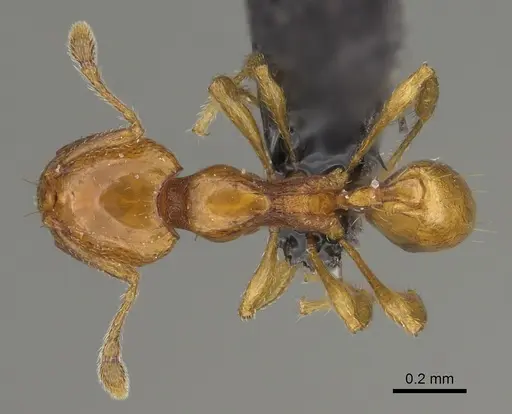
Literature
Loading...Loading products...