

Carebara madibai
- Scientific Name
- Carebara madibai
- Tribe
- Crematogastrini
- Subfamily
- Myrmicinae
- Author
- Fischer & Azorsa, 2014
- Distribution
- Found in 2 countries
Carebara madibai Overview
Carebara madibai is an ant species of the genus Carebara. It is primarily documented in 2 countries , including Central African Republic, Gabon. Detailed taxonomic data and occurrence records can be further explored via authoritative databases such as AntWeb or the Global Biodiversity Information Facility (GBIF).
Carebara madibai
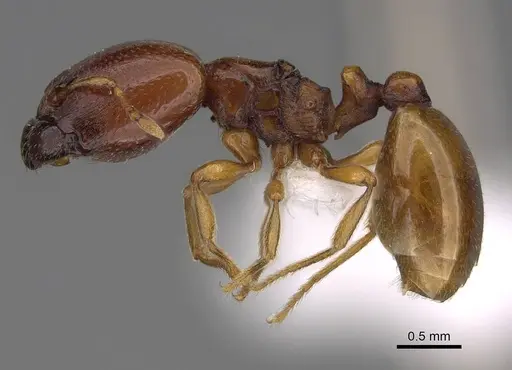
Carebara madibai is a tiny rainforest ant from Central Africa, first described in 2014. The species is named in memory of Nelson Rolihlahla Mandela, affectionately known as Madiba. These ants show a strong size polymorphism, major workers reach about 1.1mm head width while minor workers are only 0.33-0.41mm [1]. Major workers lack eyes entirely, while minor workers have a single simple eye (one ommatidium) [1]. The species is unique within its group for having nine-segmented antennae. In the wild, colonies have been collected from sifted leaf litter, leaf mold, and rotting wood at elevations between 375-680 meters in rainforest habitats across the Central African Republic, Democratic Republic of Congo, Gabon, and Uganda [1][2].
Quick Summary
- Difficulty: Unknown, likely Expert
- Origin & Habitat: Rainforest of Central Africa (Central African Republic, DRC, Gabon, Uganda) at 375-680m elevation [1]
- Colony Type: Unconfirmed, likely single queen based on genus patterns
- Size & Growth:
- Queen: Undescribed, no queen measurements available
- Worker: Major workers: 1.09-1.13mm HW, Minor workers: 0.33-0.41mm HW [1]
- Colony: Unknown, likely hundreds to low thousands based on genus patterns
- Growth: Unknown, likely moderate based on genus
- Development: Unknown, estimated 4-8 weeks based on related Carebara species (No direct development data exists for this species. Estimates based on typical Carebara genus development patterns at tropical temperatures.)
- Antkeeping:
- Temperature: Unknown, likely 24-28°C based on rainforest origin
- Humidity: High humidity required, rainforest species collected from damp leaf litter and rotting wood [1]
- Diapause: Unknown, likely minimal or none given tropical origin
- Nesting: Natural nesting in rotting wood and leaf litter suggests Y-tong, plaster, or naturalistic setups with damp substrate would work well. Avoid dry conditions.
- Behavior: Behavior is unstudied in captivity. Based on genus patterns, these are likely cryptic colony-dwelling ants that nest in damp wood and leaf litter. Minor workers likely handle foraging while majors serve as soldiers or food processors. Escape prevention is critical due to their very small size, minor workers are only 0.33mm and can squeeze through standard test tube barriers. Handle with extreme care as they are fragile and easily crushed.
- Common Issues: very small size means escapes are likely without fine mesh barriers, no captive husbandry information exists, experimental species, humidity requirements are unclear but likely high based on rainforest origin, no information on acceptable foods, diet is unknown, wild-caught colonies may have parasites that kill them in captivity
Species Discovery and Naming
Carebara madibai was formally described in 2014 by Georg Fischer and Frank Azorsa. The species was named in memory of Nelson Rolihlahla Mandela (1918-2013), the former South African president and anti-apartheid revolutionary who was affectionately nicknamed Madiba by his people. The name honors Mandela as a 'father of the nation' figure. The species is part of the C. xynera group and is unique among this group for having nine-segmented antennae, a key identification feature [1]. The type specimens were collected from Parc National Dzanga-Ndoki in the Central African Republic, from rainforest leaf litter at 510 meters elevation.
Identification and Morphology
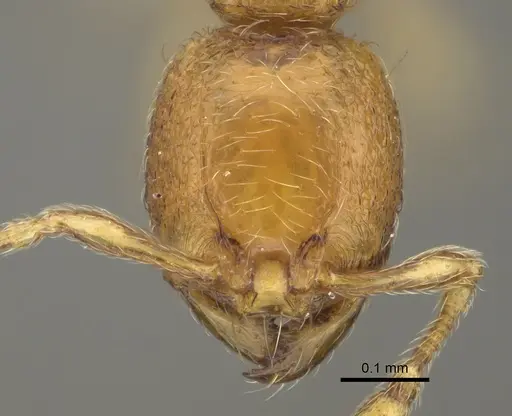
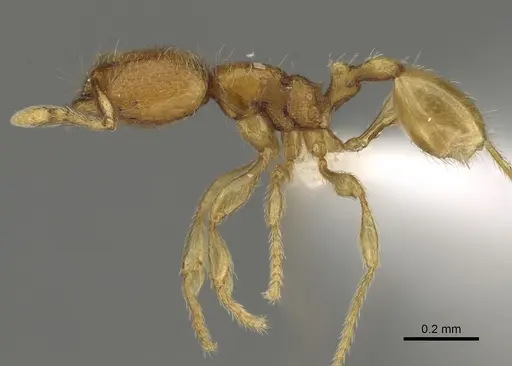
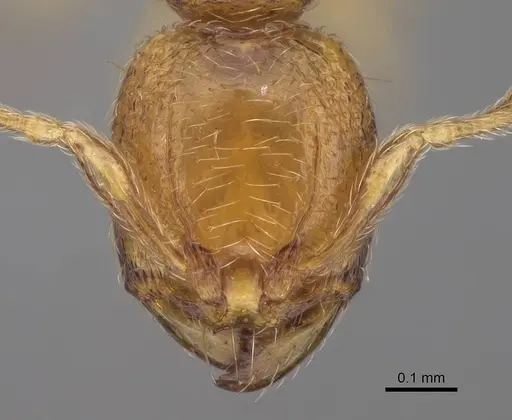
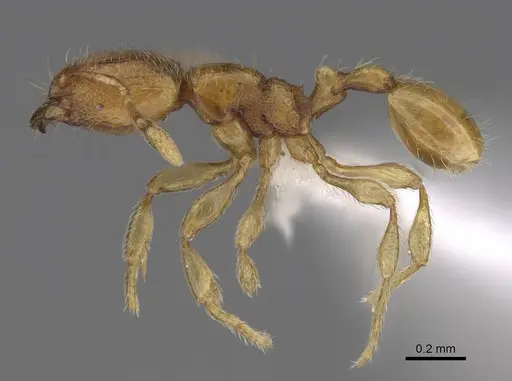
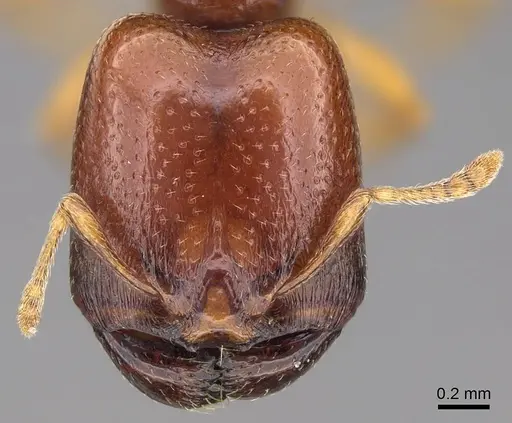
This species shows dramatic polymorphism between major and minor workers. Major workers have a nearly rectangular head that is longer than wide, measuring 1.09-1.13mm in head width. Their face is smooth and shiny with large scattered foveae (small pits), and they lack eyes entirely. Minor workers are much smaller at 0.33-0.41mm head width and possess a single simple eye with one ommatidium. Both castes have very short, mostly appressed body hairs, lacking the long standing hairs seen in some related species [1]. The antennae have nine segments in both castes, with short scapes that do not reach the posterior quarter of the head in majors.
Natural Distribution and Habitat
Carebara madibai is known from four Central African countries: the Central African Republic, Democratic Republic of Congo, Gabon, and Uganda. All collection records come from elevations between 375-680 meters in rainforest environments. The species has been collected using sifting methods from leaf litter, leaf mold, and rotting wood, typical microhabitats for cryptic rainforest litter ants. This suggests the species is a litter-dwelling ant that nests in damp, shaded microhabitats within the forest floor [1].
Housing and Nesting
Since this is a newly described species with no captive husbandry history, housing recommendations must be inferred from genus patterns and natural nesting observations. These ants naturally nest in rotting wood and leaf litter in rainforests, suggesting they require high humidity and damp substrate. A Y-tong (AAC) nest or plaster nest with moisture-retentive substrate would likely work well. Given their tiny size (minor workers are only 0.33mm), escape prevention must be excellent, use fine mesh barriers and ensure all connections are sealed. A naturalistic setup with damp leaf litter and small pieces of rotting wood could also be appropriate. Avoid dry conditions entirely.
Feeding and Diet
The diet of Carebara madibai is unstudied in captivity. In the wild, related Carebara species are typically omnivorous, feeding on small arthropods, honeydew, and decaying organic matter. Given their tiny size, they likely consume very small prey items such as springtails, booklice, and other micro-arthropods found in leaf litter. For captive feeding, start with small live prey like springtails and fruit flies. Sugar sources may be accepted but this is unconfirmed. Do not offer prey items larger than their minor workers. Experimental feeding trials will be needed to determine accepted foods.
Temperature and Humidity Requirements
Based on their rainforest origin in Central Africa, these ants likely require warm, humid conditions. Temperature in the range of 24-28°C is a reasonable starting point, similar to other tropical Carebara species. Humidity should be high, the natural habitat is damp leaf litter and rotting wood in rainforests. Keep the nest substrate consistently moist but not waterlogged. Provide a humidity gradient so ants can choose their preferred zone. Given the lack of captive data, observe colony behavior and adjust conditions accordingly. If workers cluster together excessively, increase humidity, if they avoid certain areas, reduce moisture.
Frequently Asked Questions
How long does it take for Carebara madibai to develop from egg to worker?
This is unknown, no development data exists for this species. Based on typical Carebara genus patterns at tropical temperatures (24-28°C), estimates suggest 4-8 weeks from egg to first worker, but this is purely speculative.
What do Carebara madibai ants eat?
Diet is unconfirmed for this species. Based on related Carebara species, they likely accept small live prey (springtails, fruit flies) and may consume honeydew or sugar water. Start with small live prey and experiment cautiously.
Are Carebara madibai good for beginners?
No. This is an experimental species with no captive husbandry information available. The species was only described in 2014 and no established keeping protocols exist. Only experienced antkeepers should attempt this species.
Do Carebara madibai ants sting?
Unknown. Most tiny Myrmicinae ants have stingers but are too small to penetrate human skin effectively. No specific data exists for this species.
How big do Carebara madibai colonies get?
Unknown. No colony size data exists for this species. Based on genus patterns, colonies likely reach hundreds to low thousands of workers.
What temperature should I keep Carebara madibai at?
No specific data exists. Based on their Central African rainforest origin, start around 24-28°C and observe colony behavior. Adjust based on activity levels.
Do Carebara madibai need hibernation or diapause?
Unlikely. As a tropical rainforest species from Central Africa, they probably do not require a winter rest period. No seasonal data exists for this species.
Can I keep multiple Carebara madibai queens together?
Unknown. No information exists about colony founding or queen behavior for this species. Do not attempt combining unrelated queens without data.
Why are my Carebara madibai dying?
Without captive data, diagnosing problems is extremely difficult. Ensure excellent escape prevention (they are tiny), maintain high humidity, and avoid dry conditions. Wild-caught colonies may carry parasites.
What nest type is best for Carebara madibai?
No established protocol exists. Based on natural nesting in rotting wood and leaf litter, a Y-tong (AAC) nest or plaster nest with damp substrate would likely be appropriate. Avoid dry setups entirely.
References

This caresheet is licensed under CC BY-SA 4.0 .
CASENT0366109
View on AntWeb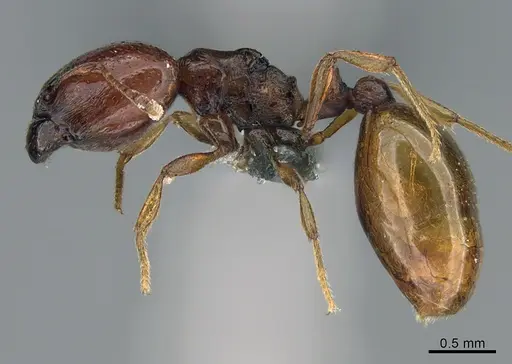
CASENT0366110
View on AntWeb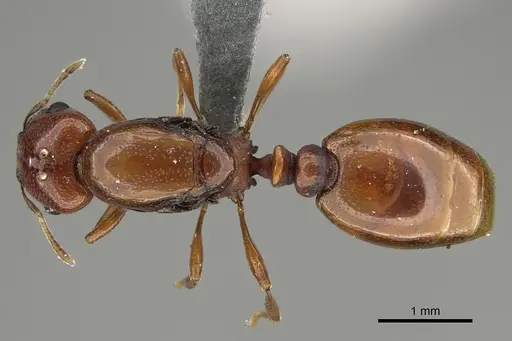
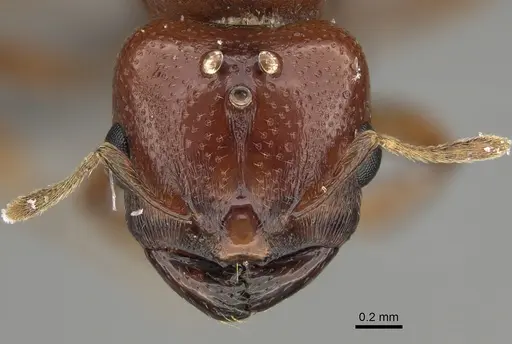
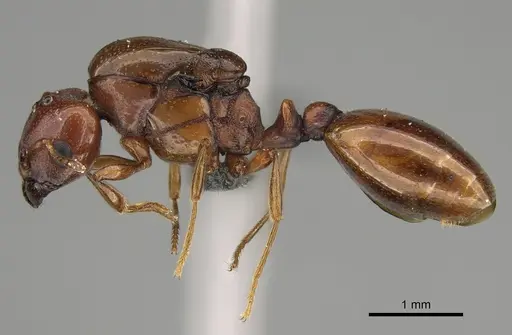
CASENT0405750
View on AntWeb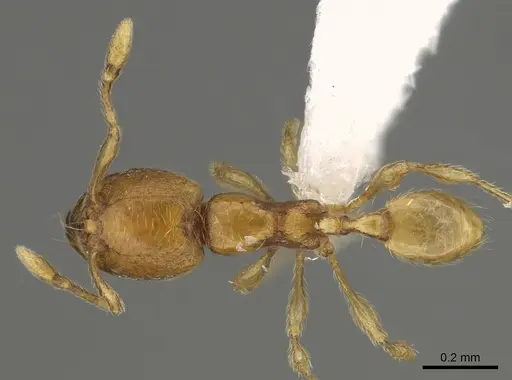
CASENT0405752
View on AntWeb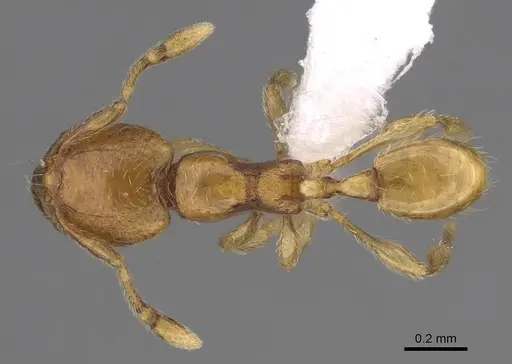
CASENT0415384
View on AntWeb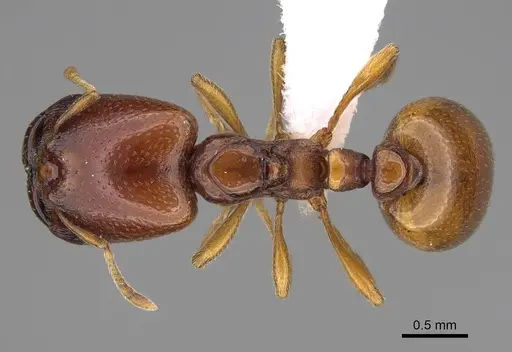
Literature
Loading...Loading products...