

Carebara hainteny
- Scientific Name
- Carebara hainteny
- Tribe
- Crematogastrini
- Subfamily
- Myrmicinae
- Author
- Azorsa & Fisher, 2018
- Distribution
- Found in 1 countries
Carebara hainteny Overview
Carebara hainteny is an ant species of the genus Carebara. It is primarily documented in 1 countries , including Madagascar. Detailed taxonomic data and occurrence records can be further explored via authoritative databases such as AntWeb or the Global Biodiversity Information Facility (GBIF).
Carebara hainteny
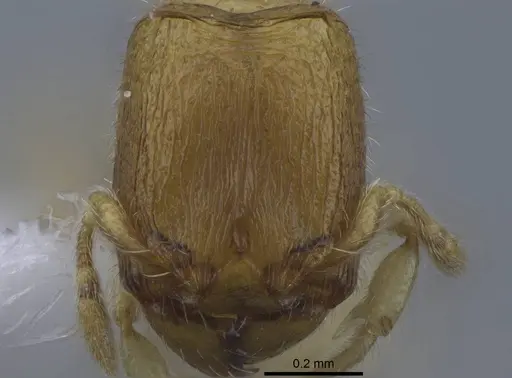
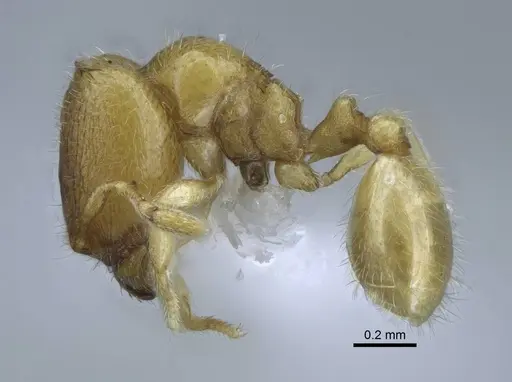
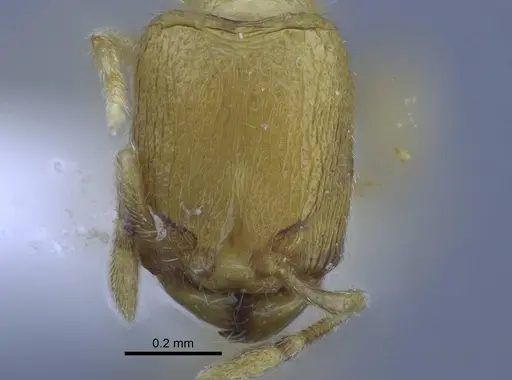
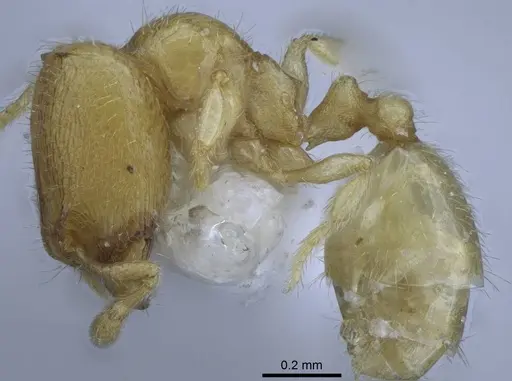
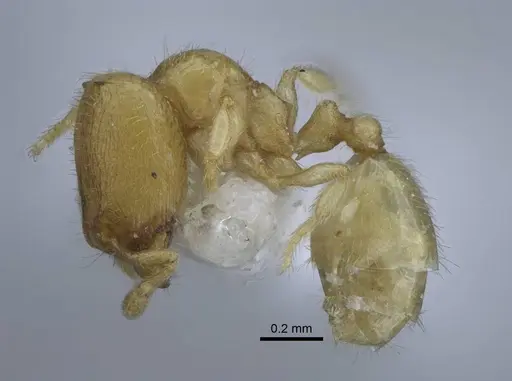
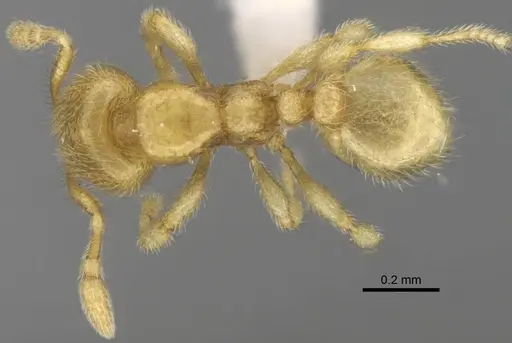
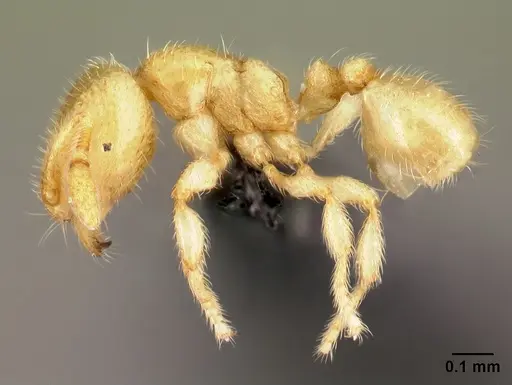
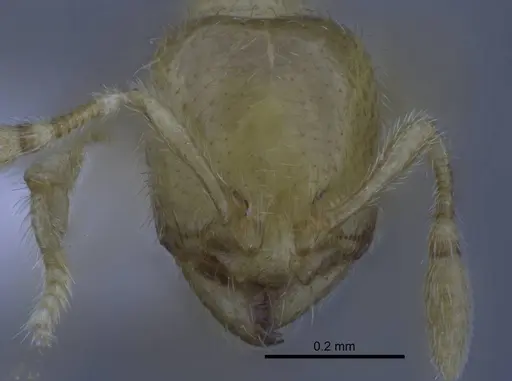
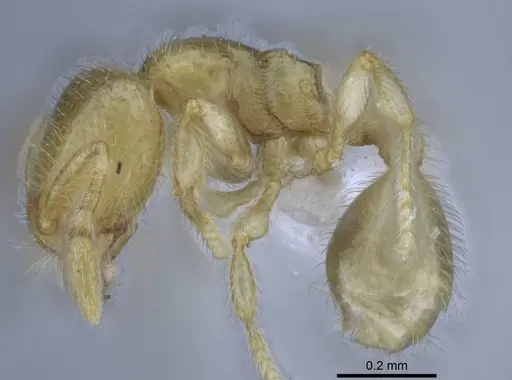
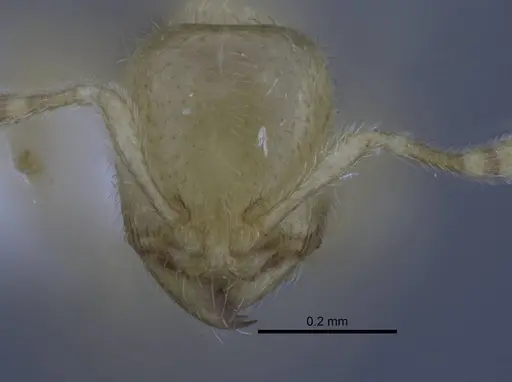
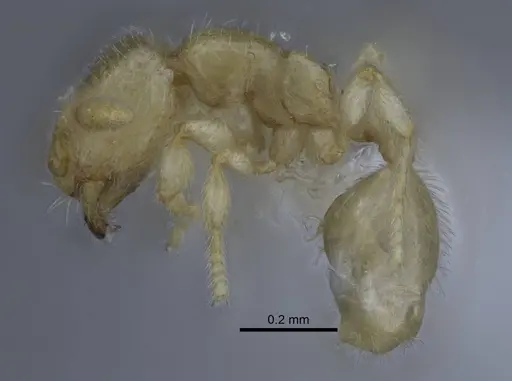
Carebara hainteny is a tiny dimorphic ant from the mountains of Madagascar. Major workers have distinctive horn-like teeth on the corners of their heads and measure 0.56-0.68mm in head length, while minor workers are smaller at 0.35-0.39mm [1]. They were first described in 2018 and are found only in the central highlands of Madagascar, living in montane rainforests and grasslands between 785-1300 meters elevation [1]. In the wild, they nest in rotten logs and leaf litter, and researchers have found no intermediate worker sizes between majors and minors [1].
Quick Summary
- Difficulty: Hard
- Origin & Habitat: Central Madagascar, montane rainforest and grassland at 785-1300m elevation [1]
- Colony Type: Unknown, colony structure and queen number not documented
- Size & Growth:
- Queen: Unknown, not described in available research
- Worker: Major workers: head length 0.56-0.68mm, Minor workers: head length 0.35-0.39mm (total body length approximately 2-3mm) [1]
- Colony: Unknown
- Growth: Unknown
- Development: Unknown, not documented (Based on similar small Myrmicinae, development may take 6-10 weeks at 24-26°C, but this is speculative and unconfirmed for this species)
- Antkeeping:
- Temperature: Moderate temperatures around 20-24°C based on montane habitat at 785-1300m elevation. Avoid temperatures above 26°C [1]
- Humidity: High humidity (70-80%) to match rainforest conditions. Keep nest substrate damp like rotting wood and leaf mold [1]
- Diapause: Unknown, tropical origin suggests no hibernation needed, but montane habitat means they may slow in cooler months
- Nesting: Naturalistic setups with rotten wood or Y-tong/plaster nests with very small chambers. Tight spaces preferred based on leaf mold nesting [1]
- Behavior: Unknown temperament, but extremely small size (under 3mm) means escape prevention must be exceptional. Use fine mesh under 0.5mm and Fluon barriers [1]
- Common Issues: escape prevention is critical, workers are tiny enough to fit through the smallest gaps in standard setups, poorly studied species with undocumented care requirements means keepers must experiment carefully, montane origin suggests heat sensitivity, colonies may fail if kept too warm above 26°C, specific humidity needs from rainforest habitat, substrate drying out quickly kills colonies
Natural History and Identification
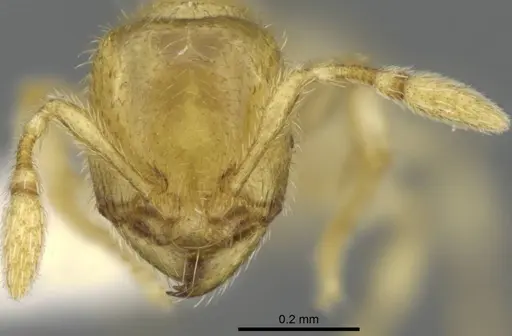
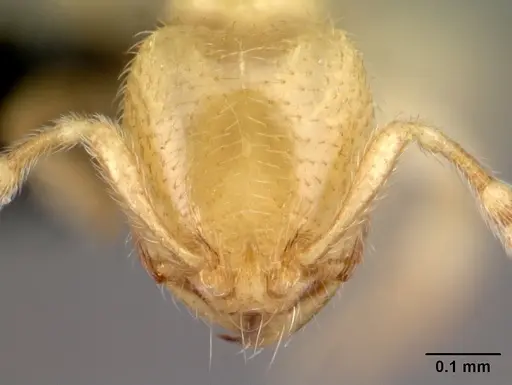
Carebara hainteny lives only in the central highlands of Madagascar, specifically in montane rainforest and grassland habitats between 785 and 1300 meters elevation [1]. Researchers collected them using Winkler traps from rotten logs, leaf mold, and rotten wood, showing they prefer damp, decaying organic matter [1]. These ants show strong worker dimorphism, majors have distinctive horn-like teeth on the posterolateral corners of their heads and rough, ridged sculpturing, while minors are smaller with smoother heads [1]. No intermediate worker sizes exist in this species [1]. Both castes have ten-segmented antennae and tiny eyes consisting of just one lens [1].
Housing and Nest Setup
Based on their nesting in rotten wood and leaf litter, provide a naturalistic setup with pieces of decaying wood or a Y-tong nest with very small, tight chambers. Because workers measure only 2-3mm total body length, standard test tube setups must use minimal water to prevent drowning, and nest entrances need fine mesh under 0.5mm or thick Fluon barriers to prevent escapes. They likely prefer enclosed, humid microhabitats similar to rotting logs rather than open spaces. [1]
Temperature and Humidity
Coming from montane regions at 785-1300m elevation, these ants likely prefer moderate temperatures between 20-24°C rather than hot tropical conditions [1]. Temperatures above 26°C may stress them. Maintain high humidity around 70-80% to match their rainforest and montane forest habitats [1]. Keep the nest substrate damp but not waterlogged, think rotting wood texture rather than swampy. Provide good ventilation to prevent mold while maintaining humidity.
Feeding and Diet
The natural diet of Carebara hainteny is unconfirmed. Based on patterns seen in other Carebara species, they likely accept small live prey such as springtails, tiny fruit flies, and possibly sugar water or honey. Given their extremely small size, offer prey smaller than 2mm. Observe carefully to see what they accept, as specific dietary requirements remain undocumented. [1]
Colony Founding and Development
Researchers have not documented founding behavior for this species. Queen size, whether queens are claustral (sealing themselves in) or semi-claustral (needing to forage), and colony structure all remain unknown [1]. Colony size estimates and development timelines are also undocumented. Based on related Carebara species, queens may be claustral, but this is speculative. Expect potentially slow growth typical of small montane species.
Frequently Asked Questions
Can I keep Carebara hainteny in a test tube?
Yes, test tubes work for founding and small colonies, but use very small water reservoirs to prevent drowning given their tiny size (workers under 3mm).
What do Carebara hainteny eat?
Their natural diet is unconfirmed. Offer small live prey like springtails, tiny fruit flies, and sugar water, adjusting based on what they accept.
Do Carebara hainteny need hibernation?
Probably not, they are tropical. However, coming from montane regions (785-1300m), they may slow activity in cooler months. Keep them above 18°C year-round.
How big do Carebara hainteny colonies get?
Unknown, researchers have not documented maximum colony size for this species.
Are Carebara hainteny good for beginners?
No, they are poorly studied, have specific habitat requirements from montane Madagascar, and their extremely small size makes escape prevention difficult.
Do Carebara hainteny sting?
Unknown, but unlikely to penetrate human skin given workers are under 3mm in length.
Can I keep multiple Carebara hainteny queens together?
Not recommended, combining multiple queens is unconfirmed for this species and likely risky.
How long until Carebara hainteny get their first workers?
Unknown, development time is undocumented. Based on similar small ants, expect 6-10 weeks at 24°C, but this is speculative.
Where do Carebara hainteny come from?
They are endemic to central Madagascar, found only in montane rainforest and grassland habitats at 785-1300m elevation.
What makes Carebara hainteny major workers special?
Major workers have distinctive horn-like teeth on the corners of their heads and rough, ridged sculpturing on the head surface, unlike the smoother-headed minors.
References

This caresheet is licensed under CC BY-SA 4.0 .
CASENT0410494
View on AntWeb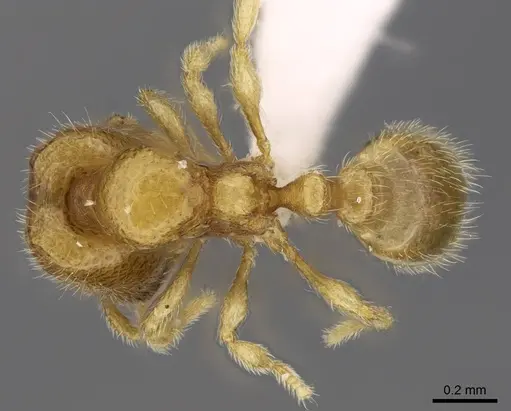
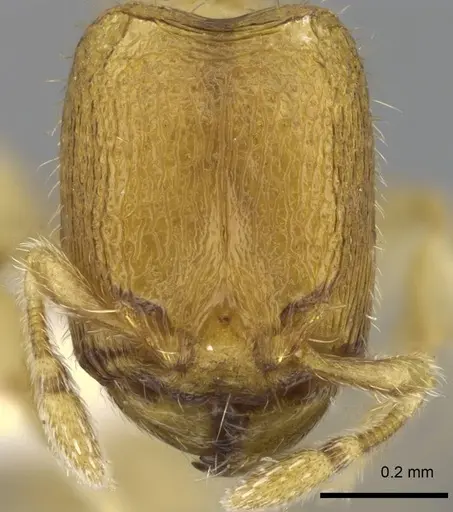
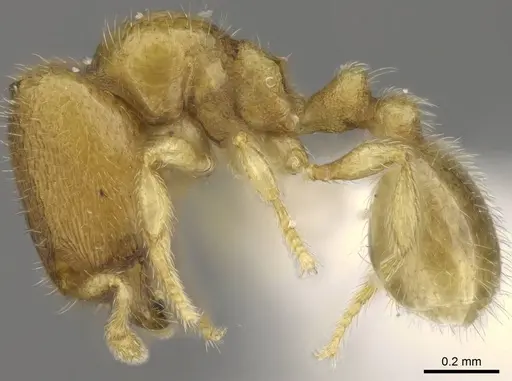
CASENT0410496
View on AntWeb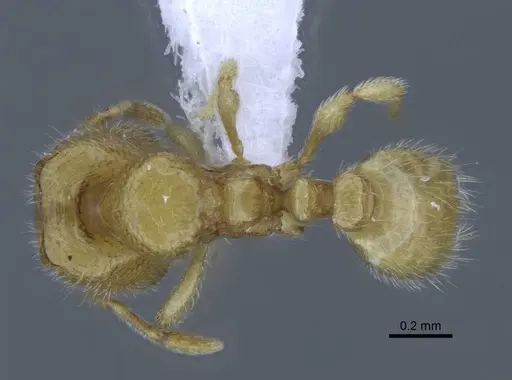
CASENT0410497
View on AntWeb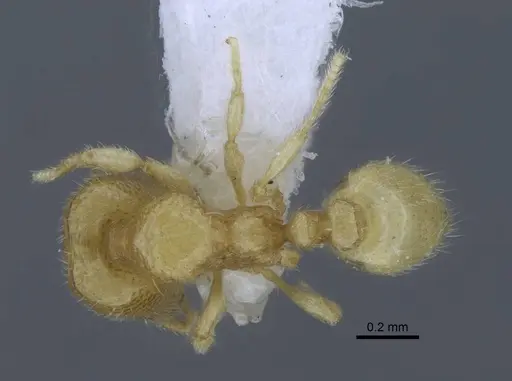
CASENT0410542
View on AntWeb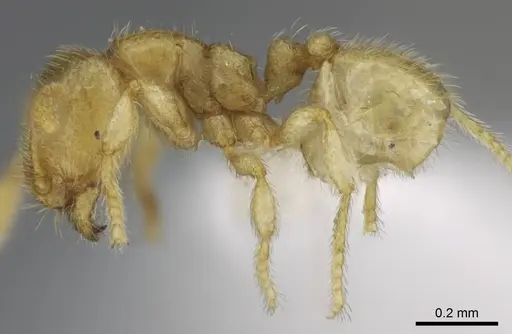
CASENT0410551
View on AntWeb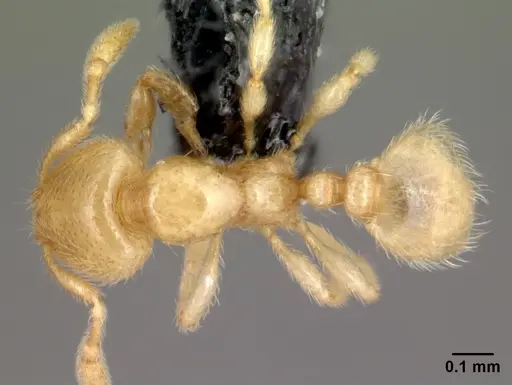
CASENT0410557
View on AntWeb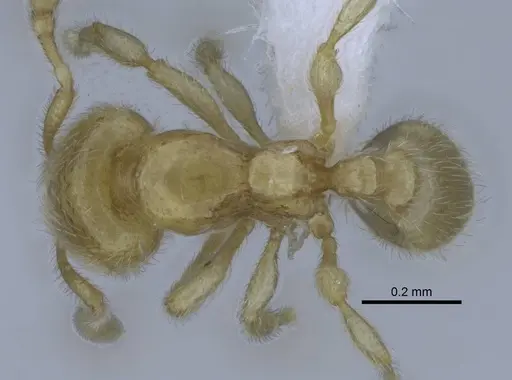
CASENT0410568
View on AntWeb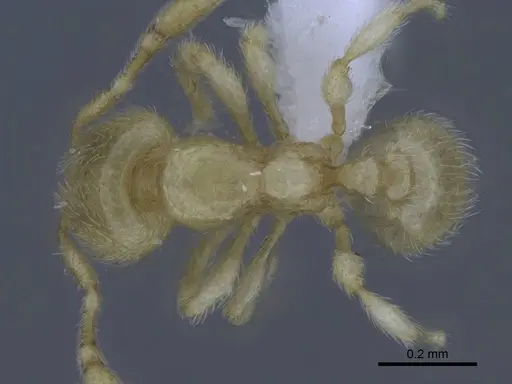
Literature
Loading...Loading products...