

Carebara castanea
- Scientific Name
- Carebara castanea
- Tribe
- Crematogastrini
- Subfamily
- Myrmicinae
- Author
- Smith, 1858
- Distribution
- Found in 2 countries
Carebara castanea Overview
Carebara castanea is an ant species of the genus Carebara. It is primarily documented in 2 countries , including Hong Kong, Thailand. Detailed taxonomic data and occurrence records can be further explored via authoritative databases such as AntWeb or the Global Biodiversity Information Facility (GBIF).
Carebara castanea
Carebara castanea is a small subterranean ant species native to Southeast Asia, found across China, Laos, Singapore, Thailand, and Vietnam [1]. Workers are minute in size and monomorphic (all the same size), with no soldiers present in this species [1]. Colonies are massive, containing tens of thousands of workers with a single queen [1]. These ants build complex underground nests with 7 to 24 levels, reaching depths of 11 to 150 centimeters below the soil surface [2]. The workers have powerful biting mouthparts and can deliver a painful bite [2]. This species is notable for being one of the few ants consumed as food in Thailand, where both adults and eggs are harvested from wild nests and sold in local markets [3].
Quick Summary
- Difficulty: Medium
- Origin & Habitat: Native to Southeast Asia, found in China (Hong Kong), Laos, Singapore, Thailand, and Vietnam. Nests underground in complex tunnel systems in forest areas [1][4].
- Colony Type: Monogyne, colonies have a single queen [1]. Tens of thousands of workers per colony make this one of the larger Carebara species in captivity potential.
- Colony: Monogyne
- Founding: Claustral
- Size & Growth:
- Queen: Not specifically measured in available papers, genus estimate around 5-8mm
- Worker: Minute workers, approximately 2-3mm (very small)
- Colony: Tens of thousands of workers [1]
- Growth: Moderate, large colonies take time to establish
- Development: Estimated 6-8 weeks at optimal temperature based on genus patterns (Development time not directly studied for this species, estimate based on typical Carebara development)
- Antkeeping:
- Temperature: Keep at 24-28°C, these are tropical ants from Southeast Asia that need warm conditions. A heating cable on one side of the nest creates a suitable gradient.
- Humidity: Subterranean species need high humidity. Keep the nest substrate consistently moist but not waterlogged. The deeper chambers of their natural nests suggest they prefer stable, humid conditions.
- Diapause: No, being a tropical species, they do not require hibernation. However, slight temperature reductions during winter months may slow activity naturally.
- Nesting: These ants are strictly subterranean and avoid light. They need deep, dark nesting areas with soil or compact substrate. Y-tong (AAC) nests or plaster nests with deep chambers work well. Test tubes are not suitable for established colonies due to their need for underground-style housing. Provide darkness and minimal disturbance.
- Behavior: Workers are docile but will bite defensively if threatened. They are subterranean, meaning they rarely venture into the open, this makes them fascinating to observe in a naturalistic setup but less interactive than surface-nesting species. Workers have powerful mandibles and can deliver a painful bite [2]. Escape prevention is critical due to their tiny size, they can squeeze through remarkably small gaps. They are not aggressive toward colonies but will defend their nest vigorously if breached.
- Common Issues: escape prevention is critical, minute workers squeeze through the tiniest gaps, colonies need darkness and minimal disturbance to thrive, large colony size requires significant space as they grow, overfeeding can lead to mold in their underground nests, wild-caught colonies may have parasites that kill them in captivity
Housing and Nest Setup
Carebara castanea requires housing that mimics their natural subterranean lifestyle. These ants are strictly underground-dwelling and avoid light, so dark nests work best. Y-tong (AAC) nests or plaster nests with deep chambers are ideal because they allow you to create the dark, humid environment these ants need. naturalistic setups with deep soil (at least 10-15cm) also work well and allow the ants to build their own tunnel systems. Test tubes are only suitable for founding queens, once the colony grows beyond 20-30 workers, they need more substantial housing. The outworld should be simple since these ants rarely emerge above ground. Use excellent escape prevention because their minute size allows them to squeeze through gaps smaller than you'd expect. [2][1]
Feeding and Diet
Like other Carebara species, these ants are likely omnivorous, feeding on small insects, honeydew, and plant matter. In captivity, offer small live prey such as fruit flies, pinhead crickets, and small mealworms. Sugar water or honey can be offered occasionally, though they may not accept it as readily as some other ants. Feed protein sources 2-3 times per week, and remove any uneaten prey within 24 hours to prevent mold. Given their tiny worker size, prey items should be appropriately small, no larger than the ants themselves. Their subterranean lifestyle means they may be less aggressive in foraging than surface-dwelling species.
Temperature and Humidity
As tropical ants from Southeast Asia, Carebara castanea needs warm temperatures to thrive. Keep the nest area at 24-28°C. A heating cable placed on top of the nest (never underneath where it can dry out the substrate) helps maintain these temperatures. These ants prefer high humidity consistent with underground conditions, the nest substrate should feel consistently moist but never waterlogged. Allow some drier areas in the outworld so ants can self-regulate. Avoid temperature drops below 20°C for extended periods, as this can stress the colony. Stable conditions are more important than exact numbers. [4]
Colony Development
Colonies start with a single claustral queen who seals herself in a chamber and raises the first workers (nanitics) on stored body fat. Initial colony growth is slow, the first generation may take 6-8 weeks to emerge. Once established, colonies can grow substantially since they reach tens of thousands of workers in maturity. Workers are all the same size (monomorphic) with no soldiers in this species [1]. The queen is significantly larger than workers and can lay eggs continuously once established. Be patient during the founding phase, disturbing the queen before workers emerge can cause colony failure.
Seasonal Care
Being a tropical species, Carebara castanea does not require true hibernation. However, in temperate climates where they're kept as pets, slight temperature reductions during winter months (reducing to around 20-22°C) can be appropriate and may stimulate natural behavioral cycles. The colony will naturally reduce activity but remain active. Do not cool them dramatically, these are warm-climate ants that can be stressed by cold. Summer months should bring peak activity and feeding. In their native range (Thailand, Laos, Vietnam), these ants emerge from their nests once a year during May and June [2], though this behavior may not manifest in captive settings.
Handling and Temperament
While not aggressive, these ants will defend themselves if threatened. Workers have powerful mandibles and can deliver a surprisingly painful bite for their tiny size [2]. They are not suitable for handling but can be observed safely through nest walls. Their subterranean nature means they're not particularly active on the outworld, most of their activity happens underground in the nest chambers. This makes them a 'watch-through-the-glass' species rather than an interactive one. They are fascinating to observe in naturalistic setups where you can see their tunnel-building behavior.
Frequently Asked Questions
Can I keep Carebara castanea in a test tube?
Test tubes are only suitable for the founding queen. Once the colony reaches 20-30 workers, you must move them to a more substantial nest like a Y-tong or plaster formicarium with deep chambers. These are subterranean ants that need space to build underground-style tunnels.
How long does it take for the first workers to emerge?
Expect 6-8 weeks from founding to first workers (nanitics) at optimal temperature (24-28°C). This is an estimate based on typical Carebara genus development, the exact timeline has not been directly documented for this species.
Do Carebara castanea ants sting?
They do not have a stinger, but workers have powerful biting mouthparts and can deliver a painful bite if handled or threatened [2]. They are not dangerous to humans beyond the bite.
Are Carebara castanea good for beginners?
This species is rated as medium difficulty. While fascinating, their subterranean lifestyle and need for specific housing (not test tubes) make them better suited for keepers who have already established at least one colony successfully. Their large colony size and escape-prone tiny workers require experienced care.
How big do Carebara castanea colonies get?
Colonies reach tens of thousands of workers at maturity [1]. This makes them one of the larger Carebara species and among the more substantial Myrmicinae colonies you can keep.
What do Carebara castanea eat?
They are omnivorous. Feed small live prey like fruit flies, small crickets, and mealworms. Offer protein 2-3 times per week. Sugar water or honey can be offered occasionally. Prey should be appropriately sized for their minute workers.
Do they need hibernation?
No, as tropical ants from Southeast Asia, they do not require hibernation. In temperate climates, slight temperature reduction to around 20-22°C in winter is acceptable but not required.
Why are my ants dying?
Common causes include: disturbance during founding phase, temperatures below 20°C, too little humidity, or escape-prone tiny workers that have wandered away. Also check for parasites in wild-caught colonies. Ensure darkness in the nest area and minimal disturbance during early colony stages.
When should I move them to a formicarium?
Move from test tube to a proper nest (Y-tong, plaster, or naturalistic) when the colony reaches 20-30 workers or the test tube becomes moldy/dry. Subterranean ants need deep housing, shallow setups are not suitable.
Can I keep multiple queens together?
No, this is a monogyne (single queen) species. Multiple unrelated queens will fight. Only keep one queen per colony.
References

This caresheet is licensed under CC BY-SA 4.0 .
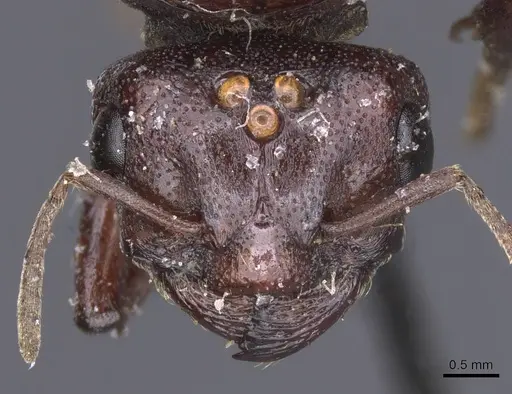
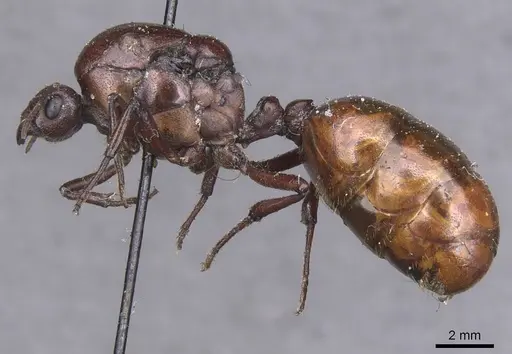
CASENT0902403
View on AntWeb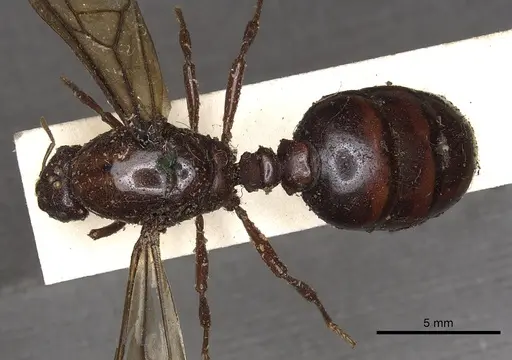
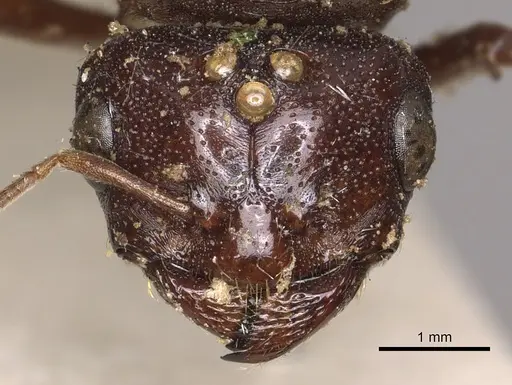
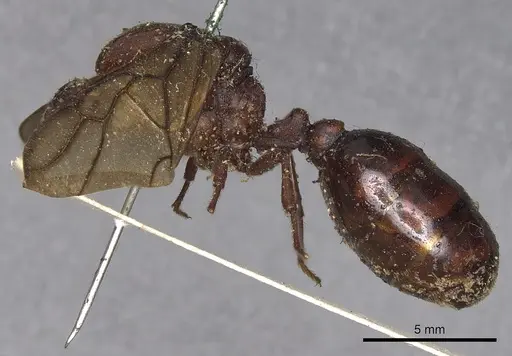
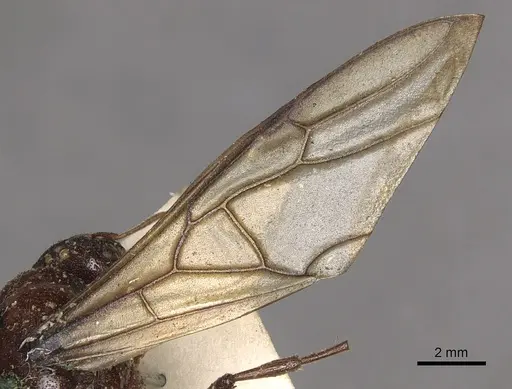
CASENT0913482
View on AntWeb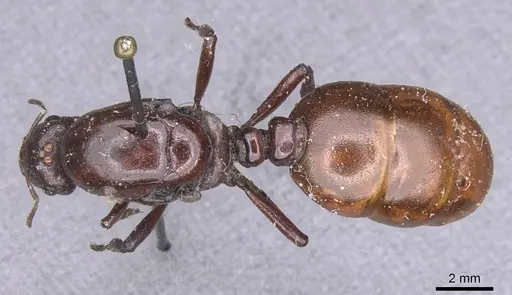
Literature
Loading...Loading products...