

Cardiocondyla semirubra
- Scientific Name
- Cardiocondyla semirubra
- Tribe
- Crematogastrini
- Subfamily
- Myrmicinae
- Author
- Seifert, 2003
- Distribution
- Found in 1 countries
Cardiocondyla semirubra Overview
Cardiocondyla semirubra is an ant species of the genus Cardiocondyla. It is primarily documented in 1 countries , including Türkiye. Detailed taxonomic data and occurrence records can be further explored via authoritative databases such as AntWeb or the Global Biodiversity Information Facility (GBIF).
Cardiocondyla semirubra
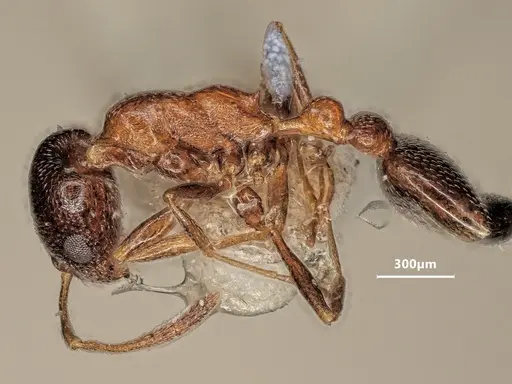
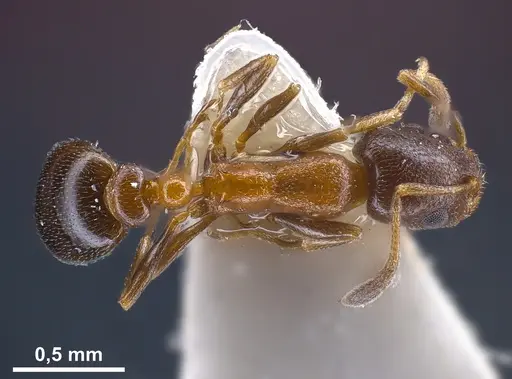
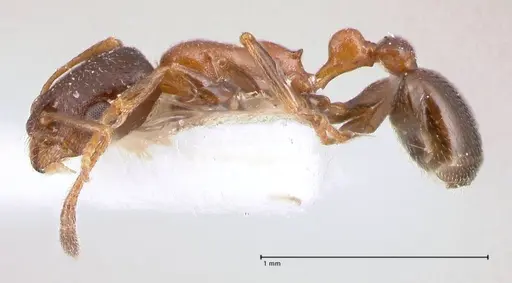
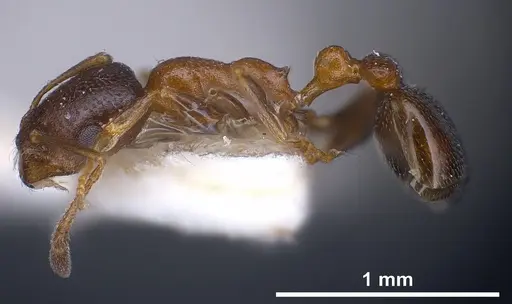
Cardiocondyla semirubra is an extremely small ant species belonging to the batesii species group. Workers measure only about 0.55mm in total body length (CS 552 µm), making them among the tiniest ants you could keep. The species has a striking two-tone coloration: the head, gaster, legs, and antennae are dark to blackish brown, while the mesosoma (middle body section) and petiole are reddish brown, hence the name 'semirubra' meaning 'half-red'. The most distinctive physical feature is the extremely wide petiole (the narrow 'waist' segment), which is nearly as wide as it is tall. This species is only known from southeastern Turkey, specifically the Sanliurfa region at elevations of 400-600 meters in steppe habitat. Only four workers have ever been collected in the wild, making this one of the rarest and least-studied ants in the hobby. Nothing is known about this species' biology, colony structure, or captive care requirements [1][2].
Quick Summary
- Difficulty: Unknown
- Origin & Habitat: Southeastern Turkey (Sanliurfa region), steppe habitat at 400-600m elevation. The two known collection sites are about 30km apart at coordinates 36.94°N,38.91°E and 37.20°N,39.00°E [1][3].
- Colony Type: Unknown. Only four workers from two samples have ever been documented. Colony structure (single queen vs multiple queens) has not been studied [1].
- Size & Growth:
- Queen: Unknown, no queens have been described [1]
- Worker: 0.55mm (CS 552 µm) [1][2]
- Colony: Unknown, only 4 workers have ever been collected [1]
- Growth: Unknown
- Development: Unknown (No development data exists for this species. Based on typical Cardiocondyla patterns, development may take 4-8 weeks at warm temperatures, but this is entirely speculative.)
- Antkeeping:
- Temperature: Unknown. Based on the species' Turkish steppe origin (around 37°N latitude), they likely experience hot summers and cool winters. Related Cardiocondyla species typically thrive at 24-28°C. Start in the mid-range (24-26°C) and observe colony activity [4].
- Humidity: Unknown. Steppe habitats in Turkey are relatively dry. Keep nest substrate moderately moist with some dry areas available. Avoid waterlogging [4].
- Diapause: Unknown. Turkey experiences cold winters, so dormancy is possible, but this has not been documented for this species.
- Nesting: Unknown in captivity. In the wild, only workers have been collected with no nest site data. Related Cardiocondyla species typically nest in soil, under stones, or in shallow cavities. A small test tube setup or tiny acrylic nest would be appropriate given their minute size [4].
- Behavior: Unknown. Cardiocondyla ants are generally non-aggressive and docile. The genus is known for having ergatoid (wingless) males in some species, but this has not been documented for C. semirubra. Given their extremely small size, escape prevention is critical, they can squeeze through gaps invisible to the naked eye. Use fine mesh and tight-fitting barriers [4].
- Common Issues: no biological data exists, all care is speculative, extreme rarity means no captive breeding stock is available, tiny size makes escape prevention extremely difficult, nothing known about founding behavior or queen requirements, no information on diet or feeding preferences
Species Overview and Rarity
Cardiocondyla semirubra is one of the rarest ants in the world to keep. Only four workers from two locations in southeastern Turkey have ever been documented in scientific literature. This species was formally described in 2003 by Bernhard Seifert, and no additional biological research has been published since. The holotype and paratypes were collected from steppe habitat near Sanliurfa, Turkey, at elevations between 400-600 meters. The species is easily distinguished from related Cardiocondyla by its extremely wide petiole, the waist segment is nearly as wide as it is tall, a feature not seen in other batesii-group species [1][2].
For antkeepers, this species represents an extreme challenge: there is simply no captive care information available. No one has successfully kept or bred this species in captivity. All care recommendations must be based on educated guesses from related species and general Cardiocondyla husbandry. If you somehow obtain this species, you would essentially be pioneering its captive care from scratch. This makes it unsuitable for beginners and even experienced keepers should approach with caution [1].
Size and Identification
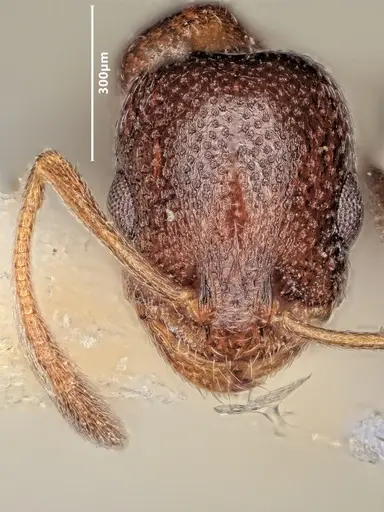
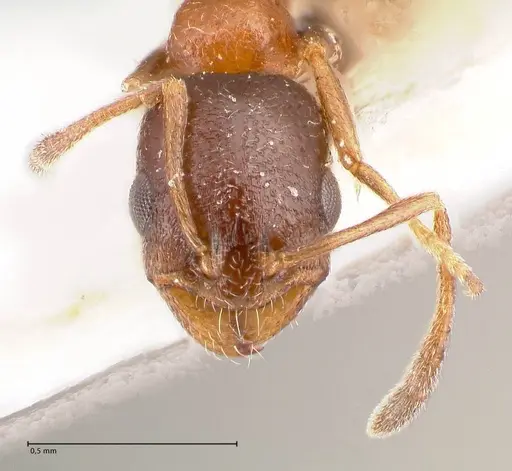
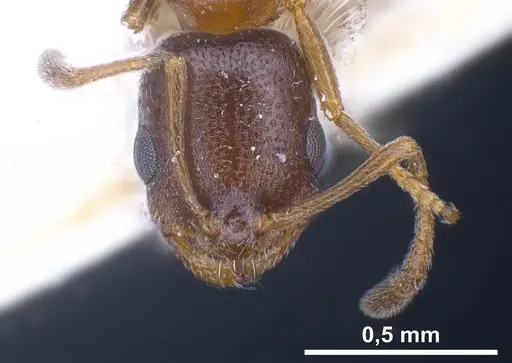
Workers are extremely small, measuring only about 0.55mm in cephalic size (CS 552 µm). To put this in perspective, this is smaller than a grain of salt. The body has a distinctive two-tone coloration: the head, gaster (abdomen), coxae, femora, and tibiae are dark to blackish brown, while the mesosoma and petiole are reddish brown. The postpetiole, scape, and antennal club are dark brown. The most diagnostic feature is the extremely wide petiole, measurements show PeW/CS 0.322,meaning the petiole is about 32% as wide as the head. This is unusually wide for the genus. The species also has relatively large eyes (EYE/CS 0.256) and short, blunt spines on the propodeum [1][2].
No queens or males have been described for this species. In the Cardiocondyla genus, some species have ergatoid (wingless) replacement queens, but this has not been documented for C. semirubra. If you are attempting to keep this species, you would have no reference for identifying queen caste [1].
Housing and Escape Prevention
Given the minute size of these ants (0.55mm), housing presents unique challenges. Standard test tube setups may work, but you must use excellent escape prevention. These ants can squeeze through gaps that are virtually invisible to the human eye. Use fine mesh (at least 0.5mm or finer) on any ventilation holes, and ensure all connections are sealed with fluon or similar barriers. Even a hairline crack will allow escape.
For nesting, a small acrylic nest with tiny chambers or a carefully prepared test tube setup would be appropriate. The nest should be kept horizontal or slightly tilted, with a water reservoir (cotton ball) at one end. Because nothing is known about this species' nesting preferences, you are essentially experimenting. Start with moderate humidity and observe where the ants cluster, adjust accordingly [4].
Feeding and Diet
The diet of Cardiocondyla semirubra is completely unstudied. In general, Cardiocondyla species are omnivorous and typically feed on honeydew, small insects, and various protein sources. However, given the extremely small size of C. semirubra, their prey items would be limited to microscopic arthropods like springtails, tiny mites, and similar micro-fauna.
For captive feeding, you should start with very small prey items. Live springtails are an excellent choice as they are small enough for these tiny ants to tackle. You could also offer fruit flies, tiny mealworm pieces, or other appropriately sized insects. Sugar water or honey diluted 1:4 with water may be accepted, but this is speculative. Feed small amounts and remove any uneaten prey within 24-48 hours to prevent mold. Because nothing is known about this species' specific dietary needs, careful observation of what they accept is essential [4].
Temperature and Seasonal Care
The natural range in southeastern Turkey (around 37°N latitude) experiences considerable seasonal variation. Summers are hot (often exceeding 35°C), while winters can be cold with occasional frosts. The species was collected in June, suggesting they are active during the warm season.
For captive care, a temperature range of 24-28°C is a reasonable starting point based on related Cardiocondyla species. You can use a heating cable on one side of the nest to create a temperature gradient, allowing the ants to self-regulate. Monitor their activity, if they cluster near the heat, increase slightly, if they avoid it, reduce temperature.
Nothing is known about diapause requirements. Many temperate ant species require a winter rest period, but this has not been documented for C. semirubra. If the colony shows signs of slowing in winter, you could provide a cool period (15-18°C) for several months, but this is speculative. Always err on the side of stability, avoid sudden temperature changes [4].
Frequently Asked Questions
Is Cardiocondyla semirubra available in the antkeeping hobby?
No. This is one of the rarest ant species in existence, only four workers have ever been documented. There is no captive breeding stock in the hobby, and obtaining this species would require extremely specialized sources. Even if available, the complete lack of captive care information makes keeping this species extremely challenging.
How big do Cardiocondyla semirubra colonies get?
Unknown. Only four workers from two samples have ever been collected. Based on related Cardiocondyla species, colonies are likely small, probably under 100 workers. The maximum colony size has not been studied [1].
What do Cardiocondyla semirubra ants eat?
Unconfirmed. Based on general Cardiocondyla biology, they likely accept small protein sources (tiny insects, springtails) and sugar sources (honey water). Given their minute size, prey items must be very small. Nothing has been documented for this specific species.
Do Cardiocondyla semirubra ants sting?
Unknown. Cardiocondyla ants have stingers, but they are typically too small to penetrate human skin. Most species are considered non-aggressive and docile. Given their tiny size, any sting would be negligible even if delivered [4].
What temperature should I keep Cardiocondyla semirubra at?
Unknown, no specific data exists. Based on the species' Turkish origin and related Cardiocondyla species, a range of 24-28°C is a reasonable starting point. Use a heating gradient and adjust based on colony behavior. Never exceed 30°C or drop below 15°C without data [4].
How long does it take for Cardiocondyla semirubra to develop from egg to worker?
Unknown. No development data exists for this species. Based on typical Cardiocondyla development at warm temperatures (25°C+), it may take 4-8 weeks, but this is entirely speculative. Related species in the genus typically develop faster than larger ants due to their small size [4].
Can I keep multiple Cardiocondyla semirubra queens together?
Unknown. The colony structure has not been documented. Only four workers have ever been collected, with no information on queen number or behavior. Combining unrelated queens is not recommended due to lack of data on their social structure [1].
Does Cardiocondyla semirubra need hibernation?
Unknown. The Turkish range experiences cold winters, so dormancy is possible, but this has not been documented. If the colony becomes less active in winter, you could provide a cool period (15-18°C) for 2-3 months. However, this is speculative, observe your colony's behavior and adjust accordingly.
Are Cardiocondyla semirubra good for beginners?
No. This species is completely unsuitable for beginners or even most experienced keepers. There is zero captive care information available, you would be pioneering all aspects of husbandry. Additionally, this species is extremely rare and virtually unavailable in the antkeeping hobby. If you want a Cardiocondyla species, consider more common and documented species like Cardiocondyla obscurior or Cardiocondyla nuda.
What makes Cardiocondyla semirubra different from other Cardiocondyla?
The most distinctive feature is the extremely wide petiole, the waist segment is nearly as wide as it is tall (PeW/CS 0.322). This is unusual within the genus. The species also has a characteristic two-tone coloration with a reddish mesosoma and petiole contrasting against a dark head and gaster. Biologically, nothing else is known, all other behaviors and traits are shared with related species [1][2].
References

This caresheet is licensed under CC BY-SA 4.0 .
ANTWEB1048537
View on AntWeb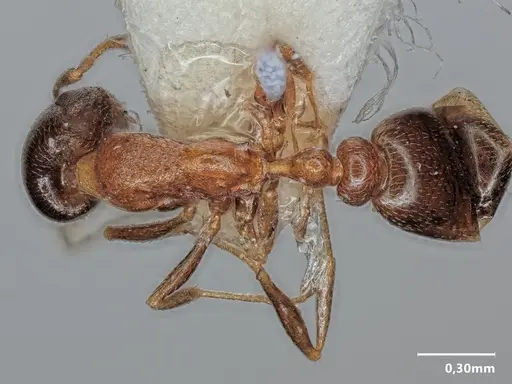
FOCOL0727
View on AntWeb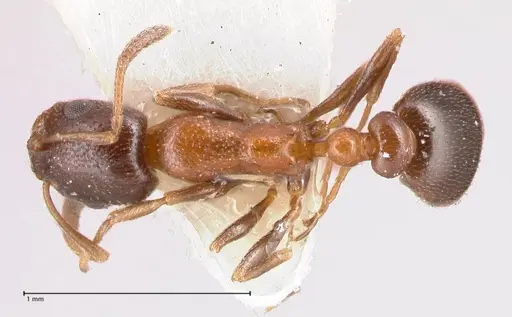
Literature
Loading...Loading products...