

Cardiocondyla paranuda
- Scientific Name
- Cardiocondyla paranuda
- Tribe
- Crematogastrini
- Subfamily
- Myrmicinae
- Author
- Seifert, 2003
- Distribution
- Found in 1 countries
Cardiocondyla paranuda Overview
Cardiocondyla paranuda is an ant species of the genus Cardiocondyla. It is primarily documented in 1 countries , including Australia. Detailed taxonomic data and occurrence records can be further explored via authoritative databases such as AntWeb or the Global Biodiversity Information Facility (GBIF).
Cardiocondyla paranuda
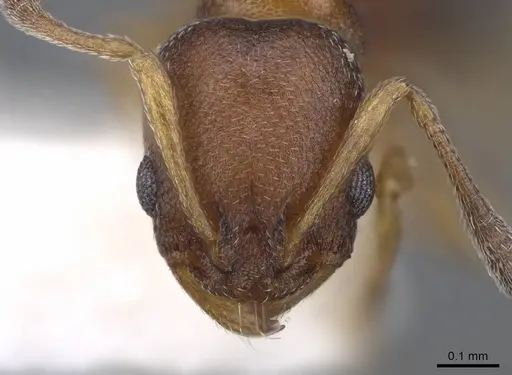
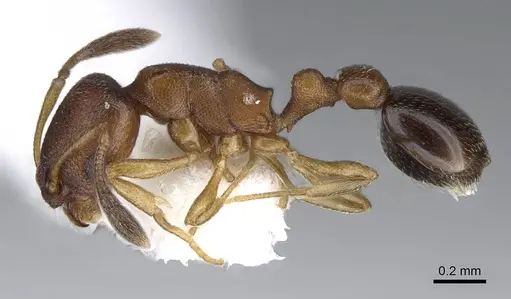
Cardiocondyla paranuda is a tiny ant species native to Australia, and it's the only Cardiocondyla species found in the interior arid regions of the continent [1]. Workers are extremely small at about 2-2.5mm, with an elongated head and notably short propodeal spines. They have the shortest gastral pubescence of any species in the C. nuda group, giving them a relatively smooth appearance compared to their relatives [1][2]. The species is remarkably adapted to harsh, hot, and dry conditions, it lives far from the coast (averaging 329km from sea) in areas receiving only about 588mm annual rainfall, making it one of the most arid-adapted ants in the genus [1]. Many specimens show amber-colored bodies with a noticeably darker gaster, though coloration can vary between populations.
Quick Summary
- Difficulty: Medium
- Origin & Habitat: Central Australia, the only Cardiocondyla species found in inland Australia, adapted to arid and very hot climates with low annual rainfall (averaging 588mm) [1].
- Colony Type: Unknown, only foragers have been collected, so colony structure, male morphology, and behavior remain unstudied [1]. Based on related species in the nuda group, likely single-queen colonies with small worker populations.
- Size & Growth:
- Queen: Unconfirmed, no queens have been described in scientific literature
- Worker: 2-2.5mm (CS 473±26 μm) [1][2]
- Colony: Likely small, probably under 500 workers based on typical Cardiocondyla patterns
- Growth: Unknown, no development data exists for this species
- Development: Unconfirmed, no direct observations exist. Based on related Cardiocondyla species, estimate 4-8 weeks at warm temperatures. (Development timeline has not been directly studied. Related species in the genus typically develop relatively quickly under warm conditions.)
- Antkeeping:
- Temperature: Adapted to hot conditions, aim for 24-30°C as a starting point, with a slight gradient. This species naturally tolerates high temperatures in the Australian interior [1].
- Humidity: Low to moderate, this is an arid-adapted species. Keep nest substrate moderately dry, with some moisture available. Avoid overly damp conditions.
- Diapause: Likely minimal or none, being an Australian arid-zone species, they probably don't require strong hibernation. However, a slight cool period during winter months may be beneficial.
- Nesting: Natural nesting sites are undocumented, but related species typically nest in soil or under stones. A small test tube setup or Y-tong nest with narrow chambers works well for their tiny size.
- Behavior: Not documented, the species remains poorly studied in the wild. Based on genus patterns, they are likely generalist foragers that scavenge for small insects and tend honeydew-producing insects. Their tiny size makes escape prevention critical, they can squeeze through very small gaps. Aggression levels are unknown but likely low to moderate like most Cardiocondyla species.
- Common Issues: tiny size makes escape prevention essential, use fine mesh barriers, colony structure is unknown so founding may be challenging, no established care guidelines exist, keepers must experiment, limited availability since this is a rarely kept species, humidity control is tricky, too much moisture harms arid-adapted ants
Natural History and Distribution
Cardiocondyla paranuda is a remarkable Australian endemic, it's the only species in the entire genus Cardiocondyla that has colonized the interior arid regions of Australia [1]. This sets it apart from its close relative C. atalanta, which is found in more coastal, humid areas of northern Australia. The species shows significant adaptations to continental climate extremes, living in areas averaging 329km from the coast with annual rainfall as low as 150-1250mm [1]. This makes it one of the most drought-tolerant species in a genus known for adaptable ants. The type specimen was originally mislabeled as being from Tunisia due to a label mix-up by the collector, the ant was actually collected in Australia [1]. The species was formally described in 2003 by Bernhard Seifert, and remains one of the least studied Cardiocondyla species.
Identification and Appearance
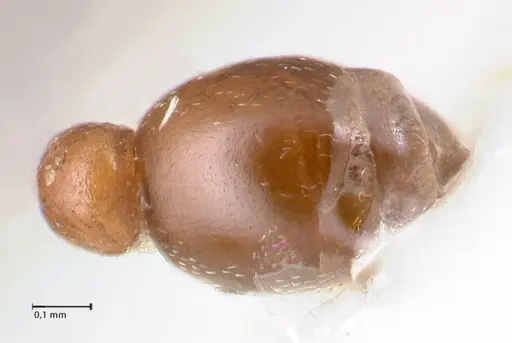
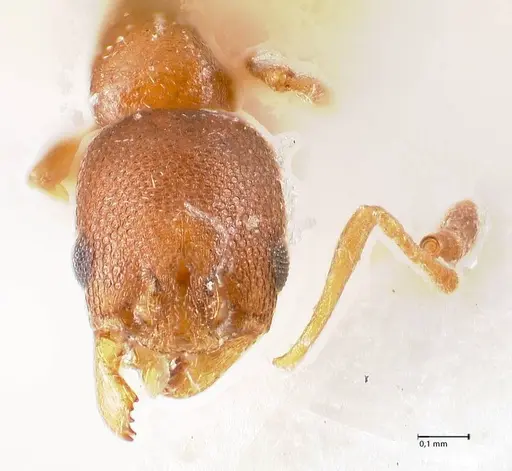
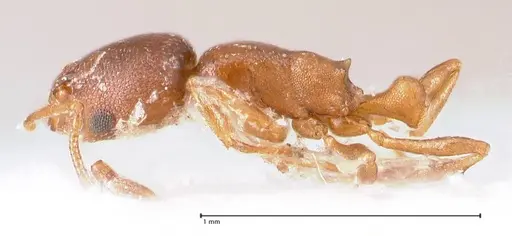
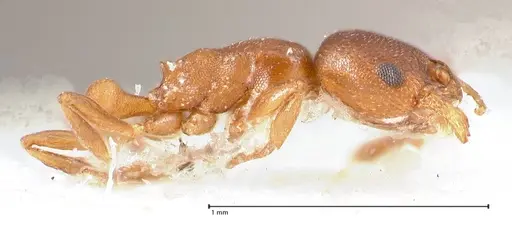
Workers of C. paranuda are tiny, measuring only about 2-2.5mm in total length with a cephalic size (CS) of approximately 473 micrometers [1]. They have an elongated head (CL/CW ratio of 1.214) and relatively small eyes (EYE 0.233). The most distinctive feature is their extremely short gastral pubescence, the shortest of any species in the C. nuda group, giving the abdomen a relatively smooth, shiny appearance compared to related species [1]. Propodeal spines are short but present. Coloration is variable: many specimens show an amber-colored head and mesosoma with a noticeably darker gaster, though some populations have entirely dark or entirely amber individuals [1]. These subtle differences and the species' tiny size make identification challenging and typically requires microscopic examination of morphometric characters.
Housing and Nest Setup
Given their tiny size and arid natural habitat, C. paranuda requires careful attention to escape prevention and humidity control. Use test tubes with cotton barriers or small acrylic nests with chambers appropriately sized for 2mm ants. A Y-tong style nest works well because it allows for precise humidity control while keeping the colony contained. The nesting chamber should be kept relatively dry compared to typical tropical ant setups, aim for substrate that is just barely moist, not saturated. Provide a small water reservoir but ensure it doesn't create excessive condensation. Because they are so small, standard escape barriers may not be sufficient, use fine mesh covers and check for any gaps larger than 1mm.
Feeding and Diet
Like other Cardiocondyla species, C. paranuda is likely a generalist scavenger and predator. Offer small protein sources such as fruit flies, pinhead crickets, or other tiny arthropods. They probably also tend honeydew-producing insects like aphids or scale insects. Sugar sources may be accepted, you can offer a small drop of diluted honey or sugar water, but monitor for acceptance. Feed small amounts every few days, removing any uneaten prey after 24 hours. Given their tiny foragers, portion sizes should be very small, a single fruit fly or tiny cricket leg is sufficient for a small colony.
Temperature and Seasonal Care
This species is naturally adapted to hot, arid conditions in the Australian interior. Maintain temperatures in the warm range, starting around 24-30°C is reasonable based on their native climate [3]. A slight temperature gradient allows workers to regulate their own exposure. During winter, a slight reduction to room temperature (around 18-22°C) may simulate seasonal changes, but strong hibernation is probably not required. Monitor colony activity: if workers become sluggish and cluster together, they may be too cool, if they avoid the heated area, reduce temperatures. The key is avoiding excessive humidity rather than achieving specific temperature points.
Frequently Asked Questions
How long does it take for Cardiocondyla paranuda to go from egg to worker?
The development timeline has not been directly studied for this species. Based on related Cardiocondyla species, expect approximately 4-8 weeks from egg to first worker at warm temperatures (around 25-28°C).
Are Cardiocondyla paranuda good for beginners?
This species is not ideal for beginners. It remains poorly studied in scientific literature, meaning established care guidelines are limited. Additionally, their tiny size makes housing and escape prevention challenging. Consider starting with more common species like Cardiocondyla obscurior or C. wroughtonii that have established care protocols.
Do Cardiocondyla paranuda ants sting?
Given their tiny size, any sting would be negligible to humans. Cardiocondyla ants have stingers but they are too small to penetrate human skin effectively. The main concern is their tendency to escape due to their minute size.
How big do Cardiocondyla paranuda colonies get?
Colony size is not documented, but based on typical Cardiocondyla patterns, colonies likely reach a few hundred workers at most. The species appears to be a small-colony species.
Can I keep multiple Cardiocondyla paranuda queens together?
This is unknown, colony structure has not been studied for this species. Related species in the nuda group are typically monogyne (single queen), but some Cardiocondyla can be facultatively polygynous. Without specific data, combining unrelated queens is not recommended.
What do Cardiocondyla paranuda eat?
They are likely generalist scavengers. Offer small live or frozen prey like fruit flies, springtails, or tiny crickets. They probably also accept honeydew and sugar sources. Feed small amounts every 2-3 days and remove uneaten food.
Do Cardiocondyla paranuda need hibernation?
Probably not, as an Australian arid-zone species, they likely don't require strong hibernation. A slight temperature reduction during winter months may be beneficial but is not strictly necessary.
Why are my Cardiocondyla paranuda escaping?
Their tiny size (about 2mm) means they can squeeze through incredibly small gaps. Use fine mesh (at least 0.5mm or smaller), check all lid seams, and consider using fluon or other barrier coatings on the outer edges of your setup.
References

This caresheet is licensed under CC BY-SA 4.0 .
CASENT0914965
View on AntWeb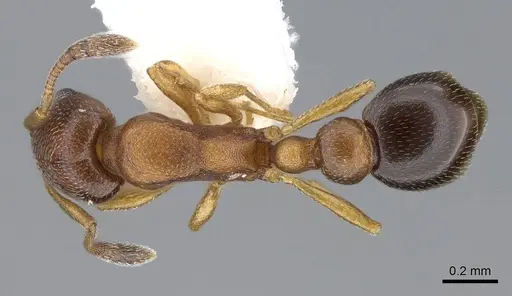
FOCOL0739
View on AntWeb
Literature
Loading...Loading products...