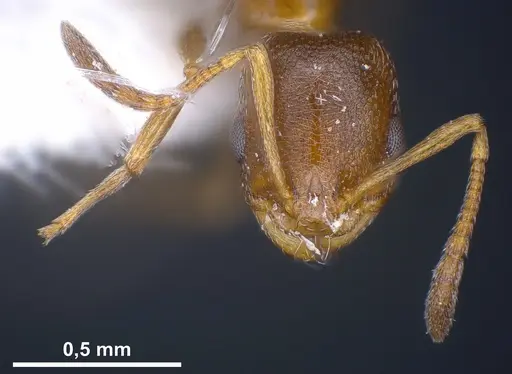
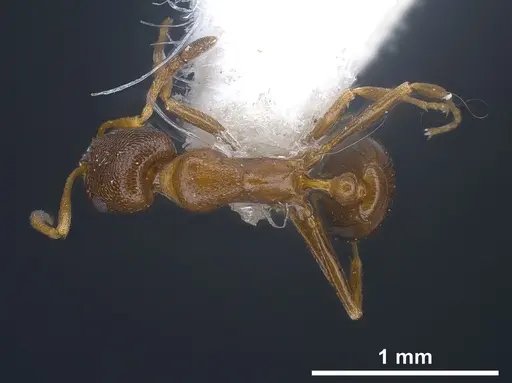
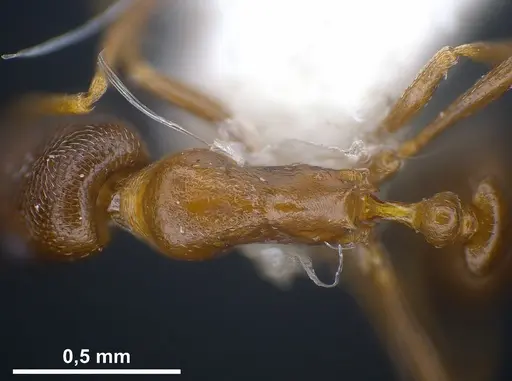
Cardiocondyla brachyceps - "Short-headed Heart-node Ant"
Cardiocondyla brachyceps is a small ant species belonging to the 'C. elegans species group', characterized by its unique waist segments and fine body sculpture. Workers are typically small, ranging from 1.8 to 2.2 mm in length. Their coloration can vary, with heads usually medium brown to blackish brown, while the mesosoma and petiole often show a lighter orange-brown hue, sometimes with an orange-yellowish component even in darker specimens. The postpetiole and gaster are typically dark to blackish brown. A distinguishing feature is their elongated petiolar peduncle.
- Difficulty: Medium
- Origin & Habitat: Central Asia, specifically from southern Georgia and northeastern Turkey eastward through Iran to eastern Afghanistan. in Semi-deserts, steppes, and open habitats with immature soils, often found near rivers, lakes, and sea shores. They may also inhabit forest margins. They typically nest in the soil, occasionally under stones..
- Colony Type: Polygyne (multiple queens), claustral founding.
- Size & Growth:
- Queen: Not specified
- Worker: 1.8-2.2mm
- Colony: Small (hundreds). Medium growth.
- Antkeeping:
- Temperature: Maintain a temperature range of 24-28°C for optimal development. As they originate from arid regions, they can tolerate some fluctuations..
- Humidity: Provide a humidity gradient, with part of the nest at 40-60% and another area slightly drier. This allows the ants to choose their preferred humidity..
- Diapause: Required. 3-4 months at 10-15°C.
- Nesting: These ants prefer nesting in soil or under rocks. For artificial setups, acrylic, Ytong, or naturalistic setups with a sandy-loam substrate are suitable. Ensure small, secure entrances due to their tiny size..
- Behavior: Low aggressiveness.
- Common Issues: Humidity fluctuations, Overfeeding leading to waste, Stress from handling.
Cardiocondyla brachyceps, like many ants in the genus Cardiocondyla, are known for the presence of ergatoid males, which are wingless and worker-like in appearance. These unique males often stay within the nest to mate, and a fascinating aspect of their behavior is their tendency to fight competing males within the colony, sometimes to the death, to monopolize mating opportunities. This internal competition is a crucial part of their reproductive strategy.
Despite their small size, Cardiocondyla species, including C. brachyceps, are known to possess a relatively large, blade-like sting. While they are not typically aggressive towards humans, this sting can be a deterrent to other ant species. In their natural habitat, workers of larger, aggressive species have been observed to retreat when encountering Cardiocondyla foragers, suggesting the emission of effective repellents.
Colonies of Cardiocondyla brachyceps are relatively small, usually consisting of several dozen to a few hundred workers, rarely exceeding 500 individuals. Their natural nests are often difficult to locate due to their tiny entrance holes, which are usually unmarked by excavated substrate. This discreet nesting behavior makes them quite elusive in the wild.
For successful antkeeping, offering a diverse diet is key for Cardiocondyla brachyceps. They are omnivorous scavengers, readily accepting both carbohydrates like honey or sugar water, and proteins from small insects such as fruit flies, mealworms, or crickets. Providing a varied food source helps ensure the health and growth of your colony.
The genus Cardiocondyla is noted for its ability to thrive in open, arid environments, with many species demonstrating high heat tolerance. When keeping C. brachyceps, replicating these conditions with a proper temperature gradient in the nest and outworld, along with appropriate humidity levels, will be beneficial for their well-being and development.
Frequently Asked Questions
What kind of housing is best for a Cardiocondyla brachyceps colony?
For these tiny ants, a formicarium designed for small species is ideal. Options like acrylic nests with small chambers, Ytong setups, or naturalistic setups using a sand-loam substrate are excellent. Always ensure the nest has a very small, secure entrance to prevent escapes. Remember, their natural nests are quite concealed!
What do Cardiocondyla brachyceps eat?
Cardiocondyla brachyceps are generalist omnivores. They thrive on a varied diet of carbohydrates like honey or sugar water and protein sources such as small feeder insects (e.g., fruit flies, small mealworms, roaches). Providing a mix ensures all their nutritional needs are met for a flourishing colony.
How big do Cardiocondyla brachyceps colonies get?
These fascinating ants typically form small colonies, usually ranging from a few dozen to a few hundred workers, generally not exceeding 500 individuals. This makes them a great choice for keepers with limited space or those new to the hobby who prefer managing smaller populations.
Do Cardiocondyla brachyceps have queens that look like workers?
The genus Cardiocondyla is known for its fascinating male polymorphism, featuring both winged and wingless (ergatoid) males. However, the queens are typically winged alates, though some species within the genus can exhibit gyne polymorphism, where queens may vary in size.
Are Cardiocondyla brachyceps good for beginners?
Their small colony size and interesting behaviors make them a rewarding species to keep. While they aren't considered 'easy' due to their specific habitat needs (like humidity gradients) and tiny size, an attentive beginner who researches their care thoroughly can certainly succeed.
Do Cardiocondyla brachyceps sting?
Yes, Cardiocondyla brachyceps workers do possess a relatively large, blade-like sting for their size. While they are not overtly aggressive towards handlers, and their sting is not medically significant for humans, it can certainly be felt and is primarily used for defense against other insects.
Do I need to hibernate my Cardiocondyla brachyceps colony?
Yes, diapause (a period of dormancy, often referred to as hibernation in antkeeping) is required for Cardiocondyla brachyceps. A cool period, typically 3-4 months at temperatures between 10-15°C, will help ensure the long-term health and vitality of your colony.
What temperatures are best for Cardiocondyla brachyceps?
For active colony growth, aim to keep your Cardiocondyla brachyceps at temperatures between 24-28°C. During diapause, the temperature should be lowered to 10-15°C. Providing a slight temperature gradient within the nest can also be beneficial.
What is unique about Cardiocondyla brachyceps males?
One of the most remarkable aspects of Cardiocondyla, including C. brachyceps, is the presence of ergatoid (wingless, worker-like) males. These males are known for their fierce, often lethal, battles within the nest to secure exclusive mating rights with the queens. This fascinating behavior is a hallmark of the genus.
How long does it take for Cardiocondyla brachyceps to develop from egg to worker?
The development time from egg to a fully-fledged worker ant for Cardiocondyla species generally takes about 8-9 weeks, given optimal conditions. This relatively quick development allows for steady colony growth once established.
Are Cardiocondyla brachyceps sensitive to humidity?
Like many ant species, Cardiocondyla brachyceps benefit from a humidity gradient within their nest. While they originate from arid and semi-arid regions, providing a section of the nest with 40-60% humidity and another drier area allows them to self-regulate and choose their preferred moisture level, promoting colony health.
What kind of substrate do they prefer in a naturalistic setup?
In naturalistic setups, Cardiocondyla brachyceps prefer substrates like sand, loam, or fine gravel. This mimics their natural nesting sites in open, immature soils near water sources. Ensure the substrate isn't prone to molding and provides adequate structural integrity for their small tunnels.