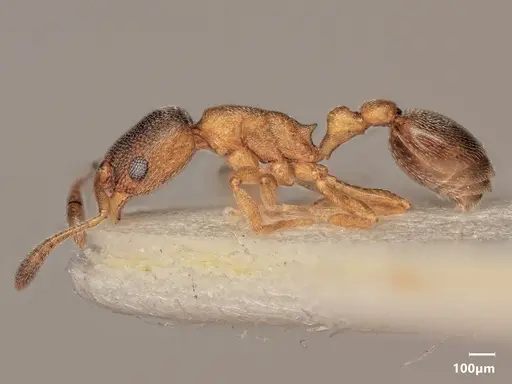
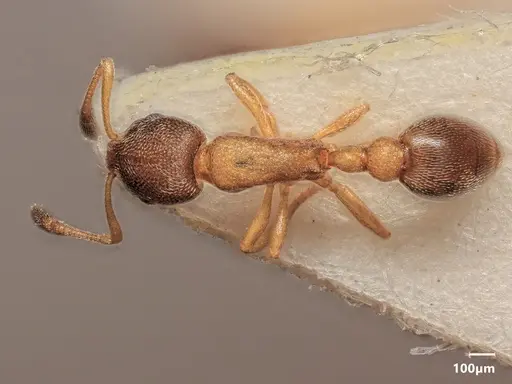
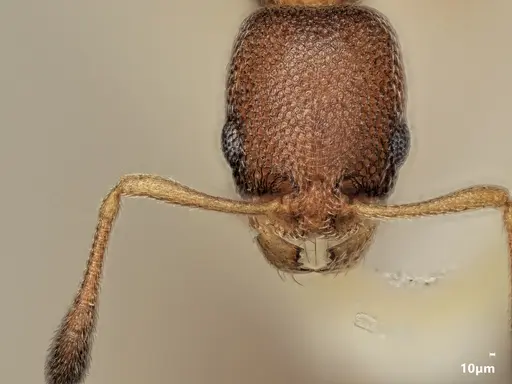
Cardiocondyla tjibodana - "Tjibodan Cardiocondyla Ant"
Cardiocondyla tjibodana is a tiny ant species, often characterized by its small size and a distinctive warm orange-yellowish tinge on its mesosoma and waist, contrasting with a darker head and gaster. They are part of the 'Cardiocondyla minutior group' and are phenotypically very similar to Cardiocondyla minutior and Cardiocondyla goa. Workers are minute, typically foraging solitarily. This species is known to be omnivorous. They are also considered an invasive species, having spread to remote zoogeographical regions from their native Malayan distribution.
- Difficulty: Easy
- Origin & Habitat: Malayan region (Philippines, Malaysia, Indonesia, New Guinea), with introduced populations in other tropical/subtropical areas like Belize and Anatahan. in Shallow soil in open, disturbed areas with bare or weakly herbaceous ground, often found in parks and plantations..
- Colony Type: Polygyne (multiple queens), claustral (though queens may forage during founding) founding.
- Size & Growth:
- Queen: Not specified
- Worker: 0.357-0.402mm
- Colony: Small (hundreds). Medium growth.
- Antkeeping:
- Temperature: Room temperature, roughly 24-28°C, simulating their tropical origin. Specific optimal range not widely published, but stability is key..
- Humidity: Moderate to high, around 60-80%, given their tropical habitat. A gradient is beneficial..
- Diapause: Not required. Not specified at Not specified.
- Nesting: Artificial nests like acrylic, Ytong, or natural setups with shallow soil. Test tubes are suitable for founding..
- Behavior: Low (towards handler, but can show intra-colony aggression among males and queens) aggressiveness.
- Common Issues: Humidity fluctuations, Overfeeding leading to waste, Queen stress, Mold in nest.
One fascinating aspect of Cardiocondyla species, including C. tjibodana, is the potential for male polymorphism. Some colonies might produce typical winged males that fly off for nuptial flights, while others produce 'ergatoid' or worker-like males. These wingless males never leave the nest and engage in aggressive competition with other ergatoid males within their own colony for mating opportunities with virgin queens. This unique behavior makes them particularly interesting to observe for advanced antkeepers.
Foraging behavior in Cardiocondyla tjibodana workers is typically solitary and inconspicuous due to their minute size. Despite being small, these ants are known to possess effective repellent substances, allowing them to coexist with larger, more dominant ant species like Linepithema humile. This adaptability in the face of interspecies competition is a noteworthy trait for ant enthusiasts interested in diverse ant behaviors.
Colony size for Cardiocondyla tjibodana is relatively small, often consisting of only a few dozen workers. This makes them a manageable species for beginners and those with limited space, as they don't require massive setups. Their smaller colony size also allows for more detailed observation of individual life histories and colony dynamics within the formicarium.
While Cardiocondyla tjibodana is considered an invasive tramp species in some regions, it's generally not reported to cause significant ecological or economic problems in introduced areas. This is an important consideration for antkeepers concerned about the potential impact of keeping non-native species. Always ensure responsible containment to prevent any accidental escapes.
The taxonomy of Cardiocondyla species, including C. tjibodana, can be quite challenging due to their minute size and phenotypic similarities to related species. While C. tjibodana has a distinct warm orange-yellowish mesosoma, differentiating it from closely related species like C. minutior can sometimes require detailed morphometric analysis. For the average antkeeper, focusing on the general care requirements is more important than precise sub-species identification.
Queens of Cardiocondyla species are generally short-lived, with lifespans typically ranging from 0.5 to 2 years. This shorter lifespan means that new queens might need to be introduced periodically if you wish to maintain a long-term colony. However, their ability to establish new colonies even with uninseminated gynes, by mating with the first male produced from their own eggs, offers an interesting aspect of their reproductive strategy.
Frequently Asked Questions
What kind of nest is best for Cardiocondyla tjibodana?
For Cardiocondyla tjibodana, a small-scale formicarium is ideal, especially given their relatively compact colony size. Test tubes work well for founding colonies. Once established, you can move them into small acrylic nests, Ytong setups, or even naturalistic soil nests. Just ensure the nest has good humidity retention and a secure outworld for foraging.
How often should I feed Cardiocondyla tjibodana?
These ants are omnivorous, so a varied diet is key. Offer small amounts of protein (like tiny insect pieces, e.g., fruit flies or roach parts) and sugary foods (sugar water, honey water, or fruit) a few times a week. Adjust frequency based on colony size and consumption to prevent mold and wasted food.
Do Cardiocondyla tjibodana need diapause?
Cardiocondyla tjibodana originates from tropical regions, so they generally do not require a diapause period. Maintaining stable, warm temperatures year-round, mimicking their natural habitat, is usually sufficient for their well-being and continuous growth.
Are Cardiocondyla tjibodana queens polygynous?
Yes, Cardiocondyla tjibodana is a polygynous species, meaning colonies can have multiple queens. This can lead to larger colonies and more resilient setups, although intra-colony queen aggression can sometimes occur in small, young colonies.
What is unique about Cardiocondyla tjibodana males?
One of the most fascinating aspects of Cardiocondyla tjibodana is their dimorphic males. You might find typical winged males that fly to mate, but also 'ergatoid' (worker-like and wingless) males. These ergatoid males stay in the nest and compete aggressively with other males for mating opportunities with virgin queens from their own colony.
How big do Cardiocondyla tjibodana colonies get?
Colonies of Cardiocondyla tjibodana are considered small, typically reaching only a few dozen workers. This makes them a great choice for antkeepers who prefer smaller, more manageable colonies or have limited space.
Are these ants good for beginners?
Yes, Cardiocondyla tjibodana is often considered an easy species to keep, making them suitable for beginner antkeepers. Their small size, relatively simple care requirements, and ability to thrive in smaller setups contribute to their beginner-friendly nature.
What kind of humidity do Cardiocondyla tjibodana prefer?
Given their tropical origins, Cardiocondyla tjibodana thrive in moderate to high humidity, ideally around 60-80%. Providing a humidity gradient within the nest is beneficial, allowing the ants to choose their preferred moisture level for different stages of their brood.
Do Cardiocondyla tjibodana sting?
Yes, like many myrmicine ants, Cardiocondyla tjibodana workers do possess a sting. However, due to their minute size, a sting from these ants is unlikely to be significant for a human, usually resulting in a very mild, if any, sensation.
Can Cardiocondyla tjibodana co-exist with other ant species?
In their natural habitat, Cardiocondyla tjibodana workers, despite their small size, are known to co-exist with more dominant ant species due to their production of effective repellent substances. However, in a captive antkeeping setup, it is generally advised to keep ant species separately to prevent fighting and stress.
What is the typical lifespan of a Cardiocondyla tjibodana queen?
Queens of Cardiocondyla species, including C. tjibodana, generally have a shorter lifespan compared to many other ant genera, typically ranging from 0.5 to 2 years. This means you might observe colony turnover more frequently than with long-lived species.
Are Cardiocondyla tjibodana fast-growing?
Their colony growth rate is generally considered medium. While they don't reach supercolony sizes, they can grow steadily when provided with optimal conditions and consistent feeding.
What is their natural nesting behavior?
In the wild, Cardiocondyla tjibodana prefers to nest in shallow soil, especially in open, disturbed areas like bare ground or weakly herbaceous patches. They can also be found in parks and plantations, adapting well to human-modified environments.