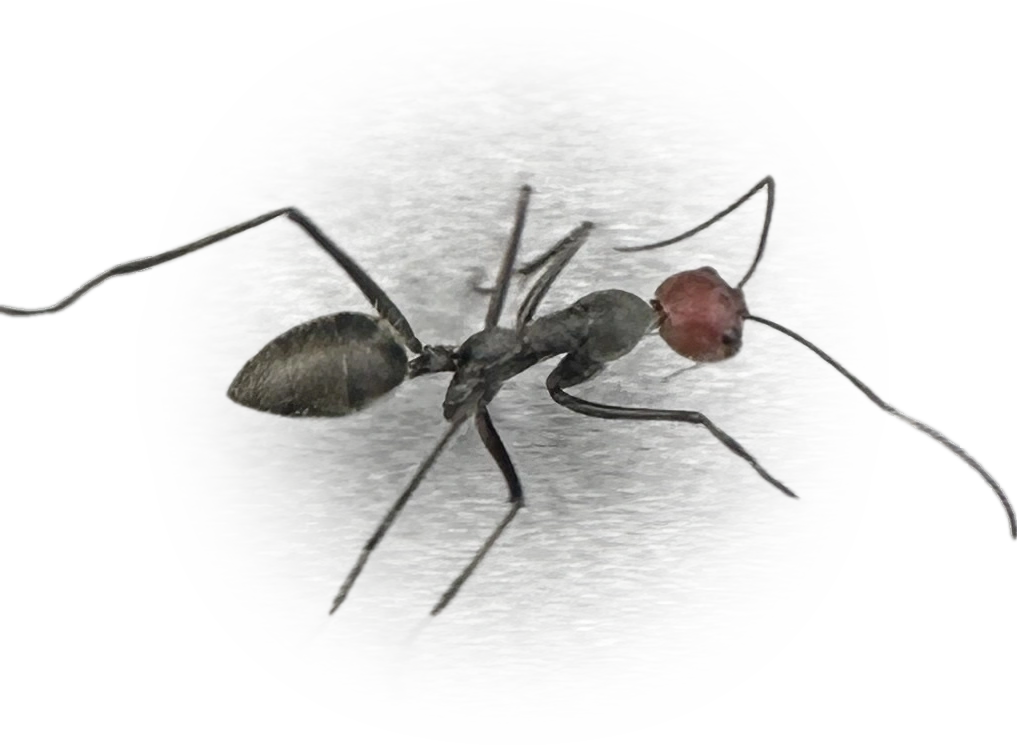

Camponotus singularis
- Scientific Name
- Camponotus singularis
- Subgenus
- Myrmosaulus
- Tribe
- Camponotini
- Subfamily
- Formicinae
- Author
- Smith, 1858
- Distribution
- Found in 7 countries
Camponotus singularis Overview
Camponotus singularis is an ant species of the genus Camponotus. It is primarily documented in 7 countries , including China, Indonesia, India. Detailed taxonomic data and occurrence records can be further explored via authoritative databases such as AntWeb or the Global Biodiversity Information Facility (GBIF).
Camponotus singularis
Camponotus singularis is a large-bodied Asian carpenter ant species known for its pronounced worker dimorphism. Majors are impressively large (16-20mm) with distinctive heart-shaped heads, while minors are more modest at 9-15mm. The species ranges from Nepal through Southeast Asia to Indonesia, with documented populations in Yunnan, Myanmar, Thailand, Laos, Vietnam, Malaysia, Sumatra, Java, and Borneo. They are habitat specialists found exclusively in primary forest environments, nesting both in soil and on tree trunks. This species shows fascinating morphological specialization with major workers being much rarer than minors in wild colonies.
Quick Summary
- Difficulty: Medium
- Origin & Habitat: Primary forest specialist found across South and Southeast Asia including Nepal, India, Myanmar, Thailand, Laos, Vietnam, Malaysia, Indonesia (Java, Sumatra), and China's Yunnan province. They inhabit mixed deciduous forests and are ground and tree trunk nesters [1][2][3].
- Colony Type: Monogyne (single-queen colonies). True worker dimorphism with distinct major and minor subcastes, no intermediate phenotypes. Major workers are much rarer than minors in wild colonies [3].
- Colony: Monogyne
- Founding: Claustral
- Size & Growth:
- Queen: 18-20mm [3]
- Worker: Minors: 9-15mm, Majors: 17-20mm [3]
- Colony: Unknown, likely several hundred workers based on typical Camponotus patterns
- Growth: Moderate, typical Camponotus development
- Development: 6-10 weeks (estimated based on typical Camponotus development at 24-26°C) (Development time follows standard Camponotus patterns. Major workers take longer to develop than minors due to their larger size.)
- Antkeeping:
- Temperature: Keep at 24-26°C. Provide a gentle thermal gradient so ants can self-regulate. Room temperature within this range works well, otherwise use a heating cable on one side of the nest.
- Humidity: Moderate to high humidity (60-80%). Keep nest substrate consistently moist but not waterlogged. Mist occasionally and provide a water tube. Being a forest species, they appreciate some moisture but avoid stagnant, overly wet conditions.
- Diapause: Not required. As a tropical/subtropical species from Southeast Asia, they do not need hibernation. Keep them at stable temperatures year-round.
- Nesting: Y-tong (AAC) nests work well for their size. They can also adapt to plaster nests or naturalistic setups with soil. Provide chambers scaled to their large body size. Acceptable of both horizontal and vertical setups.
- Behavior: Generally calm and non-aggressive for a large carpenter ant. Workers are moderately active foragers. They are not known to be particularly defensive but majors can deliver a painful sting if threatened. Escape prevention is important given their size, they can squeeze through standard barrier gaps. They accept sugar water and protein foods readily.
- Common Issues: colonies may fail if humidity drops too low, forest species need moisture, major workers develop slowly and are rare in young colonies, don't be alarmed if you only see minors initially, escape prevention matters despite their size, they can still find gaps in poor setups, wild-caught colonies may carry parasites that cause colony collapse, slow growth in first year is normal, Camponotus take time to establish
Appearance and Identification
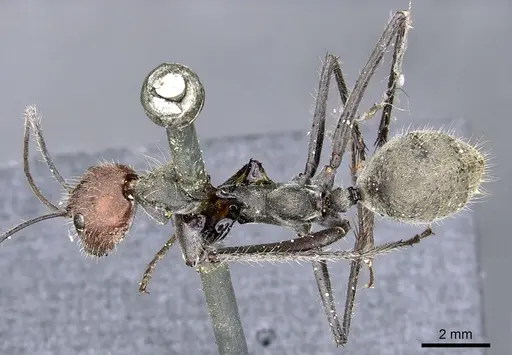
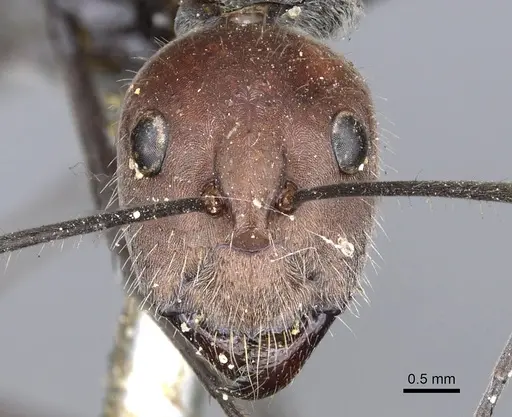
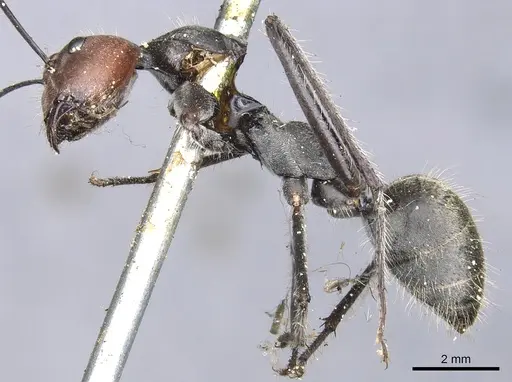
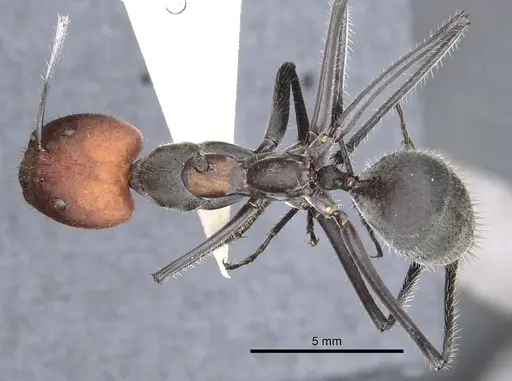
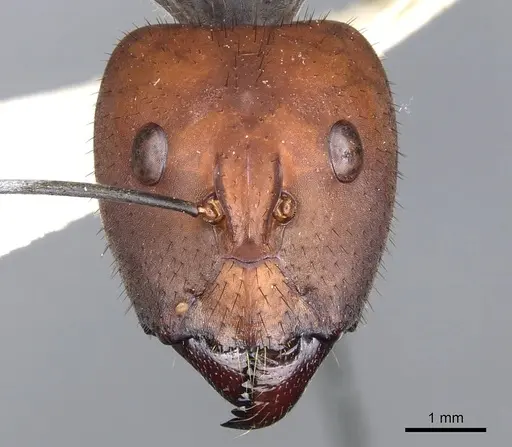
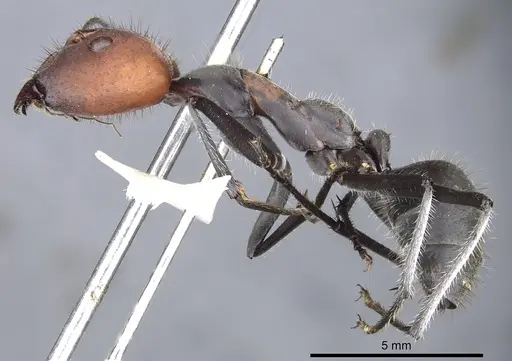
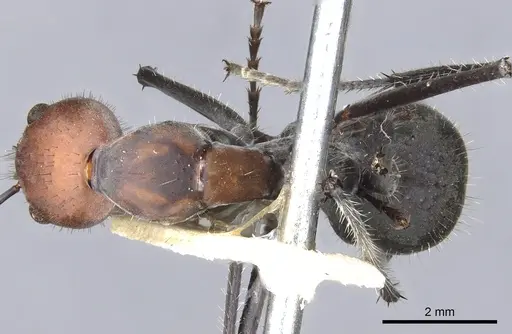
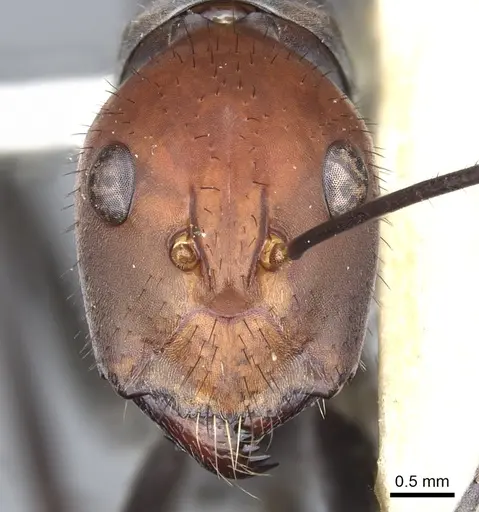
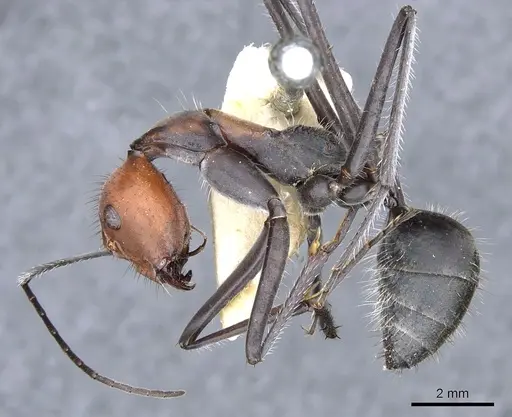
Camponotus singularis is one of the larger carpenter ant species you'll encounter. The most striking feature is their true worker dimorphism, majors and minors look like different species. Major workers reach 17-20mm with a distinctive heart-shaped head that is deeply concave at the back. Minor workers are more modest at 9-15mm with an oval head shape. Both castes have dense pubescence (short fine hairs) covering the body, and the propodeum (the section behind the mesonotum) is convex, creating a noticeable bump in their otherwise smooth back profile. Queens are the largest at 18-20mm and have well-developed wing muscles indicating their alate status. In wild colonies, majors are surprisingly rare, researchers examining specimens found 85 minors for every 10 majors [3].
Natural History and Distribution
This species has a wide distribution across South and Southeast Asia, from Nepal through Myanmar, Thailand, Laos, Vietnam, Malaysia, Indonesia (Java and Sumatra), and into China's Yunnan province. They are strict habitat specialists found exclusively in primary forest environments, notably absent from secondary forest and rubber plantations [2]. In their natural range, they nest both in the ground and on tree trunks, showing flexibility in nesting site selection [1]. The species was originally described from Java in 1858 and has a complex taxonomic history, including being previously synonymized under other names before being recognized as a valid species. A subspecies Camponotus singularis rufomaculatus is also recognized [4].
Housing and Nest Setup
For keeping Camponotus singularis, Y-tong (AAC) nests are an excellent choice given their large size. The chambers should be appropriately scaled, these are substantial ants that need room to move. Plaster nests also work well and help maintain humidity. Because they come from forest environments, provide moderate humidity (60-80%) by keeping the nest substrate moist but not waterlogged. A water tube attached to the setup helps maintain humidity. They can be kept at room temperature if your home is in the 24-26°C range, otherwise, use a heating cable on one side of the nest to create a gentle thermal gradient. Avoid placing the heating element directly on the nest material as it can cause excessive drying. Outworld space should be adequate for their foraging activities.
Feeding and Nutrition
Like most Camponotus species, these ants are omnivorous and accept a varied diet. Sugar sources are essential, they readily consume sugar water, honey, or diluted maple syrup. For protein, offer insects such as mealworms, crickets, or other appropriately sized prey. Given their large size, they can handle bigger prey items than smaller ant species. Feed protein 2-3 times per week and keep sugar water constantly available. Remove uneaten prey after 24-48 hours to prevent mold. In the wild, they forage on tree trunks and ground, so placement of food in the outworld should work well.
Colony Development and Growth
Colony growth follows typical Camponotus patterns but on the slower side. Queens are claustral, they seal themselves in a chamber and raise the first brood alone using stored fat reserves. The first workers (nanitics) will be smaller but should still show the minor worker morphology. True majors take much longer to develop and remain rare in young colonies. Expect 6-10 weeks from egg to first worker at optimal temperatures. Growth is moderate, don't expect rapid expansion. Major workers, being much larger and more specialized, develop slower and appear in higher numbers as the colony matures. A healthy established colony may eventually reach several hundred workers, though exact maximum size is unconfirmed for this species. [3]
Seasonal Care
As a tropical/subtropical species from Southeast Asia, Camponotus singularis does not require hibernation or diapause. Keep them at stable temperatures year-round, ideally in the 24-26°C range. Avoid temperature drops below 20°C for extended periods. They are active throughout the year in their native range and will remain active in captivity if kept warm. Maintain humidity consistently, forest species are sensitive to drying out. There is no need for seasonal adjustments in lighting or cooling periods.
Frequently Asked Questions
How long does it take for Camponotus singularis to produce first workers?
Expect 6-10 weeks from egg to first worker at optimal temperature (24-26°C). This follows typical Camponotus development timelines. The first workers will be smaller minors, major workers take longer to develop and appear in greater numbers as the colony matures.
What do Camponotus singularis ants eat?
They are omnivorous. Offer sugar water, honey, or maple syrup continuously for energy. For protein, provide insects like mealworms, crickets, or other appropriately sized prey 2-3 times per week. Remove uneaten prey after 24-48 hours.
What temperature do Camponotus singularis need?
Keep them at 24-26°C. This tropical species does not tolerate cool temperatures well. A gentle thermal gradient is ideal so they can self-regulate. Room temperature in this range works, or use a heating cable on part of the nest.
Are Camponotus singularis good for beginners?
They are rated as medium difficulty. While not as challenging as some species, they do have specific humidity needs (being forest specialists) and slower growth than many starter species. Their large size makes them impressive, but expect patience, colony development takes time.
Do Camponotus singularis need hibernation?
No. As a tropical/subtropical species from Southeast Asia, they do not require hibernation or winter cooling. Keep them at stable warm temperatures year-round.
How big do Camponotus singularis colonies get?
Exact maximum colony size is unconfirmed for this species, but based on typical Camponotus patterns, established colonies likely reach several hundred workers. The colony grows gradually over several years.
What makes Camponotus singularis special?
Their most notable feature is true worker dimorphism, majors and minors look dramatically different, with majors having distinctive heart-shaped heads. They are also habitat specialists found only in primary forests, making them a rewarding species for those interested in forest-dwelling ants.
Can I keep multiple Camponotus singularis queens together?
No. This species is monogyne, meaning colonies have a single queen. Combining unrelated queens is not recommended and would likely result in fighting.
Why are my major workers so rare?
This is completely normal. In Camponotus singularis, major workers are naturally much rarer than minors, researchers found roughly 8-9 minors for every major in wild colonies. Majors develop slower and the colony only produces them in significant numbers when mature.
References

This caresheet is licensed under CC BY-SA 4.0 .
Literature
Loading...Loading products...