

Camponotus scotti
- Scientific Name
- Camponotus scotti
- Tribe
- Camponotini
- Subfamily
- Formicinae
- Author
- McArthur, 2003
- Distribution
- Found in 1 countries
Camponotus scotti Overview
Camponotus scotti is an ant species of the genus Camponotus. It is primarily documented in 1 countries , including Australia. Detailed taxonomic data and occurrence records can be further explored via authoritative databases such as AntWeb or the Global Biodiversity Information Facility (GBIF).
Camponotus scotti
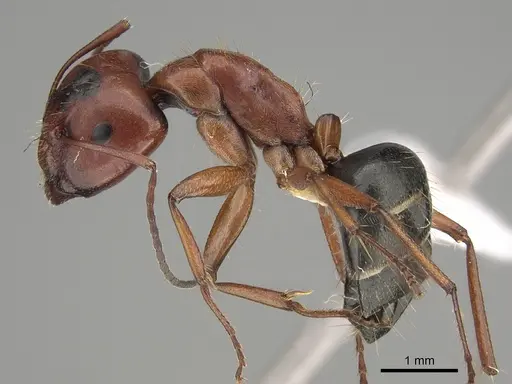
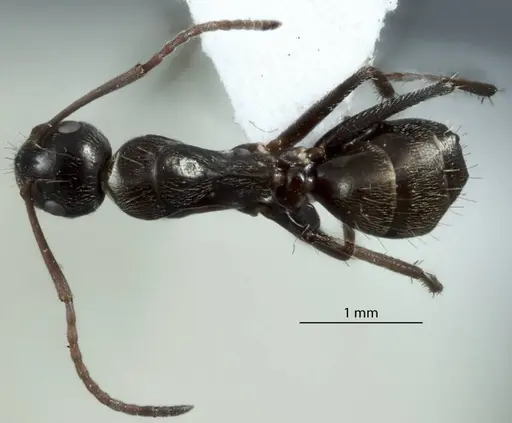
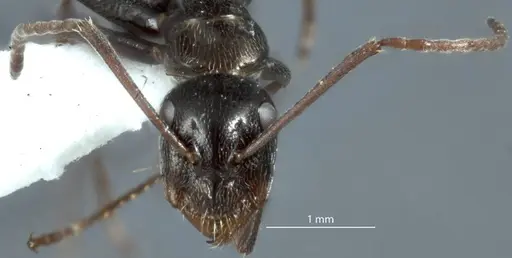
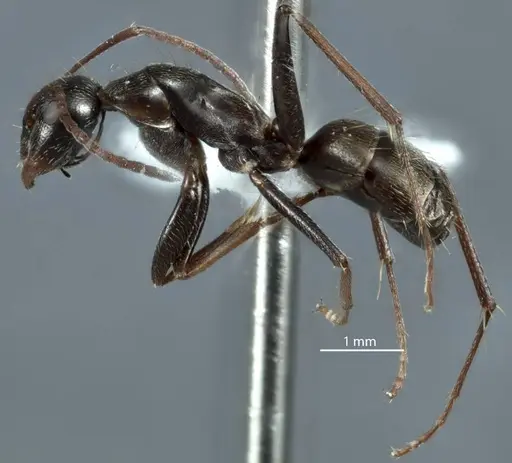
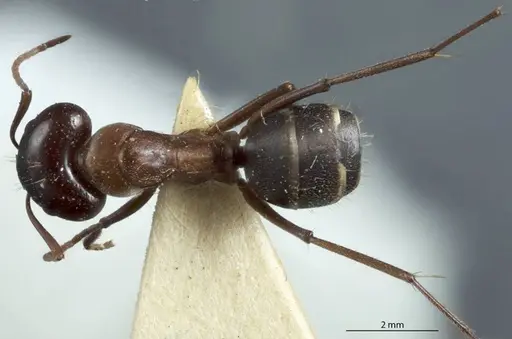
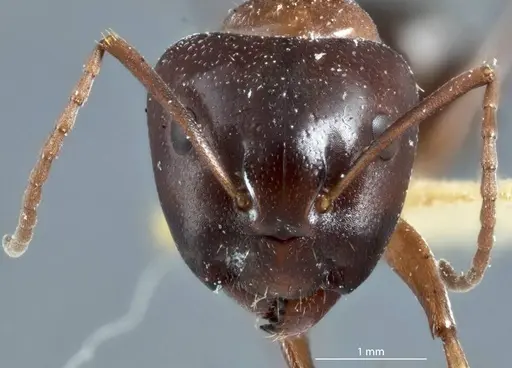
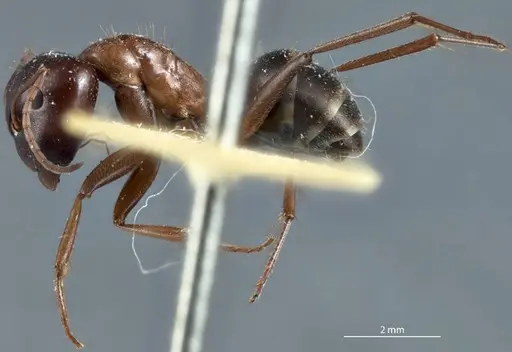
Camponotus scotti is a polymorphic carpenter ant native to southern Australia, specifically found in the Darling Range near Adelaide and surrounding South Australian regions. Workers are polymorphic with major and minor castes, majors have a wider head with a straight vertex, while minors have parallel head sides and a convex vertex. The species is distinguished by glistening white appressed setae, sparse erect setae on the head, mesosoma, node and gaster, and red-brown limbs and scapes. Coloration is variable, often appearing in patches from red to black. Minor workers have six mandibular teeth, and the propodeum dorsum is straight in side view [1][2].
This ant is not uncommon in the Darling Range and was first described from Scott Creek Conservation Park, after which it is named. The species forages on tree trunks during the day and nests in the ground, making it a typical ground-nesting Camponotus species with behaviors similar to other Australian carpenter ants.
Quick Summary
- Difficulty: Medium
- Origin & Habitat: Southern Australia, specifically the Darling Range in Western Australia and Jupiter Creek near Adelaide in South Australia. Found in temperate Australian habitats, nesting in the ground [2][3].
- Colony Type: Monogyne (single queen) colonies. As a typical Camponotus species, colonies start with a single claustral queen that seals herself in to raise the first brood alone.
- Colony: Monogyne
- Founding: Claustral
- Size & Growth:
- Queen: Estimated 10-14mm based on Camponotus genus patterns, direct measurements not documented
- Worker: Major workers: estimated 8-12mm, Minor workers: estimated 5-7mm based on genus patterns [1]
- Colony: Estimated moderate colony size, likely several hundred workers based on typical Camponotus growth
- Growth: Moderate, Camponotus species typically take 6-10 weeks from egg to first worker
- Development: 6-10 weeks at optimal temperature based on typical Camponotus development (Development time is estimated from genus-level data since species-specific studies are not available. Major workers develop larger than minors and take longer to mature.)
- Antkeeping:
- Temperature: Keep at 22-26°C. As an Australian temperate species, they prefer warm conditions but not extreme heat. A heating cable on one side of the nest creates a suitable gradient.
- Humidity: Moderate humidity around 50-60%. Keep the nest substrate slightly moist but not waterlogged. Being a ground-nesting species, they benefit from some moisture in the nesting area.
- Diapause: Yes, Australian temperate ants require a winter rest period. Reduce temperature to 10-15°C for 2-3 months during winter months (roughly June-August in Southern Hemisphere).
- Nesting: Ground-nesting species. Test tubes work well for founding colonies. Established colonies do well in Y-tong nests, plaster nests, or naturalistic setups with soil substrate. They do not chew through acrylic, making acrylic nests a viable option.
- Behavior: Day-active foragers often found on tree trunks. Workers are polymorphic, majors handle larger prey and defend the colony while minors handle most foraging and brood care. They are moderately aggressive when disturbed but not particularly territorial. Escape prevention is important, use standard barrier methods as they are not particularly known for escaping. Their polymorphic nature means you'll see a size range of workers [1][3].
- Common Issues: queen mortality during founding is common, claustral queens rely on stored fat and many fail before workers emerge, slow initial growth can lead to overfeeding, too much food spoils in test tube setups and causes mold, winter die-off if diapause conditions are not provided, Australian species expect a cool period, major workers developing too slowly, majors take longer than minors to appear in new colonies, test tube flooding can drown founding queens, use appropriate water reservoir size
Nest Preferences and Setup
Camponotus scotti is a ground-nesting species that naturally establishes nests in soil, often under stones or in decaying wood near the ground surface. For captive care, test tubes work excellently for founding colonies, use a water reservoir at one end with cotton separating it from the ants. The queen will seal herself into a chamber and remain there until her first workers emerge. Once the colony reaches 20-30 workers, you can transition to a formicarium. Y-tong (acrylic) nests work well for established colonies, as do plaster nests with chambers scaled to their size. Because they are not aggressive chewers through acrylic, standard acrylic nests are suitable. Provide a connection to an outworld for foraging. The nest should be kept dark or covered, as carpenter ants prefer dim conditions for their brood chambers. [2][3]
Feeding and Diet
In the wild, Camponotus scotti forages on tree trunks during the day and likely feeds on honeydew from aphids and scale insects, plus small insects and nectar. In captivity, offer a varied diet: sugar water or honey should be available constantly, especially for the queen and growing brood. Protein sources like small crickets, mealworms, or other small insects should be offered 2-3 times per week. Minor workers do most of the foraging and will accept most standard ant foods. Major workers, when they appear, can handle larger prey items. Remove uneaten prey after 24-48 hours to prevent mold. Avoid overfeeding, in test tube setups, excess food quickly becomes a mold problem that can kill the colony.
Temperature and Seasonal Care
As a species from temperate southern Australia, Camponotus scotti prefers temperatures in the 22-26°C range. They can tolerate slightly cooler conditions but growth will slow. During summer, room temperature is usually sufficient, but you may need a heating cable in cooler climates. Place the heating cable on top of the nest, not underneath, to avoid excessive drying. Winter care requires a diapause period, reduce temperatures to 10-15°C for 2-3 months, roughly corresponding to Southern Hemisphere winter (June-August). This rest period is important for colony health and triggers reproductive behavior. Do not feed during diapause and keep moisture minimal. Sudden temperature drops should be avoided, acclimate gradually. [2]
Colony Growth and Development
Camponotus scotti is polymorphic, meaning colonies produce both major and minor workers. The first workers (nanitics) are typically smaller and develop faster. As the colony grows, majors will begin appearing, these have the distinctive wider head and can take longer to develop than minors. A healthy founding colony should produce its first workers within 6-10 weeks under optimal conditions. After that, growth is moderate, expect several new workers per month initially, accelerating as the colony passes 50 workers. Major workers typically appear when the colony reaches 30-50 workers. Colonies can eventually reach several hundred workers. Be patient during the founding phase, this is when most colonies fail due to queen starvation or mold from overfeeding. [1]
Behavior and Temperament
This species is day-active, with workers commonly observed foraging on tree trunks in the wild. They are moderately aggressive when their nest is threatened, majors will respond to disturbance. However, they are not particularly territorial or aggressive toward keepers during routine care. Workers are polymorphic with majors having larger heads for carrying larger prey and defending the nest, while minors handle most foraging and brood care. They are not known as escape artists, but standard barrier methods (fluon, barrier bands) should still be used. The species shows typical Camponotus behavior: relatively calm, not overly skittish, and with clear division of labor between worker castes. [1][2][3]
Frequently Asked Questions
How long does it take for Camponotus scotti to produce first workers?
Expect first workers (nanitics) in 6-10 weeks under optimal temperature conditions (22-26°C). This is typical for Camponotus species. The queen will remain sealed in her chamber until workers emerge.
What do Camponotus scotti ants eat?
They need a balanced diet of sugar (honey or sugar water constantly available) and protein (small insects like crickets or mealworms 2-3 times per week). They are typical carpenter ants that forage for honeydew and insects in the wild.
Can I keep multiple Camponotus scotti queens together?
No. This is a monogyne species, colonies start with a single queen. Combining unrelated queens will result in fighting. Only one queen per colony should be kept.
Do Camponotus scotti need hibernation?
Yes, they require a winter diapause period. Reduce temperatures to 10-15°C for 2-3 months, typically during winter. Do not feed during this period and keep moisture minimal.
What is the best nest type for Camponotus scotti?
Test tubes work well for founding colonies. Once established with 20-30+ workers, Y-tong (acrylic) nests, plaster nests, or naturalistic setups with soil all work well. They are not aggressive chewers through acrylic.
How big do Camponotus scotti colonies get?
Based on typical Camponotus patterns, mature colonies can reach several hundred workers. The presence of major workers indicates a well-established colony.
Are Camponotus scotti good for beginners?
They are rated as medium difficulty. The main challenges are the slow founding phase (6-10 weeks with no workers), the need for winter diapause, and avoiding overfeeding that causes mold in test tube setups.
When should I move Camponotus scotti to a formicarium?
Move from test tube to formicarium when the colony reaches 20-30 workers or when the test tube shows signs of drying out frequently. Make sure the formicarium chambers are appropriately sized for their polymorphic workers.
Why is my Camponotus scotti queen not laying eggs?
Possible causes include: temperatures too low (below 20°C), queen stress from too much light or disturbance, insufficient food, or the colony is in its natural resting phase. Ensure optimal conditions (22-26°C, dark, minimal disturbance) and offer sugar water.
What temperature range is ideal for Camponotus scotti?
Keep them at 22-26°C for optimal growth and brood development. They can tolerate 18-28°C but growth slows outside this range. A gentle temperature gradient allows workers to choose their preferred zone.
How do I know if my Camponotus scotti colony is healthy?
Signs of health include: workers actively foraging, brood present (eggs, larvae, pupae), queen remaining in her chamber, and no mold or dead ants in the nest area. Unhealthy signs include: queen outside the chamber, no brood for extended periods, workers acting sluggishly, or mold problems.
References

This caresheet is licensed under CC BY-SA 4.0 .
Literature
Loading...Loading products...