

Camponotus saxatilis
- Scientific Name
- Camponotus saxatilis
- Tribe
- Camponotini
- Subfamily
- Formicinae
- Author
- Ruzsky, 1895
- Distribution
- Found in 1 countries
Camponotus saxatilis Overview
Camponotus saxatilis is an ant species of the genus Camponotus. It is primarily documented in 1 countries , including Russian Federation. Detailed taxonomic data and occurrence records can be further explored via authoritative databases such as AntWeb or the Global Biodiversity Information Facility (GBIF).
Camponotus saxatilis
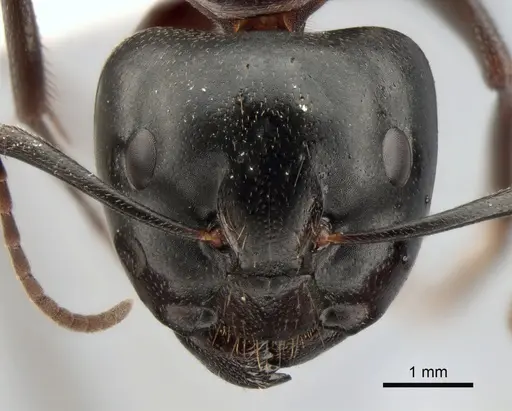
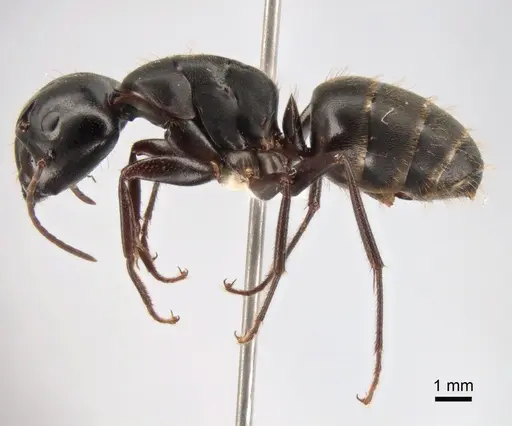
Camponotus saxatilis is a medium-to-large carpenter ant found across northern Asia, from Russia through Mongolia to China and the Korean Peninsula. Workers measure 9-15mm and have a distinctive almost entirely black body with long, dense pubescence on the abdominal segments. This species is a boreal forest ant that nests primarily in dead wood (rotten logs, standing dead trees, fallen branches) and under stones, sometimes with partial soil chambers. What makes C. saxatilis particularly interesting is its sophisticated aphid-farming behavior, it maintains partial division of labor where some workers constantly attend aphid colonies while others transport honeydew, and it has demonstrated remarkable numerical competence in laboratory experiments, being able to memorize and transmit information about complex paths to food sources.
Quick Summary
- Difficulty: Medium
- Origin & Habitat: Northern Asia (Russia, Mongolia, China, Korean Peninsula). Found in boreal forests, forest steppe, mountain steppe, forest edges, and grasslands. Nests in dead wood (rotten wood, fallen logs, base of dead trees) and under stones [1][2][3].
- Colony Type: Monogyne (single-queen colonies). Each colony typically has 600-1000 workers, with some colonies reaching up to 2000 individuals [2][4][5].
- Colony: Monogyne
- Founding: Claustral
- Size & Growth:
- Queen: Approximately 15mm (based on female forewing length 13.5-15.8mm average 15.2mm) [6]. Estimated from related Camponotus species.
- Worker: 9-15mm (size class I) [7].
- Colony: 600-2000 workers [2][4][5].
- Growth: Moderate, typical for Camponotus species.
- Development: 6-8 weeks (estimated based on typical Camponotus development at 20-25°C). (Development time follows standard Camponotus patterns, queens seal themselves in and raise first workers (nanitics) alone over several weeks.)
- Antkeeping:
- Temperature: Keep nest at 20-25°C. As a boreal species from northern Asia, it tolerates cooler temperatures than tropical ants. Room temperature (around 20-22°C) is suitable, with a slight gradient if possible [2].
- Humidity: Moderate humidity. Keep nest substrate moist but not waterlogged. Provide a water tube as a humidity source. These ants prefer well-drained but not dry conditions [3].
- Diapause: Yes, requires hibernation. As a boreal species, colonies need a winter rest period around 5-10°C for 3-4 months (October-March in the Northern Hemisphere) [8].
- Nesting: Prefers dead wood and stone substrates. In captivity, a Y-tong (AAC) nest or plaster nest works well. Provide a setup with narrow chambers and some soil area for foraging. Avoid overly wet conditions that could rot wood.
- Behavior: Temperament is relatively calm, these ants are not aggressive and show mostly non-aggressive reactions to threats (body jerking rather than biting). They are skilled aphid farmers with partial division of labor: some workers attend aphid colonies continuously while others transport honeydew. Escape risk is moderate, use standard barrier methods. They do not sting but may bite if provoked. Notably, they have demonstrated numerical competence in laboratory experiments, being able to learn and communicate complex path information [4][9].
- Common Issues: hibernation failure, colonies often die if kept too wet or warm during winter dormancy, wild-caught colonies may carry parasites that can devastate captive colonies, slow initial growth during founding phase can lead to beginner impatience and overfeeding, aphid-tending specialization means they may ignore sugar water initially, protein-rich foods are more important, test tube setups can flood if water reservoirs are too large for the colony size
Nest Preferences and Housing
Camponotus saxatilis naturally nests in dead wood and under stones in boreal forest environments. In captivity, Y-tong (acrylic) nests work well, as do plaster nests with narrow chambers scaled to their size. The key is providing a nest that stays relatively stable in humidity, these ants prefer conditions that aren't too wet (which causes wood rot) but also not bone dry. A small water tube connected to the nest helps maintain adequate humidity. For the outworld, a simple foraging area with a soil section allows them to exhibit natural behaviors. Because they are moderate-sized ants (9-15mm workers), standard escape prevention is usually sufficient, but always use fluon on tube connections as a precaution. [3][2][1]
Feeding and Diet
This species is primarily a honeydew collector and predator. In the wild, they tend multiple aphid species including Symydobius oblongus and Aphis craccivora, and they also hunt small invertebrates. In captivity, offer protein sources like mealworms, small crickets, or other small insects 2-3 times per week. They will also accept sugar water or honey as an energy source, though they may initially ignore it if focused on protein. Unlike some ants, C. saxatilis shows interesting foraging specialization, some workers specialize as 'attendants' staying at aphid colonies while others transport honeydew. This means they can use a well-organized feeding station. Remove uneaten protein after 24 hours to prevent mold.
Temperature and Seasonal Care
As a boreal species from northern Asia, C. saxatilis prefers cooler temperatures than many tropical carpenter ants. Keep the nest at 20-25°C, room temperature is often ideal. They can tolerate brief cool periods but should be kept warm enough for active brood development. The most critical seasonal requirement is hibernation. From roughly October to March (adjust for your hemisphere), the colony needs a cold period at 5-10°C. This simulates their natural cycle in boreal forests where temperatures drop significantly. During hibernation, keep the colony dark, quiet, and ensure the substrate doesn't dry out completely. A refrigerator works well for this. Do not hibernate colonies that are too small (less than 20-30 workers) as they may not have enough reserves to survive. [8][2]
Behavior and Unique Traits
One of the most fascinating aspects of C. saxatilis is its demonstrated numerical competence. In laboratory experiments using binary tree mazes, these ants were able to memorize and transmit information about sequences of turns toward food sources. This makes them one of the more cognitively sophisticated ant species studied. In terms of temperament, they are relatively calm and non-aggressive, their primary defense is body jerking rather than biting. They are also subdominant in ant communities, meaning they don't aggressively dominate resources but instead maintain specialized aphid-farming territories. For antkeepers, this means a colony that is interesting to observe but not particularly challenging to manage. They are escape artists to some degree, so standard barrier methods apply. [4][9][5]
Colony Founding
Camponotus saxatilis follows typical claustral founding. The queen seals herself in a small chamber and raises the first workers (nanitics) entirely on her own body reserves. This means you should not disturb a founding queen or offer her food, she doesn't need it. The founding chamber should be kept dark and undisturbed. First workers typically emerge after 6-8 weeks, though this varies with temperature. Once workers emerge, you can begin offering tiny amounts of protein and sugar water. The colony will grow slowly at first as the queen focuses on producing more workers rather than scaling up rapidly.
Growth and Development
Colonies reach 600-2000 workers in nature, with some laboratory colonies studied having 800-2000 individuals. Growth is moderate, not as fast as some tropical ants but faster than very slow-growing species. The key to healthy growth is consistent temperatures (20-25°C), adequate protein, and proper humidity. Brood development follows standard Camponotus patterns: eggs hatch into larvae, which then pupate before emerging as adult workers. The first few workers (nanitics) are typically smaller than mature workers. As the colony grows, larger workers (majors) may develop, though C. saxatilis doesn't show extreme polymorphism like some Camponotus species. [4][5][2]
Frequently Asked Questions
How long does it take for Camponotus saxatilis to produce first workers?
Expect first workers (nanitics) in 6-8 weeks after the queen lays eggs, assuming temperatures around 20-25°C. This is typical for Camponotus species. The queen seals herself in during founding and raises the first brood alone.
What do Camponotus saxatilis eat?
They are primarily honeydew collectors and predators. Offer small insects like mealworms, fruit flies, or small crickets as protein 2-3 times per week. They will also accept sugar water or honey. Their natural diet focuses on honeydew from aphids and small invertebrates.
Do Camponotus saxatilis need hibernation?
Yes, as a boreal species from northern Asia, they require a winter dormancy period. Keep the colony at 5-10°C for 3-4 months (roughly October-March). This is essential for colony health and longevity.
Are Camponotus saxatilis good for beginners?
They are medium difficulty, more challenging than simple species like Lasius but easier than some exotic ants. They require proper hibernation and have specific humidity needs, but their calm temperament makes them manageable. Expect slower growth than tropical ants.
How big do Camponotus saxatilis colonies get?
Mature colonies reach 600-2000 workers. This is moderate for Camponotus, not as large as some species but substantial enough to be impressive.
Can I keep multiple Camponotus saxatilis queens together?
No, this species is monogyne (single-queen). Multiple unrelated queens will fight. Only keep one queen per colony.
When should I move Camponotus saxatilis to a formicarium?
Wait until the colony has 50-100 workers and is actively foraging in the outworld. Moving too early can stress the colony. A Y-tong or plaster nest works well once they outgrow a test tube setup.
Why is my Camponotus saxatilis colony dying?
Common causes include: improper hibernation (too warm or wet), parasites from wild-caught colonies, mold from overfeeding, or temperatures outside their 20-25°C range. Check these factors and adjust accordingly.
What makes Camponotus saxatilis special compared to other ants?
They are one of the few ant species proven to have numerical competence, they can learn and communicate complex path information in laboratory experiments. They also show sophisticated aphid-farming with worker specialization.
References

This caresheet is licensed under CC BY-SA 4.0 .
CASENT0882046
View on AntWeb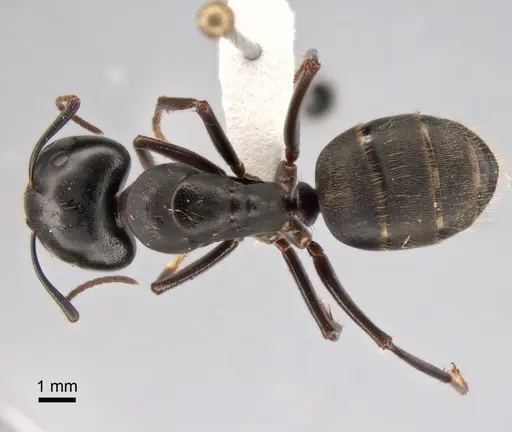
Literature
Loading...Loading products...