

Camponotus prostans
- Scientific Name
- Camponotus prostans
- Subgenus
- Tanaemyrmex
- Tribe
- Camponotini
- Subfamily
- Formicinae
- Author
- Forel, 1910
- Distribution
- Found in 1 countries
Camponotus prostans Overview
Camponotus prostans is an ant species of the genus Camponotus. It is primarily documented in 1 countries , including Australia. Detailed taxonomic data and occurrence records can be further explored via authoritative databases such as AntWeb or the Global Biodiversity Information Facility (GBIF).
Camponotus prostans
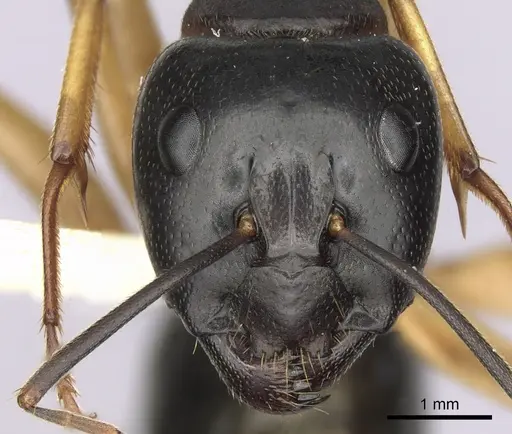
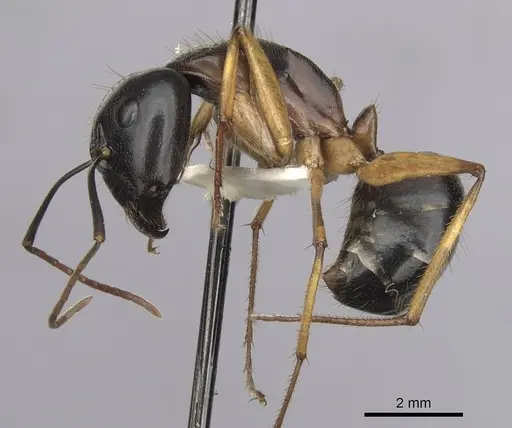
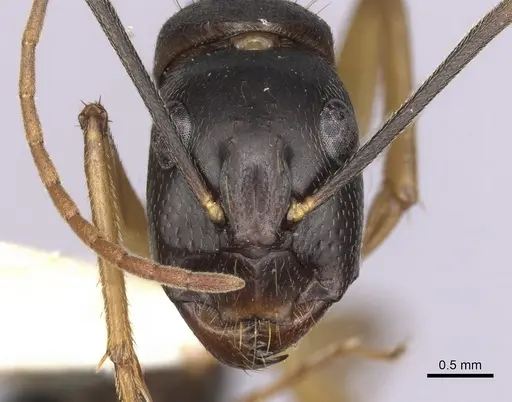
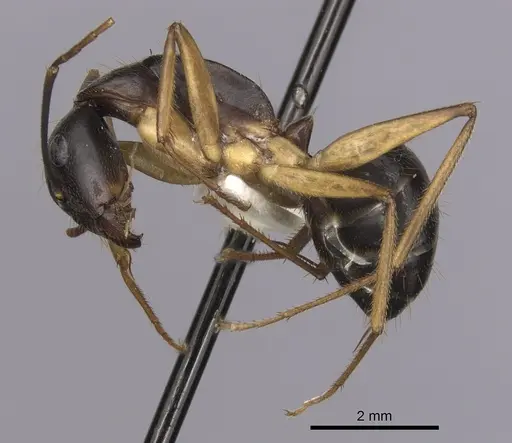
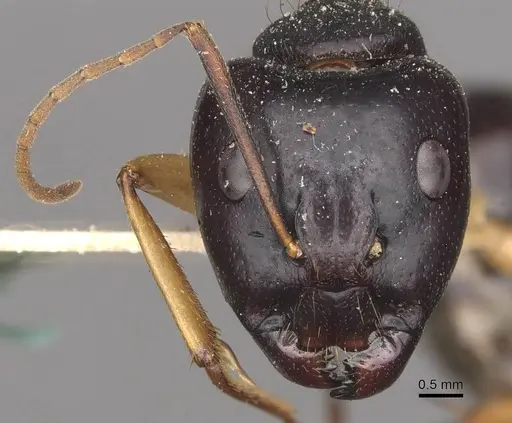
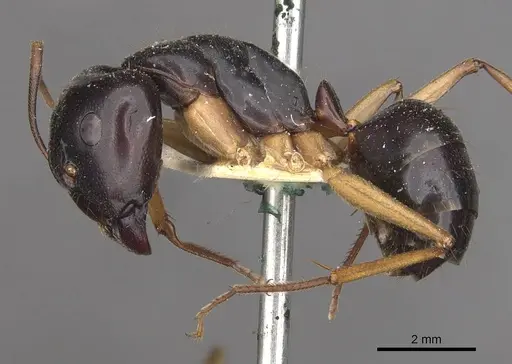
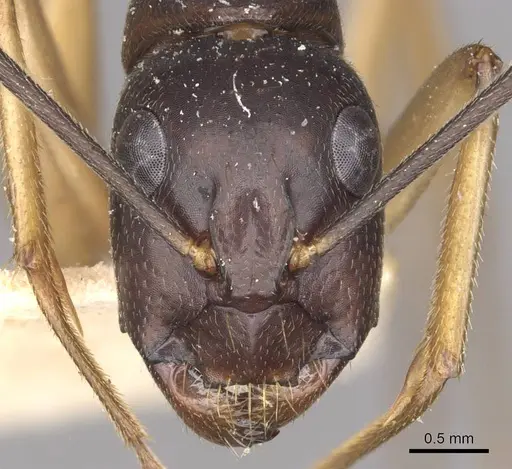
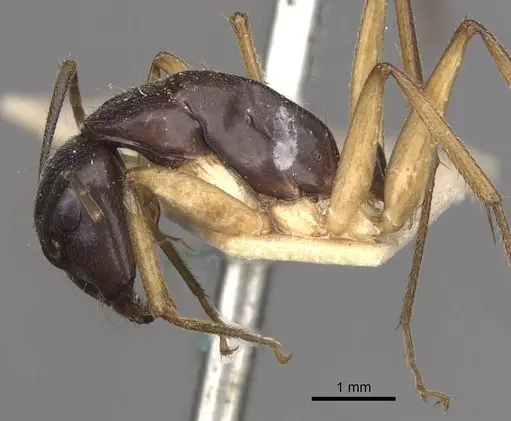
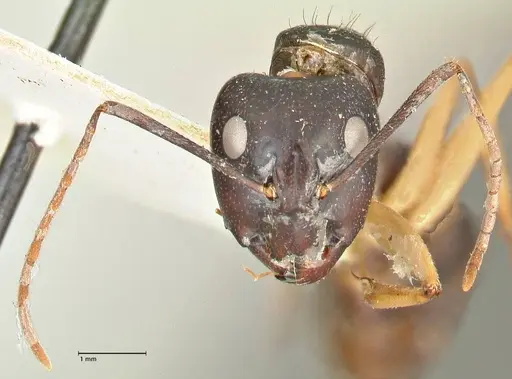
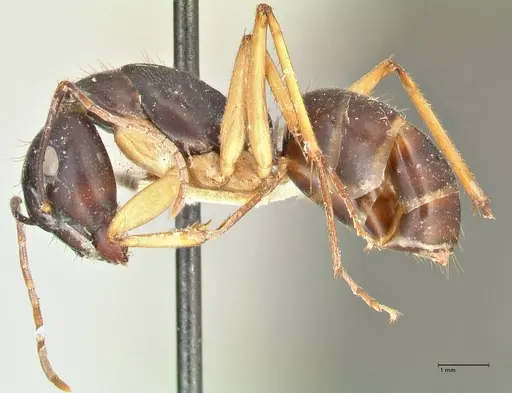
Camponotus prostans is a medium-to-large carpenter ant native to south-western Australia. Workers measure 6.8-10.5mm with major workers being notably larger, while queens reach an impressive 15-17mm [1]. The species has a distinctive uniformly blackish to brown-and-black coloration, setting it apart from its close relative Camponotus dryandrae which displays rich reddish- or yellowish-brown markings. The two species are very difficult to tell apart without microscopic examination, the reliable distinguishing feature is the reduced number of setae on the underside of the head in C. prostans [2].
This species has a fascinating behavioral trait worth noting: workers have been observed actively guarding nearby Iridomyrmex (another ant genus) nest mounds, attacking any workers that emerge and killing them with formic acid spray. This aggressive behavior appears to reduce competition and give C. prostans more time to forage [1]. The species is mainly found in the south-west and southern portions of the Southwest Botanical Province of Western Australia, though it has been recorded as far east as the Gibson Nature Reserve [2].
Quick Summary
- Difficulty: Medium
- Origin & Habitat: South-western Australia, primarily in the Southwest Botanical Province region with a Mediterranean climate [3][2]. They inhabit areas ranging from dry sclerophyll forest to woodland, often nesting under stones or in soil.
- Colony Type: Monogyne, single queen colonies are typical for the Camponotus genus. Queens are large and robust, capable of founding colonies independently.
- Colony: Monogyne
- Founding: Claustral
- Size & Growth:
- Queen: 15-17 mm [1]
- Worker: 6.8-10.5 mm [1]
- Colony: Likely reaches several thousand workers based on typical Camponotus patterns
- Growth: Moderate
- Development: 6-10 weeks (estimated based on typical Camponotus development at optimal temperature) (Development time depends on temperature, warmer conditions within acceptable range will speed development. Major workers take longer to develop than minor workers.)
- Antkeeping:
- Temperature: Keep nest area around 22-26°C. These ants come from a Mediterranean climate with warm summers and cool winters. A heating cable on one side of the nest creates a gentle gradient allowing workers to choose their preferred temperature. Room temperature in most homes (20-24°C) is suitable.
- Humidity: Moderate humidity around 50-60%. The natural habitat in southwestern Australia is relatively dry. Keep the nest substrate slightly moist but allow it to dry between waterings. Provide a water tube as a constant water source.
- Diapause: Yes, likely requires a winter rest period of 2-3 months at 10-15°C, reflecting their temperate origin in southwestern Australia where winters are cool and wet.
- Nesting: Y-tong (AAC) nests work well for their size. Plaster or acrylic nests are also suitable. They prefer dark, secure chambers. A naturalistic setup with stones over substrate can mimic their natural nesting under stones.
- Behavior: These ants are moderately aggressive and will defend their nest vigorously. They have functional acidopores and can spray formic acid as a defense, this gives them an advantage over smaller ant competitors. Workers are primarily nocturnal or crepuscular, foraging during cooler parts of the day. Major workers are slower-moving but can deliver a strong bite. Escape risk is moderate, their size makes them less likely to escape than tiny ants, but they are strong climbers. Use standard barrier methods like fluon on test tube rims.
- Common Issues: colonies may fail if kept too cold, maintain warm conditions during active season, formic acid spray can irritate skin, handle gently and avoid provoking them, queens can live 15-20 years but first workers may take months, patience is essential, major workers develop slowly and colony growth appears gradual initially, wild-caught colonies may have parasites, quarantine and observe new colonies
Nest Preferences and Housing
Camponotus prostans is a medium-to-large carpenter ant that does well in standard ant keeping setups. Y-tong (AAC) nests are ideal because they provide dark, secure chambers that these ants prefer. Plaster nests and acrylic nests also work well. The nest should have chambers sized appropriately for the colony, not too large for founding colonies, but spacious enough for established colonies to expand.
In the wild, these ants often nest under stones or in soil, so a naturalistic setup with a layer of substrate and flat stones on top can mimic their natural environment. However, for practical ant keeping, test tubes work perfectly for founding colonies. Once the colony reaches 20-30 workers, you can consider moving to a formicarium.
The outworld (foraging area) should be simple and easy to clean. These ants are moderate climbers but not extreme escape artists like tiny species. Standard barrier methods like fluon on container rims are sufficient to contain them. [1]
Feeding and Diet
Like most Camponotus species, C. prostans is omnivorous with a preference for protein foods. In captivity, they readily accept protein sources such as mealworms, crickets, and other small insects. Sugar water, honey, or diluted jam can be offered as supplementary energy, though they may not accept sugary foods as enthusiastically as some other ants.
Feed protein 2-3 times per week, adjusting based on colony size and consumption. Remove uneaten prey after 24-48 hours to prevent mold. A constant source of fresh water is essential, a test tube with a cotton plug works well.
In their natural habitat, they likely forage for insects and honeydew from aphids or scale insects. Their observed aggressive behavior toward Iridomyrmex ants suggests they are competitive foragers that will actively compete with other ant species for food resources. [1]
Temperature and Seasonal Care
These ants come from southwestern Australia, which has a Mediterranean climate, warm, dry summers and cool, wet winters. Keep the nest area at 22-26°C during the active season. A small heating cable placed on one side of the nest creates a temperature gradient that allows workers to regulate their own temperature by moving between warmer and cooler areas.
During winter (roughly November to February in the Northern Hemisphere), reduce temperature to 10-15°C to simulate their natural seasonal cycle. This winter rest period is important for colony health and may trigger reproductive behavior in established colonies. Keep them in a cool basement, garage, or refrigerator during this time. Reduce feeding significantly during diapause, once or twice a month is sufficient.
Do not let the nest dry out completely even during diapause, but reduce humidity substantially. A light misting every few weeks is enough to prevent complete drying. [3][2]
Behavior and Defense
Camponotus prostans has a notably aggressive side for a carpenter ant. In the wild, they have been observed actively guarding Iridomyrmex ant nests, attacking and killing workers that emerge. They grab smaller ants in their mandibles and spray formic acid from their acidopores, killing the victims within seconds. This behavior appears to reduce competition and give them exclusive foraging time.
In captivity, this translates to a colony that will vigorously defend its nest. Major workers can deliver a surprisingly strong bite for their size. They also have functional formic acid spray as a defense mechanism, while not dangerous to humans, it can be irritating.
Workers are primarily active during evening and nighttime hours, though they will adjust their activity patterns to the light cycle you provide. They are not particularly skittish and will often emerge to investigate new food items or disturbances. [1]
Colony Growth and Development
Like all Camponotus species, C. prostans starts with claustral founding. The queen seals herself in a chamber and does not leave to forage, she lives entirely on stored fat reserves and metabolic resources to raise her first brood. This means you should not offer food to a founding queen, it can actually stress her or lead to mold problems in the nest.
First workers (nanitics) typically emerge after 6-10 weeks at optimal temperature (around 24-26°C). These initial workers are smaller than normal workers but can already forage for food. After this point, you can begin offering protein foods.
Colony growth is initially slow, the first batch of workers may only number 5-15 individuals. However, once the colony establishes a reliable worker force, growth accelerates. Major workers (the larger soldiers) begin appearing as the colony matures. A mature colony can contain several thousand workers and may live for 15-20 years with a healthy queen.
Frequently Asked Questions
How long does it take for Camponotus prostans to raise first workers?
At optimal temperature (around 24-26°C), expect first workers in 6-10 weeks. The exact timing depends on temperature, cooler conditions will slow development significantly.
What do I feed Camponotide prostans?
Offer protein foods like mealworms, crickets, or other small insects 2-3 times per week. Sugar water or honey can be offered occasionally but is not required. Remove uneaten prey after 24-48 hours.
Do Camponotus prostans need hibernation?
Yes, they benefit from a winter rest period. Reduce temperature to 10-15°C for 2-3 months during winter. This mimics their natural seasonal cycle in southwestern Australia and helps maintain colony health.
How big do Camponotus prostans colonies get?
Based on typical Camponotus patterns, colonies can reach several thousand workers. The queen can live 15-20 years, making these long-term commitments.
Are Camponotus prostans good for beginners?
They are rated as medium difficulty. They are more forgiving than some species but require patience during the founding phase. Their moderate size and straightforward care requirements make them suitable for antkeepers who have successfully kept at least one species through the founding stage.
When should I move Camponotus prostans from a test tube to a formicarium?
Move to a formicarium once the colony reaches 20-30 workers and the test tube shows signs of mold or condensation buildup. Make sure the formicarium has appropriately sized chambers, too large a space can stress the colony.
Can I keep multiple Camponotus prostans queens together?
No. This species is monogyne (single queen). Combining unrelated queens typically results in fighting and colony failure. Only keep one queen per colony.
Why are my Camponotus prostans dying?
Common causes include: temperatures too cold (keep above 20°C), excessive humidity causing mold, stress from too much disturbance during founding, or parasites from wild-caught colonies. Ensure proper temperature, moderate humidity, and minimal disturbance during the founding phase.
References

This caresheet is licensed under CC BY-SA 4.0 .
CASENT0280199
View on AntWeb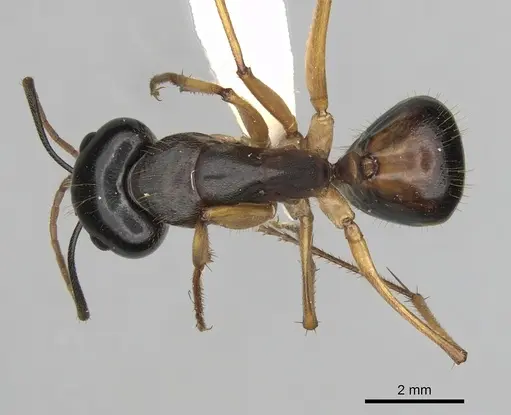
CASENT0280200
View on AntWeb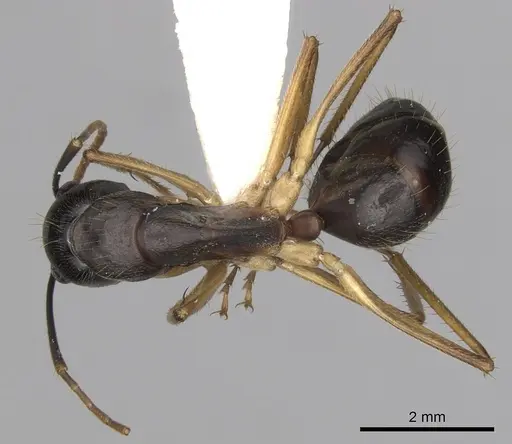
CASENT0887650
View on AntWeb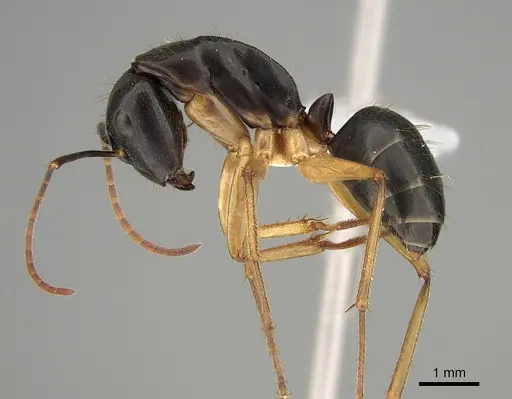
CASENT0910311
View on AntWeb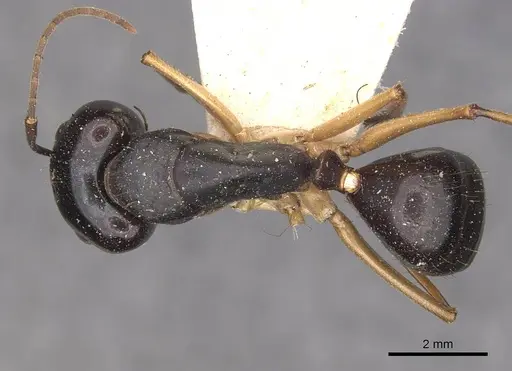
CASENT0910312
View on AntWeb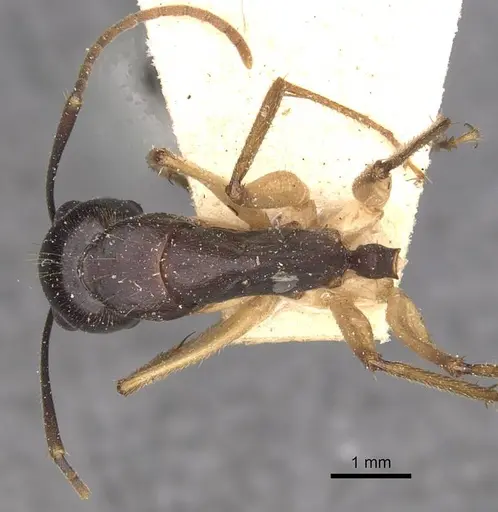
FOCOL2451
View on AntWeb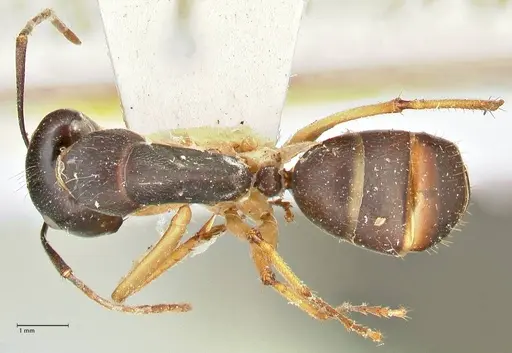
Literature
Loading...Loading products...