

Camponotus peleliuensis
- Scientific Name
- Camponotus peleliuensis
- Tribe
- Camponotini
- Subfamily
- Formicinae
- Author
- Clouse, 2007
- Distribution
- Found in 1 countries
Camponotus peleliuensis Overview
Camponotus peleliuensis is an ant species of the genus Camponotus. It is primarily documented in 1 countries , including Palau. Detailed taxonomic data and occurrence records can be further explored via authoritative databases such as AntWeb or the Global Biodiversity Information Facility (GBIF).
Camponotus peleliuensis
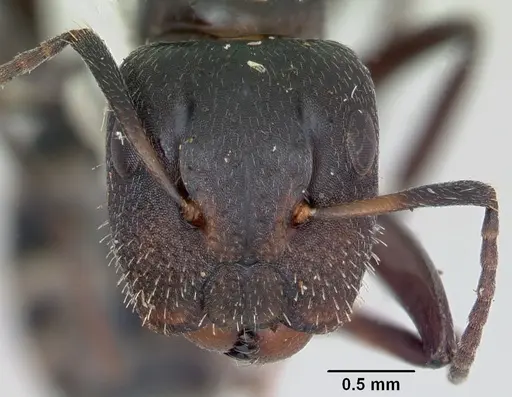
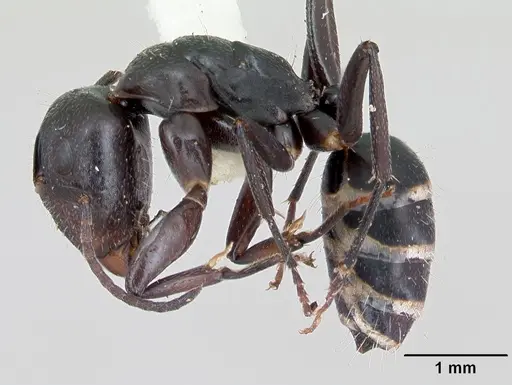
Camponotus peleliuensis is a small to medium-sized carpenter ant native only to Peleliu Island in the Republic of Palau, Micronesia. Workers measure 4.3-4.8mm, with major workers being larger than minors. The species has a distinctive appearance: a nearly square head, squat petiole (the segment between thorax and abdomen), and dark reddish-brown to matte black coloration with characteristic grey stripes across the gaster (abdomen) [1][2]. This species was only described in 2007,making it one of the more recently discovered ants in the hobby. The name honors Peleliu Island and the WWII soldiers who fought there. Nothing is known about their biology in the wild, so care recommendations are based on typical Camponotus genus patterns and the conditions of their tropical island home.
Quick Summary
- Difficulty: Medium
- Origin & Habitat: Peleliu Island, Republic of Palau (Micronesia), a small tropical island in the western Pacific Ocean. They likely nest in rotting wood or under stones in the island's forest habitats [1][2].
- Colony Type: Unknown. Based on typical Camponotus patterns, likely single-queen (monogyne) colonies, though colony structure has not been documented for this species.
- Founding: Claustral
- Size & Growth:
- Queen: Undescribed, no queen specimens have been documented in scientific literature
- Worker: 4.3-4.8mm for major workers, minors are smaller [1]
- Colony: Unknown, no colony size data exists
- Growth: Moderate, based on typical Camponotus development patterns
- Development: Estimated 6-8 weeks at optimal temperature, based on typical Camponotus genus development (Development time is estimated from related species, direct observations do not exist for this species)
- Antkeeping:
- Temperature: Keep warm, around 24-28°C. As a tropical species from Palau, they need temperatures in the mid-to-high 20s Celsius. A heating cable on one side of the nest creates a suitable gradient
- Humidity: Moderate to high humidity, around 60-80%. Palau is a tropical island with humid conditions. Keep the nest substrate moist but not waterlogged, with some drier areas available
- Diapause: Unlikely, as a tropical species from near the equator, they probably do not require a winter dormancy period. However, some seasonal slowdown may occur during cooler months
- Nesting: In captivity, they do well in Y-tong (AAC) nests, plaster nests, or naturalistic setups with rotting wood. They are carpenter ants, so they may excavate soft materials. Tight-fitting chambers scaled to their size work well
- Behavior: Not documented in captivity. Based on typical Camponotus behavior, they are likely moderately aggressive when defending the nest and will bite if threatened. Workers are active foragers that likely hunt insects and collect honeydew. Their small size (under 5mm) means escape prevention is important, use fine mesh and tight-fitting barriers. They are likely nocturnal or crepuscular, becoming more active during evening hours.
- Common Issues: since nothing is known about their biology, unexpected problems are likely, be prepared to adjust care based on colony behavior, escape prevention is critical due to their small size, they can squeeze through tiny gaps, tropical species may not tolerate cool temperatures, keep warm year-round, slow growth compared to faster-developing ants may frustrate beginners, wild-caught colonies may have parasites or diseases not yet understood
Appearance and Identification
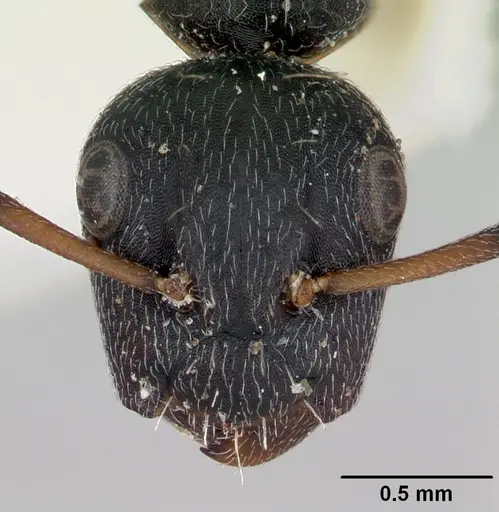
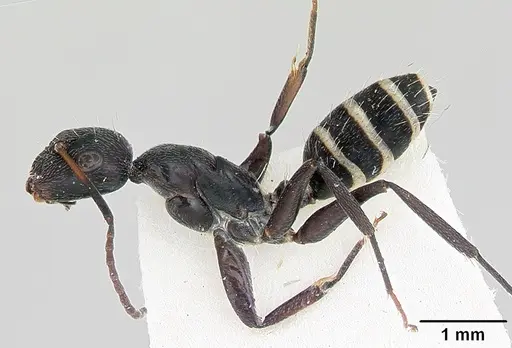
Camponotus peleliuensis is a distinctive small carpenter ant. Major workers reach about 4.8mm in total length, while minor workers are smaller at 4.3-4.7mm. The most recognizable feature is their nearly square head when viewed from the front, most other Camponotus species have more rectangular or rounded heads. Their petiole (the narrow waist segment) is notably squat and short compared to related species. Coloration is dark reddish-brown to nearly black, with the gaster (abdomen) showing distinctive grey stripes caused by clear strips on each posterior tergite. These stripes are about as wide as the hind tibia. Minor workers are darker overall, appearing matte black with contrasting orange proximal scapes and mandibles. The body is covered with fine recumbent silver hairs interspersed with longer standing hairs, particularly on the head, mesosoma, and gaster [1][2].
Natural History and Distribution
This species is known only from Peleliu Island in the Republic of Palau, making it an endemic species with a very restricted range. Peleliu is a small island (about 13 square kilometers) in the western Pacific Ocean. The species was first described in 2007 by Ronald M. Clouse from specimens collected in 1945 and 1946. The etymology honors both the island and the U.S. Marine and Infantry soldiers who fought there during one of WWII's most horrific battles. The holotype was collected less than a year after the battle ended. Beyond this basic distribution data, nothing is known about their biology in the wild, no information exists on nesting habits, colony size, diet, reproductive behavior, or seasonal patterns. This makes them one of the least-studied ants available in the antkeeping hobby [1][2][3].
Housing and Nest Setup
Since nothing is known about this species' specific nesting preferences, housing recommendations are based on what works well for other small Camponotus species. A Y-tong (AAC) acrylic nest works well, these provide proper humidity control and allow you to observe your colony. Plaster nests or naturalistic setups with rotting wood pieces also suit carpenter ants. The chambers should be scaled to their small size, avoid overly large, open spaces. Keep the nest substrate consistently moist but not waterlogged. Since they're from a tropical island, they need higher humidity than temperate Camponotus species. A water tube attached to the nest provides drinking water and helps maintain humidity. For the outworld, a simple setup with a foraging area and protein foods works fine. Escape prevention is critical, use tight-fitting lids and fine mesh barriers, as workers are small enough to squeeze through standard ant farm gaps.
Feeding and Diet
Like other Camponotus species, these ants are omnivorous. They likely feed on honeydew (the sugary waste from aphids and scale insects), nectar from plants, and insects in the wild. In captivity, offer a mix of protein and sugar sources. Sugar water, honey, or commercial ant nectar should be available constantly. For protein, offer small insects like fruit flies, small mealworms, or cricket pieces. Feed protein 2-3 times per week, removing any uneaten prey after 24 hours. Since they're small ants, prey items should be appropriately sized, nothing larger than they can handle. Observe your colony's preferences and adjust feeding frequency based on consumption. Unlike some Camponotus that prefer fats or seeds, these likely rely more on insect prey and sugar sources.
Temperature and Seasonal Care
As a tropical species from Palau near the equator, Camponotus peleliuensis needs warm conditions year-round. Aim for temperatures in the 24-28°C range, warmer is generally better than cooler for this species. A heating cable placed on one side of the nest creates a temperature gradient that lets ants choose their preferred zone. Room temperature may be too cool in winter or in air-conditioned spaces, monitor with a thermometer. Unlike temperate species, they likely do not require a winter diapause. However, they may show reduced activity during cooler periods. If your colony becomes less active in winter, do not panic, this may be a natural response to minor temperature fluctuations. Avoid sudden temperature changes and keep them away from cold drafts. Their small size makes them more sensitive to temperature extremes than larger ants.
Colony Development and Growth
Since this species has not been kept in captivity before, exact development timelines are unknown. Based on typical Camponotus patterns, expect claustral founding where the queen seals herself in a chamber and raises the first brood alone on stored fat reserves. The first workers (nanitics) will be smaller than normal workers and should emerge around 6-8 weeks after eggs are laid, assuming optimal temperatures in the mid-to-high 20s Celsius. Growth is moderate, not as fast as some tropical species but faster than cold-climate Camponotus. Colonies likely grow to several hundred workers over time, though maximum colony size is unknown. Be patient with founding colonies, the first few months are the most critical. Avoid disturbing the queen during founding, as this can cause colony failure. Once established, colonies should grow steadily with proper feeding and warmth.
Frequently Asked Questions
How long does it take for Camponotus peleliuensis to have first workers?
Based on typical Camponotus development, expect first workers (nanitics) around 6-8 weeks after the queen lays eggs, at optimal temperatures of 24-28°C. This is an estimate since no direct observations exist for this species. Founding colonies need patience, do not disturb the queen during this critical period.
What temperature do Camponotus peleliuensis need?
Keep them warm at 24-28°C. As a tropical species from Palau, they need temperatures in the mid-to-high 20s Celsius. A heating cable on part of the nest creates a gradient. Room temperature alone may be too cool, especially in winter.
Do Camponotus peleliuensis need hibernation?
Probably not. As a tropical species from near the equator, they likely do not require a winter dormancy period. However, they may show reduced activity during cooler months.
What do Camponotus peleliuensis eat?
Like other carpenter ants, they are omnivorous. Offer sugar water, honey, or ant nectar constantly. For protein, feed small insects like fruit flies, small mealworms, or cricket pieces 2-3 times per week.
How big do Camponotus peleliuensis colonies get?
The maximum colony size is unknown, no scientific data exists on wild colonies. Based on typical Camponotus patterns, expect several hundred workers over time. Growth is moderate, not extremely fast.
Are Camponotus peleliuensis good for beginners?
They are challenging for beginners because almost nothing is known about their specific care requirements. This is a species where you may need to experiment and adjust based on colony behavior. Expect a learning curve, start with more common species if you want guaranteed success.
Can I keep multiple Camponotus peleliuensis queens together?
Colony structure has not been documented for this species. Based on typical Camponotus behavior, they likely form single-queen colonies. Combining unrelated queens is not recommended since this has not been studied.
What size nest do Camponotus peleliuensis need?
Use a nest with small, tight-fitting chambers scaled to their tiny size (workers are only 4-4.8mm). Y-tong nests or small acrylic formicariums work well. Avoid overly large, open spaces.
Why are my Camponotus peleliuensis dying?
Since nothing is known about this species' biology, unexpected problems are likely. Common issues include: temperatures too cool (keep warm), humidity wrong (too wet or too dry), escape-related losses, or stress from disturbance during founding. Monitor closely and adjust based on colony behavior.
When should I move Camponotus peleliuensis to a formicarium?
Wait until the colony has at least 20-30 workers and is actively foraging in the outworld. Moving too early can stress founding colonies. A test tube setup works well for the first several months.
Are Camponotus peleliuensis escape artists?
Yes. Their small size (under 5mm) means they can squeeze through tiny gaps. Use excellent escape prevention: tight-fitting lids, fine mesh barriers, and fluon on container edges.
References

This caresheet is licensed under CC BY-SA 4.0 .
CASENT0173098
View on AntWeb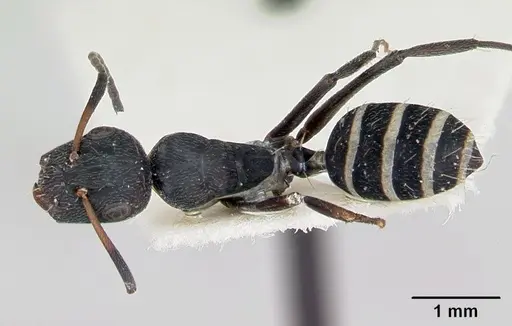
CASENT0173099
View on AntWeb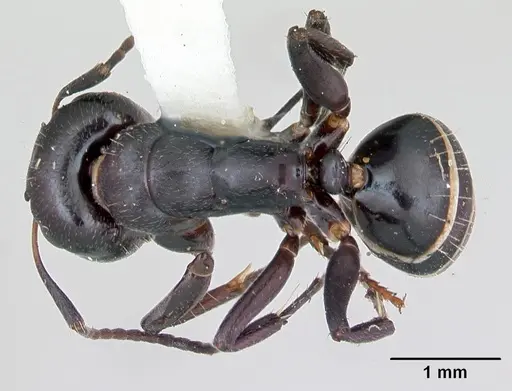
Literature
Loading...Loading products...