

Camponotus nitidescens
- Scientific Name
- Camponotus nitidescens
- Subgenus
- Myrmentoma
- Tribe
- Camponotini
- Subfamily
- Formicinae
- Author
- Forel, 1889
- Distribution
- Found in 2 countries
Camponotus nitidescens Overview
Camponotus nitidescens is an ant species of the genus Camponotus. It is primarily documented in 2 countries , including Greece, Russian Federation. Detailed taxonomic data and occurrence records can be further explored via authoritative databases such as AntWeb or the Global Biodiversity Information Facility (GBIF).
Camponotus nitidescens
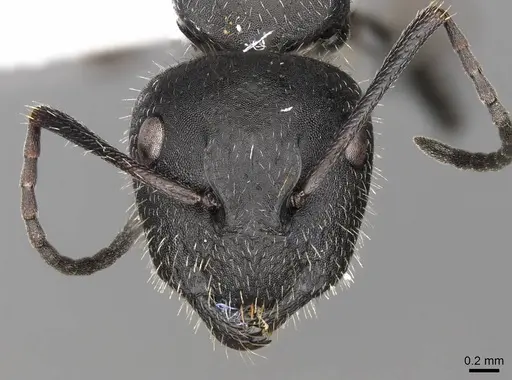
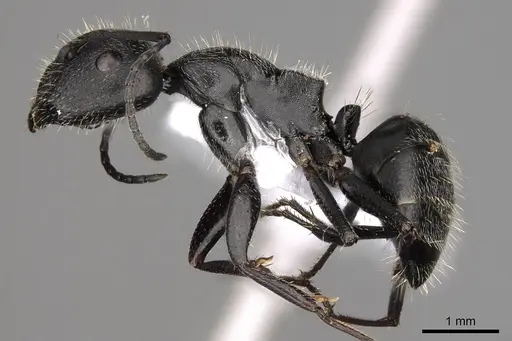
Camponotus nitidescens is a polymorphic carpenter ant native to Greece, belonging to the kiesenwetteri species group. Workers are entirely black with some yellowish-brown markings on the trochanters, antennae tips, and tarsi. The body has a distinctive matte appearance due to strong microreticulate sculpture, and is covered with long, pale, erect setae. This species shows pronounced polymorphism, major workers are significantly larger than minors, with a large nearly square head, while minor workers have a more oval head shape. Queens have not been described in the scientific literature. This is a high-elevation species found exclusively between 1000 and 1700 meters altitude in mountainous Greece [1][2].
Quick Summary
- Difficulty: Medium
- Origin & Habitat: Endemic to Greece, found in the Ionian Islands (Cephalonia), Peloponnese, and Sterea Ellas at elevations of 1000-1700m. Inhabits warm, arid habitats within coniferous forests, especially pine forests, and oak forest edges. Nests are located in soil, usually sandy, under trees between roots or under small stones. The only observed nest was in a cracked rock wall under a loose piece of rock on a roadside in oak forest [2][1][3].
- Colony Type: Single-queen colonies (monogyne), typical for the genus Camponotus. Colony size is not documented but related species in this group typically reach several hundred workers.
- Colony: Monogyne
- Founding: Claustral
- Size & Growth:
- Queen: Undescribed in scientific literature
- Worker: Minor workers: 4-6mm estimated from head length 1.1-1.3mm, Major workers: 7-9mm estimated from head length 1.5-2.0mm [1]
- Colony: Unknown but likely moderate, related species reach several hundred workers
- Growth: Moderate, typical for Camponotus
- Development: Estimated 6-8 weeks based on typical Camponotus development at warm temperatures (Development time inferred from genus-level patterns, specific data for this species is unavailable)
- Antkeeping:
- Temperature: Keep at 22-26°C. This is a Mediterranean mountain species adapted to warm conditions. A gentle gradient allowing warmer and cooler areas is recommended [2].
- Humidity: Moderate humidity, they prefer arid to semi-arid conditions typical of Mediterranean pine forests. Keep nest substrate slightly moist but allow drying between waterings. Avoid overly damp conditions.
- Diapause: Yes, as a temperate species from high elevations in Greece, they require a winter rest period. Reduce temperature to 10-15°C for 2-3 months during winter.
- Nesting: Y-tong (AAC) nests or plaster nests work well. They naturally nest in soil under stones or in rock walls. Provide a setup with narrow chambers and passages scaled to their worker size. A naturalistic setup with soil and flat stones can also be successful.
- Behavior: Workers are active throughout the day with peak activity at dusk. They are typically found foraging on tree trunks and branches, especially coniferous trees, rather than on the ground. Like most Camponotus, they are not aggressive but will defend the nest if threatened. Major workers can deliver a moderately painful sting. Escape risk is moderate, use standard barrier methods.
- Common Issues: high elevation origin means they need cooler conditions than typical tropical ants, avoid overheating, limited distribution data makes exact care requirements uncertain, monitor colony behavior for cues, winter diapause is essential for this temperate species, skipping hibernation may harm the colony, wild-caught colonies may be difficult to establish due to limited known range, slow founding phase typical of claustral Camponotus requires patience
Nest Preferences and Housing
In the wild, Camponotus nitidescens nests in soil, typically sandy soil found under trees, between roots, or under small stones. The only directly observed nest was in a cracked rock wall under a loose piece of rock on a roadside in oak forest [2]. For captive care, Y-tong (AAC) nests or plaster nests work well since they provide the dark, enclosed spaces these ants prefer. The chambers should be scaled to worker size, not too large. A naturalistic setup with a soil layer and flat stones can also replicate their natural nesting conditions. Since they come from high elevations (1000-1700m), they prefer stable conditions without extreme temperature swings. Avoid placing the nest in direct sunlight or near heating elements that could cause overheating.
Feeding and Diet
Like other Camponotus species, these ants are omnivorous. They likely forage for honeydew from aphids and scale insects, and hunt small invertebrates. In captivity, offer sugar water or honey as a constant energy source. For protein, provide small insects like fruit flies, small crickets, or mealworms. Major workers can tackle larger prey items than minors. Feed protein 2-3 times per week, and keep sugar water available at all times. They are most active at dusk, so offering food in the evening may encourage faster acceptance. Remove uneaten prey after 24 hours to prevent mold. [2]
Temperature and Seasonal Care
This species comes from Mediterranean Greece but at high elevations (1000-1700m), so they prefer warm but not extreme temperatures. Keep the nest area at 22-26°C, this aligns with their natural habitat in warm, arid coniferous forests. A temperature gradient is beneficial so workers can choose their preferred zone. During winter, they require a diapause period of 2-3 months at reduced temperatures (10-15°C). This mimics their natural seasonal cycle in the Greek mountains. Do not skip hibernation, it is essential for colony health and may trigger reproductive behavior in the following season. Reduce feeding during diapause and avoid disturbing the colony. [2][3]
Behavior and Colony Dynamics
Workers are polymorphic with distinct major and minor castes. Major workers have large, nearly square heads and are significantly larger than minors. Both castes are active foragers, with workers most commonly found on tree trunks and branches, especially coniferous trees [2]. Peak foraging activity occurs at dusk. The colony will establish a single queen (monogyne) and grow gradually. Major workers serve as defenders and can tackle larger food items, while minors handle most foraging and brood care. When threatened, major workers may deliver a sting, this species has a functional stinger though pain level is moderate. The colony should be allowed to grow naturally without splitting or disturbing the queen during the founding phase.
Frequently Asked Questions
How long does it take for Camponotus nitidescens to produce first workers?
Based on typical Camponotus development, expect 6-8 weeks from egg to first worker at optimal warm temperatures (around 24-26°C). The claustral queen will seal herself in and raise the first brood alone without foraging.
What temperature do Camponotus nitidescens need?
Keep them at 22-26°C. This Mediterranean mountain species prefers warm conditions but not extreme heat. A temperature gradient allowing workers to choose their preferred zone is ideal.
Do Camponotus nitidescens need hibernation?
Yes, as a temperate species from high-elevation Greece, they require a winter rest period. Reduce temperatures to 10-15°C for 2-3 months during winter. Skipping diapause may harm the colony and prevent reproductive behavior.
Are Camponotus nitidescens good for beginners?
This species is rated as medium difficulty. They require specific temperature conditions and winter diapause, which makes them slightly more challenging than tropical species. However, their claustral founding and relatively straightforward care make them manageable for intermediate antkeepers.
What do Camponotus nitidescens eat?
They are omnivorous. Offer sugar water or honey constantly, and provide protein sources like small insects (fruit flies, small crickets, mealworms) 2-3 times per week. Both major and minor workers will feed, with majors able to tackle larger prey.
How big do Camponotus nitidescens colonies get?
Colony size is not well documented, but based on related species in the kiesenwetteri group, expect several hundred workers at maturity. Growth is moderate, colonies develop gradually over several years.
Can I keep multiple Camponotus nitidescens queens together?
This species is monogyne, colonies have a single queen. Combining unrelated queens is not recommended and has not been documented in this species. A single queen will establish a healthy colony on her own.
References

This caresheet is licensed under CC BY-SA 4.0 .
CASENT0914422
View on AntWeb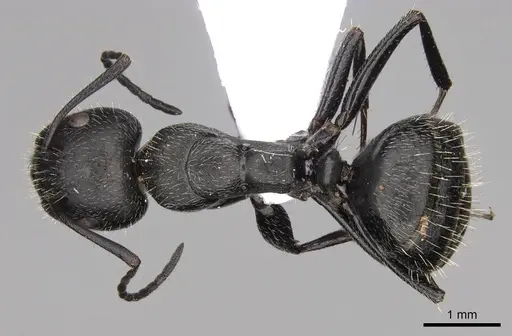
Literature
Loading...Loading products...