

Camponotus mita
- Scientific Name
- Camponotus mita
- Subgenus
- Mayria
- Tribe
- Camponotini
- Subfamily
- Formicinae
- Author
- Rakotonirina <i>et al.</i>, 2017
- Distribution
- Found in 1 countries
Camponotus mita Overview
Camponotus mita is an ant species of the genus Camponotus. It is primarily documented in 1 countries , including Madagascar. Detailed taxonomic data and occurrence records can be further explored via authoritative databases such as AntWeb or the Global Biodiversity Information Facility (GBIF).
Camponotus mita
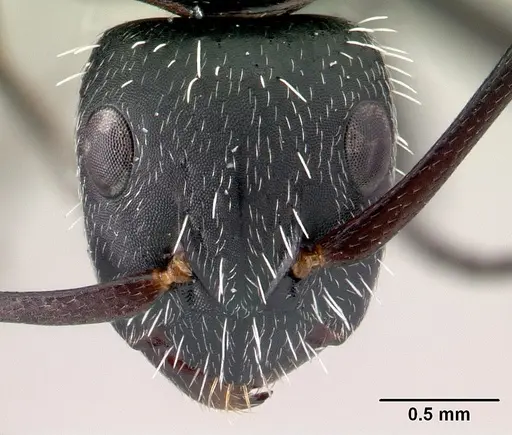
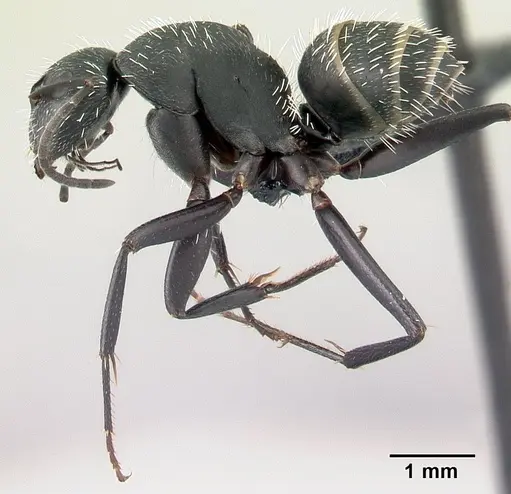
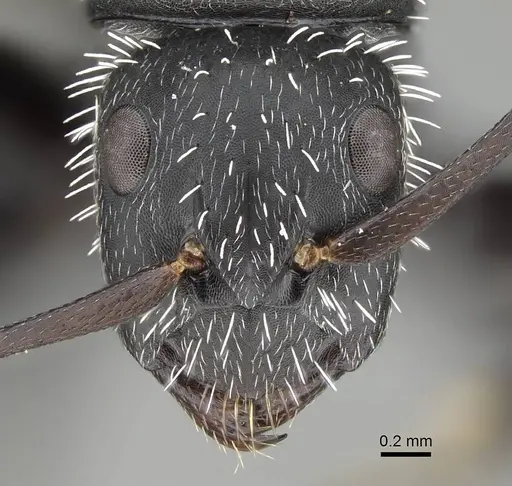
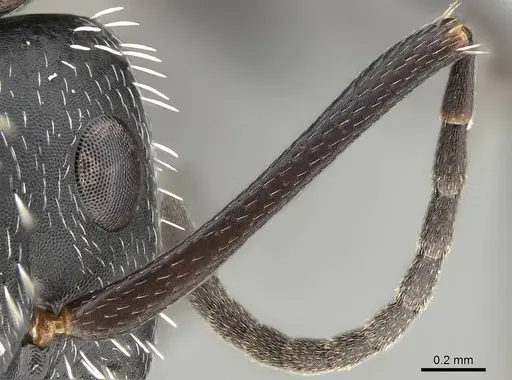
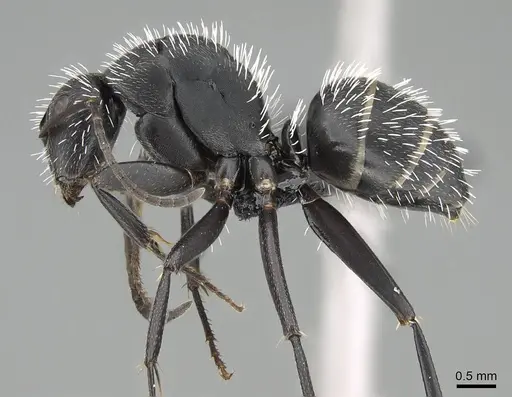
Camponotus mita is a striking black ant endemic to northern Madagascar, belonging to the Camponotus madagascarensis species group. Workers are matte black with distinctive whitish erect hairs scattered across the head, mesosoma, and propodeum. The basal half of the antennae is uniquely flattened dorsoventrally, and the mesosoma appears short and high when viewed from the side. Minor workers measure approximately 5-8mm. This species inhabits both dry forests at lower altitudes (60-90m) and humid rainforests at higher elevations (150-425m) in the Andavakoera and Ambato regions. Only the minor worker caste has been documented in scientific collections, making this a relatively poorly understood species in captivity.
Quick Summary
- Difficulty: Medium
- Origin & Habitat: Northern Madagascar, endemic. Found in dry forests at 60-90m altitude and humid rainforests at 150-425m elevation in Andavakoera and Ambato regions [1].
- Colony Type: Colony structure unconfirmed, only minor workers have been scientifically described. Based on related Camponotus species, likely single-queen colonies (monogyne) but multi-queen arrangements are possible.
- Size & Growth:
- Queen: Estimated 10-12mm based on genus patterns, not directly measured for this species
- Worker: Approximately 5-8mm (minor workers only described) [1]
- Colony: Unknown for this species, related Camponotus species typically reach several thousand workers
- Growth: Moderate, based on typical Camponotus development patterns
- Development: Estimated 6-10 weeks based on genus-level Camponotus data at optimal temperature (Development time inferred from related species, direct measurements unavailable for C. mita)
- Antkeeping:
- Temperature: Keep warm at 24-28°C, these are tropical ants from Madagascar. A heating cable on one side of the nest creates a suitable gradient
- Humidity: Requires moderate to high humidity, they inhabit humid forests in the wild. Keep nest substrate moist but not waterlogged, with some drier areas available
- Diapause: Likely minimal or no true diapause, tropical species from Madagascar does not experience cold winters. Some reduced activity during cooler months may occur
- Nesting: In captivity, Y-tong (AAC) nests or plaster nests work well. Provide a humid nest chamber with access to an outworld. Based on natural habitat, they likely nest in rotting wood or soil cavities
- Behavior: Workers are active foragers on the forest floor and low vegetation in the wild. Likely moderately aggressive with typical Camponotus temperament, they will defend the colony but are not particularly swarming. Escape prevention is important as workers can climb smooth surfaces. Their small size (5-8mm) means standard barriers like Fluon are effective.
- Common Issues: only minor workers described, queen and major workers may not exist in this species, affecting colony appearance, tropical species requires warm conditions, cold temperatures will slow or stop brood development, humidity needs are moderate to high, too dry causes brood failure, escape prevention needed despite moderate size, Camponotus are good climbers, limited availability as a species, not commonly kept in the ant hobby
Natural History and Distribution
Camponotus mita is a Madagascar endemic found only in the northern part of the island. The species occupies two distinct habitat types: dry forests at lower altitudes (60-90 meters) and humid rainforests at higher elevations (150-425 meters) in the Andavakoera and Ambato regions. Workers have been collected through litter sifting, Malaise traps, and by foraging on the forest floor and low vegetation. This preference for both dry and humid environments suggests some flexibility in captive care, though the humid forest populations likely represent their optimal conditions. The species was formally described in 2017 and remains poorly studied compared to more common Camponotus species. [1]
Identification and Appearance
Camponotus mita belongs to the C. madagascarensis species group and can be identified by several distinctive features. The entire body is matte black, and workers have randomly scattered whitish erect hairs on the posterior portion of the head, the dorsum of the mesosoma, and the lateral margin of the propodeal declivity. The basal half of the antennal scape is strongly flattened dorsoventrally, a key diagnostic feature. In side view, the mesosoma appears short and high, with the propodeal dorsum shorter than the declivitous face. The tibiae lack suberect hairs. Minor workers measure approximately 5-8mm. This species may be confused with Camponotus voeltzkowii, but C. voeltzkowii has a cylindrical (not flattened) basal antennal scape and more abundant body hairs. [1]
Housing and Nesting
For captive care, provide a humid nest chamber, Y-tong (AAC) nests or plaster nests work well for this species. They prefer humid conditions similar to their humid forest habitat in Madagascar. The nest should have a water reservoir to maintain moisture. An outworld with substrate allows workers to forage. Since only minor workers are known from this species, the colony will consist of uniformly-sized workers rather than having major (soldier) castes. Ensure the nest has chambers appropriately sized for workers around 5-8mm. Provide moderate ventilation to prevent mold while maintaining humidity.
Feeding and Diet
As a Camponotus species, C. mita is likely omnivorous. Feed a standard ant diet: protein sources like mealworms, crickets, or other small insects, plus sugar water or honey as an energy source. Camponotus ants typically have a hunger for sweets and will readily accept sugar water. Offer protein prey 2-3 times per week and keep sugar water available constantly. Remove uneaten prey after 24-48 hours to prevent mold. Fresh water should always be accessible.
Temperature and Seasonal Care
Keep these tropical ants warm at 24-28°C. A heating cable placed on one side of the nest creates a temperature gradient allowing workers to choose their preferred zone. As a Madagascar species from tropical forests, they do not require hibernation. During cooler months, activity may naturally decrease, but true diapause is unlikely. Avoid temperatures below 20°C for extended periods as this can slow brood development and weaken the colony. Room temperature within the 24-28°C range is acceptable.
Colony Development
Only minor workers have been scientifically described for this species, meaning majors may not exist in natural colonies. This is unusual for Camponotus and makes C. mita distinctive. Colony growth is expected to be moderate, typical for Camponotus, expect 6-10 weeks from egg to first worker at optimal temperature. The colony will likely grow over several years to reach several thousand workers. Founding colonies may be slow to establish as the queen raises her first brood alone in a claustral chamber.
Frequently Asked Questions
How long does it take for Camponotus mita to produce first workers?
Expect 6-10 weeks from egg to first worker at optimal temperature (24-28°C). This is based on typical Camponotus development patterns as specific timing has not been documented for this species.
What do Camponotus mita ants eat?
They are omnivorous like other Camponotus. Offer protein prey (mealworms, small crickets, insects) 2-3 times per week and keep sugar water or honey available constantly. Fresh water should always be accessible.
What temperature do Camponotus mita ants need?
Keep them warm at 24-28°C. A heating cable on one side of the nest creates a gradient. These tropical Madagascar ants do not require hibernation.
Are Camponotus mita good for beginners?
This is a medium-difficulty species. They require warm, humid conditions and are less commonly available than other Camponotus. The lack of documented major workers may disappoint keepers expecting typical Camponotus morphology.
How big do Camponotus mita colonies get?
Colony size is not documented for this species, but related Camponotus typically reach several thousand workers over several years.
Do Camponotus mita ants have majors?
Only minor workers have been scientifically described. This is unusual, most Camponotus have both minor and major workers. Your colony will likely consist of uniformly-sized workers.
What humidity do Camponotus mita need?
Moderate to high humidity. Keep the nest substrate moist but not waterlogged. They inhabit humid forests in the wild, so aim for damp conditions similar to a rainforest setup.
Can I keep multiple Camponotus mita queens together?
Colony structure is unconfirmed for this species. Based on related Camponotus, they may be single-queen colonies. Combining unrelated queens is not recommended without species-specific documentation.
References

This caresheet is licensed under CC BY-SA 4.0 .
CASENT0110442
View on AntWeb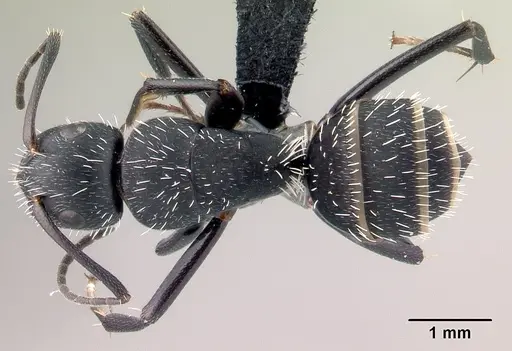
CASENT0498906
View on AntWeb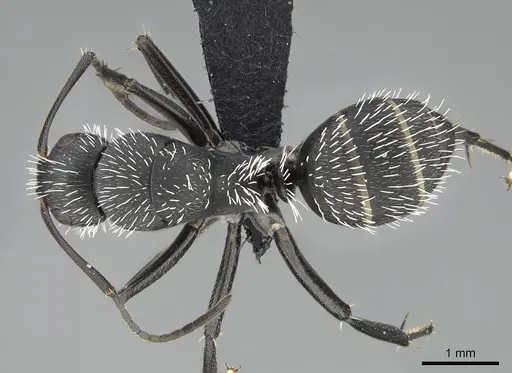
Literature
Loading...Loading products...