

Camponotus megalonyx
- Scientific Name
- Camponotus megalonyx
- Subgenus
- Myrmopalpella
- Tribe
- Camponotini
- Subfamily
- Formicinae
- Author
- Wheeler, 1919
- Distribution
- Found in 1 countries
Camponotus megalonyx Overview
Camponotus megalonyx is an ant species of the genus Camponotus. It is primarily documented in 1 countries , including Malaysia. Detailed taxonomic data and occurrence records can be further explored via authoritative databases such as AntWeb or the Global Biodiversity Information Facility (GBIF).
Camponotus megalonyx
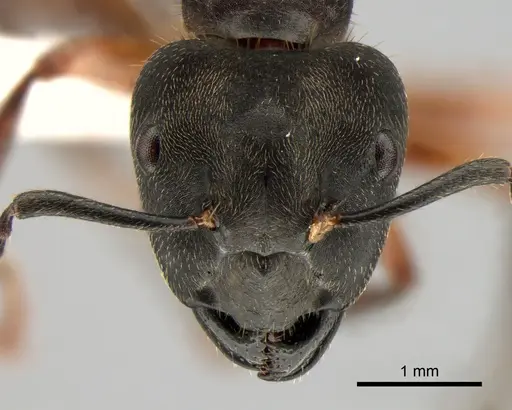
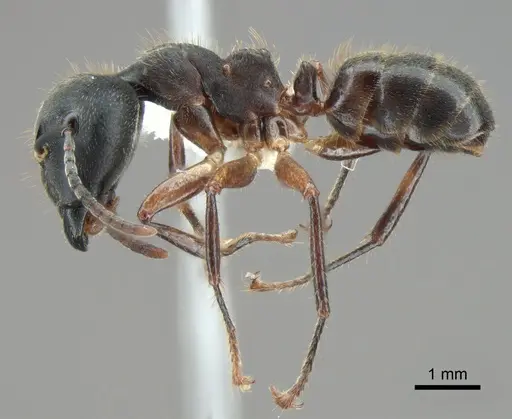
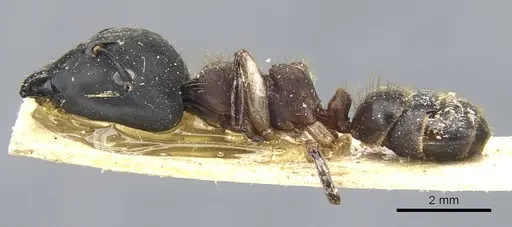
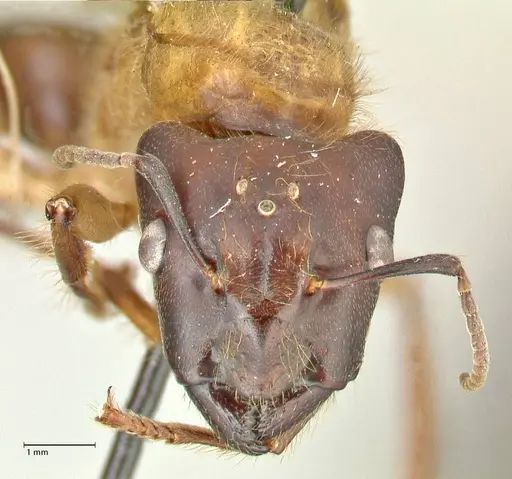
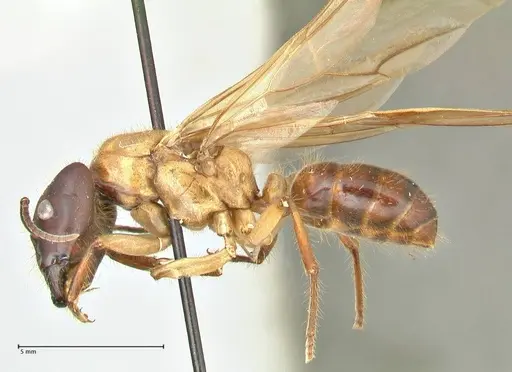
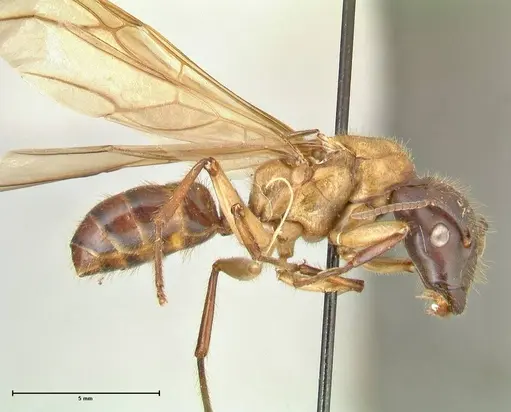
Camponotus megalonyx is a remarkable Southeast Asian carpenter ant and the sole member of the subgenus Myrmopalpella. Workers are highly polymorphic, ranging from tiny 4mm minors to impressive 11mm major workers, making them one of the most size-variable Camponotus species [1]. They feature a distinctive saddle-shaped propodeum, deep metanotal groove, and unusually short antennae and palps compared to other carpenter ants [2]. This species is famous for nesting exclusively inside the thickened midribs of rattan palm leaves (Korthalsia spp.), a truly unique nesting habit among ants [1]. Found across Borneo, Sumatra, and Malaysia in lowland virgin forests near streams.
Quick Summary
- Difficulty: Hard
- Origin & Habitat: Tropical Southeast Asia, Borneo, Sumatra, Indonesia, and Malaysia. Nests in the thickened midribs of rattan palm leaves (Korthalsia spp.) in lowland virgin forests at 0-100m elevation, typically near streams [1][2].
- Colony Type: Likely single-queen colonies based on typical Camponotus patterns, though colony structure has not been directly studied. Queens are large at 15.5-16mm [2].
- Colony: Monogyne
- Founding: Claustral
- Size & Growth:
- Queen: 15.5-16mm [2]
- Worker: 4-11mm (highly polymorphic, minima 4-4.5mm, minor 5-6mm, media 7-7.5mm, major 8-8.3mm, maxima 9.8-11mm) [2][1]
- Colony: Unknown, likely moderate-sized colonies based on typical Camponotus patterns
- Growth: Moderate, inferred from Camponotus genus patterns
- Development: 6-10 weeks (estimated based on typical Camponotus development at 24-26°C) (Development time is estimated from related Camponotus species, specific data for this species is not available)
- Antkeeping:
- Temperature: Keep at 24-28°C, they are a tropical species requiring warm, stable conditions. Use a heating cable on one side of the nest to create a gentle gradient.
- Humidity: High humidity is essential, they naturally live inside plant material in humid forest understory. Keep nest substrate consistently moist but not waterlogged. Provide a water tube and ensure humidity stays above 70%.
- Diapause: No, as a tropical species, they do not require hibernation. Maintain warm temperatures year-round.
- Nesting: This is the most critical challenge, they nest inside rattan palm midribs in the wild. In captivity, provide a naturalistic setup with vertical plant material or cork bark. A Y-tong (AAC) nest with narrow chambers can work, but they may prefer more organic nesting options. Avoid standard soil nests, they need air circulation around their nesting material.
- Behavior: Workers are moderately aggressive when defending the nest but not particularly territorial. They are primarily nocturnal foragers. Major workers have powerful mandibles and can deliver a painful bite. Escape risk is moderate, use standard Camponotus escape prevention (Fluon on container edges). They are polymorphic, so you'll see a range of worker sizes as the colony grows.
- Common Issues: Nesting difficulty, they refuse typical soil/formicarium setups and need plant-based nesting material, Humidity control is critical, too dry and colonies fail quickly, Tropical warmth requirements year-round, room temperature is often insufficient, Slow growth compared to temperate Camponotus species, beginners may lose patience, Limited availability makes colonies expensive and hard to find
Nest Preferences and Housing
This is the most critical aspect of keeping Camponotus megalonyx successfully. In the wild, they exclusively nest inside the thickened midribs (rachis) of rattan palm leaves (Korthalsia spp.) [1]. The interior of these plant stems provides a hollow, humid, and protected space perfect for colony development. In captivity, you'll need to replicate this unusual nesting environment. The best options include: (1) Naturalistic setups with vertical pieces of cork bark or dried plant stems, positioned to allow ants to explore and nest inside, (2) Modified Y-tong (AAC) nests with very narrow chambers, though they may not accept these as readily as plant material, (3) Custom setups using dried rattan or bamboo sections. The key is providing vertical, plant-based nesting material with some internal cavity space. Avoid standard soil-filled formicariums, these ants simply won't use them. Place the nest in a quiet, dark location and minimize disturbances during the founding phase.
Feeding and Diet
Camponotus megalonyx is a typical carpenter ant, they are omnivorous and will accept both sugar sources and protein. For sugar, offer honey water, sugar water, or maple syrup in a shallow container (like a test tube with a cotton ball soaked in solution). Replace every 2-3 days to prevent fermentation. For protein, provide small insects like fruit flies, small crickets, mealworms, or waxworms. Feed protein 2-3 times per week, adjusting based on colony size. Larger colonies can handle bigger prey items. Minor workers will tackle small insects while major workers can handle larger prey. Remove uneaten prey after 24 hours to prevent mold. Unlike some specialized ants, they are not picky eaters and should accept a standard carpenter ant diet.
Temperature and Humidity Requirements
As a tropical Southeast Asian species, Camponotus megalonyx requires warm and humid conditions year-round. Maintain temperatures between 24-28°C (75-82°F) with a gentle gradient so ants can choose their preferred spot. A small heating cable placed on one side of the outworld or nest area works well, never place heat directly on the nest as it can dry out the colony. Humidity should stay above 70% inside the nest area. This is easier to achieve with plant-based nesting material that holds moisture well. Use a water tube in the outworld and mist occasionally, but avoid creating standing water. Unlike temperate ants, they do not enter diapause, maintaining consistent tropical conditions is essential year-round. Cold drafts or temperatures below 22°C can stress and potentially kill colonies.
Colony Founding and Development
Queens are large at 15.5-16mm and likely use claustral founding, they seal themselves in a chamber and raise their first brood using stored fat reserves. The founding chamber should be small and dark. After the first workers (nanitics) emerge, usually within 6-10 weeks at optimal temperature, the queen stops foraging entirely and focuses on egg-laying. The colony will then grow progressively, with workers becoming increasingly polymorphic as the colony matures. Major workers (soldiers) typically appear once the colony reaches several hundred workers. This species has remarkably slow development compared to many temperate Camponotus, patience is essential. A well-fed queen can live for 15-20 years, so this is a long-term commitment. [2]
Unique Physical Characteristics
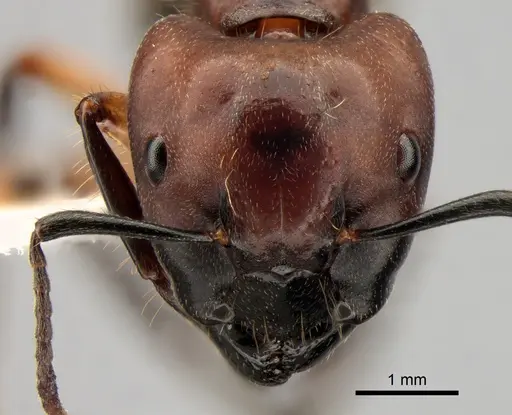
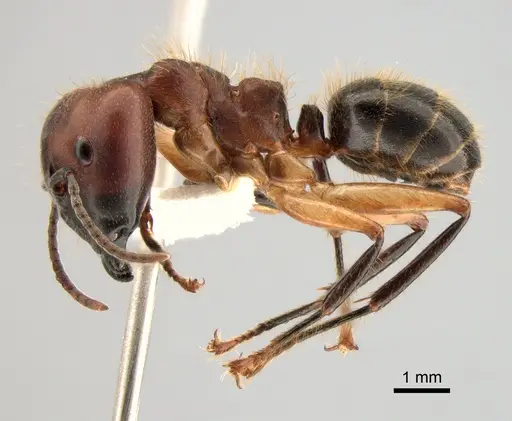
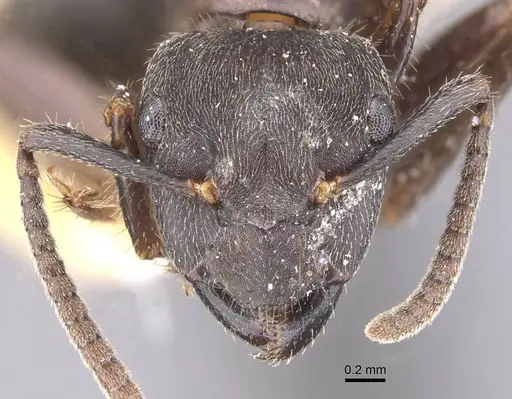
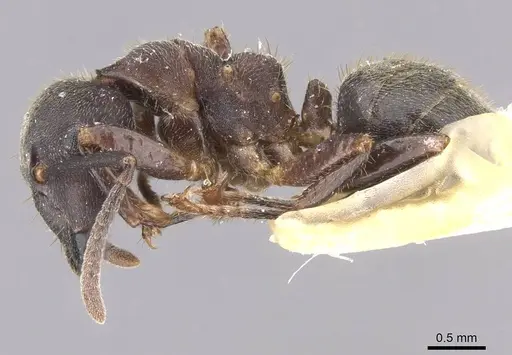
Camponotus megalonyx has several distinctive features that set it apart from other carpenter ants. The worker caste is highly polymorphic, with body lengths ranging from 4mm to over 11mm, one of the most extreme size ranges in the genus [1]. They have unusually short maxillary palps (only 5 segments instead of the typical 6) and labial palps (3-4 segments instead of 4) [2]. Their propodeum (the section behind the waist) has a distinctive saddle shape with a deep groove, and their antennae are notably short compared to other Camponotus [1]. The larger workers have a densely punctate or leathery body texture, and all workers have erect hairs on their antennae and leg tibiae, a trait not found in many related species. Queens have uniquely produced occipital lobes (back-of-head projections) and very long hairs on the underside of their head.
Behavior and Temperament
This species is moderately defensive, they will bite if threatened and major workers can deliver a noticeable pinch. They are primarily nocturnal foragers, becoming more active in the evening and night hours. Workers communicate using chemical trails and can recruit nestmates to food sources. Unlike some aggressive Camponotus species, they are not particularly territorial and typically focus on foraging rather than raiding other ant colonies. Major workers serve as defenders and can crack open larger prey items with their powerful mandibles. The colony becomes more active and visible as it grows, with workers readily exploring the outworld for food. They do not have a functional sting but can spray formic acid as a defense mechanism, typical of Formicinae subfamily ants.
Frequently Asked Questions
Can I keep Camponotus megalonyx in a test tube?
Test tubes can work for founding colonies but may not be ideal long-term. This species naturally nests inside plant material (rattan palm midribs), so they may not readily accept test tube setups. If using a test tube, provide a dark cover and ensure high humidity. For established colonies, a naturalistic setup with cork bark or plant stems is much better.
What do Camponotus megalonyx eat?
They are omnivorous like other carpenter ants. Offer sugar water, honey, or maple syrup as a constant energy source. For protein, feed small insects like fruit flies, small crickets, or mealworms 2-3 times per week. They will readily accept both sugar and protein sources.
How long does it take for the first workers to emerge?
Based on typical Camponotus development, expect first workers (nanitics) to emerge in 6-10 weeks after the queen lays eggs, provided temperatures are maintained at 24-28°C. This is a slow-growing species, so patience is essential.
Are Camponotus megalonyx good for beginners?
No, this is not a beginner-friendly species. Their unusual nesting requirements (needing plant-based nesting material rather than soil), high humidity needs, and tropical temperature requirements make them challenging. They are also rarely available in the ant-keeping hobby.
Do Camponotus megalonyx need hibernation?
No, as a tropical species from Southeast Asia, they do not require hibernation or a winter cool period. Maintain warm temperatures (24-28°C) year-round for optimal colony health.
How big do colonies get?
Colony size is not well documented, but based on typical Camponotus patterns, colonies likely reach several hundred to a few thousand workers over several years. The extreme polymorphism of workers (ranging from 4mm to 11mm) becomes more pronounced as the colony grows.
Why won't my C. megalonyx nest in a formicarium?
This species naturally nests inside plant stems (rattan palm midribs), not in soil or pre-made tunnels. Standard formicariums with tunnels in plaster or soil are often rejected. Use naturalistic setups with cork bark, dried plant stems, or custom rattan sections to provide the vertical, plant-based nesting environment they instinctively seek.
What temperature is ideal for Camponotus megalonyx?
Keep them at 24-28°C (75-82°F). Use a heating cable on one side of the nest to create a gentle gradient, allowing ants to regulate their own temperature. Avoid temperatures below 22°C or sudden temperature drops.
Where does Camponotus megalonyx live in the wild?
They are found in Borneo, Sumatra, and Malaysia, nesting exclusively inside the thickened midribs of rattan palm leaves (Korthalsia spp.) in lowland virgin forests near streams at elevations of 0-100m [1].
References

This caresheet is licensed under CC BY-SA 4.0 .
CASENT0882007
View on AntWeb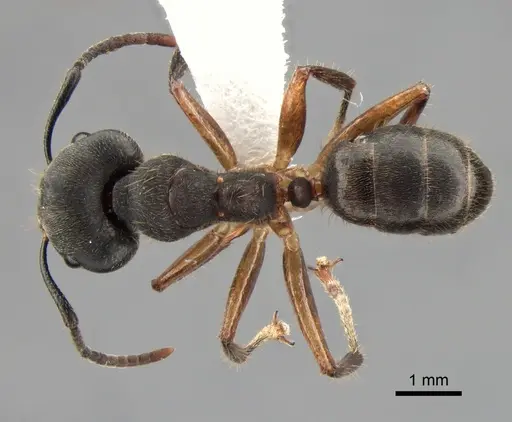
CASENT0882008
View on AntWeb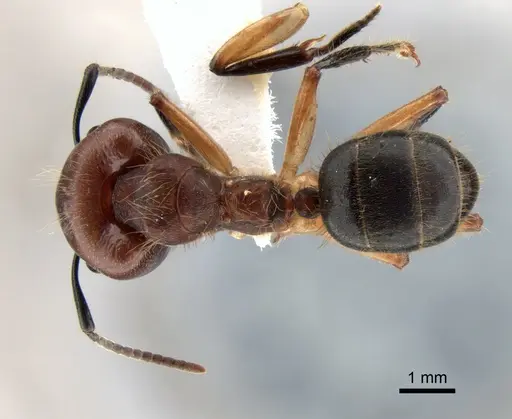
CASENT0903575
View on AntWeb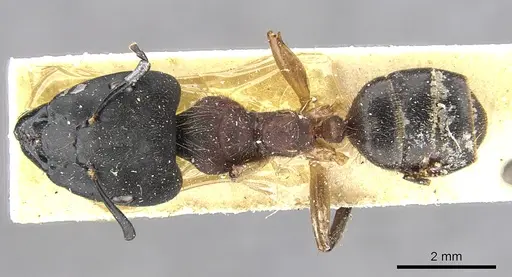
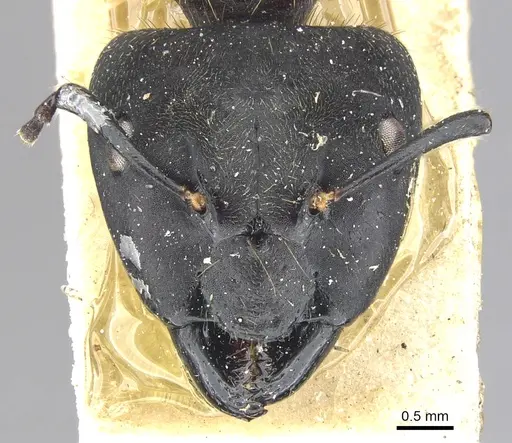
CASENT0913753
View on AntWeb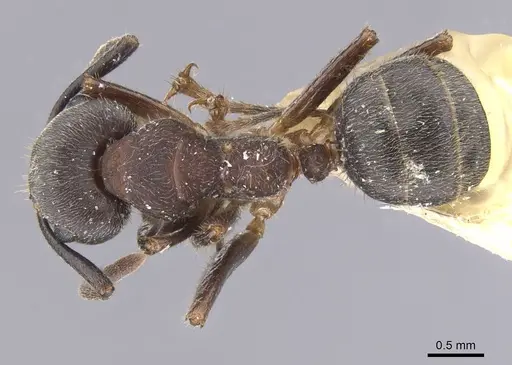
FOCOL2399
View on AntWeb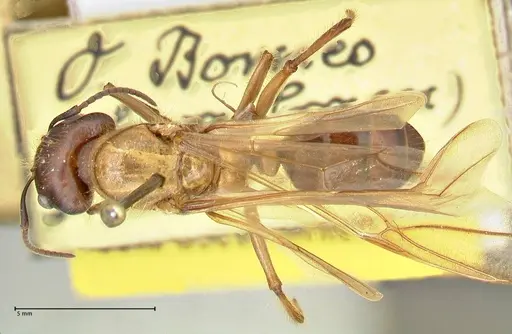
Literature
Loading...Loading products...