

Camponotus langi
- Scientific Name
- Camponotus langi
- Subgenus
- Tanaemyrmex
- Tribe
- Camponotini
- Subfamily
- Formicinae
- Author
- Wheeler, 1922
- Distribution
- Found in 1 countries
Camponotus langi Overview
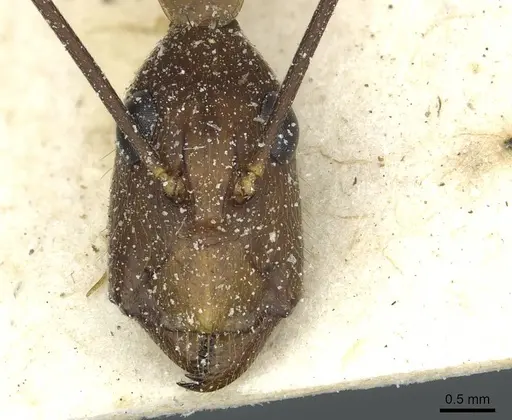
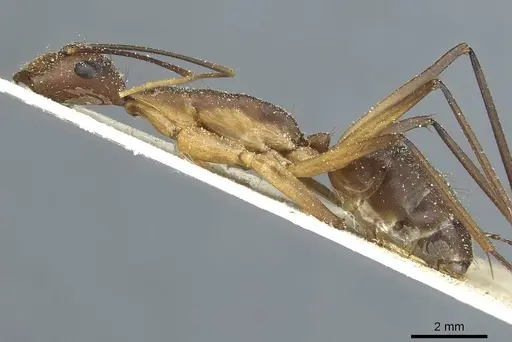
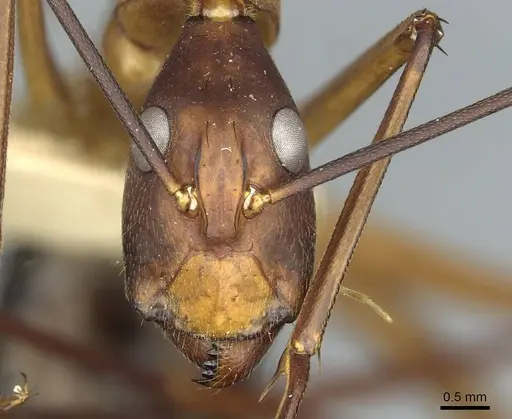
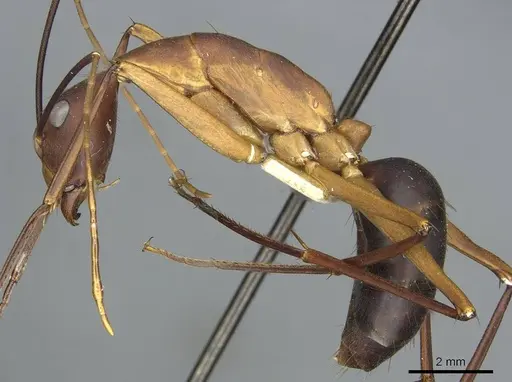
Camponotus langi is an ant species of the genus Camponotus. It is primarily documented in 1 countries , including Congo, Democratic Republic of the. Detailed taxonomic data and occurrence records can be further explored via authoritative databases such as AntWeb or the Global Biodiversity Information Facility (GBIF).
Camponotus langi
Camponotus langi is a carpenter ant species described from the Democratic Republic of Congo, specifically from the Haut-Lomami province [1]. This is a poorly documented species with limited scientific records, known only from a historical description by Wheeler in 1922. As a Camponotus species, workers are polymorphic with major and minor castes, and queens are relatively large. The species is African tropical, suggesting it prefers warm, humid conditions consistent with its rainforest habitat in central Africa.
Quick Summary
- Difficulty: Unknown, likely Moderate based on genus patterns
- Origin & Habitat: Democratic Republic of Congo (Haut-Lomami province) [1]. Likely inhabits tropical rainforest environments typical of the region.
- Colony Type: Unconfirmed. Most Camponotus species are monogyne (single queen), but colony structure has not been documented for this specific species.
- Founding: Claustral
- Size & Growth:
- Queen: Estimated 12-16mm based on typical Camponotus queen size range [2]
- Worker: Major workers 8-12mm, minor workers 5-8mm, typical for Camponotus [2]
- Colony: Unknown for this species. Camponotus colonies typically reach several thousand workers over several years.
- Growth: Moderate, typical for Camponotus which grow more slowly than smaller ants
- Development: Estimated 6-10 weeks at optimal tropical temperatures (25-28°C). This is based on typical Camponotus development patterns [2]. (Development time is estimated from genus-level data since species-specific timing is unconfirmed.)
- Antkeeping:
- Temperature: Keep at 24-28°C. As a tropical African species, warmth is important. A heating cable on one side of the nest creates a gradient allowing ants to regulate their temperature [2].
- Humidity: Keep substrate moderately moist. Tropical forest species prefer 60-80% humidity. Provide a water tube for drinking access.
- Diapause: Unlikely. Tropical species from equatorial Africa do not typically require hibernation. However, a slight reduction in temperature during dry seasons may be beneficial.
- Nesting: Use a nesting setup that retains moisture well. Y-tong (AAC) nests or plaster nests work well for Camponotus. Provide narrow chambers suitable for their size.
- Behavior: Not specifically documented. Based on genus behavior, they are typically moderate foragers, accepting protein foods and sugar sources. Workers are relatively large, reducing escape risk compared to tiny ants, but standard escape prevention (Fluon barriers) should still be used. They are not known to be particularly aggressive but will defend the nest if threatened.
- Common Issues: lack of species-specific care data makes precise recommendations difficult, tropical temperature requirements mean colonies may struggle in cool environments, slow growth can frustrate beginners expecting fast development, wild-caught colonies may have parasites or diseases not yet documented for this species, poorly documented nuptial flight timing makes collection difficult
Housing and Nest Setup
Camponotus langi will do well in standard antkeeping setups. A test tube setup works for founding colonies, providing a constant water source through a cotton plug. Once the colony reaches 20-30 workers, you can transition to a formicarium. Y-tong (AAC) nests or plaster nests are ideal because they retain moisture well and provide the dark, enclosed chambers these ants prefer. Ensure the nest has chambers scaled to their size, not too large, as ants prefer snug spaces. An outworld area allows for foraging and waste disposal.
Feeding and Diet
Like other carpenter ants, Camponotus langi is omnivorous. Feed a mix of protein and sugar sources. Sugar water, honey, or diluted maple syrup provides carbohydrates. For protein, offer insects like fruit flies, small crickets, mealworms, or wax worms. Feed protein 2-3 times per week, and keep sugar water available constantly. Remove uneaten food after 24-48 hours to prevent mold. Since this species is poorly documented, start with basic foods and experiment to see what workers accept.
Temperature and Heating
As a tropical species from the DRC, Camponotus langi needs warm conditions. Keep the nest area at 24-28°C. Room temperature may be sufficient if your home is naturally warm, but most keepers use a small heating cable or heating mat placed on top of the nest (never underneath, as excessive bottom heat can dry out the nest). Create a temperature gradient so workers can move between warmer and cooler areas. Avoid temperatures below 20°C for extended periods.
Growth and Development
Colony growth follows typical Camponotus patterns. A newly mated queen will seal herself in a chamber and lay eggs after 1-2 weeks. Eggs develop through larval and pupal stages over approximately 6-10 weeks at optimal temperature, producing the first workers (nanitics). These initial workers are smaller than normal workers but will begin foraging and caring for subsequent brood. Growth is moderate, expect the colony to reach 50 workers within 6-12 months under good conditions. Camponotus colonies can live for many years, with queens potentially living 15-20 years.
Seasonal Care
Since Camponotus langi comes from equatorial Africa, it does not require true hibernation. However, you may notice reduced activity during what would be the dry season in its native habitat. During this time, you can slightly reduce temperatures (by 2-4°C) and reduce feeding frequency. Do not cool the colony dramatically, a slight adjustment is sufficient. Maintain year-round warmth and humidity for best growth.
Frequently Asked Questions
How long does it take for Camponotus langi to produce first workers?
At optimal temperatures (24-28°C), expect first workers in 6-10 weeks. This is based on typical Camponotus development patterns since species-specific timing is unconfirmed.
What do Camponotus langi ants eat?
They are omnivorous. Feed protein (insects like fruit flies, mealworms, small crickets) 2-3 times per week and keep sugar water (honey water, sugar water, maple syrup) available constantly.
What temperature do Camponotus langi ants need?
Keep them warm at 24-28°C. As a tropical African species, they need consistent warmth. A heating cable on the nest can help maintain proper temperature.
Are Camponotus langi good for beginners?
Difficulty level is uncertain due to limited species-specific data. However, Camponotus as a genus are generally considered good intermediate-level ants because they are larger, more forgiving of minor mistakes, and don't require extreme conditions.
How big do Camponotus langi colonies get?
Colony size is unconfirmed for this specific species, but Camponotus colonies typically reach several thousand workers over several years of growth.
Do Camponotus langi need hibernation?
No. As a tropical species from equatorial Africa, they do not require hibernation. Maintain warm temperatures year-round.
When should I move Camponotus langi to a formicarium?
Move from test tube to formicarium once the colony reaches 20-30 workers and the test tube water supply needs replenishing frequently. Ensure the new nest is appropriately sized with chambers that aren't too large.
Can I keep multiple Camponotus langi queens together?
This is unconfirmed for the species. Most Camponotus are monogyne (single queen), and combining unrelated queens typically leads to fighting. Do not attempt multi-queen setups without specific evidence this species tolerates it.
Why is my Camponotus langi colony not growing?
Common causes include: temperatures below 24°C (slows development), insufficient protein in diet, low humidity, or stress from disturbance. Check all three: temperature, humidity, and food quality. Also ensure the queen is still alive and laying eggs.
References

This caresheet is licensed under CC BY-SA 4.0 .
CASENT0911962
View on AntWeb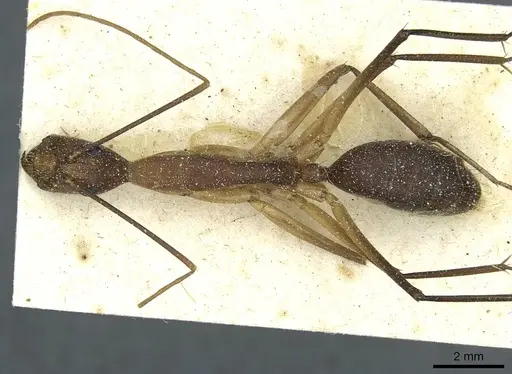
RMCAENT000017809
View on AntWeb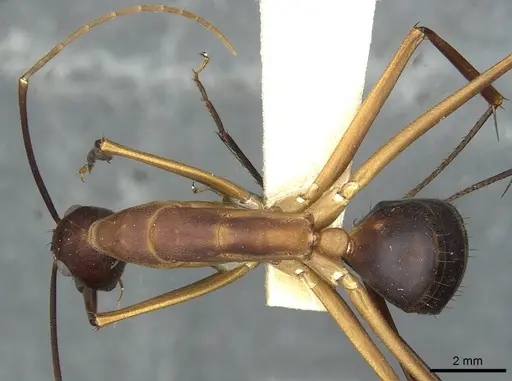
Literature
Loading...Loading products...