

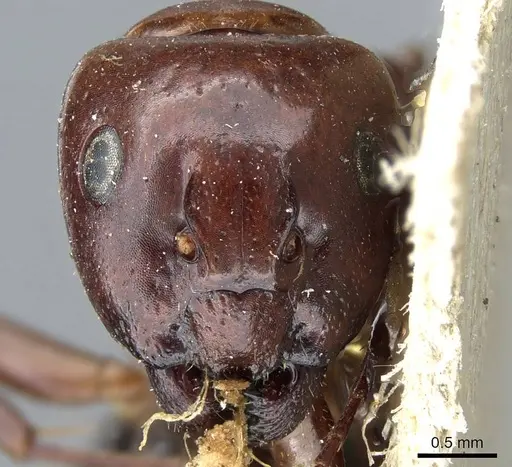
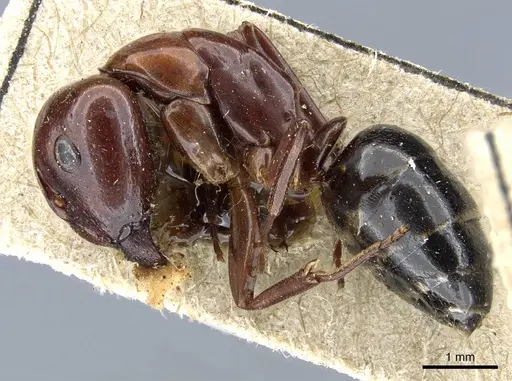
Camponotus lameerei
- Scientific Name
- Camponotus lameerei
- Subgenus
- Myrmentoma
- Tribe
- Camponotini
- Subfamily
- Formicinae
- Author
- Emery, 1898
- Distribution
- Found in 2 countries
Camponotus lameerei Overview
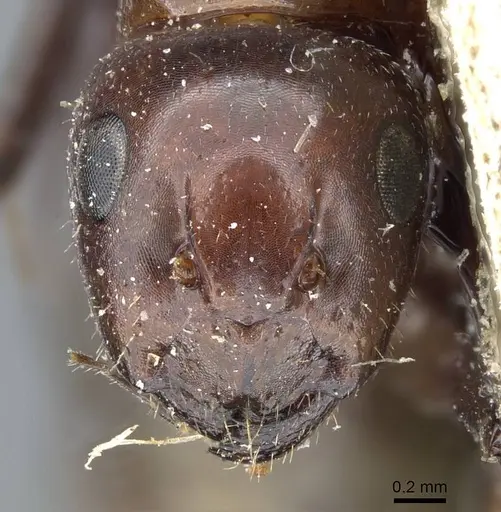
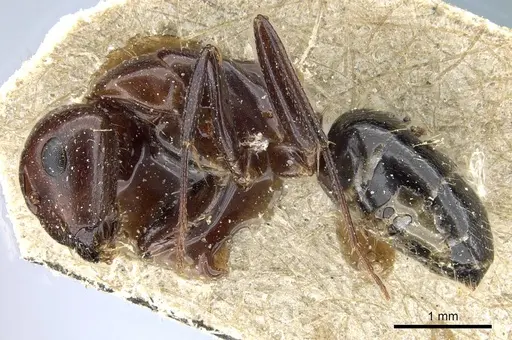
Camponotus lameerei is an ant species of the genus Camponotus. It is primarily documented in 2 countries , including Kazakhstan, Uzbekistan. Detailed taxonomic data and occurrence records can be further explored via authoritative databases such as AntWeb or the Global Biodiversity Information Facility (GBIF).
Camponotus lameerei
Camponotus lameerei is a medium-sized carpenter ant found across Central Asia, from Turkmenistan and Uzbekistan through Kyrgyzstan to Mongolia. Workers measure 5-10mm, with major workers being notably larger than minors. They have the classic carpenter ant appearance with a dark body and pale yellowish or reddish legs. This species is a tree-nesting ant that excavates galleries in dead or hollow deciduous trees including elm, poplar, willow, and wild pear. Unlike many ants that nest in soil, these ants make their homes in rotting wood tunnels, particularly those made by beetle larvae. They inhabit altitudes between 700-1700m in Kyrgyzstan's mountain forests and oases in desert regions.
Quick Summary
- Difficulty: Medium
- Origin & Habitat: Central Asia, found in Turkmenistan, Uzbekistan, Kyrgyzstan, South Kazakhstan, and Mongolia. Inhabits vegetation-covered bottomland, oases, and mountain forests at elevations of 700-1700m. Nests in dry or hollow trunks of deciduous trees including elm, poplar, wild pear, apricot, wild apple, and willow. In desert regions, lives in oases and riparian forests, nesting in living Populus euphratica trees [1][2][3].
- Colony Type: Monogyne, single queen colonies. Queens are claustral and seal themselves in during founding [1].
- Colony: Monogyne
- Founding: Claustral
- Size & Growth:
- Queen: 10-12mm estimated based on genus Camponotus patterns [1]
- Worker: 5-10mm, major workers up to 10mm, minor workers around 5-6mm [1]
- Colony: Up to several thousand workers typical for Camponotus species [1]
- Growth: Moderate, typical for carpenter ants, first workers (nanitics) emerge in 6-8 weeks under optimal conditions [1]
- Development: 6-8 weeks at optimal temperature (around 24-26°C), typical for Camponotus genus [1] (Development is temperature-dependent, cooler temperatures slow growth significantly)
- Antkeeping:
- Temperature: Keep nest area at 24-26°C with a slight gradient. Room temperature (20-24°C) is acceptable but will slow development. A heating cable on one side of the nest creates a useful gradient [1].
- Humidity: Moderate humidity around 50-60%. These are woodland ants that prefer slightly drier conditions than tropical species. Keep nest substrate moderately moist but allow some drying between waterings. Avoid waterlogging [1].
- Diapause: Yes, requires hibernation period of 3-4 months at 5-10°C during winter. This species is adapted to temperate mountain climates and needs a cold period to trigger reproductive cycles. Reduce feeding and keep in a cool location (basement, garage, or refrigerator) from late October through February [1].
- Nesting: Y-tong (AAC) or plaster nests work well. These ants naturally nest in wood, so wooden or cork-based formicaria mimic their natural habitat. Provide narrow chambers and tight passages scaled to worker size. Test tube setups are suitable for founding colonies [1].
- Behavior: Generally calm and non-aggressive for a Camponotus species. Workers are mostly crepuscular and nocturnal, they become active in late afternoon and evening rather than during bright daylight. They are predaceous, with documented cases of workers attacking beetle larvae including longhorn beetles and bark beetles [3]. Escape risk is moderate, use standard barriers but these are not particularly good climbers compared to some Crematogaster species. They are not known for stinging and pose no danger to keepers [1].
- Common Issues: colonies often struggle if humidity stays too high, these are woodland ants that prefer drier conditions, hibernation failure is common, keepers forget the 3-4 month cold period these mountain ants need, slow founding phase causes beginners to overcheck the nest, claustral queens should not be disturbed until workers emerge, test tube setups can flood if water reservoirs are too large for the colony size, wild-caught colonies may carry parasites that cause colony collapse in captivity
Nest Preferences
Camponotus lameerei naturally nests in rotting wood, particularly in old tree trunks and hollow branches. In captivity, they do well in Y-tong (acrylic) nests, wooden formicaria, or plaster nests that mimic their natural wood-nesting habitat. Provide chambers that are appropriately scaled to their size, major workers reach 10mm so chambers should be spacious enough for larger workers to move comfortably. A naturalistic setup with cork or wood pieces works especially well since it mimics their natural environment. Test tube setups are suitable for founding colonies but should be upgraded to a proper formicarium once the colony reaches 20-30 workers. Avoid overly humid conditions, these are woodland ants that prefer their nest area to be moderately dry rather than damp [1][3].
Feeding and Diet
As omnivorous carpenter ants, they accept a varied diet. Protein sources should include insects like mealworms, crickets, and fruit flies. They are predaceous in nature and have been observed attacking beetle larvae, so live prey is particularly appreciated. Sugar sources are essential for energy, offer honey water, sugar water, or commercial ant nectar. A balanced approach works best: provide protein prey 2-3 times per week and keep a constant sugar source available. Remove uneaten prey after 24-48 hours to prevent mold. Young colonies starting with just a queen should not be fed, claustral queens survive entirely on their stored fat reserves until the first workers emerge [1][3].
Temperature and Care
Keep the nest area at 24-26°C for optimal development. Room temperature (20-24°C) is acceptable but will result in slower brood development. A heating cable placed on one side of the nest creates a temperature gradient that allows ants to self-regulate. These ants are adapted to mountain forests and can tolerate cooler temperatures than tropical species, but growth slows significantly below 20°C. The most critical seasonal requirement is hibernation, these ants need a 3-4 month cold period at 5-10°C during winter months (typically late October through February in the Northern Hemisphere). Without proper hibernation, colonies may fail to produce reproductive castes in subsequent seasons [1].
Behavior and Temperament
This is a calm, non-aggressive species that is a good choice for antkeepers who want a larger carpenter ant without the defensiveness of some Camponotus species. Workers are primarily crepuscular and nocturnal, they become most active in late afternoon and evening hours. This activity pattern means you'll see more activity if you check on them in the evening rather than during the day. They are not particularly good climbers and are unlikely to escape from smooth-walled formicaria. While they can bite if provoked, they rarely do so and pose no danger to keepers. The major workers are significantly larger than minors and serve as the 'soldiers' of the colony, capable of cracking larger prey items [1][3].
Founding and Colony Development
Queen founding is claustral, the queen seals herself in a small chamber and does not leave to forage. She relies entirely on stored fat reserves to survive and raise the first brood. This means you should not attempt to feed a founding colony or disturb the queen during this critical period. First workers, called nanitics, are typically smaller than normal workers but emerge within 6-8 weeks under warm conditions. After workers emerge, the colony enters a growth phase where population increases steadily. Camponotus colonies can live for many years, with queens potentially surviving 15-20 years in captivity with proper care [1].
Frequently Asked Questions
How long does it take for Camponotus lameerei to get first workers?
First workers (nanitics) typically emerge in 6-8 weeks when kept at optimal temperature (24-26°C). Cooler temperatures will significantly slow development, it may take 10-12 weeks at room temperature [1].
What temperature do Camponotus lameerei need?
Keep the nest at 24-26°C for optimal development. A slight gradient allowing cooler areas (around 20°C) is beneficial. Room temperature is acceptable but will slow growth [1].
Do Camponotus lameerei need hibernation?
Yes, they require a 3-4 month hibernation period at 5-10°C during winter. This is essential for their reproductive cycle, without proper hibernation, colonies may fail to produce new queens and males [1].
What do Camponotus lameerei eat?
They are omnivorous, offer protein insects (mealworms, crickets, fruit flies) 2-3 times per week and keep a constant sugar source (honey water or sugar water) available. They are predaceous and prefer live prey [1][3].
Can I keep Camponotus lameerei in a test tube?
Test tubes work well for founding colonies. Keep the queen in a dark, undisturbed test tube with a water reservoir until workers emerge. Upgrade to a proper formicarium once the colony reaches 20-30 workers [1].
Are Camponotus lameerei good for beginners?
They are rated as medium difficulty. They are more forgiving than some species but require proper hibernation and appropriate nesting in wood-based formicaria. Their nocturnal activity pattern may surprise beginners expecting daytime activity [1].
How big do Camponotus lameerei colonies get?
Mature colonies can reach several thousand workers. They are a medium-to-large carpenter ant species with major workers up to 10mm [1].
When should I move my colony to a formicarium?
Move from test tube to formicarium once the colony has 20-30 workers and the test tube is becoming crowded. Y-tong or wooden formicaria work best since these ants naturally nest in wood [1].
Why are my Camponotus lameerei not active during the day?
This is normal, they are primarily crepuscular and nocturnal, becoming most active in late afternoon and evening. This is documented behavior in the wild [3].
What humidity level do Camponotus lameerei need?
Moderate humidity around 50-60% is ideal. They are woodland ants that prefer drier conditions than tropical species. Avoid overly humid setups that can cause mold problems [1].
References

This caresheet is licensed under CC BY-SA 4.0 .
CASENT0905399
View on AntWeb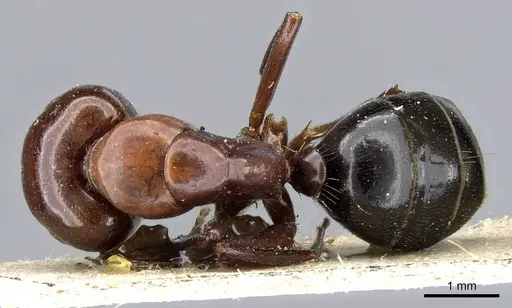
CASENT0905400
View on AntWeb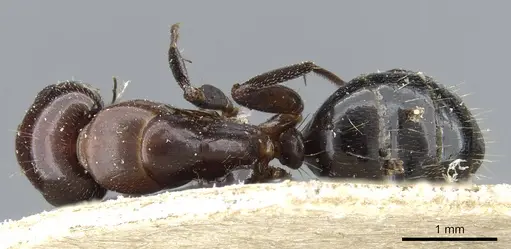
Literature
Loading...Loading products...