

Camponotus itoi
- Scientific Name
- Camponotus itoi
- Subgenus
- Myrmamblys
- Tribe
- Camponotini
- Subfamily
- Formicinae
- Author
- Forel, 1912
- Distribution
- Found in 3 countries
Camponotus itoi Overview
Camponotus itoi is an ant species of the genus Camponotus. It is primarily documented in 3 countries , including China, Japan, Korea. Detailed taxonomic data and occurrence records can be further explored via authoritative databases such as AntWeb or the Global Biodiversity Information Facility (GBIF).
Camponotus itoi
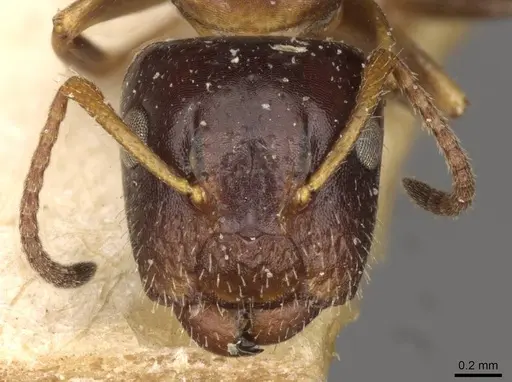
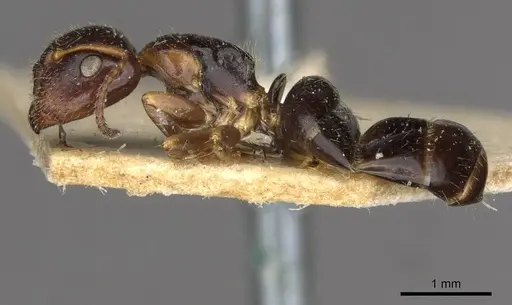
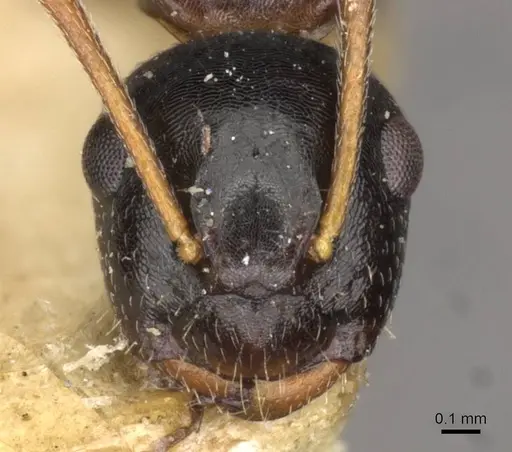
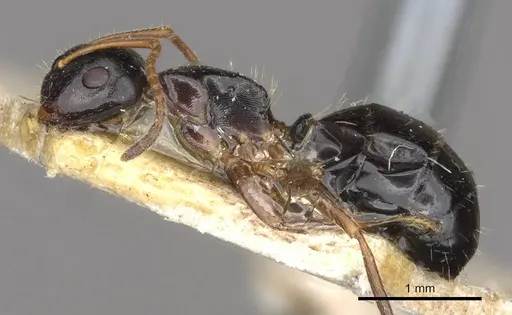
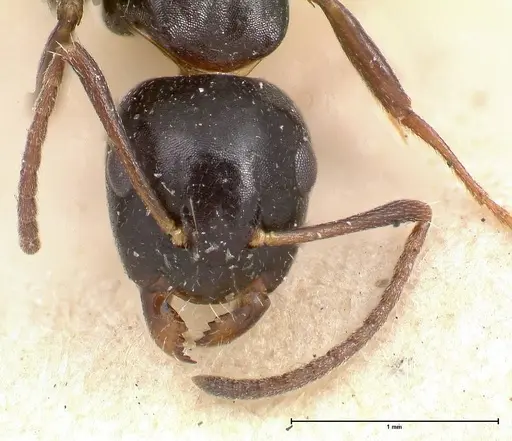
Camponotus itoi is a small, jet-black ant species native to East Asia, measuring just 3.5-4.5mm for workers, making it the smallest Japanese species in its subgenus Myrmamblys [1]. These ants have a distinctive appearance with a flat mesonotal dorsum and an abruptly sloped propodeal declivity. They are truly arboreal, nesting exclusively in dead twigs on standing trees across their range in Japan (Honshu, Kyushu), the Korean Peninsula, and parts of China [1][2][3]. Unlike many arboreal ants that stay in the canopy, C. itoi forages both on plants and on the ground surface, giving them flexibility in captive setups [4]. This species belongs to the Subordinate Camponotini functional group, meaning they are generally peaceful and not aggressive toward other ants [5].
Quick Summary
- Difficulty: Medium
- Origin & Habitat: Native to East Asia, Japan (Honshu, Kyushu), Korean Peninsula, and China (Fujian, Hubei, Hunan, Jiangsu, Sichuan). Found in conifer-broadleaf forests and Masson pine forests at elevations of 574-780m. Nests in dead twigs on standing trees [1][4][6].
- Colony Type: Single-queen (monogyne) colonies typical for Camponotus species. Colonies likely reach moderate size, similar to other small Camponotus species.
- Colony: Monogyne
- Founding: Claustral
- Size & Growth:
- Queen: Estimated 8-10mm based on genus patterns (no direct measurement found)
- Worker: 3.5-4.5mm [1]
- Colony: Estimated several hundred workers based on similar small Camponotus species
- Growth: Moderate
- Development: Estimated 6-8 weeks at optimal temperature based on typical Camponotus development (Development time is inferred from related Camponotus species, actual timing may vary. Nanitics (first workers) typically emerge smaller than normal workers.)
- Antkeeping:
- Temperature: Keep at 20-24°C. As a temperate species from Japan and Korea, they prefer moderate temperatures. Room temperature is often suitable. Avoid temperatures above 28°C
- Humidity: Moderate humidity (50-70%). These forest-dwelling ants prefer slightly damp conditions but not wet substrate. Provide a water tube and keep the nest area moderately humid
- Diapause: Yes, as a temperate species from Japan/Korea, they require a winter dormancy period. Keep at 5-10°C for 2-3 months during winter
- Nesting: Arboreal species that naturally nests in dead twigs. Y-tong (AAC) nests or plaster nests with narrow chambers work well. Avoid large open spaces, they prefer tight, enclosed chambers scaled to their small size. Can also use test tube setups with multiple connections [1][2]
- Behavior: Generally peaceful and non-aggressive, consistent with their Subordinate Camponotini classification [5]. Workers forage both on vegetation and the ground, showing behavioral flexibility [4]. They are small but not particularly fast-moving. Escape prevention is important due to their small size, use fine mesh barriers. They accept sugar water and protein sources like most Camponotus. Workers are primarily nocturnal or crepuscular in activity patterns, though they will forage during the day when needed
- Common Issues: small size makes escape prevention critical, use fine mesh and tight-fitting lids, arboreal nature means they may struggle in fully horizontal test tube setups, provide vertical or angled options, winter dormancy is essential for long-term colony health, skipping hibernation can weaken colonies, slow founding phase, new colonies may take months to produce first workers, requiring patience, wild-caught colonies may carry parasites that can devastate captive colonies
Housing and Nest Setup
Camponotus itoi is an arboreal species that naturally nests in dead twigs on standing trees, so your setup should reflect this preference [1]. Y-tong (acrylic) nests or plaster nests with narrow, tight chambers work best. These ants are tiny, workers are only 3.5-4.5mm, so chambers should be appropriately scaled [1]. Avoid large, open spaces that would make them feel exposed. Test tube setups can work, but consider providing an angled or vertical orientation since they naturally live off the ground. A small outworld connected to the nest allows for foraging. Ensure excellent escape prevention, their small size means they can squeeze through surprisingly tiny gaps. Use fine mesh on any ventilation holes and ensure all connections are snug [2].
Feeding and Diet
Like other Camponotus species, C. itoi is omnivorous. Offer sugar water, honey, or diluted syrup as a constant energy source. For protein, provide small insects like fruit flies, small mealworms, or cricket pieces. Since they are small, prey items should be appropriately sized, nothing larger than they can handle. They are foragers on both plants and ground surface in the wild, showing they will explore and accept food from various locations [4]. Feed protein 2-3 times per week and keep sugar water available at all times. Remove uneaten prey after 24-48 hours to prevent mold. These ants are not specialized predators, so standard ant feeding protocols apply.
Temperature and Seasonal Care
As a temperate species from Japan and Korea, C. itoi requires moderate temperatures and a winter dormancy period. Keep the nest area at 20-24°C, room temperature is often suitable for this species. Avoid prolonged exposure to temperatures above 28°C or below 15°C during the active season. During winter (roughly November-February in the Northern Hemisphere), reduce temperature to 5-10°C to simulate hibernation. This dormancy period is essential for colony health and reproductive success. Do not feed during deep hibernation but ensure some moisture is available. Return to normal temperatures gradually in spring to trigger activity.
Colony Development and Growth
Camponotus itoi colonies grow at a moderate pace typical of the genus. A claustral founding queen seals herself in a chamber and survives on stored fat reserves while raising the first brood. Expect 6-8 weeks from egg to first worker (nanitics) at optimal temperature, though this is estimated from related species rather than directly documented. The first workers (nanitics) will be smaller than normal workers. Colony growth accelerates once the first workers emerge and begin foraging. Maximum colony size is estimated at several hundred workers, smaller than giant Camponotus species but still substantial. Patience is key during the founding phase, as disturbing the queen too early can be fatal. Do not overfeed new colonies, as excess food mold can kill developing brood.
Behavior and Temperament
This species belongs to the Subordinate Camponotini functional group, which means they are generally peaceful and non-aggressive [5]. Workers are not particularly defensive and rarely sting. They show behavioral flexibility by foraging both on vegetation and the ground surface in the wild [4]. Activity patterns are primarily crepuscular or nocturnal, though they will forage during the day when necessary. They are not aggressive toward humans and are safe to handle gently. Their small size and peaceful nature make them suitable for observation, though their arboreal habits mean you'll see most activity in the outworld rather than visible chambers.
Frequently Asked Questions
How long does it take for Camponotus itoi to produce first workers?
Expect 6-8 weeks from egg to first worker at optimal temperature (around 22°C). This is estimated from related Camponotus species since specific development data for C. itoi is not documented. The first workers (nanitics) will be noticeably smaller than mature workers.
What size nest should I use for Camponotus itoi?
Use a nest with small, tight chambers scaled to their tiny 3.5-4.5mm worker size. Y-tong (AAC) nests or plaster nests work well. Avoid large open chambers, these arboreal ants prefer enclosed spaces similar to the dead twigs they naturally nest in.
Do Camponotus itoi ants need hibernation?
Yes. As a temperate species from Japan and Korea, they require a winter dormancy period. Keep colonies at 5-10°C for 2-3 months during winter (roughly November-February). Skipping hibernation can weaken the colony and prevent reproduction.
What do Camponotus itoi ants eat?
They are omnivorous like most Camponotus. Offer constant sugar water or honey for energy, and protein sources like small insects (fruit flies, small mealworms, cricket pieces) 2-3 times per week. Prey should be appropriately sized for their small workers.
Are Camponotus itoi ants aggressive?
No. They belong to the Subordinate Camponotini functional group, which are generally peaceful and non-aggressive [5]. They rarely sting and are safe to handle. They are not defensive and pose no danger to keepers.
Can I keep multiple Camponotus itoi queens together?
No. This species is monogyne (single-queen) typical of Camponotus. Multiple unrelated queens will fight. Only keep one queen per colony. If you find a wild colony, it will likely have just one queen.
How big do Camponotus itoi colonies get?
Estimated several hundred workers at maturity. This is smaller than giant Camponotus species but still substantial. Growth is moderate, expect several months to reach 50+ workers and a year or more for a mature colony.
Why are my Camponotus itoi escaping?
Their small size (3.5-4.5mm) means they can squeeze through tiny gaps. Use fine mesh on all ventilation, ensure lid seals are tight, and check all connection points. Escape prevention must be excellent for this species.
Is Camponotus itoi good for beginners?
Medium difficulty, they are more suitable for intermediate antkeepers. Their small size requires good escape prevention, and their need for winter dormancy adds complexity. They are peaceful and not dangerous, but the founding phase requires patience.
References

This caresheet is licensed under CC BY-SA 4.0 .
CASENT0905455
View on AntWeb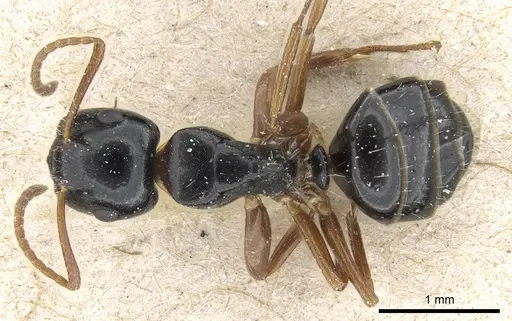
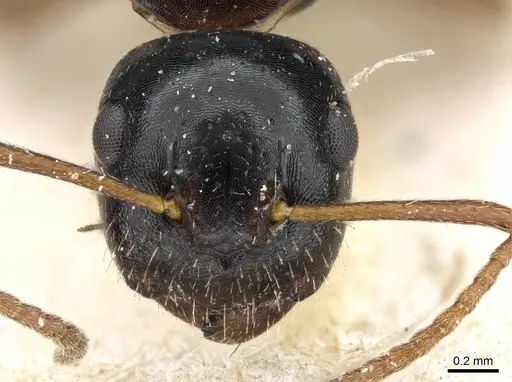
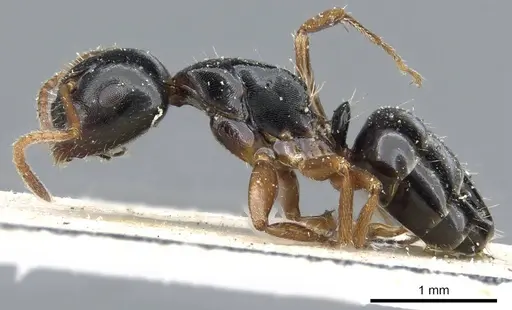
CASENT0910516
View on AntWeb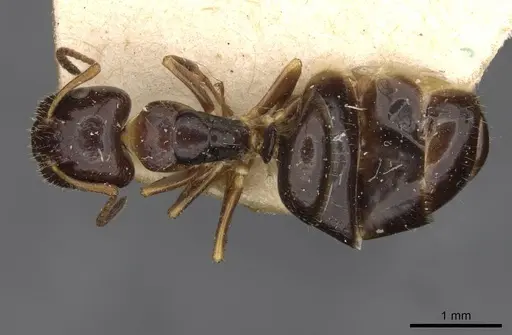
CASENT0910517
View on AntWeb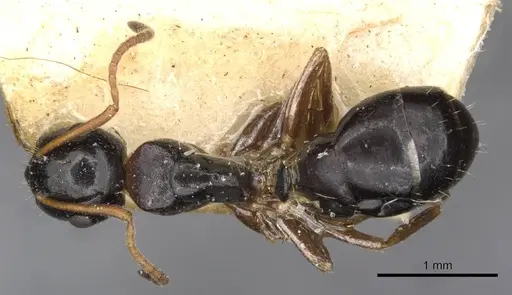
FOCOL0479
View on AntWeb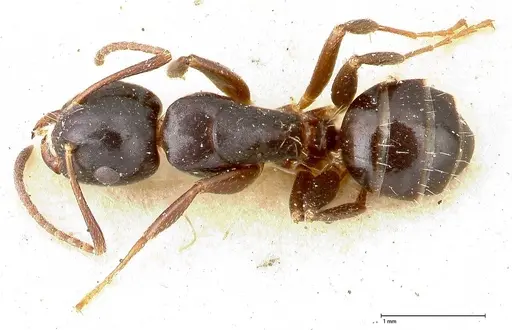
Literature
Loading...Loading products...