

Camponotus haroi
- Scientific Name
- Camponotus haroi
- Subgenus
- Tanaemyrmex
- Tribe
- Camponotini
- Subfamily
- Formicinae
- Author
- Espadaler, 1997
- Distribution
- Found in 1 countries
Camponotus haroi Overview
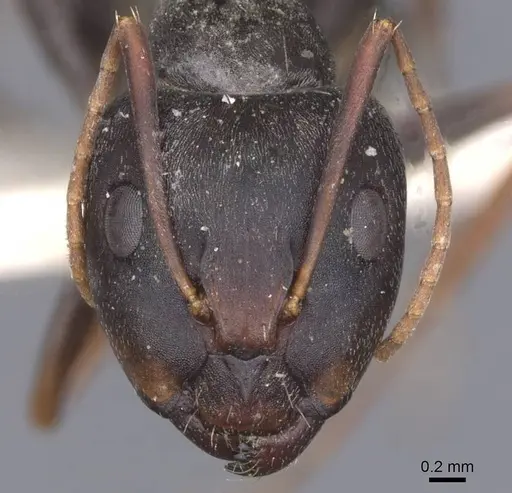
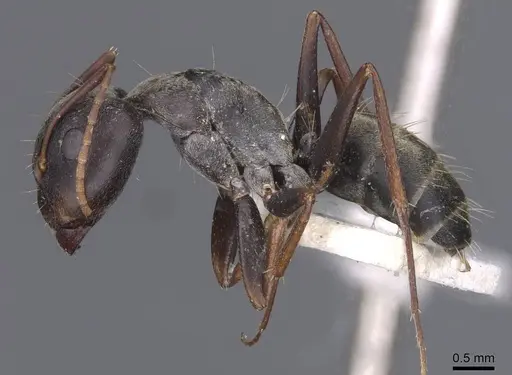
Camponotus haroi is an ant species of the genus Camponotus. It is primarily documented in 1 countries , including Spain. Detailed taxonomic data and occurrence records can be further explored via authoritative databases such as AntWeb or the Global Biodiversity Information Facility (GBIF).
Camponotus haroi
Camponotus haroi is a medium-to-large carpenter ant endemic to the southeastern Iberian Peninsula in Spain. Workers are polymorphic, meaning they come in different sizes, minor workers handle most tasks while major workers (soldiers) defend the colony and crack open seeds. The species was described in 1997 by Xavier Espadaler and is named after the entomologist Haro. Queens are significantly larger than workers and have the robust, chunky build typical of Camponotus. This ant is strictly endemic to Spain, found only in specific provinces (Alicante and Jaén) along the Mediterranean coast and nearby inland areas [1][2]. The narrow distribution makes it a rare find in the antkeeping hobby.
Quick Summary
- Difficulty: Medium
- Origin & Habitat: Native to the southeastern Iberian Peninsula in Spain. This species lives in hot, dry Mediterranean climate zones, think coastal areas with mild winters and warm, dry summers. In the wild, they nest in soil under stones or in rotting wood, typical of Camponotus nesting preferences [2][3].
- Colony Type: Likely single-queen (monogyne) colonies based on typical Camponotus patterns. Multiple queens have not been documented in wild colonies. Ergatoid (wingless replacement) queens may exist as documented in related species, but this is unconfirmed for C. haroi specifically.
- Colony: Monogyne
- Founding: Claustral
- Size & Growth:
- Queen: Estimated 14-18mm based on genus patterns, direct measurements not published
- Worker: Estimated 6-14mm (polymorphic, minor workers 6-9mm, major workers 10-14mm)
- Colony: Likely several thousand workers at maturity based on typical Camponotus development
- Growth: Moderate, Camponotus species typically grow more slowly than smaller ants, taking months to establish
- Development: Estimated 6-10 weeks at optimal temperature based on typical Camponotus development [1] (Development is temperature-dependent, warmer conditions speed it up, cooler slows it down. First workers (nanitics) are smaller than normal workers.)
- Antkeeping:
- Temperature: Keep nest area at 22-26°C. A heating cable on one side creates a gradient so ants can choose their preferred temperature. These are warmth-loving ants from a Mediterranean climate [2].
- Humidity: Moderate humidity (40-60%). Allow the nest to dry partially between waterings, these ants come from relatively dry Mediterranean habitats. Provide a water tube but avoid saturating the nest.
- Diapause: Yes, provide a winter rest period of 8-12 weeks at 10-15°C. This mimics their natural seasonal cycle in Spain where winters are cooler but not freezing.
- Nesting: Y-tong (AAC) nests work well for this species. They also do well in plaster or acrylic nests with chambers sized to worker count. Provide a dark, quiet location. A test tube setup works for founding colonies.
- Behavior: Generally calm and non-aggressive compared to some Camponotus. Workers are active foragers that search for sweet liquids (honeydew, sugar water) and protein (insects). Major workers can deliver a painful bite if threatened, but they are docile and rarely attack. Escape risk is moderate, their larger size makes them easier to contain than tiny ants, but they can still climb smooth surfaces. Close observation shows they establish well-defined foraging routes.
- Common Issues: colonies grow slowly and beginners may overfeed or disturb them too often, winter diapause is essential, skipping it weakens the colony, major workers can crack out of weak formicarium connections, use secure setups, wild-caught colonies may have parasites, quarantine and observe new colonies, queens are long-lived but founding colonies have high failure rates, this is normal
Housing and Setup
For a newly caught queen, start with a test tube setup. Fill a test tube one-third with water, plug with cotton, and place the queen in the dark. She will seal herself in and lay eggs. Once you have 10-20 workers, you can move to a proper formicarium. Y-tong (AAC) nests are excellent for Camponotus, the porous material holds humidity well and allows proper gas exchange. Plaster nests also work. The key is providing appropriately sized chambers, too large and the ants feel exposed, too small and they can't move brood around. Connect the nest to an outworld (foraging area) with tubing. The outworld should have a sugar water feeder and protein food dish. Cover the nest with a dark cloth except for observation, these ants prefer dark, quiet spaces.
Feeding Your Colony
Camponotus haroi workers are omnivorous like most carpenter ants. They need a balanced diet of sugars and protein. Offer sugar water (1:3 ratio with water) or honey diluted to roughly 50% concentration, change every 2-3 days to prevent mold. For protein, offer small insects like fruit flies, mealworms, or crickets appropriate to worker size. Remove uneaten prey after 24 hours. In the wild, they also tend aphids for honeydew, you can simulate this with sugar water. Feed protein 2-3 times per week for established colonies, more frequently when brood is developing. Queens and larvae need more protein than workers.
Temperature and Seasonal Care
These ants come from the warm Mediterranean coast of Spain, so they prefer temperatures in the low-to-mid 20s°C (22-26°C). Keep the nest at the warmer end of this range during active growth (spring and summer). A small heating cable or heat mat under one end of the nest creates a temperature gradient, ants will move to their preferred area. In winter, simulate their natural cycle with a diapause period. Reduce temperature to 10-15°C for 8-12 weeks (roughly November through February in the Northern Hemisphere). During diapause, reduce feeding to once every 2-3 weeks and keep the nest dark and quiet. Do not feed during deep dormancy. This winter rest is essential for colony health, skipping it leads to weakened colonies that fail to produce new brood in spring. [2]
Colony Development and Growth
A newly mated queen digs a small chamber and seals herself inside, this is called claustral founding. She uses stored fat reserves to survive and feed her first brood. After 4-8 weeks (longer if cool), the first workers (nanitics) emerge. These are smaller than normal workers because the queen had limited resources. Once nanitics forage, the colony enters the growth phase. Expect slow but steady growth through the first year, a healthy founding might reach 30-50 workers by winter. Year two brings faster growth as the colony establishes foraging routes and the queen produces more eggs. Camponotus colonies can live for decades with a healthy queen, eventually reaching several thousand workers.
Behavior and Observation
Camponotus haroi workers are active foragers that establish defined trails. You will see them carrying insects back to the nest and tending to brood in the chambers. Major workers (the larger soldiers) typically stay near the queen and brood chambers, emerging to defend the colony or crack open tough food. Unlike some aggressive ant species, these are generally calm, you can observe them without much defensive behavior. They do have mandibles and can bite if squeezed, but they rarely sting. Watch for alates (winged reproductives) in summer, these are new queens and males that will leave to mate. If you see them, your colony is mature and producing reproductives.
Frequently Asked Questions
How long does it take for Camponotus haroi to get first workers?
Expect 6-10 weeks from egg to first worker at warm temperatures (24-26°C). Cooler temperatures extend this significantly. The first workers (nanitics) are smaller than normal workers, this is normal.
What temperature do Camponotus haroi need?
Keep them at 22-26°C during the active season. A heating cable on one end of the nest creates a gradient. In winter, provide 8-12 weeks of cool diapause at 10-15°C.
Can I keep multiple Camponotus haroi queens together?
Not recommended. This species is likely monogyne (single queen). Unlike some ants, they do not found colonies pleometrotically (multiple queens together). A single established queen colony is the standard approach.
How big do Camponotus haroi colonies get?
At maturity, colonies likely reach several thousand workers over several years. Camponotus are long-lived, a healthy colony can persist for decades.
Do Camponotus haroi need hibernation?
Yes. Provide 8-12 weeks of winter rest at 10-15°C. This mimics their natural Mediterranean seasonal cycle and is essential for colony health.
What do Camponotus haroi eat?
They need both sugar and protein. Offer sugar water or diluted honey as constant sugar sources. Feed protein (insects like mealworms, fruit flies) 2-3 times per week.
Is Camponotus haroi good for beginners?
Medium difficulty. They are more forgiving than some species but have specific temperature and diapause requirements. The slow growth requires patience. Not the easiest choice but achievable for committed beginners.
When should I move from test tube to formicarium?
Move once you have 15-30 workers and the test tube shows condensation buildup or the cotton is soiled. A small formicarium or Y-tong setup with a connection tube works well.
Why is my colony declining?
Common causes: wrong temperature (too cold or too hot), improper humidity (too wet or dry), skipped diapause, overfeeding (mold), or disturbance. Check each factor and adjust. Founding colonies have natural failure rates, if the queen died, this is normal.
References

This caresheet is licensed under CC BY-SA 4.0 .
CASENT0911617
View on AntWeb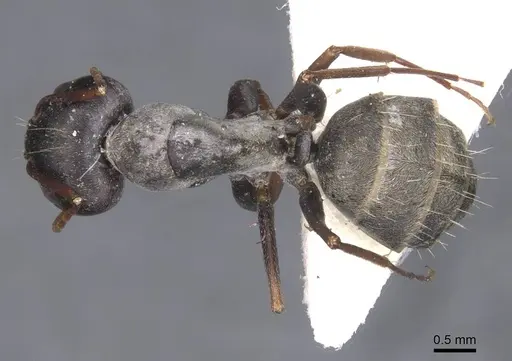
Literature
Loading...Loading products...