
Camponotus festinatus exhibits a clear seasonal flight window. Peak flight activity is concentrated in June, with the overall period spanning May to August.
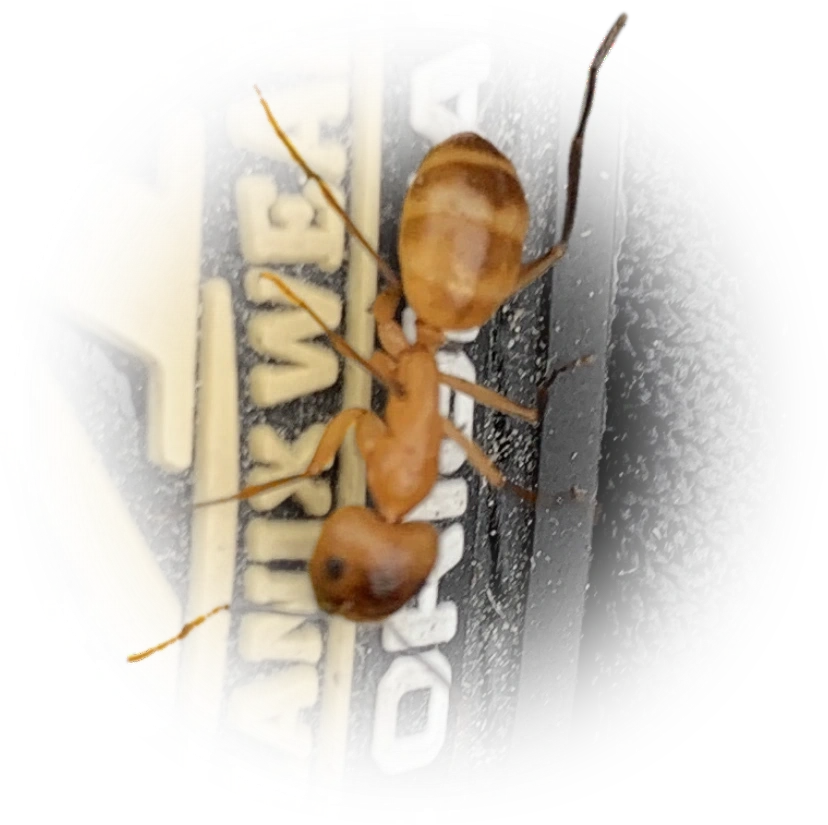
Camponotus festinatus
- Scientific Name
- Camponotus festinatus
- Subgenus
- Tanaemyrmex
- Tribe
- Camponotini
- Subfamily
- Formicinae
- Author
- Buckley, 1866
- Distribution
- Found in 2 countries
- Nuptial Flight
- from May to August, peaking in June
AI Identifiable
try →
Camponotus festinatus Overview
Camponotus festinatus is an ant species of the genus Camponotus. It is primarily documented in 2 countries , including Mexico, United States of America. Detailed taxonomic data and occurrence records can be further explored via authoritative databases such as AntWeb or the Global Biodiversity Information Facility (GBIF).
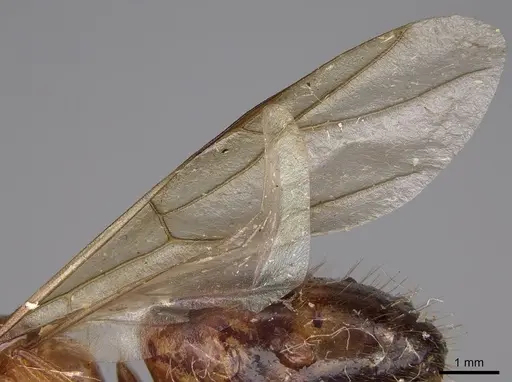
The nuptial flight of Camponotus festinatus is a significant biological event, typically occurring from May to August, peaking in June. During this time, winged queens and males leave the nest to mate and establish new colonies.
Camponotus festinatus
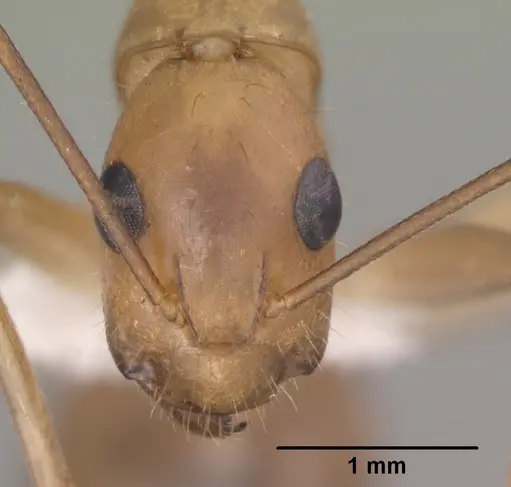
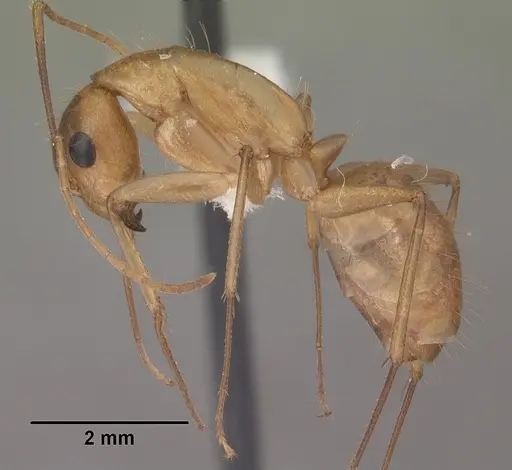
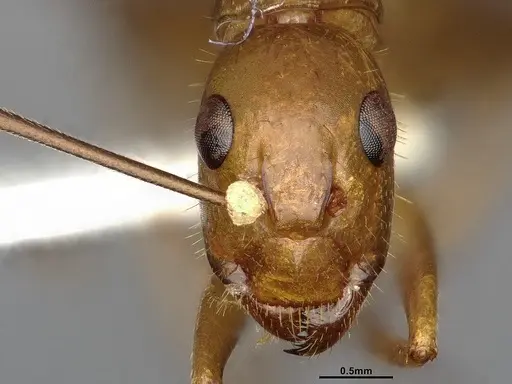
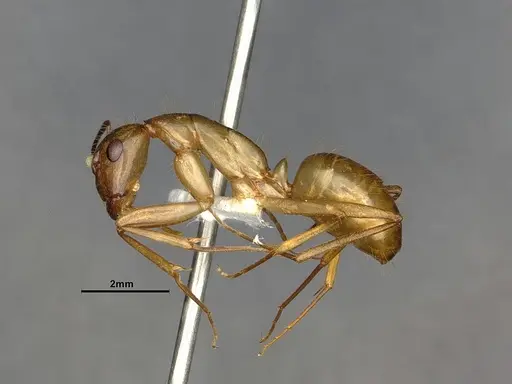
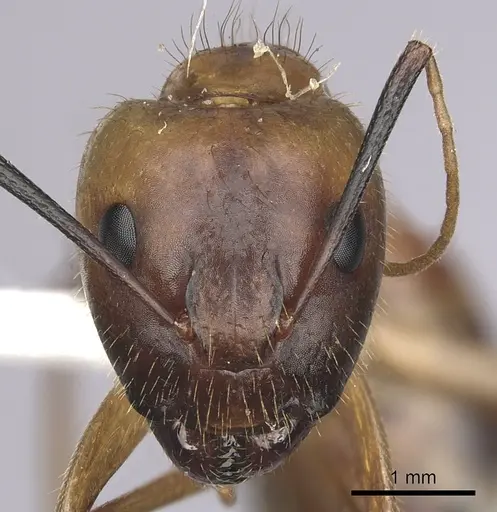
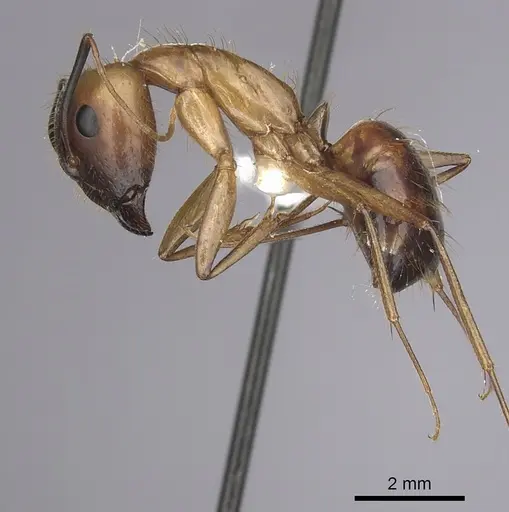
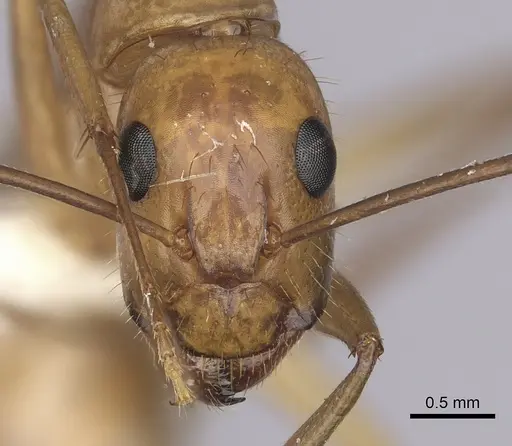
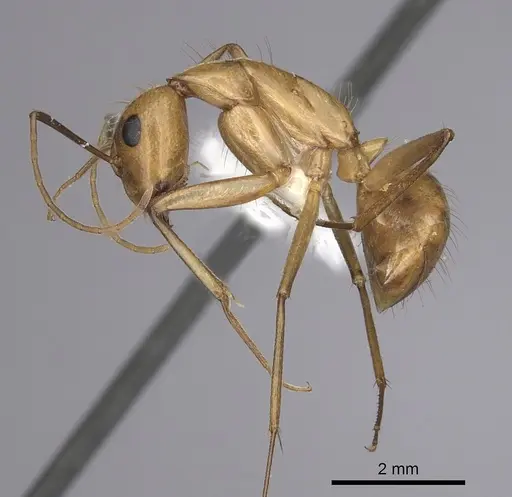
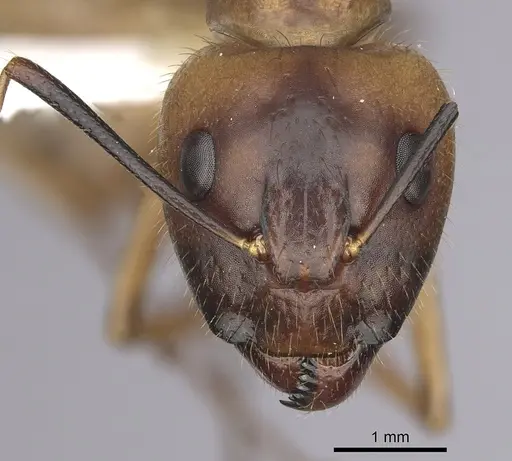
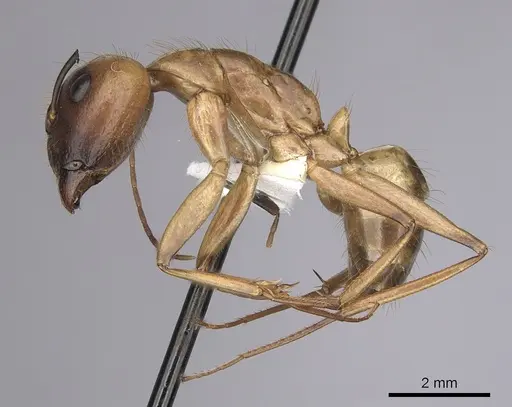
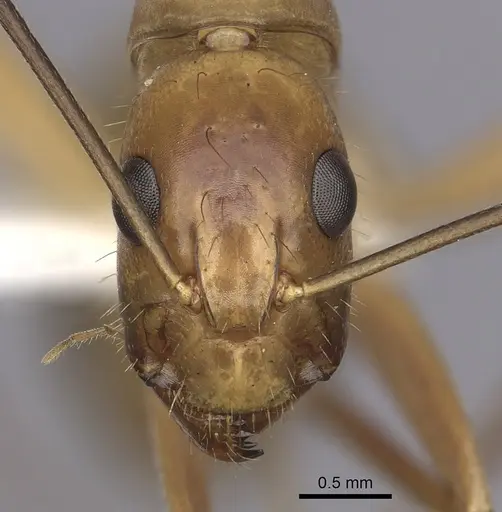
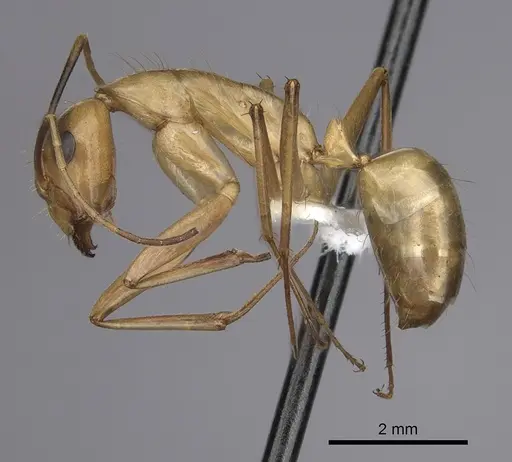
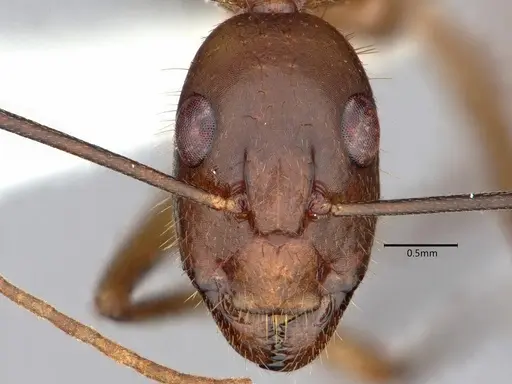
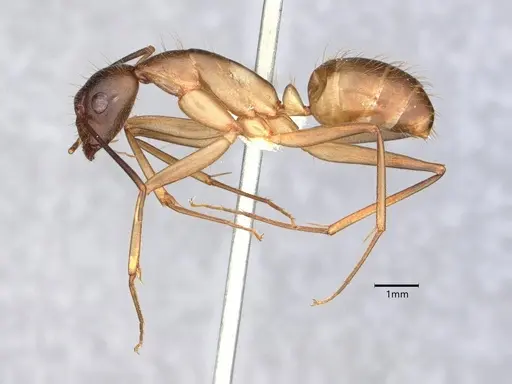
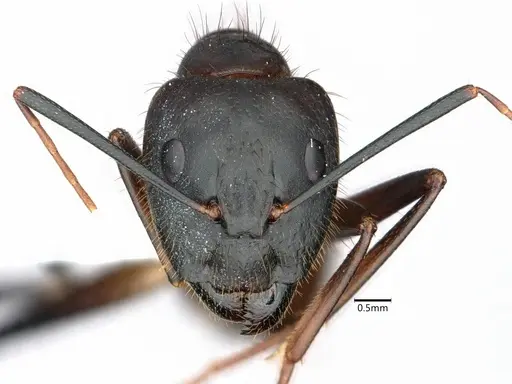
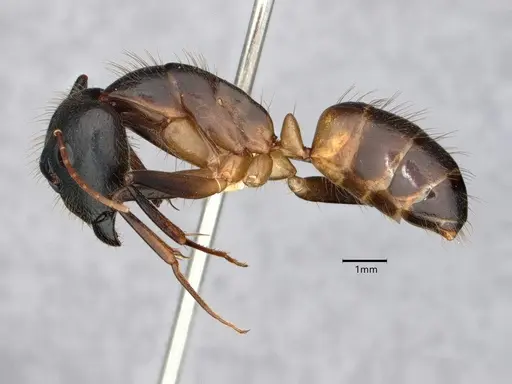
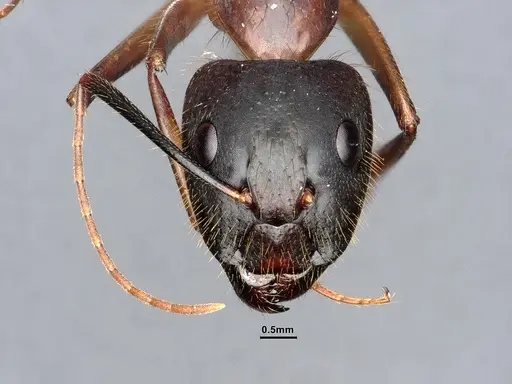
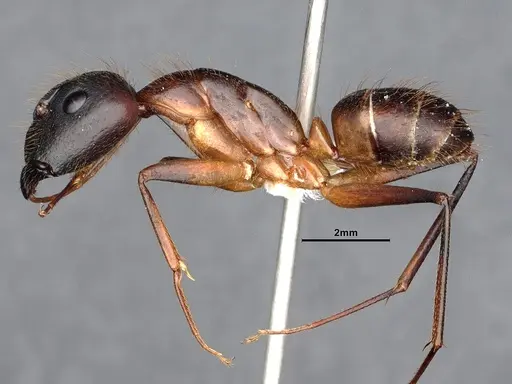
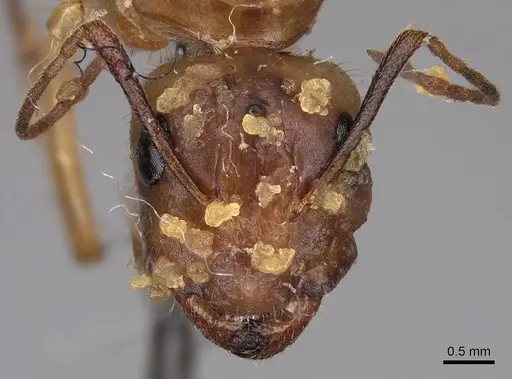
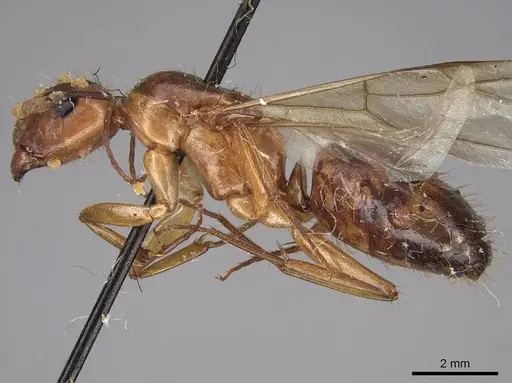
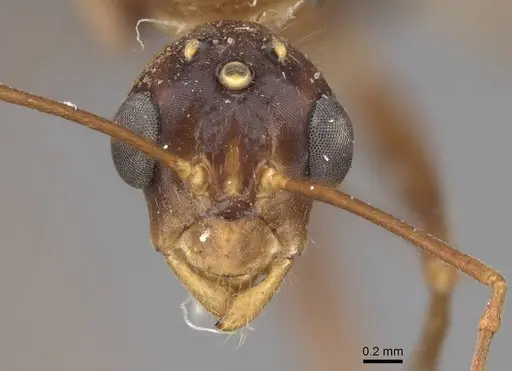
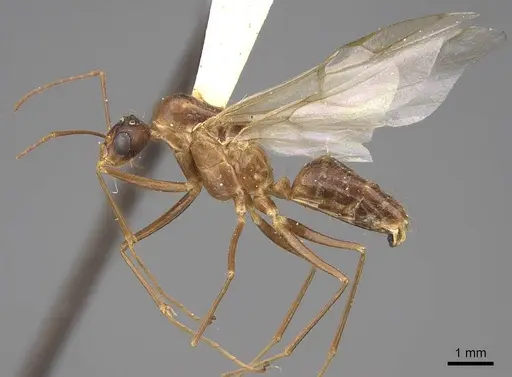
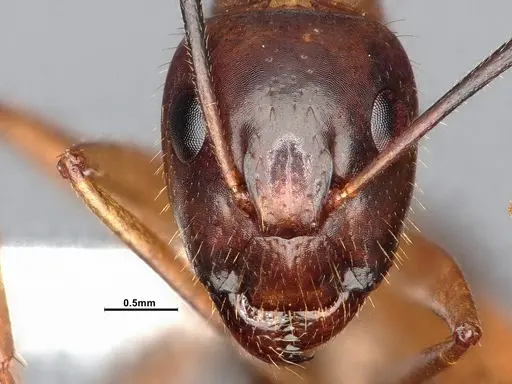
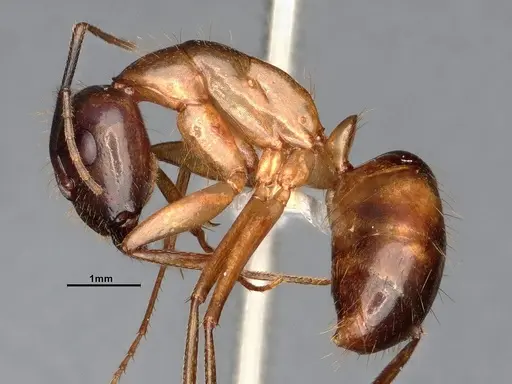
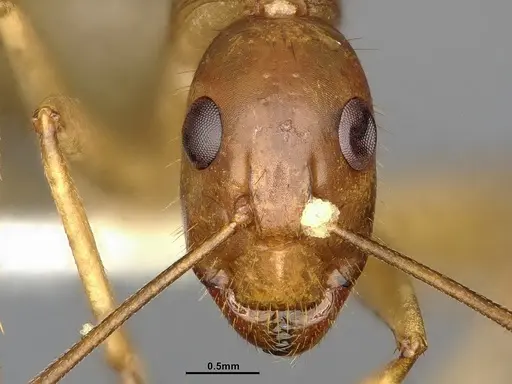
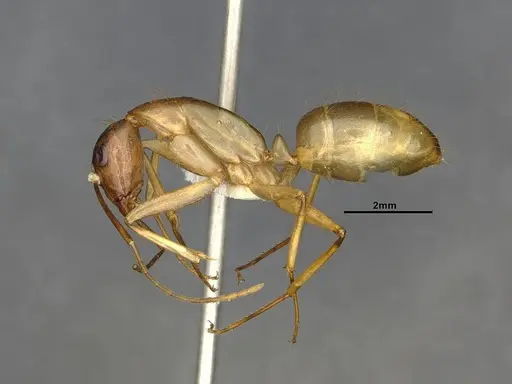
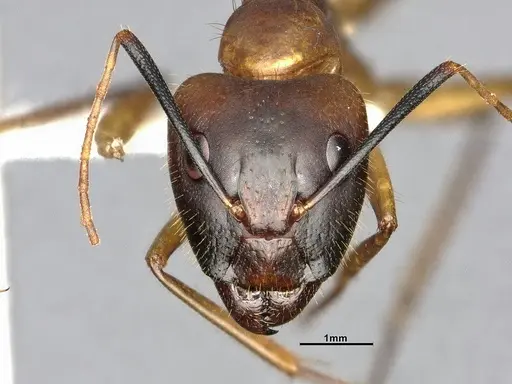
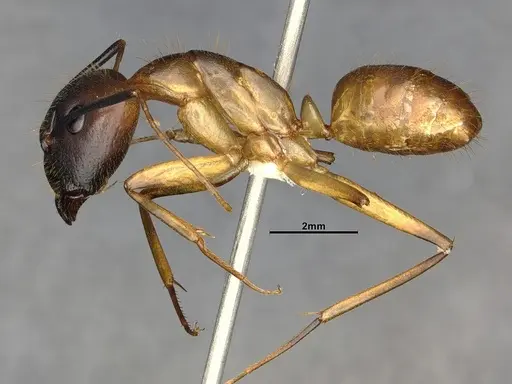
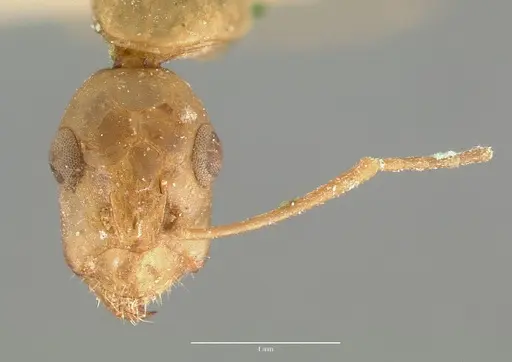
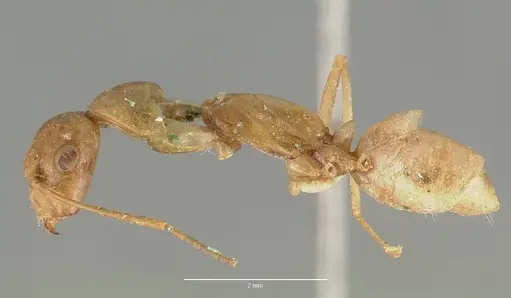
Camponotus festinatus is a medium-sized carpenter ant found across the southwestern United States and northern Mexico, from central Texas west to central Arizona. Workers come in two size castes: majors measure 2.75-3.00mm head length with a distinctive wedge-shaped head, while media and minors are smaller at 1.65-2.00mm. Queens reach 2.56-2.72mm. The ant has a yellowish-brown body with variable darker brown markings on the head and gaster, and features a well-defined median ridge on the clypeus (the plate above the mandibles). This species is part of a complex of similar species that has caused significant taxonomic confusion, with researchers historically confusing it with several other Camponotus species [1].
What makes C. festinatus particularly interesting is its flexible social structure. While most colonies have a single queen, approximately 25% of wild colonies contain multiple related queens that all reproduce. Additionally, colonies often occupy multiple nests (polydomy), spreading across several locations rather than living in a single nest [2]. This species also plays an important role in chemical ecology research, it's one of the Formicine ants that has evolved the ability to detoxify fire ant venom through a behavior called acidopore grooming, where they use formic acid to neutralize alkaloid toxins [3].
Quick Summary
- Difficulty: Medium
- Origin & Habitat: Native to the southwestern United States and northern Mexico, ranging from central Texas to central Arizona. Found primarily in oak woodlands at elevations from 700-1500m, nesting in soil beneath stones on rocky hillsides [1][2].
- Colony Type: Primarily single-queen colonies (monogyne), but approximately 25% of field colonies contain multiple related queens that reproduce together. Colonies are also polydomous, they occupy multiple connected nests rather than a single nest [2]. Queens typically mate with only one male (monandry) [2].
- Colony: Optionally polygyne
- Founding: Claustral
- Size & Growth:
- Queen: 2.56-2.72 mm [1]
- Worker: Major: 2.75-3.00 mm HL, Media/minor: 1.65-2.00 mm HL [1]
- Colony: Unknown maximum, likely several thousand workers based on typical Camponotus size
- Growth: Moderate, based on typical Camponotus development patterns
- Development: 6-8 weeks at optimal temperature (Development time estimated from genus-level data since species-specific timing hasn't been studied. Camponotus species typically take 6-8 weeks from egg to nanitic worker at warm temperatures.)
- Antkeeping:
- Temperature: Keep nest around 22-26°C. Research colonies were successfully maintained at 22°C [4]. This species naturally occurs in desert and woodland habitats with significant temperature variation, so room temperature (around 20-24°C) is typically suitable.
- Humidity: Moderate humidity preferred. In nature they nest in soil beneath stones, which provides some moisture but not saturated conditions. Keep the nest substrate lightly moist but allow it to dry partially between waterings. Avoid both waterlogged and completely dry conditions.
- Diapause: Yes, this species experiences winter in its native range across Texas and Arizona. Provide a winter rest period at 10-15°C for 2-3 months during winter months, mimicking their natural seasonal cycle.
- Nesting: Natural nesting: soil nests beneath stones on rocky hillsides. In captivity, they do well in standard formicarium setups including Y-tong (acrylic) nests, plaster nests, or naturalistic setups with soil substrate. Provide a nest chamber scaled to colony size with access to an outworld for foraging. Because they naturally nest under stones, a setup with a covered nest chamber (like a Y-tong) works well, simulating the dark, protected space beneath a rock.
- Behavior: These ants are relatively calm and not particularly aggressive toward keepers. They are moderate foragers that will search for protein and sugar sources. Major workers have well-developed mandibles but are not known for aggressive defense. They are not escape artists, their medium size makes them easy to contain with standard barriers. Workers show alarm responses when threatened, opening mandibles and may lunge or snap [4]. The species is known for its ability to detoxify fire ant venom through specialized grooming behavior involving formic acid [3].
- Common Issues: colonies may fail if not given a proper winter diapause, this temperate species expects seasonal temperature drops, overfeeding can lead to mold in nest setups, remove uneaten protein promptly, polydomous colonies in the wild may try to expand into multiple nesting areas, provide adequate space or they may escape, newly caught queens may have mated with multiple males despite the species tendency toward monandry, genetic diversity can still be high in captive colonies, wild-caught colonies may contain parasites from their natural habitat, quarantine and observe new colonies carefully
Nuptial Flight Activity Analysis 216 observations
Flight Activity by Hour 216 observations
Camponotus festinatus nuptial flight activity peaks around 22:00 during the night. Activity is spread across a 24-hour window (00:00–23:00). A secondary activity peak occurs around 20:00. Times may be influenced by human observation patterns.
Housing and Nest Setup
Camponotus festinatus does well in standard ant-keeping setups. A Y-tong (acrylic) nest works excellently, the dark, enclosed chambers mimic the dark space beneath a stone where they naturally nest. You can also use plaster nests or a naturalistic setup with a soil chamber covered by a stone or artificial cover. The key is providing a nest area that feels protected and dark, similar to the space beneath a rock on a rocky hillside. For the founding stage, a standard test tube setup works fine, place the queen in a test tube with a water reservoir plugged with cotton, then cover the tube to create darkness. Once workers arrive (typically 4-8 weeks), you can connect the test tube to an outworld for foraging. As the colony grows, upgrade to a larger formicarium. These ants don't need enormous spaces, a nest chamber roughly 4-6 inches long by 2-3 inches wide accommodates a growing colony nicely. [1][3]
Feeding and Diet
In captivity, C. festinatus accepts a typical carpenter ant diet. For protein, offer small insects like fruit flies, mealworms, or crickets. Research colonies have been successfully fed Manduca sexta (tobacco hornworm) larvae [4]. For carbohydrates, they readily accept sugar water, honey, or diluted maple syrup. One study used a 20% sucrose-vitamin solution [4]. Feed protein roughly twice weekly for growing colonies, and provide a constant sugar source. Remove uneaten protein after 24-48 hours to prevent mold. These ants are foragers that will discover and recruit to food sources, so place food in the outworld where workers can find it easily. A small dish or platform works well for liquid sugars.
Temperature and Seasonal Care
Keep your colony at room temperature (20-26°C) for optimal activity and growth. Research colonies were maintained at 22°C with success [4], which falls right in the ideal range. This species naturally experiences significant seasonal temperature variation in its desert and woodland habitat across Texas and Arizona, so they handle typical indoor temperatures well. During winter (roughly November through February in the Northern Hemisphere), reduce temperatures to 10-15°C to provide a diapause period. This mimics their natural seasonal cycle and helps maintain colony health. You can move them to a cooler location like a basement or garage, or use a small cooler/thermostat to control temperatures. Do not feed during deep hibernation, but provide a small water source so they don't dry out completely.
Colony Structure and Behavior
Understanding C. festinatus social structure helps with proper care. Most colonies have a single queen (monogyne), but about 25% of wild colonies contain multiple related queens that all reproduce [2]. This means your colony might have one queen or potentially several, both are normal for this species. Additionally, colonies are polydomous in the wild, meaning they occupy multiple connected nests [2]. In captivity, this might translate to a colony that wants to expand into multiple chambers. Workers are not aggressive but will defend the nest if threatened, they show alarm responses including mandible opening and lunging [4]. The species has a functional caste system with majors (large workers) and media/minors (smaller workers), both of which your colony will produce as it grows.
Growth and Development
Camponotus festinatus follows typical carpenter ant development. After mating, the claustral queen seals herself in a chamber and lays eggs without foraging, she lives entirely on her stored fat reserves until the first workers emerge. The first workers (nanitics) are typically smaller than regular workers and help expand the nest and forage for food. Based on typical Camponotus development, expect 6-8 weeks from egg to first worker at optimal temperatures (around 24°C). Growth rate is moderate, a well-fed colony might reach 100 workers in 6-12 months, with larger colonies of several thousand developing over 2-3 years. The species shows polymorphism, major workers develop from larvae that receive more food, and you'll see increasingly large majors as the colony matures. [2][3]
Frequently Asked Questions
How long does it take for Camponotus festinatus to produce first workers?
Expect 6-8 weeks from egg to first worker at optimal temperature (around 24°C). This is typical for Camponotus species, the claustral queen seals herself in and raises the first brood on stored body reserves alone.
Do Camponotus festinatus ants need hibernation?
Yes, they do. This species naturally experiences winter in its range across Texas and Arizona. Provide a 2-3 month diapause period at 10-15°C during winter (typically November-February in the Northern Hemisphere).
What do Camponotus festinatus eat?
They accept standard ant foods: protein sources like fruit flies, mealworms, or crickets, and sugar sources like honey water or sugar water. Research colonies successfully fed on Manduca sexta larvae and 20% sucrose solution.
Are Camponotus festinatus good for beginners?
They are medium difficulty, harder than simple species like Lasius but easier than some exotic ants. They need a proper winter diapause and take moderate time to establish, but their care requirements are straightforward.
Can I keep multiple Camponotus festinatus queens together?
In the wild, about 25% of colonies have multiple related queens that reproduce together. However, combining unrelated foundress queens is risky, they may fight. If you catch multiple queens from the same area, they might tolerate each other, but this hasn't been specifically studied.
What size nest do Camponotus festinatus need?
Start with a test tube for the founding queen. Once you have 20+ workers, upgrade to a small formicarium. They do well in Y-tong nests or plaster nests that provide a dark, covered chamber mimicking the space beneath a stone where they naturally nest.
How big do Camponotus festinatus colonies get?
Colony size maximum isn't specifically documented, but based on typical Camponotus patterns, established colonies likely reach several thousand workers over 2-3 years.
Why is Camponotus festinatus important in ant research?
This species has been studied for its ability to detoxify fire ant venom through acidopore grooming, a behavior where Formicine ants use formic acid to neutralize alkaloid toxins. It's also studied for its genetic structure and flexible colony organization with polydomy.
Where is Camponotus festinatus found in the wild?
They range from central Texas west to central Arizona, and south into northern Mexico. They live in oak woodlands at elevations of 700-1500m, nesting in soil beneath stones on rocky hillsides.
References

This caresheet is licensed under CC BY-SA 4.0 .
CASENT0102774
View on AntWeb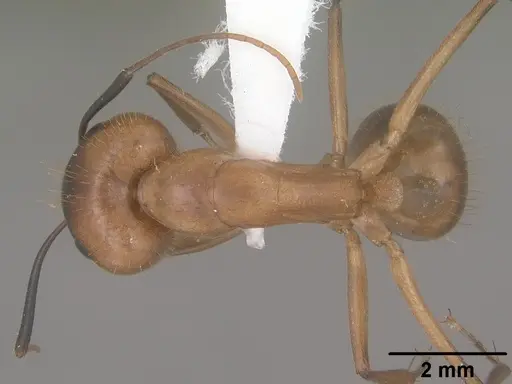
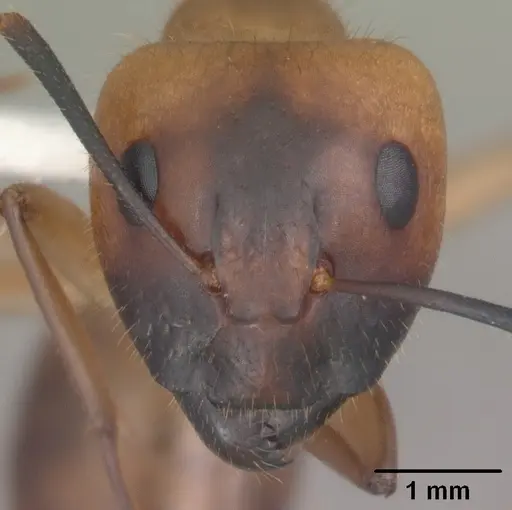
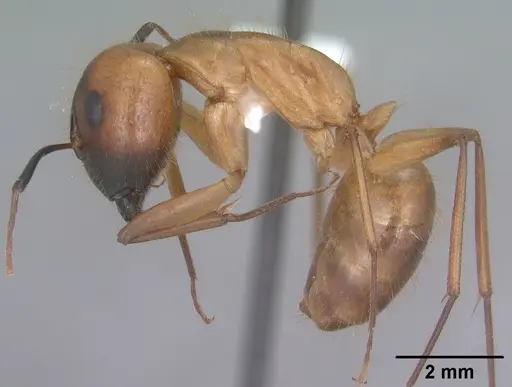
CASENT0102775
View on AntWeb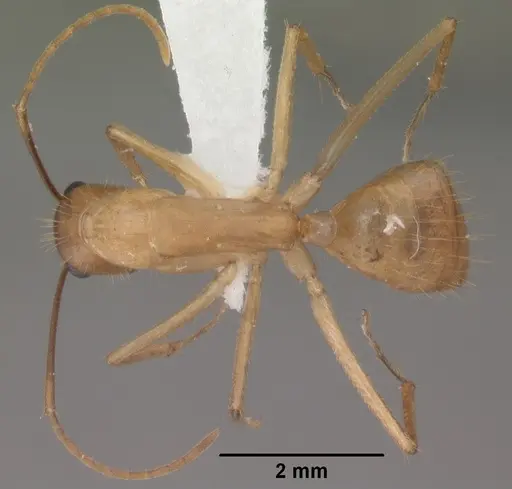
CASENT0220381
View on AntWeb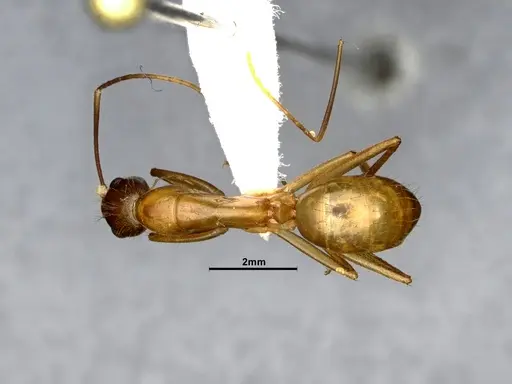
CASENT0280023
View on AntWeb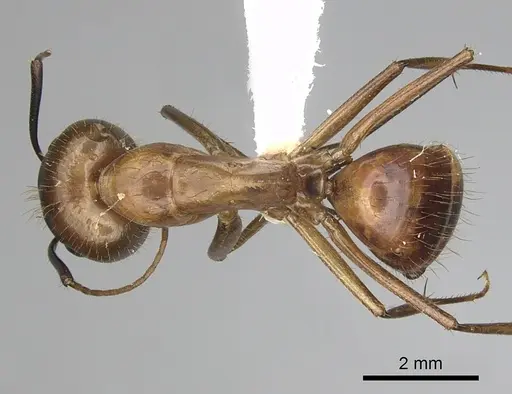
CASENT0280024
View on AntWeb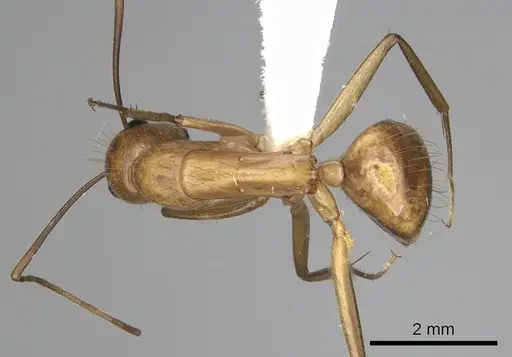
CASENT0280025
View on AntWeb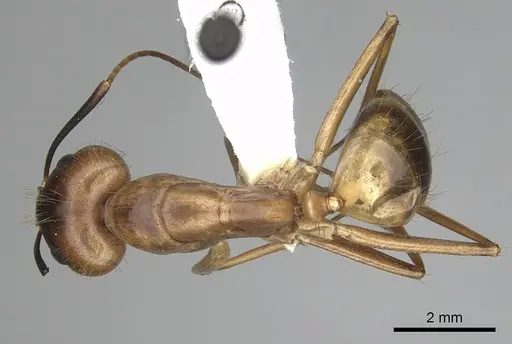
CASENT0280026
View on AntWeb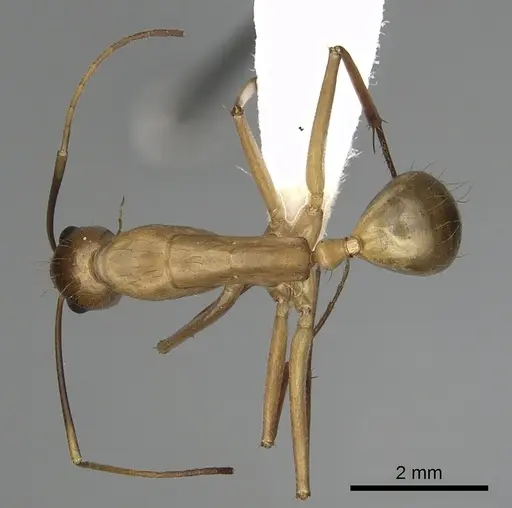
CASENT0882168
View on AntWeb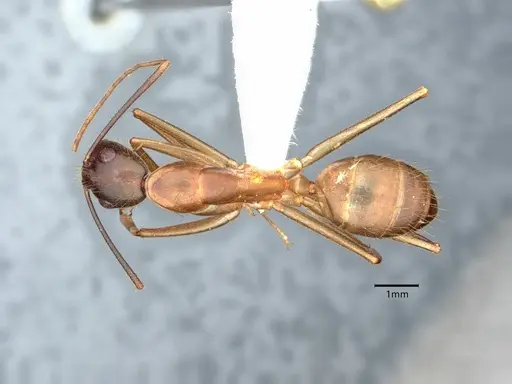
CASENT0882173
View on AntWeb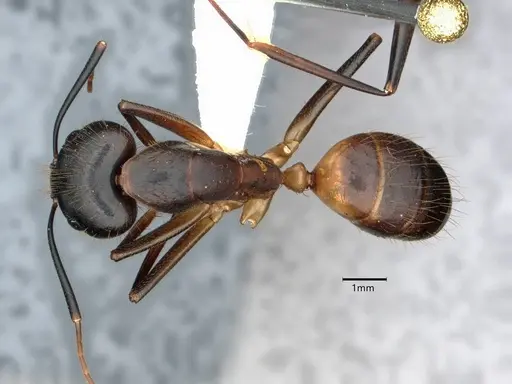
CASENT0884418
View on AntWeb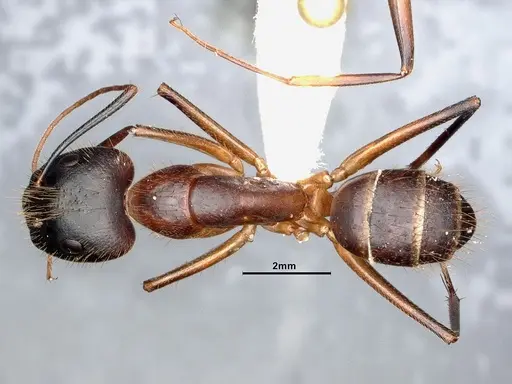
CASENT0923027
View on AntWeb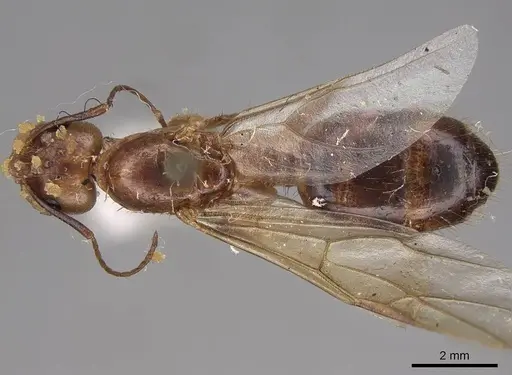
CASENT0923028
View on AntWeb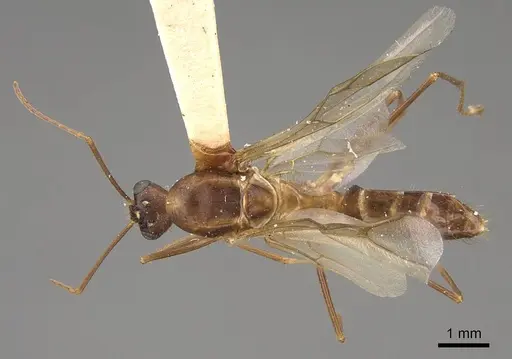
CASENT4031390
View on AntWeb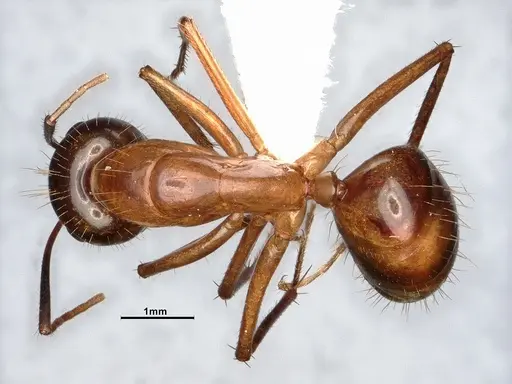
CASENT4031436
View on AntWeb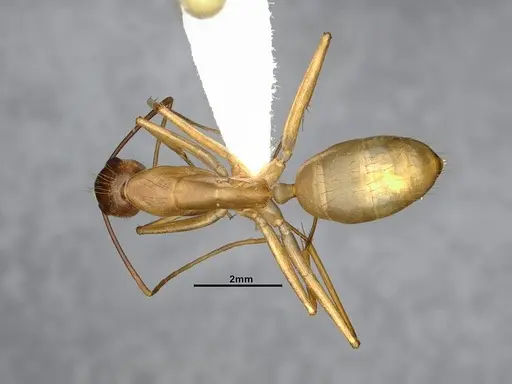
CASENT4031437
View on AntWeb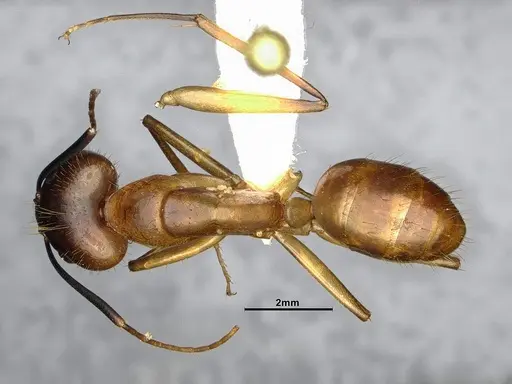
CASTYPE00594
View on AntWeb
Literature
Loading...Loading products...