

Camponotus dorycus
- Scientific Name
- Camponotus dorycus
- Subgenus
- Tanaemyrmex
- Tribe
- Camponotini
- Subfamily
- Formicinae
- Author
- Smith, 1860
- Distribution
- Found in 3 countries
Camponotus dorycus Overview
Camponotus dorycus is an ant species of the genus Camponotus. It is primarily documented in 3 countries , including Australia, Indonesia, Papua New Guinea. Detailed taxonomic data and occurrence records can be further explored via authoritative databases such as AntWeb or the Global Biodiversity Information Facility (GBIF).
Camponotus dorycus
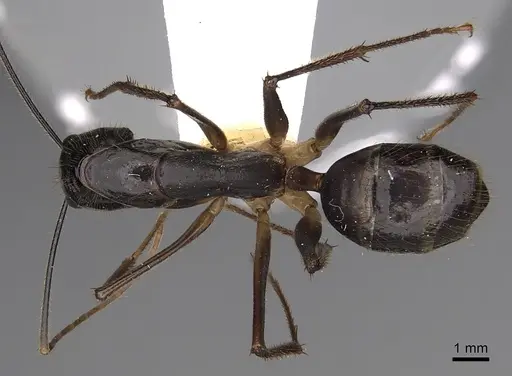
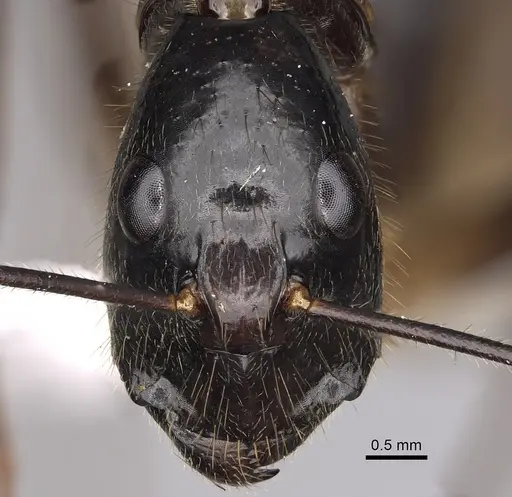
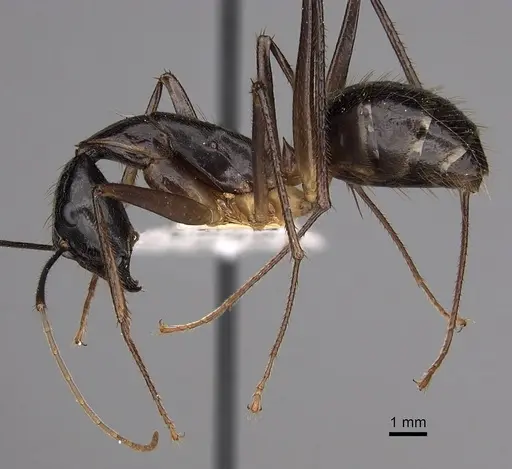
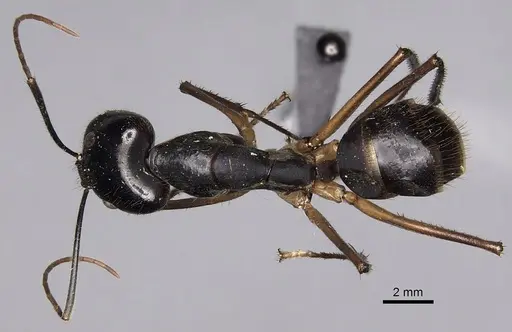
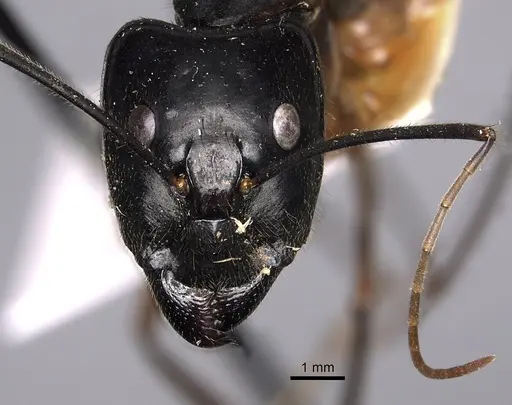
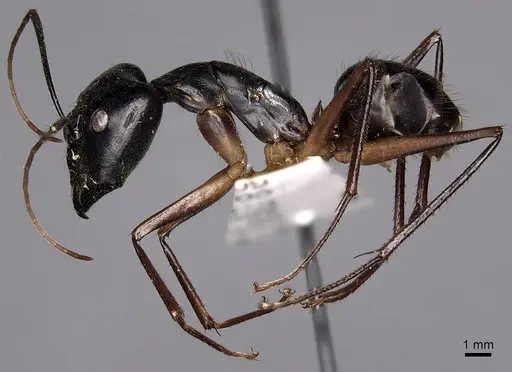
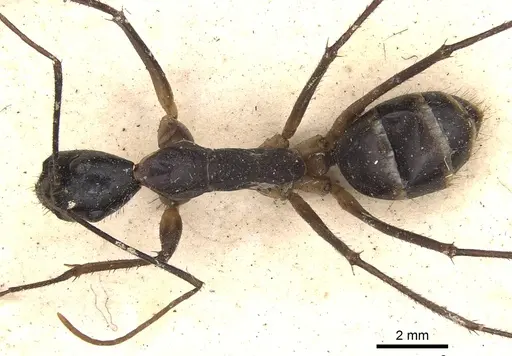
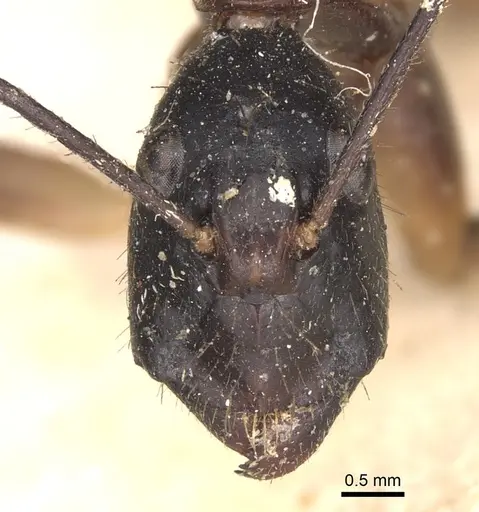
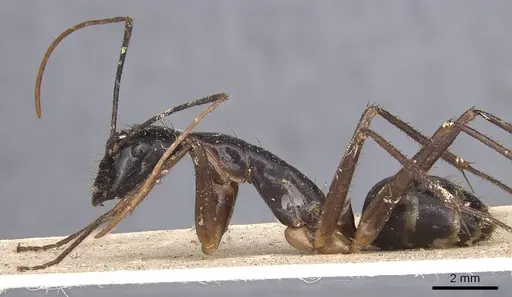
Camponotus dorycus is a large carpenter ant species native to the Indo-Pacific region, including New Guinea, Indonesia, Papua New Guinea, and northern Australia. Workers reach approximately 12mm in length, making them one of the larger ant species. They are black with a smooth and shining appearance, featuring an elongated head that narrows abruptly behind the eyes to form a distinct neck-like constriction. Their legs are slender and reddish-brown, and the petiole (the segment connecting the abdomen to the thorax) is wedge-shaped and pointed on top. Unlike many carpenter ants that nest in wood, this species is arboricolous, meaning it lives primarily in trees, nesting in aerial soil accumulations and inside termite nests on tree trunks. They are nocturnal foragers, with research showing they harvest food bodies from plants like Ryparosa kurrangii at night. The species has been recorded across elevations from 200m to 1800m in tropical rainforest environments [1][2][3][4].
Quick Summary
- Difficulty: Medium
- Origin & Habitat: Indo-Pacific region including New Guinea, Indonesia (Irian Jaya, Waigeu), Papua New Guinea, northern Australia, and Hainan Island, China. Found in tropical rainforests, primarily in primary forest at elevations from 200m to 1800m. They are arboricolous, nesting in aerial soil and inside termite nests on tree trunks [2][4][5].
- Colony Type: Colony structure is not well documented in scientific literature. Based on typical Camponotus patterns, they likely form single-queen colonies (monogyne). As a large carpenter ant, they likely have claustral founding where the queen seals herself in a chamber and lives off stored fat reserves until her first workers emerge.
- Size & Growth:
- Queen: Estimated 15-18mm based on related large Camponotus species
- Worker: Approximately 12mm [1]
- Colony: Unknown for this specific species, but related large Camponotus species can reach several thousand workers
- Growth: Moderate, based on typical Camponotus development patterns
- Development: Estimated 6-8 weeks at optimal temperature based on genus-level Camponotus data (Development time is inferred from related species in the genus. Large Camponotus species typically take 6-10 weeks from egg to first worker at warm temperatures (24-28°C).)
- Antkeeping:
- Temperature: Keep at 24-28°C for optimal brood development. As a tropical species from New Guinea and surrounding regions, they need consistently warm conditions. A gentle temperature gradient allowing workers to self-regulate is beneficial.
- Humidity: Moderate to high humidity (60-80%). As an arboricolous species from tropical rainforests, they prefer humid conditions but not saturated. Provide a water source and occasional misting, but ensure ventilation to prevent mold.
- Diapause: Likely minimal or no true diapause. As a tropical species from consistent warm climates, they probably do not require hibernation. However, slight temperature reduction during winter months may be appropriate if kept in temperate climates.
- Nesting: Arboricolous nesters prefer setups that mimic their natural tree-dwelling habitat. Y-tong (acrylic) nests or plaster nests with narrow chambers work well. Provide climbing structures and bark or wood pieces for them to explore. They do not excavate wood like some Camponotus, they occupy pre-existing cavities.
- Behavior: Generally calm and non-aggressive for a large ant species. They are nocturnal foragers, becoming more active at night. As arboricolous ants, they are excellent climbers and will readily traverse branches, plants, and any provided climbing structures. Their large size makes escape prevention relatively straightforward compared to tiny ants, but they can still squeeze through small gaps. They are not known to be particularly defensive or stingy, though larger ants can bite if threatened. Workers are robust and long-legged, adapted for moving through forest canopy environments.
- Common Issues: Tropical species may struggle in cool, dry environments, maintain warmth and humidity, Arboricolous nature means they need climbing structures and vertical space to feel secure, Limited availability in the antkeeping hobby, this species is rarely available, Wild-caught colonies may carry parasites or diseases from their native habitat, As a large species, they need spacious outworlds and proper foraging areas
Natural History and Distribution
Camponotus dorycus was originally described by Frederick Smith in 1860 from specimens collected in Dory, New Guinea (now Indonesia). The species remains known primarily from the Indo-Pacific region, with documented records in New Guinea, Indonesia (including Irian Jaya and Waigeu), Papua New Guinea, northern Australia, and Hainan Island in southern China. They are found in tropical rainforest environments, with nest abundance studies showing them present at elevations ranging from 200m in lowland forests up to 1800m in montane areas. Unlike many carpenter ants that nest in dead wood on the ground, C. dorycus is strictly arboricolous, meaning it lives in the forest canopy. Research in New Guinea rainforests found all seven documented nests in primary forest trees, with zero nests found in secondary forest areas, indicating a strong preference for undisturbed habitats. They occupy aerial soil accumulations on tree trunks and also utilize abandoned termite nests as nesting sites [1][2][4][6][5].
Nest Preferences and Housing
In captivity, C. dorycus requires housing that reflects their natural arboreal lifestyle. Unlike ground-nesting Camponotus that excavate wooden formicaria, this species prefers to occupy pre-existing cavities. Y-tong (acrylic) nests or plaster nests with appropriately sized chambers work well. The chambers should be scaled to their 12mm worker size, not too large, as ants feel safer in snugger spaces, but large enough for the colony to move freely. Provide climbing structures in the outworld such as cork bark, branches, or artificial plants, as they are adapted for vertical surfaces. A water test tube should always be available. Since they are tropical and arboricolous, maintain moderate humidity (60-80%) within the nest area. Good ventilation is essential to prevent mold while maintaining humidity. Avoid overly wet or waterlogged conditions, the nest substrate should feel damp but not soggy [2][5].
Feeding and Diet
In their natural habitat, C. dorycus has been observed harvesting food bodies from the plant Ryparosa kurrangii, specifically at night, indicating a nocturnal foraging pattern. As a large carpenter ant, they are likely omnivorous, accepting both sugar sources and protein. In captivity, offer a varied diet including sugar water or honey as a constant energy source. For protein, provide insects such as mealworms, crickets, or other appropriately sized prey. Given their large size, they can handle larger prey items than tiny ants. Feed protein 2-3 times per week, and ensure sugar water is always available. Remove uneaten prey after 24-48 hours to prevent mold. Their nocturnal activity means you may observe more foraging behavior in the evening and night hours [3][5].
Temperature and Seasonal Care
As a tropical species from New Guinea and surrounding warm regions, C. dorycus requires consistently warm temperatures. Maintain the nest area at 24-28°C for optimal brood development. Temperatures below 20°C may slow their metabolism and development significantly. A heating cable or heating mat on one side of the nest can create a temperature gradient, allowing workers to self-regulate by moving to warmer or cooler areas. Place heating on top of the nest, not underneath, to avoid evaporating moisture too quickly. Since they come from a tropical climate with minimal seasonal temperature variation, they likely do not require a true diapause or hibernation period. However, slight temperature reduction during winter months (if your room temperature drops significantly) may be appropriate. Monitor colony activity, if workers become sluggish, increase temperature. They prefer stable conditions rather than dramatic temperature swings [2][4][5].
Behavior and Temperament
Camponotus dorycus is generally a calm species, not known for excessive aggression or defensive behavior. Their large size (12mm workers) makes them less nervous than tiny ants, and they typically move with deliberate, steady purpose. They are excellent climbers due to their arboreal lifestyle, so provide adequate climbing structures in the outworld. They are nocturnal, meaning you will likely see more activity during evening and night hours. Workers are robust with elongated legs, adapted for navigating tree bark and canopy surfaces. While they can bite if cornered or threatened, they are not particularly aggressive toward keepers. Their escape risk is moderate, while larger than many ants, they can still squeeze through small gaps, so secure housing with tight-fitting lids is important. The species is rarely kept in captivity, so individual colony personalities may vary [1][5].
Frequently Asked Questions
How long does it take for Camponotus dorycus to produce first workers?
Based on typical Camponotus development patterns, expect first workers (nanitics) to emerge in approximately 6-8 weeks after the queen lays eggs, provided temperatures are maintained at 24-28°C. This is an estimate based on related species, as specific development data for C. dorycus is not available.
What size nest should I use for Camponotus dorycus?
Use a nest with chambers sized appropriately for 12mm workers, moderately snug but with room for the colony to move. Y-tong (acrylic) nests or plaster nests work well. Avoid overly large chambers as ants feel more secure in appropriately sized spaces.
Are Camponotus dorycus good for beginners?
This species is rated as medium difficulty. While large ants are often easier to care for than tiny species, C. dorycus has specific requirements (warmth, humidity, climbing structures) that make them better suited for antkeepers with some experience. They are also rarely available in the hobby.
What do Camponotus dorycus eat?
They are omnivorous. Offer sugar water or honey as a constant energy source, and protein (insects like mealworms, crickets) 2-3 times per week. They are nocturnal foragers, so you may see more feeding activity in evening hours.
Do Camponotus dorycus need hibernation?
As a tropical species from New Guinea and surrounding regions, they likely do not require true hibernation. Maintain warm temperatures (24-28°C) year-round. Slight winter temperature reduction may be appropriate if your room temperature drops significantly, but avoid cold conditions.
How big do Camponotus dorycus colonies get?
Specific colony size data is not available for this species, but related large Camponotus species can reach several thousand workers. Expect moderate to large colony growth over several years.
Can I keep multiple Camponotus dorycus queens together?
Colony structure is not well documented for this species. Based on typical Camponotus patterns, they likely form single-queen colonies. Combining unrelated queens is not recommended without documented evidence of polygyny in this species.
Why is my Camponotus dorycus colony not growing?
Check that temperatures are warm (24-28°C), humidity is adequate (60-80%), and the queen is laying eggs. Poor growth can result from too-low temperatures, inadequate nutrition, or stress. Ensure protein is offered regularly and sugar water is constantly available.
Where does Camponotus dorycus live in the wild?
,
References

This caresheet is licensed under CC BY-SA 4.0 .
Literature
Loading...Loading products...