

Camponotus claripes
- Scientific Name
- Camponotus claripes
- Subgenus
- Thlipsepinotus
- Tribe
- Camponotini
- Subfamily
- Formicinae
- Author
- Mayr, 1876
- Distribution
- Found in 1 countries
Camponotus claripes Overview
Camponotus claripes is an ant species of the genus Camponotus. It is primarily documented in 1 countries , including Australia. Detailed taxonomic data and occurrence records can be further explored via authoritative databases such as AntWeb or the Global Biodiversity Information Facility (GBIF).
Camponotus claripes
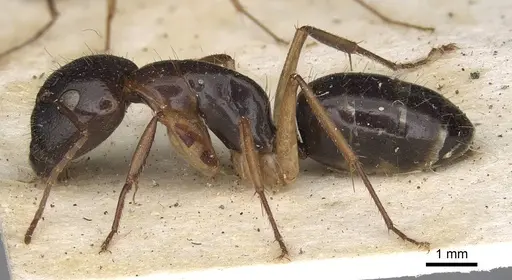
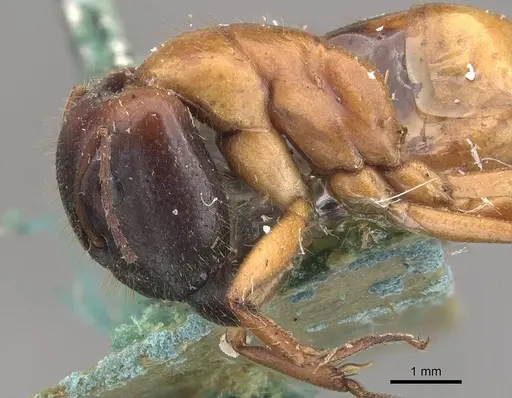
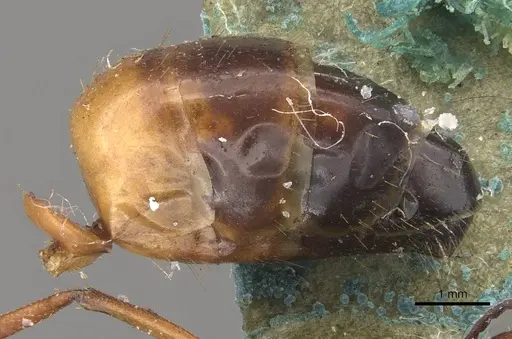
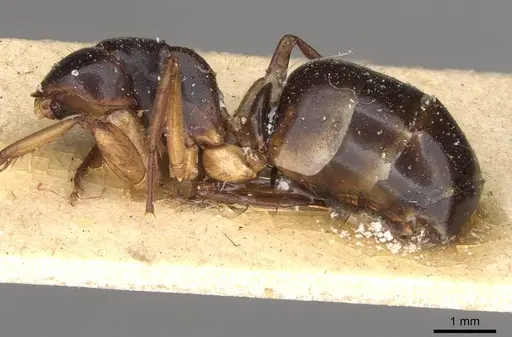
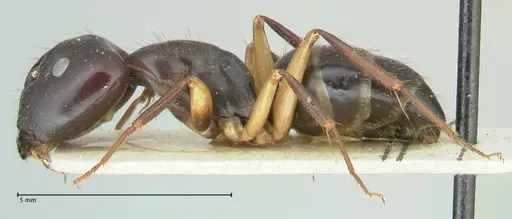
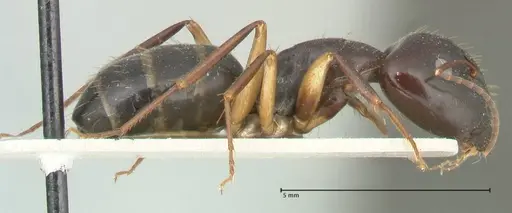
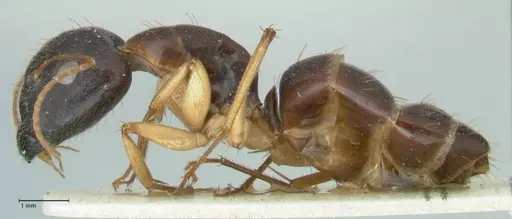
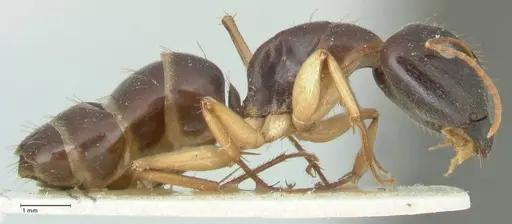
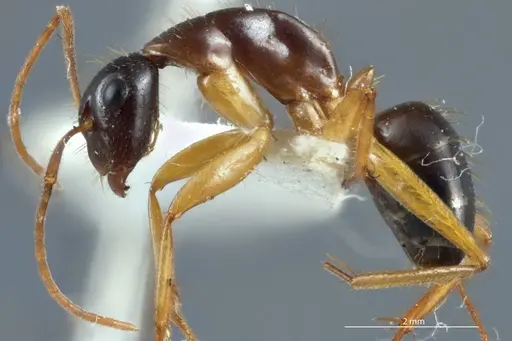
Camponotus claripes is an Australian carpenter ant known for its distinctive pale legs that contrast with its dark body. Workers come in two sizes: majors measure 6-10mm while minors are notably small at 4-6mm, among the smallest Camponotus species in Australia [1]. The head and gaster are typically black or dark brown, while the mesosoma ranges from yellowish-brown to orange, with legs varying from yellow to reddish-yellow [2]. This species has a fascinating defense mechanism, when disturbed, minor workers draw their limbs close to their body and feign death (thanatosis), then free-fall from tree trunks if touched, becoming nearly impossible to find among leaf litter [3].
Quick Summary
- Difficulty: Easy
- Origin & Habitat: Western Australia, particularly common in coastal areas and inland regions of the southwest. Also found in Queensland, NSW, South Australia, and Victoria [2]. Inhabits various environments from coastal parklands to goldfields, with minor workers varying from tiny yellowish forms in sand-plain habitats to more robust brown ants in southern districts [1][3].
- Colony Type: Likely single-queen colonies (monogyne), typical of most Camponotus species. No specific research on colony structure found.
- Founding: Claustral
- Size & Growth:
- Queen: 11-12mm [3]
- Worker: Major workers 6-10mm, minor workers 4-6mm [3]
- Colony: Estimated moderate colony size, likely several hundred workers based on typical Camponotus patterns
- Growth: Moderate, based on typical Camponotus development patterns
- Development: 6-8 weeks at optimal temperature (estimated based on genus patterns) (Development time inferred from typical Camponotus genus patterns, specific data for this species not available)
- Antkeeping:
- Temperature: Keep around 22-26°C. Australian species from temperate to subtropical regions can tolerate a range from roughly 18°C to 30°C. Provide a gentle temperature gradient so ants can self-regulate.
- Humidity: Moderate humidity around 50-70%. These ants are adaptable across Australian environments from coastal to inland regions. Keep nest substrate slightly moist but allow some drying between waterings.
- Diapause: Likely beneficial. Australian temperate populations typically benefit from a light winter rest around 15-18°C for 2-3 months, simulating cooler winter conditions.
- Nesting: Y-tong (acrylic) nests work well, or a naturalistic setup with soil and rotting wood. They are not wood-nesting like some Camponotus, they likely nest in soil or under stones in the wild. Provide a dark, quiet nesting area.
- Behavior: Generally calm and non-aggressive for a carpenter ant. The most notable behavior is their thanatosis response, minor workers will freeze and drop from surfaces when disturbed. They are moderate foragers and typically hunt for small prey. Escape risk is moderate due to their smaller size compared to many Camponotus, use standard barrier methods. They are primarily nocturnal or crepuscular foragers.
- Common Issues: minor workers feigning death may appear dead when disturbed, give them time to recover before assuming colony loss, small minor workers can escape through standard barriers, check for gaps, colonies may be slow to establish initially, patience is key during founding, Australian species may need winter rest period, research your local climate conditions, variation in worker appearance across populations may cause confusion with similar species like C. scratius
Appearance and Identification
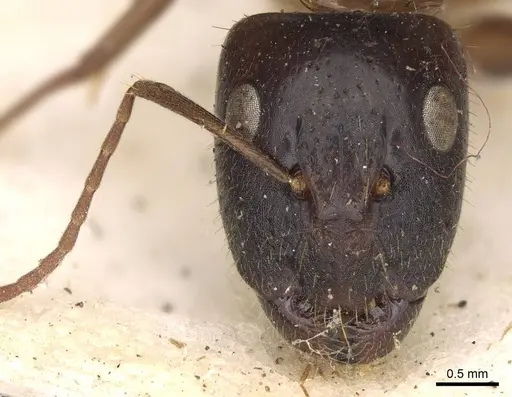
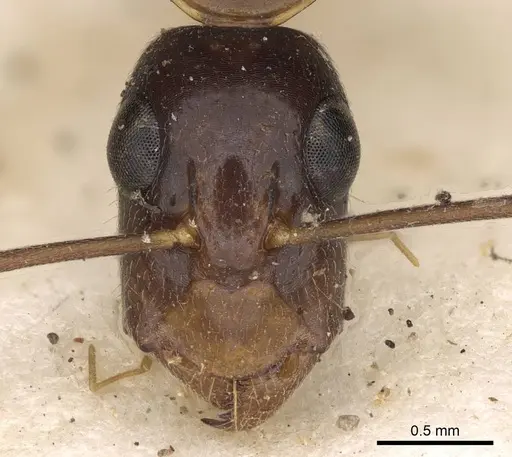
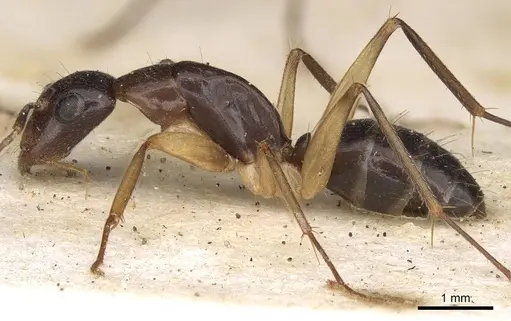
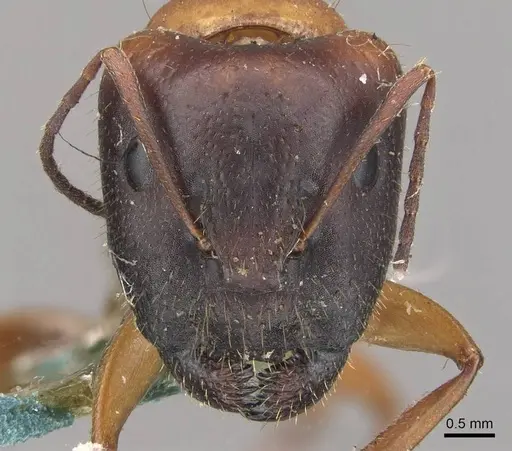
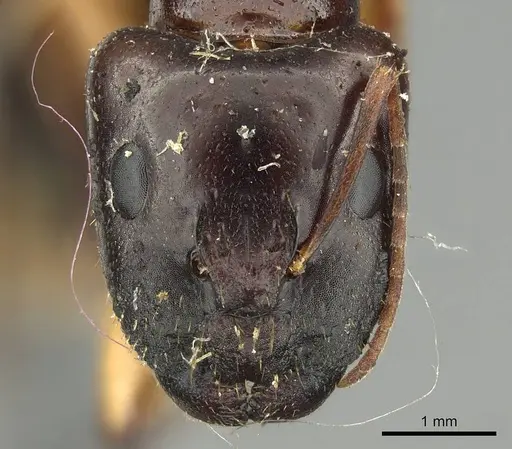
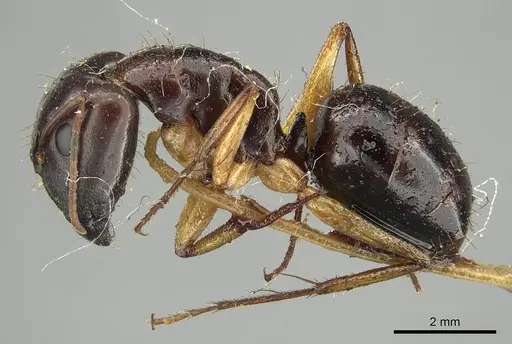
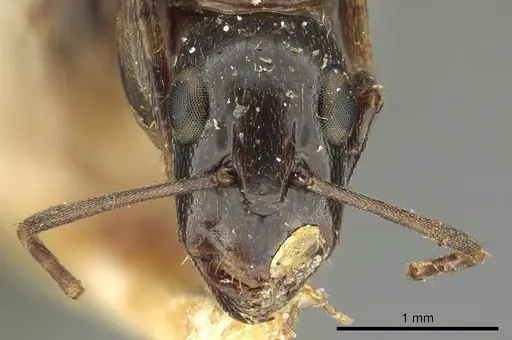
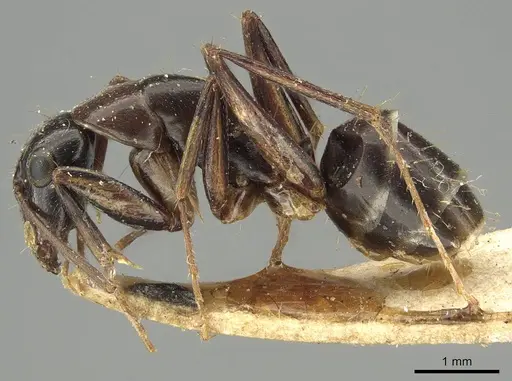
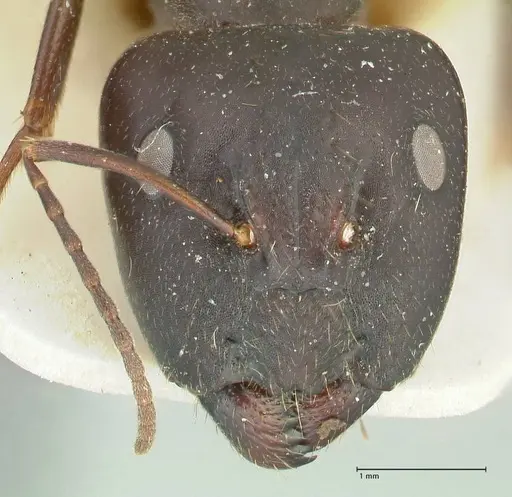
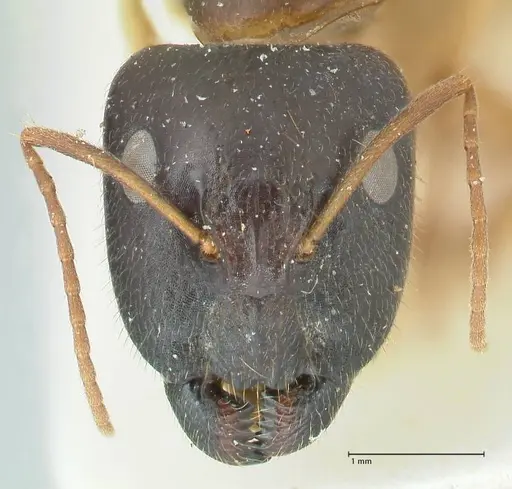
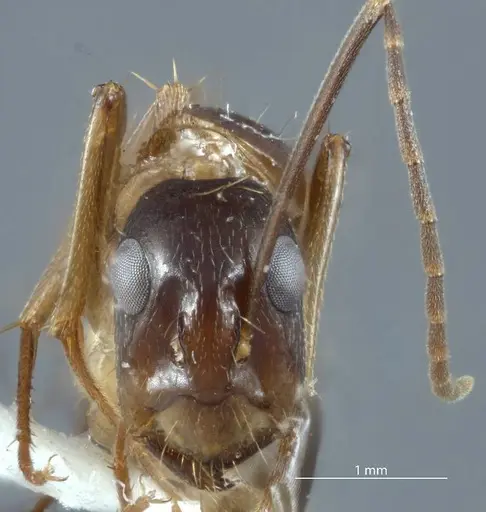
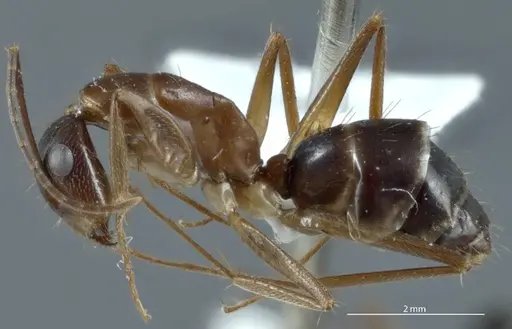
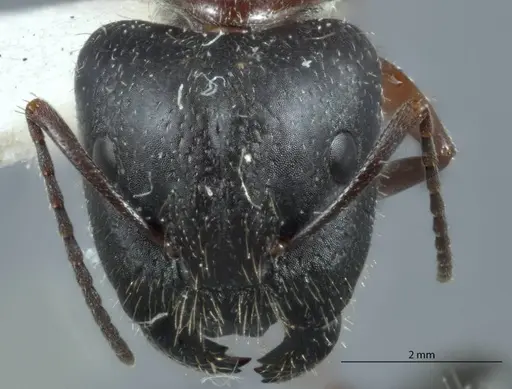
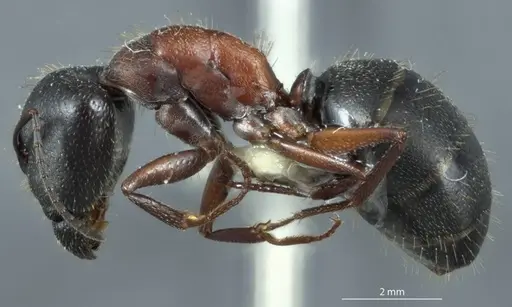
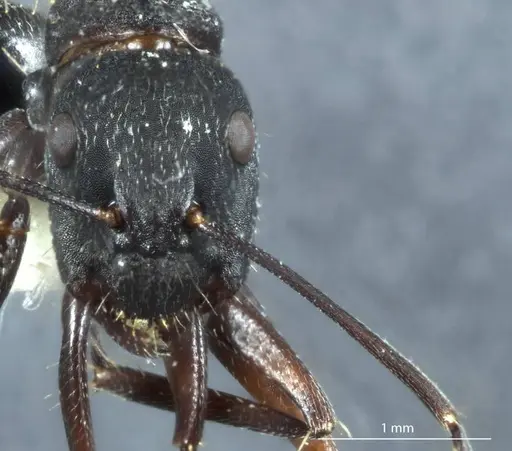
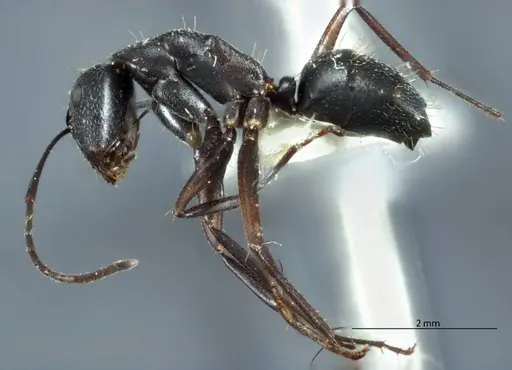
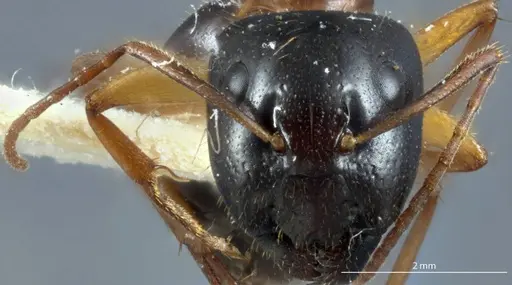
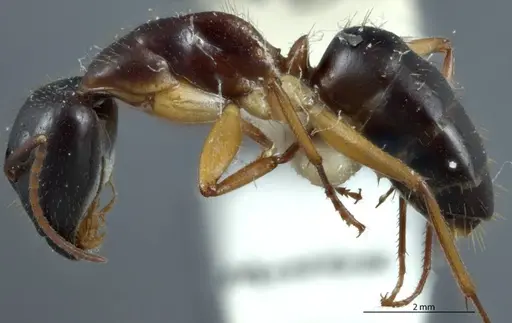
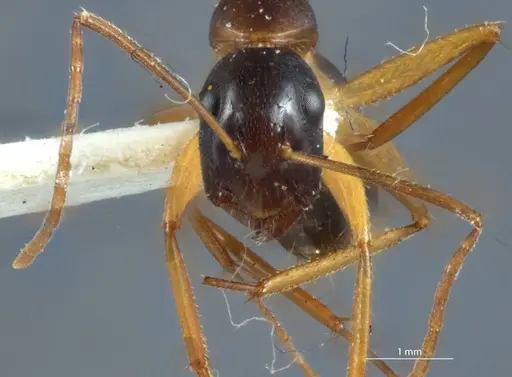
Camponotus claripes is a medium-sized carpenter ant with a distinctive appearance. Major workers reach 6-10mm while minor workers are notably small at just 4-6mm, making them among the smallest Camponotus in Australia [1]. The body is primarily black or dark brown, but the legs are distinctly pale, yellow to reddish-yellow, giving rise to the common name 'pale-legged carpenter ant' [4]. The mesosoma (middle body section) ranges from yellowish-brown to orange, sometimes contrasting sharply with the dark head and gaster, especially in specimens from goldfields regions [1]. Minor workers show considerable variation: tiny yellowish forms from Kwongan sand-plain north of Perth versus more robust brown ants in southern districts. You can distinguish C. claripes from the similar C. scratius by checking for setae (tiny hairs) on the underside of the head, C. claripes lacks these while C. scratius has them [1].
Natural History and Defense Behavior
This species is common across southwestern Australia and has adapted to various habitats from coastal areas to inland regions [1]. The most remarkable behavior is their defense mechanism called thanatosis, when disturbed, minor workers draw their legs tight against their body and freeze, feigning death. If on a tree trunk and touched, they will free-fall into vegetation below, becoming almost impossible to find among twigs and leaf litter [3]. This is an effective anti-predator strategy that helps the colony survive encounters with larger animals. In the wild, they likely nest in soil or under stones rather than in wood, though they may use existing cavities in rotting wood. They are part of the claripes species group and are related to C. aeneopilosus and C. dromas, representing Gondwanan fauna that evolved separately from Pacific carpenter ant lineages [5][6].
Housing and Nest Setup
For keeping C. claripes in captivity, a Y-tong (acrylic) nest works well, or you could use a naturalistic setup with soil and some rotting wood pieces. These ants are not strict wood-nesters like some Camponotus, they likely nest in soil or under cover in the wild. Provide a dark nesting area that stays relatively quiet. Since minor workers are small (4-6mm), ensure your formicarium has appropriately sized chambers and passages. A test tube setup works for founding colonies, use a water-filled tube attached to a dry chamber for the queen and first workers. As the colony grows, you can transition to a larger nest. Always use escape prevention, as these small workers can slip through gaps that larger ants cannot.
Feeding and Diet
Like other carpenter ants, C. claripes is an omnivore that accepts both sugar and protein sources. Offer sugar water, honey, or diluted maple syrup as a constant carbohydrate source. For protein, provide small insects like fruit flies, small crickets, or mealworms. Given their small minor worker size, prey items should be appropriately sized. They likely forage for honeydew from aphids and scale insects in the wild, so occasional sweet treats are appreciated. Feed protein roughly twice weekly, and keep sugar water available at all times. Remove uneaten prey after 24-48 hours to prevent mold.
Temperature and Seasonal Care
Maintain temperatures around 22-26°C for optimal colony health and development. As an Australian species from temperate regions, they can tolerate a broader range from roughly 18°C to 30°C. Providing a temperature gradient allows the ants to self-regulate, place a heating cable on one side of the nest set to around 28°C while leaving the other side at room temperature. During winter, a light dormancy period is likely beneficial, mimicking their natural seasonal cycle. Reduce temperature to around 15-18°C for 2-3 months in winter, reducing feeding as activity slows. This rest period supports colony health and may trigger reproductive behavior in spring.
Behavior in Captivity
C. claripes is generally calm and manageable in captivity. The thanatosis defense behavior may be observed, if you see what appears to be dead minor workers scattered outside the nest after disturbance, wait before cleaning them out, as they may be feigning death and could recover. Workers are moderately active and will establish foraging trails. Major workers, when present, are significantly larger than minors and may dominate at food sources. The colony will likely show increased activity during evening and night hours, reflecting their crepuscular foraging habits. They are not particularly aggressive and rarely bite or sting in defense. [3]
Frequently Asked Questions
How long does it take for Camponotus claripes to produce first workers?
Based on typical Camponotus development patterns, expect first workers (nanitics) around 6-8 weeks after the queen lays eggs, assuming optimal temperatures around 24-26°C. Development may be slower if temperatures are cooler.
What size nest do Camponotus claripes need?
Start with a test tube setup for the founding queen. Once the colony reaches 20-30 workers, you can move them to a small Y-tong or acrylic formicarium. Since minor workers are small (4-6mm), ensure chambers and passages are appropriately scaled.
What do Camponotus claripes eat?
They are omnivores. Offer a constant sugar source (sugar water, honey, or maple syrup) and protein foods like small insects (fruit flies, small crickets, mealworms) roughly twice weekly.
Do Camponotus claripes need hibernation?
A light winter rest is likely beneficial. Reduce temperatures to around 15-18°C for 2-3 months during winter, mimicking their natural Australian seasonal cycle. Reduce feeding during this period.
Why do my Camponotus claripes appear dead when disturbed?
This is normal behavior! Minor workers exhibit thanatosis, they freeze and draw their limbs close to their body when threatened, appearing dead. If they fall from surfaces, give them time to recover before assuming they are dead.
Are Camponotus claripes good for beginners?
Yes, they are considered a good beginner species. They are relatively docile, adaptable to a range of conditions, and their unique defense behavior is fascinating to observe. Their small size requires attention to escape prevention.
How big do Camponotus claripes colonies get?
Based on typical Camponotus patterns, colonies likely reach several hundred workers. Major workers can reach 10mm while minors stay small at 4-6mm.
Can I keep multiple Camponotus claripes queens together?
This has not been documented. Most Camponotus are single-queen species, and combining unrelated queens is not recommended unless you have specific evidence for this species.
What's the difference between Camponotus claripes and similar species?
C. claripes can be distinguished from the similar C. scratius by checking the underside of the head, C. claripes lacks setae (tiny hairs) while C. scratius has them [1]. Color and leg paleness also help identify this species.
References

This caresheet is licensed under CC BY-SA 4.0 .
CASENT0906932
View on AntWeb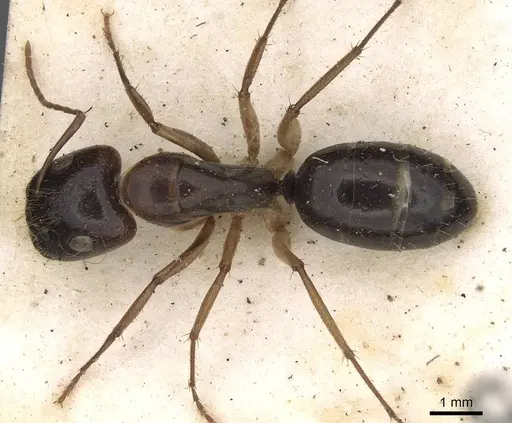
CASENT0906933
View on AntWeb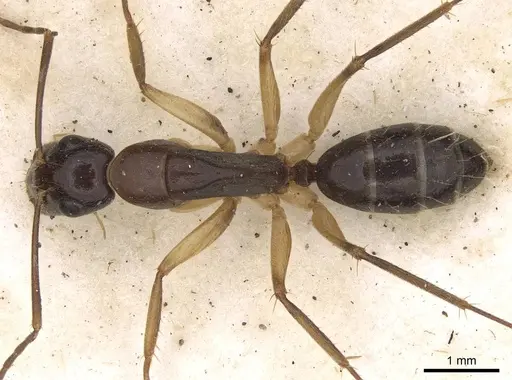
CASENT0910370
View on AntWeb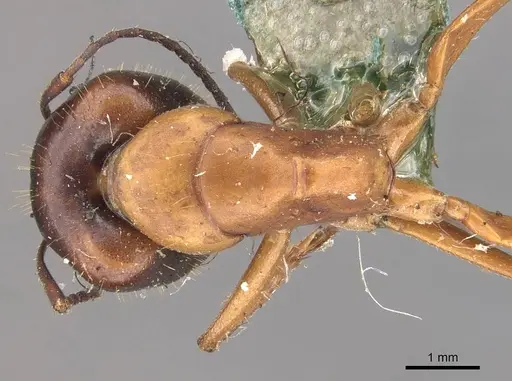
CASENT0910405
View on AntWeb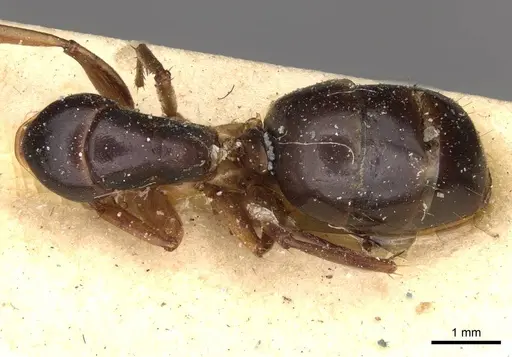
CASENT0915750
View on AntWeb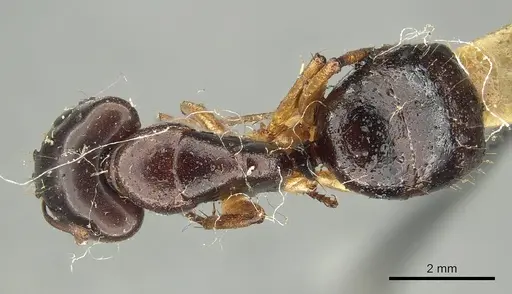
CASENT0915751
View on AntWeb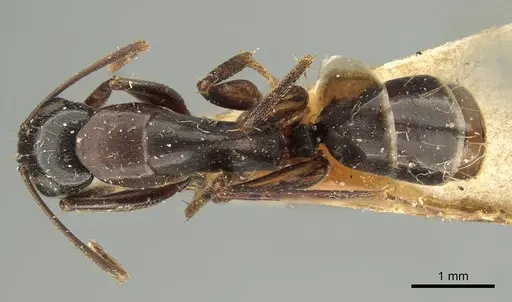
FOCOL2250
View on AntWeb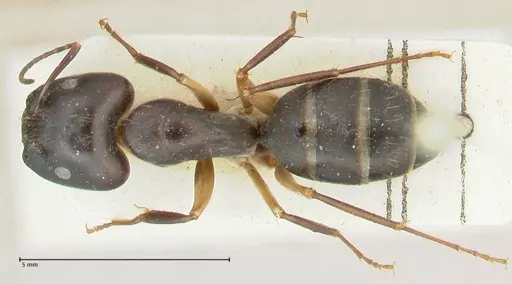
FOCOL2251
View on AntWeb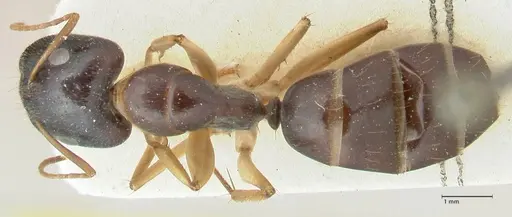
JDM32-001012
View on AntWeb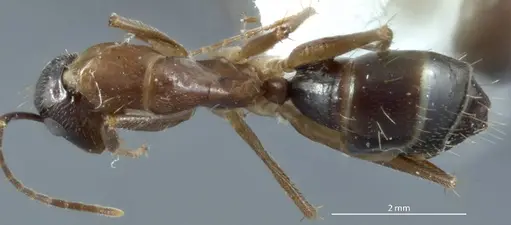
JDM32-001079
View on AntWeb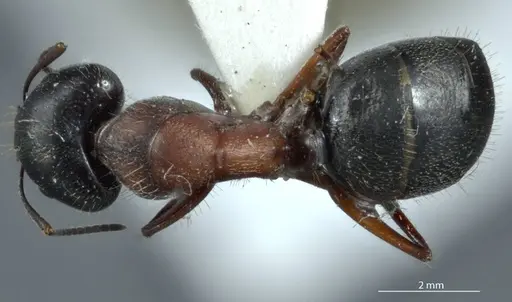
JDM32-001080
View on AntWeb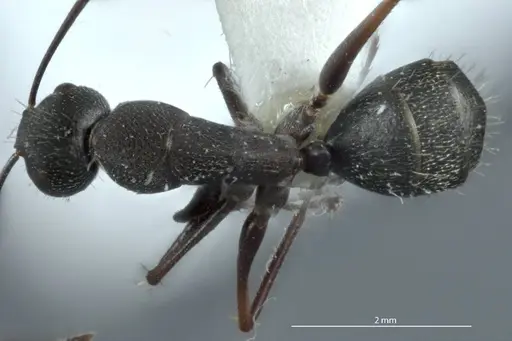
JDM32-001083
View on AntWeb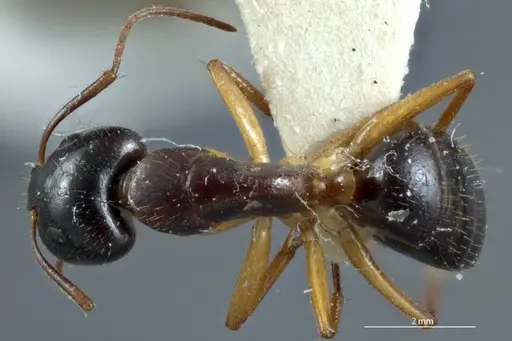
JDM32-001084
View on AntWeb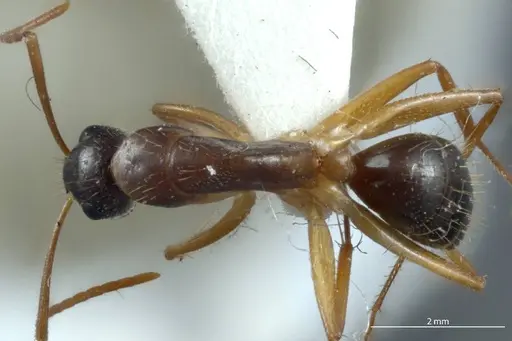
Literature
Loading...Loading products...